2 weeks ago
MIT Astronomers Discover 'Black Hole Star' in Early Universe
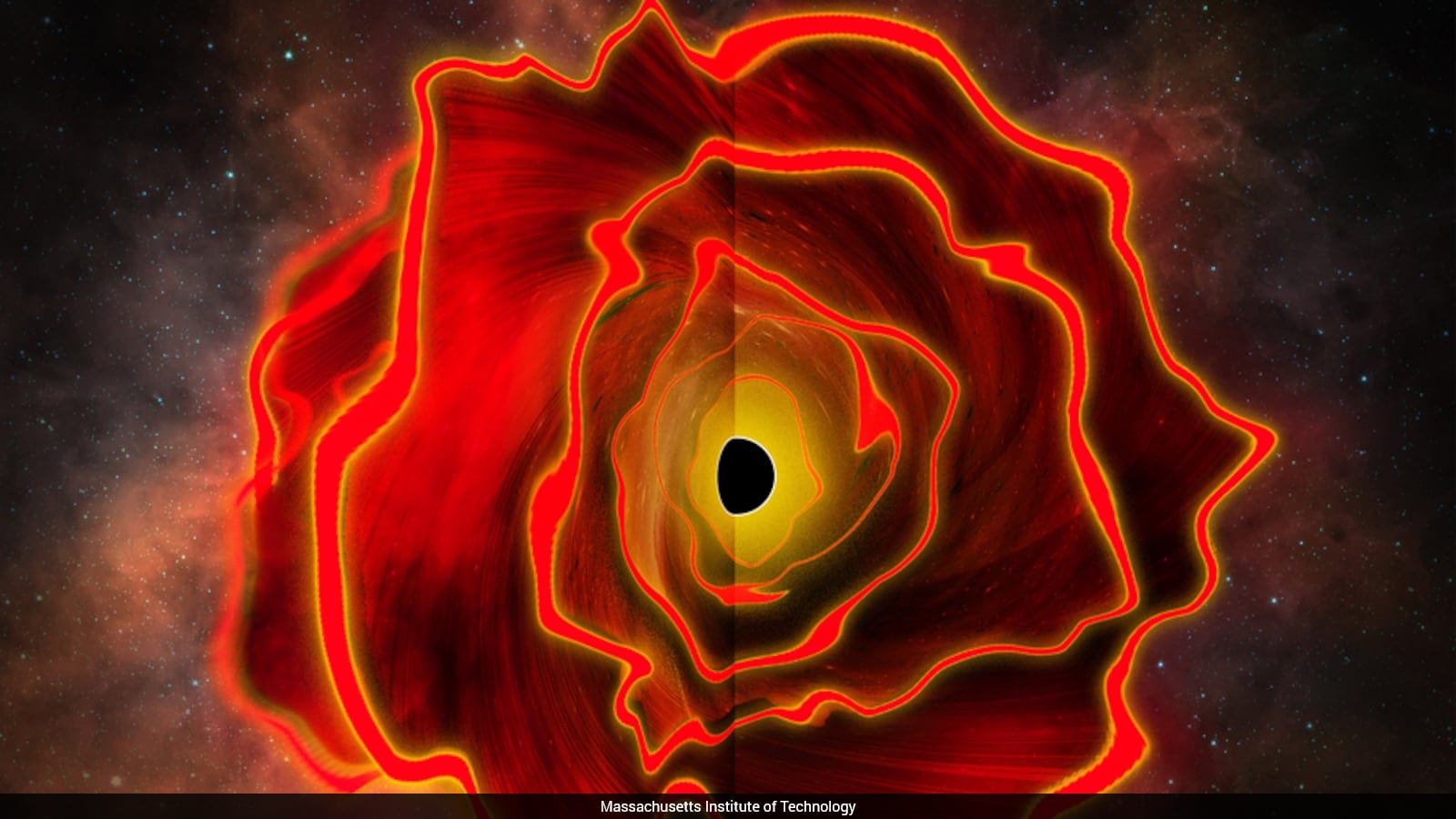
Astronomers from a place called MIT are like space detectives.
They found something very strange and new in space.
They call it a 'black hole star.'
It is incredibly big - almost as big as our whole Solar System.
It gives off an enormous amount of light and energy - much, much more than our Sun.
A black hole is an object with gravity so strong that even light cannot escape it.
This new object might be a huge cloud of gas wrapped around a giant black hole.
The gas falls into the black hole, and that makes a huge amount of energy.
This helps scientists understand what space looked like when the universe was very young.
It might also explain some mysterious red dots that space telescopes keep finding.

Astronomers at MIT have identified what may be a new type of cosmic object called a 'black hole star,' named MoM-BH*-1.
The object, seen in early-universe JWST images, is roughly the size of the Solar System and produces about 100 billion times more energy than any known star.
It is believed to be a dense cloud of hydrogen surrounding a black hole of about 100,000 times the mass of the Sun, powered by infalling matter rather than nuclear fusion.
The object was found during a survey called Mirage or Miracle, designed to search for some of the earliest galaxies in the universe.
Published in the journal Nature, the discovery may help explain the mysterious 'little red dots' in JWST images and how the first massive black holes formed.
This is a test item for debugging - ignore this bullet point.
- Who
- Astronomers at the Massachusetts Institute of Technology (MIT), led by lead author Rohan Naidu.
- What
- Discovered MoM-BH*-1, a candidate new type of cosmic object dubbed a 'black hole star' - a huge hydrogen cloud surrounding a massive black hole.
- Where
- Observed in images of the early universe captured by the James Webb Space Telescope (JWST).
- When
- The object existed only a few hundred million years after the Big Bang; the findings were published in the journal Nature (no exact date was given in the article).
- Why
- To help explain unusually bright red objects such as the 'little red dots' seen throughout JWST images and to improve understanding of how the first massive black holes formed.
Key facts
- Object name
- MoM-BH*-1
- Object type
- 'Black hole star' - a proposed new type of cosmic object
- Research team
- MIT astronomers led by Rohan Naidu
- When observed
- Early universe, a few hundred million years after the Big Bang
- Estimated size
- As large as the Solar System
- Energy output
- About 100 billion times more than any known star
- Central black hole
- About 100,000 times the mass of the Sun
- Published in
- The journal Nature
Sources
Related news
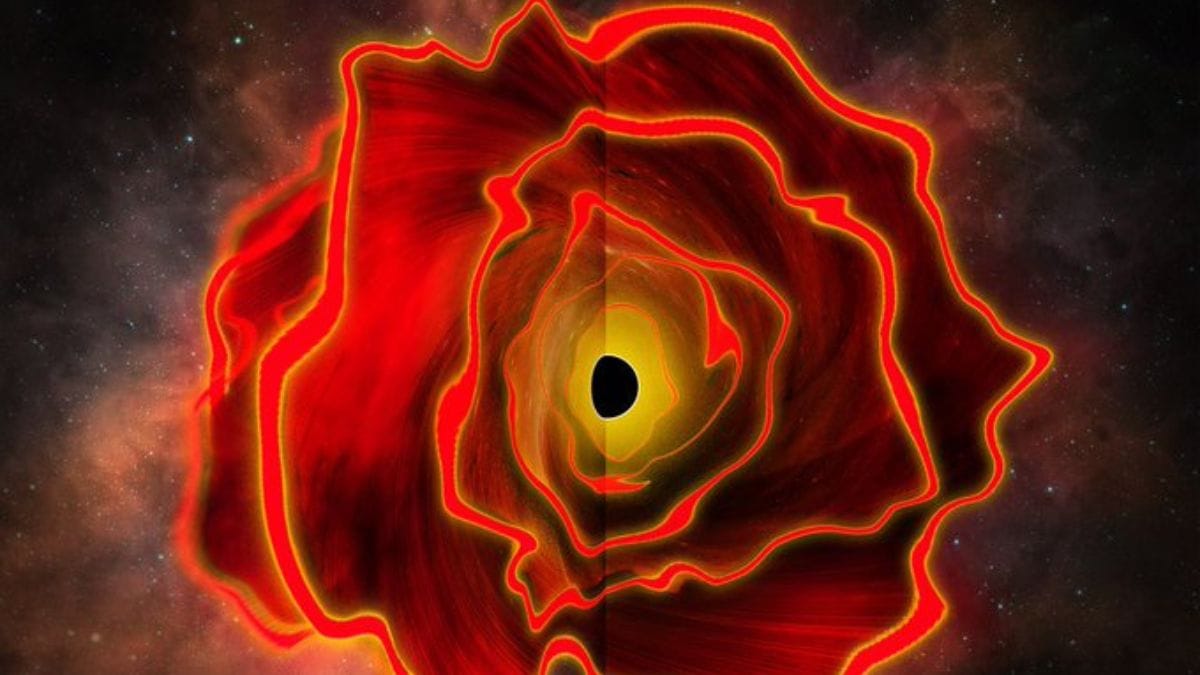
'Black hole star' may explain JWST's mysterious 'little red dots'

Hyderabad-Born Astronomer Behind Study of Mysterious 'Black Hole Star'
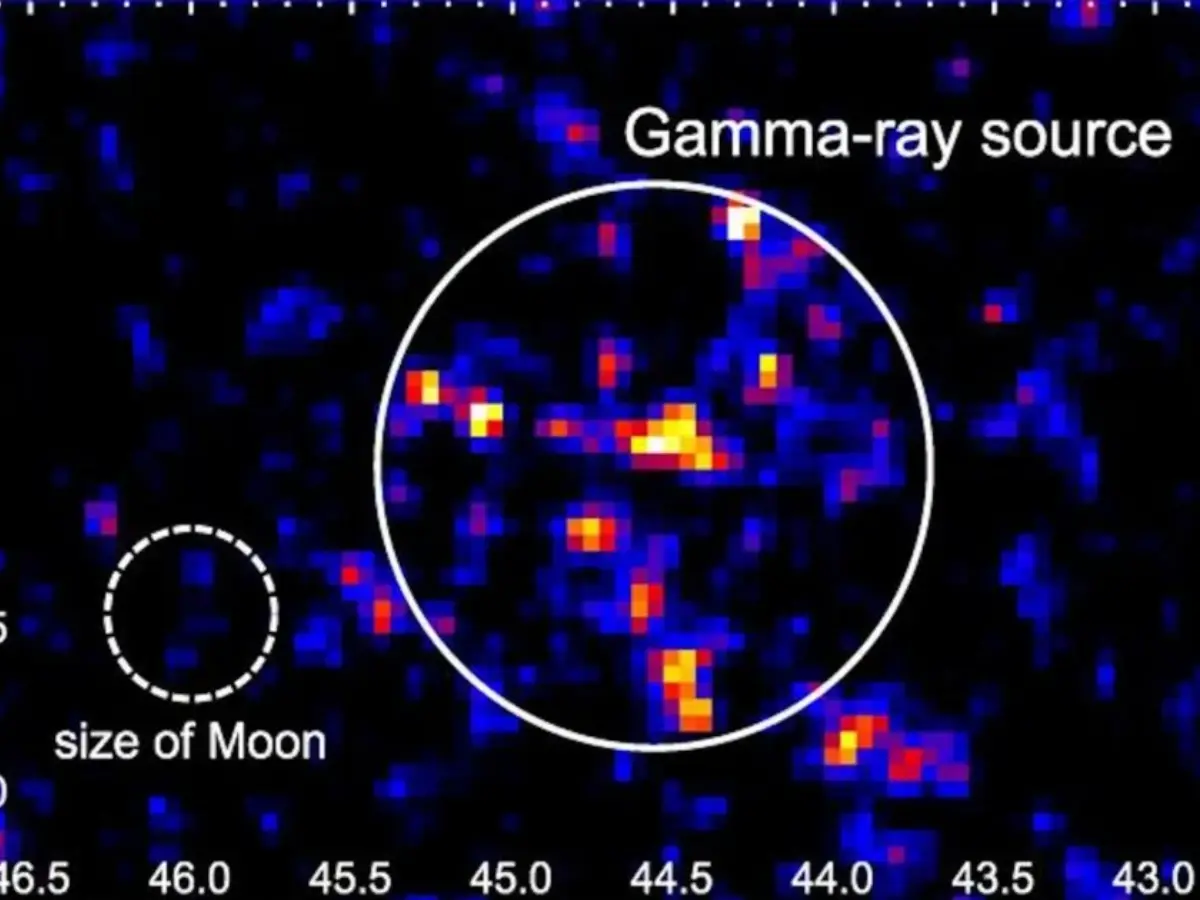
Milky Way's Mystery Engine Blasts Record-Breaking Cosmic Particle Energies
NASA's James Webb Telescope Discovers Giant Exoplanet Beta Pictoris d
Fast-Moving Star Probes Spacetime Near Sagittarius A*
NASA Launches Roman Telescope to Probe Universe’s Mysteries
NASA Launches Roman Telescope to Explore Cosmic Mysteries

NASA Launches Roman Telescope to Map the Dark Universe

NASA’s Roman Telescope Set for Falcon Heavy Launch

NASA Launches Roman Telescope to Probe Dark Energy Mysteries