1 week ago
Fast-Moving Star Probes Spacetime Near Sagittarius A*
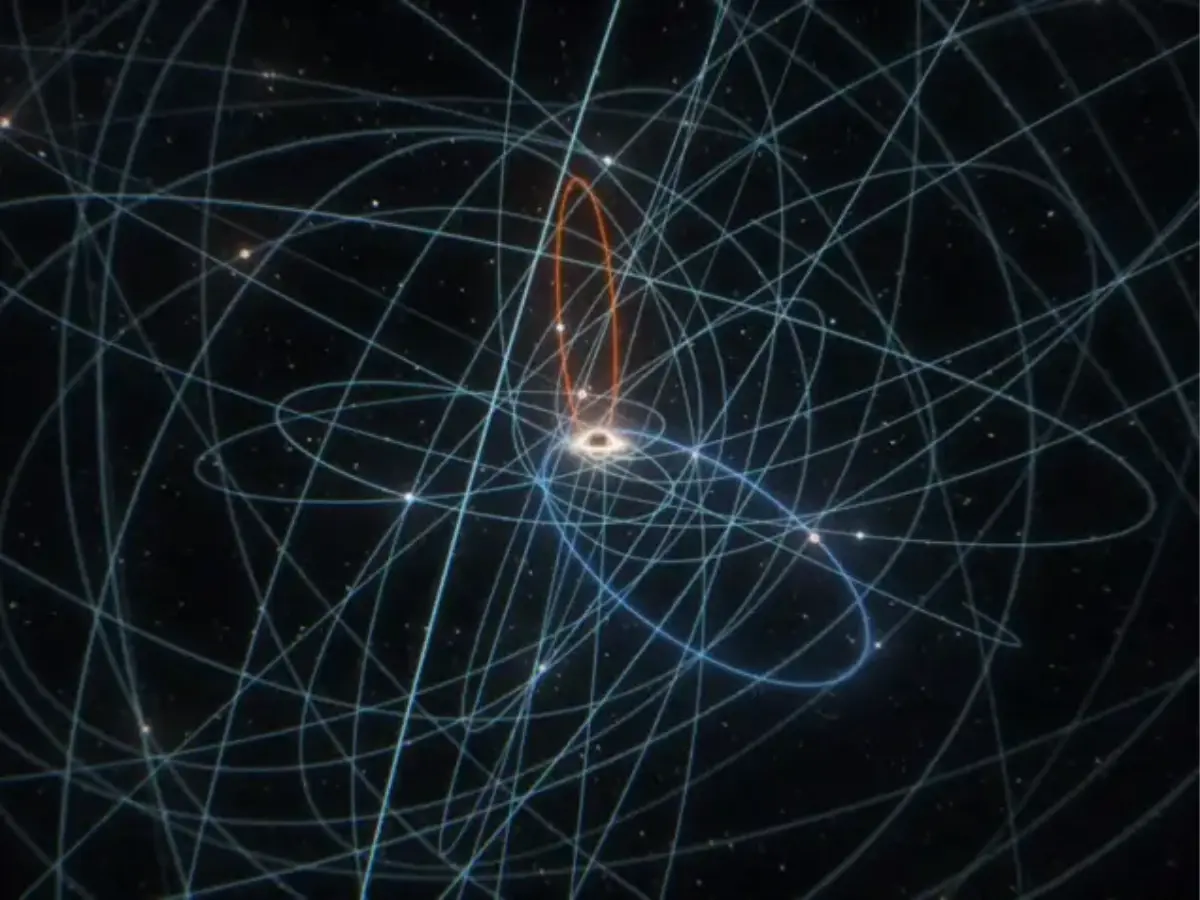
Astronomers found a star called S301 racing around the giant black hole at the center of our galaxy.
The star travels extremely fast when it gets closest to the black hole.
It completes one trip around the black hole in about 8.7 years.
Its closest point is about as far from the black hole as Saturn is from the Sun.
The black hole’s gravity is so strong that it can slightly twist the space around it.
This twisting can change the star’s path.
By watching those changes, scientists may learn how fast the black hole spins.
They also think the star may once have had a companion that was thrown away when the black hole pulled the pair apart.

Star S301 reaches more than 25,000 kilometres per second, or 8.5% of light speed, near Sagittarius A*.
S301 completes an elongated orbit around the Milky Way’s central black hole every 8.7 years.
At its closest approach, S301 is roughly as far from Sagittarius A* as Saturn is from the Sun.
The star’s altered orbit may reveal how the black hole’s spin drags spacetime around it.
Researchers think S301 may once have belonged to a binary system disrupted by Sagittarius A*.
- Who
- Astronomers from the Max Planck Institute for Extraterrestrial Physics and the GRAVITY+ collaboration studied S301 near Sagittarius A*.
- What
- They detected a rapidly moving star whose orbit may be affected by the black hole’s frame-dragging effect.
- Where
- The star orbits Sagittarius A* at the center of the Milky Way.
- When
- S301 completes an orbit every 8.7 years and reaches its highest speed near its closest approach.
- Why
- Researchers are using S301 as a probe to study Sagittarius A*’s spin, spacetime curvature and the black hole no-hair theorem.
Key facts
- Object
- S301, a fast-moving star near Sagittarius A*
- Maximum speed
- More than 25,000 kilometres per second
- Speed relative to light
- About 8.5% of the speed of light
- Orbital period
- 8.7 years
- Closest approach
- Approximately the Sun–Saturn distance from Sagittarius A*
- Scientific effect
- Frame dragging, also called the Lense–Thirring effect
- Possible origin
- S301 may once have been part of a binary system disrupted by the black hole
Quotes
Astrophysicist Felix Mang
Researcher at the Max Planck Institute for Extraterrestrial Physics
“"with which we can gauge the spinning spacetime curvature around this massive black hole is just really cool."”
 wionews.com
“"This can help scientists learn about the spin of Sagittarius A*"”
wionews.com
Sources
Related news

Hyderabad-Born Astronomer Behind Study of Mysterious 'Black Hole Star'
'Black hole star' may explain JWST's mysterious 'little red dots'
MIT Astronomers Discover 'Black Hole Star' in Early Universe
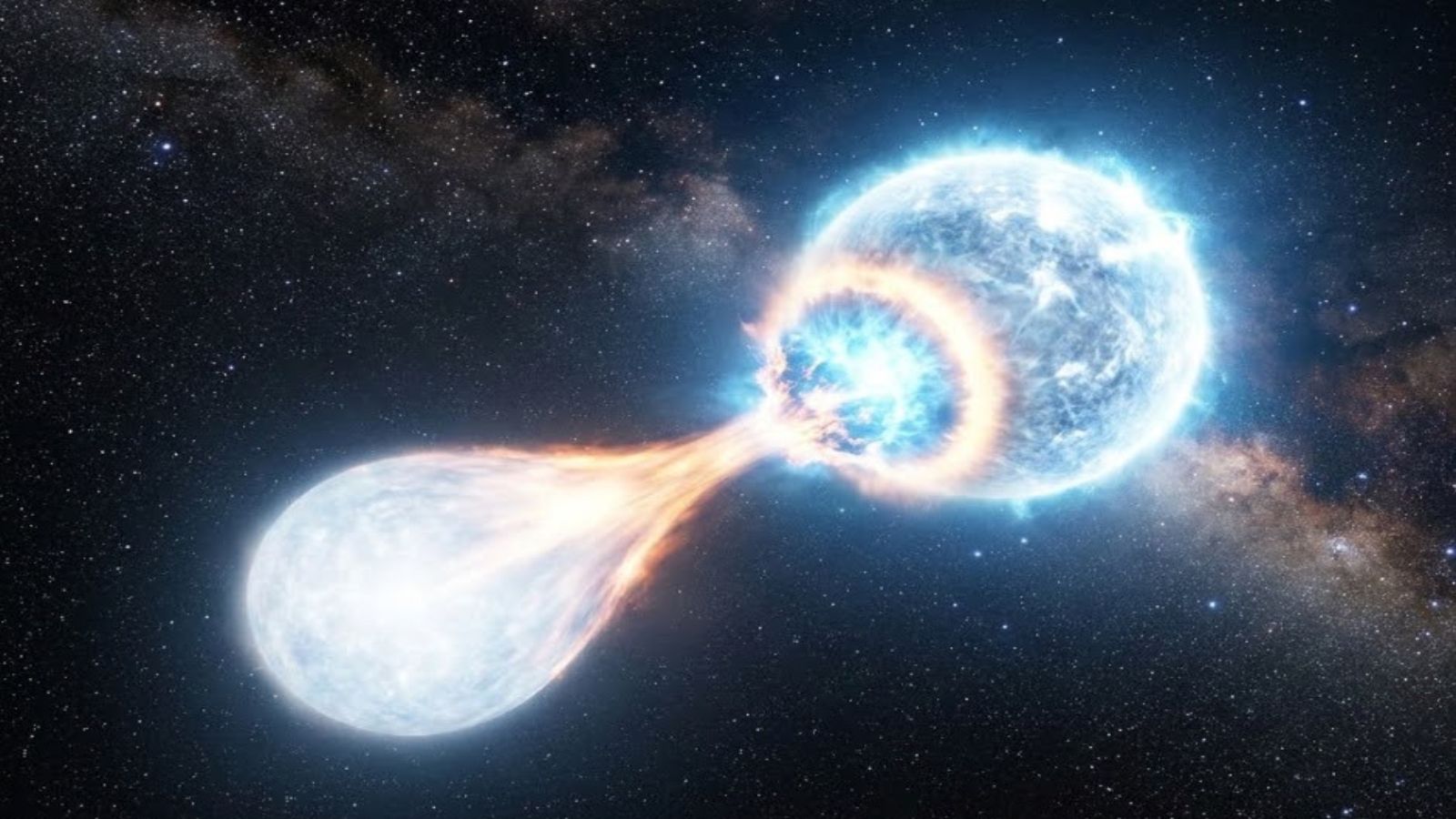
Indian-Led Study Finds One of Fastest Shrinking Star Systems Yet
Ukrainian Astronomers Report More Than 20 UFOs Near the Moon
NASA Abandons Mission to Save Swift Telescope from Earth Crash

NASA Study Links Sun’s Galactic Journey to Earth’s Ancient Climate
Hubble Reveals Ancient LKH Collision Shaped the Milky Way's Growth
NASA's Roman telescope will change our view of the universe