0 months ago
Turkey, Saudi Arabia and Pakistan Sign Mecca Defence Pact
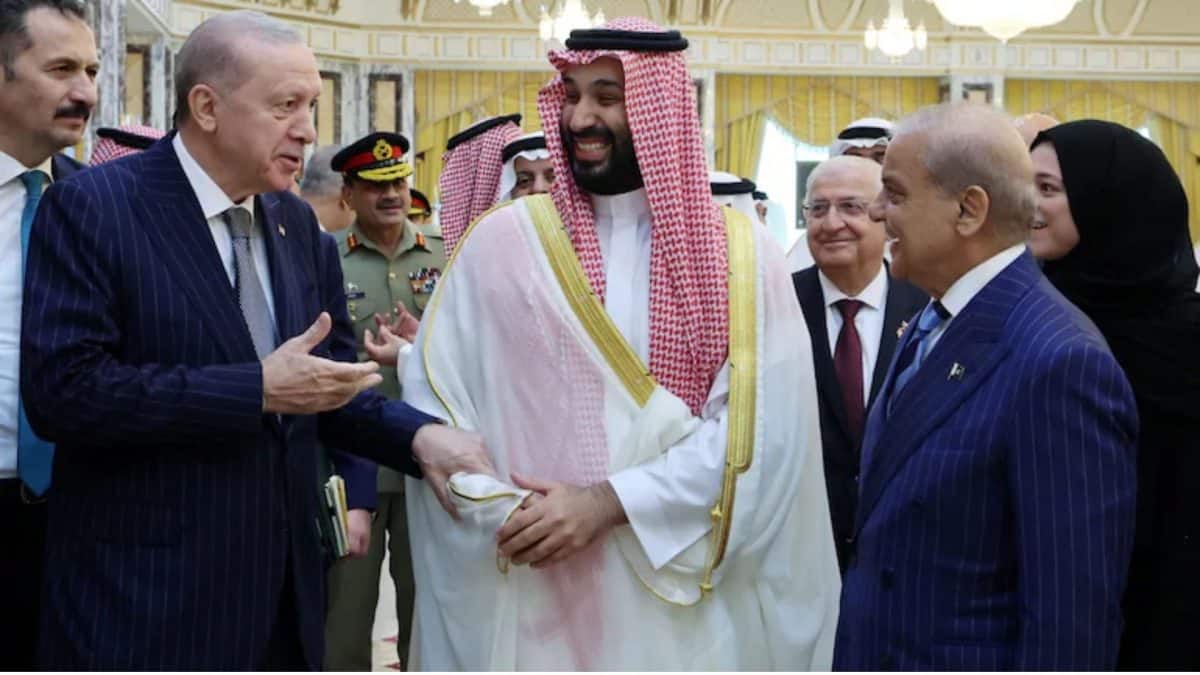
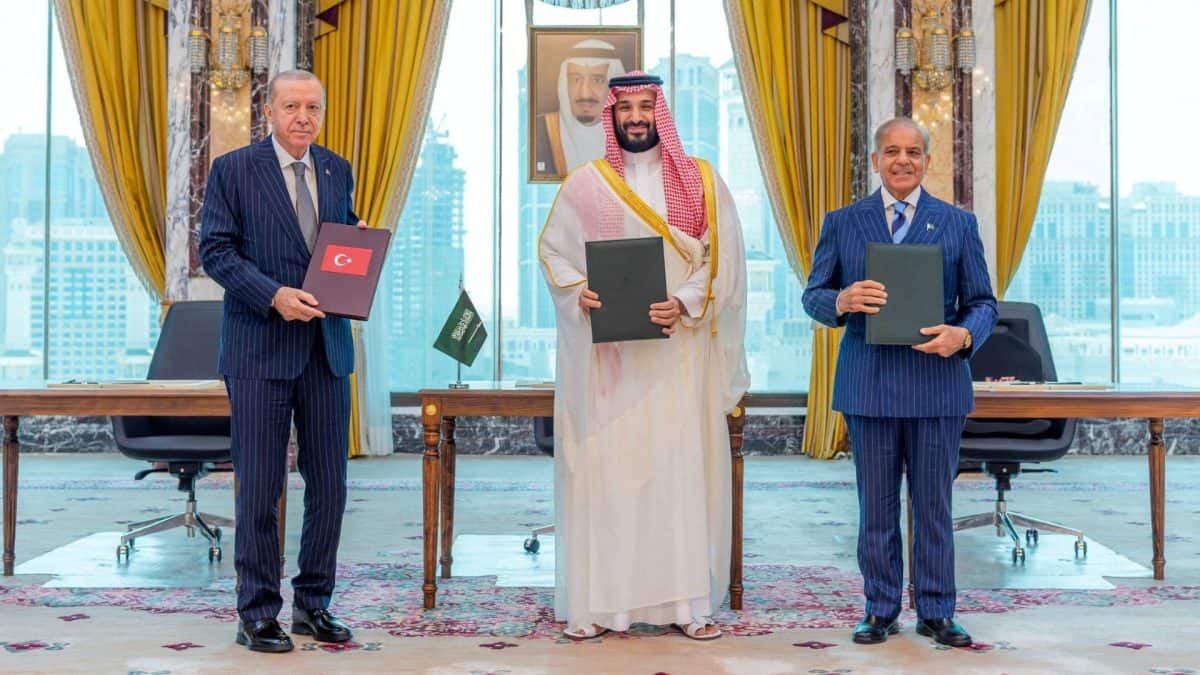
Three countries, Turkey, Saudi Arabia and Pakistan, signed a special agreement in Mecca.
They promised that if one of them is attacked, the others will treat it as an attack on everyone.
Some people call this a 'Muslim NATO.'
But the agreement does not say exactly what kind of help each country would give.
Saudi Arabia wants the pact as security insurance.
Pakistan wants to become more important on the world stage.
Turkey wants more influence in the region.
The agreement makes Iran, a powerful neighbour of two of the countries, think carefully about its next moves.
It also shows that some countries no longer want to depend only on the United States for their safety.
Whether the pact will really work when a crisis comes is still unknown.

Turkey, Saudi Arabia and Pakistan signed the Mecca Joint Defence Agreement on August 7, declaring an armed attack on any one to be an attack on all.
The pact is being described in some quarters as the emergence of a 'Muslim NATO,' though it lacks a clear concept of assistance.
Saudi Arabia sees the pact as security insurance, Pakistan as strategic elevation, and Turkey as strategic influence.
Analysts warn the Article 5-type commitment could create alliance dilemmas and entrapment, especially with Iran as Turkey's and Pakistan's neighbour and economic partner.
The signatories describe the pact as defensive and not directed against a particular country, though Iran would be the most important outside power watching its evolution.
- Who
- Turkey, Saudi Arabia and Pakistan
- What
- Signed the Mecca Joint Defence Agreement, a collective defence pact declaring an armed attack on any one member as an attack on all
- Where
- Mecca
- When
- August 7
- Why
- To hedge against uncertainty over US security guarantees and to pursue each country's strategic interests: insurance for Saudi Arabia, strategic elevation for Pakistan, and strategic influence for Turkey
Pact Supporters
Pact Skeptics
Nature of the pact
Pact Supporters
The pact represents the emergence of a 'Muslim NATO,' a genuine collective defence alliance that strengthens deterrence.
Pact Skeptics
The 'Muslim NATO' label is premature; the agreement lacks a clear concept of assistance and does not yet bear the credentials to equate it with NATO.
Relation to Iran
Pact Supporters
The pact is purely defensive and not directed against a particular country; Saudi Arabia has invested effort in restoring relations with Tehran.
Pact Skeptics
All three signatories are Sunni-majority states and Iran is the region's principal Shia power, creating a sectarian geometry that complicates Iranian calculations.
Relationship with the US
Pact Supporters
The pact is not inherently anti-US; Washington may welcome regional partners assuming greater responsibility for their security.
Pact Skeptics
The agreement is a hedge against American uncertainty, reflecting belief that US power may not always arrive when or where Riyadh requires.
Key facts
- Agreement
- Mecca Joint Defence Agreement
- Signatories
- Turkey, Saudi Arabia, Pakistan
- Date signed
- August 7
- Location
- Mecca
- Key provision
- Armed attack on any one member treated as attack on all (Article 5-type commitment)
- Unofficial label
- "Muslim NATO"
- Saudi motivation
- Security insurance
- Pakistan motivation
- Strategic elevation
- Turkey motivation
- Strategic influence
Sources
Related news
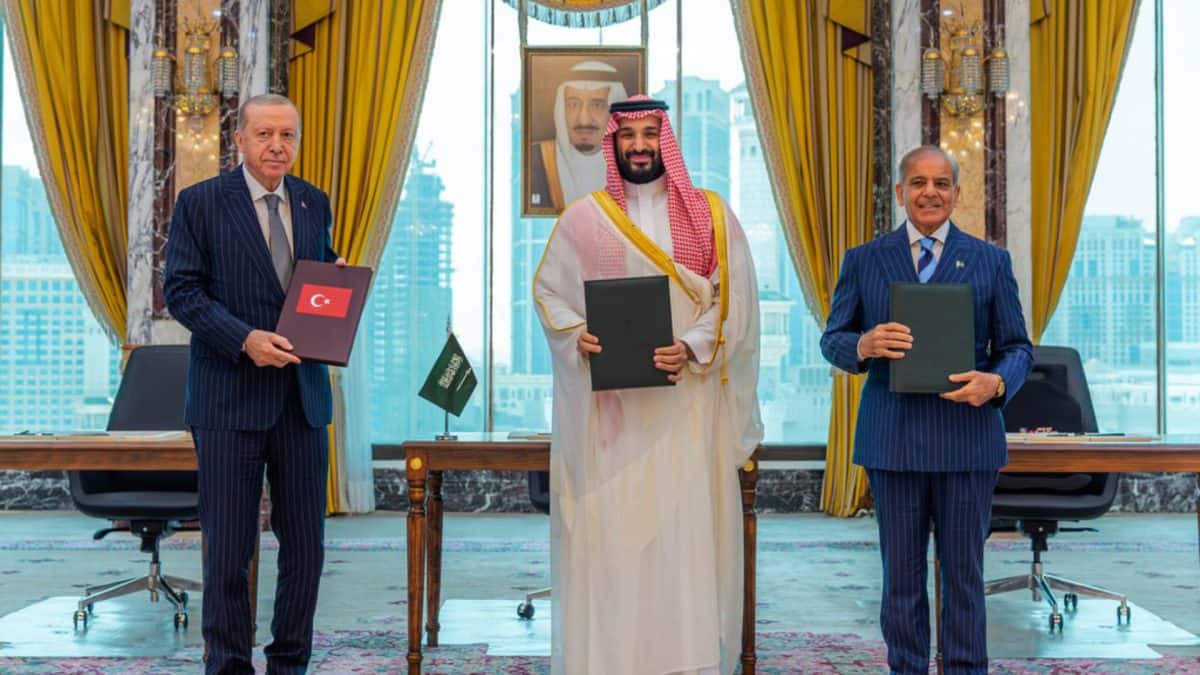
Mecca Pact Faces Questions Over Scope And Strategic Coherence

Mecca Joint Defence Pact Risks Remaining Rhetorical, Report Warns
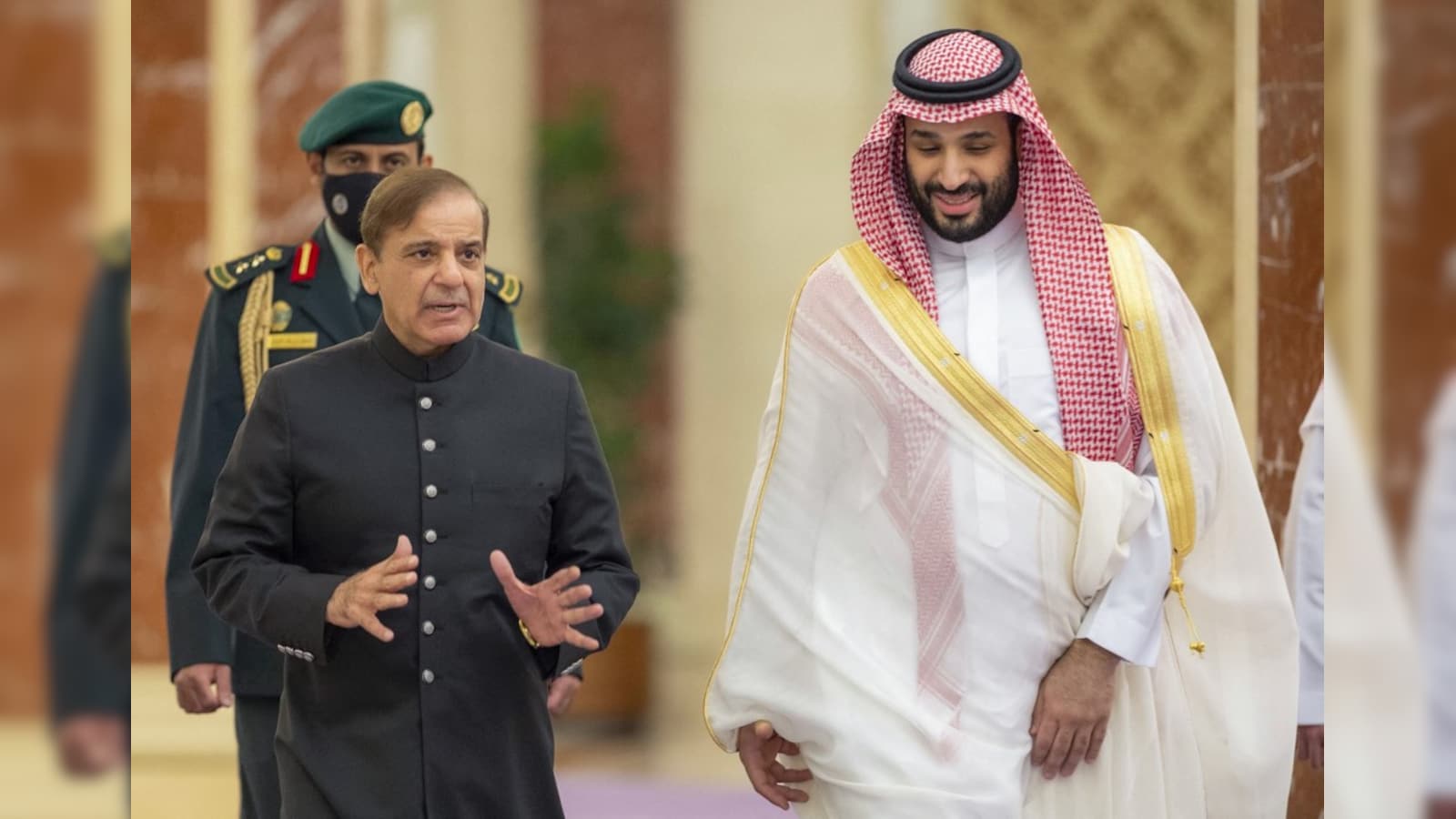
How Far Will Saudi Arabia Go for Pakistan's Mecca Pact?
Mecca defence pact risks wider conflicts, pre-1914 comparison

Saudi Arabia, Turkey, Pakistan Sign Mecca Defence Agreement
India assessing security implications of Pakistan-Saudi-Turkiye pact

Iran and Oman near deal on temporary Hormuz shipping route
Iran War Pushes Gulf States Toward Strategic Security Autonomy
Iran Plans Hormuz Shipping Corridor and Maritime Exclusion Zone

Iran Ties Hormuz Passage to End of US Threats

Indian Fuel Rates Mostly Steady Despite Crude Oil Rise