2 weeks ago
Mecca defence pact risks wider conflicts, pre-1914 comparison
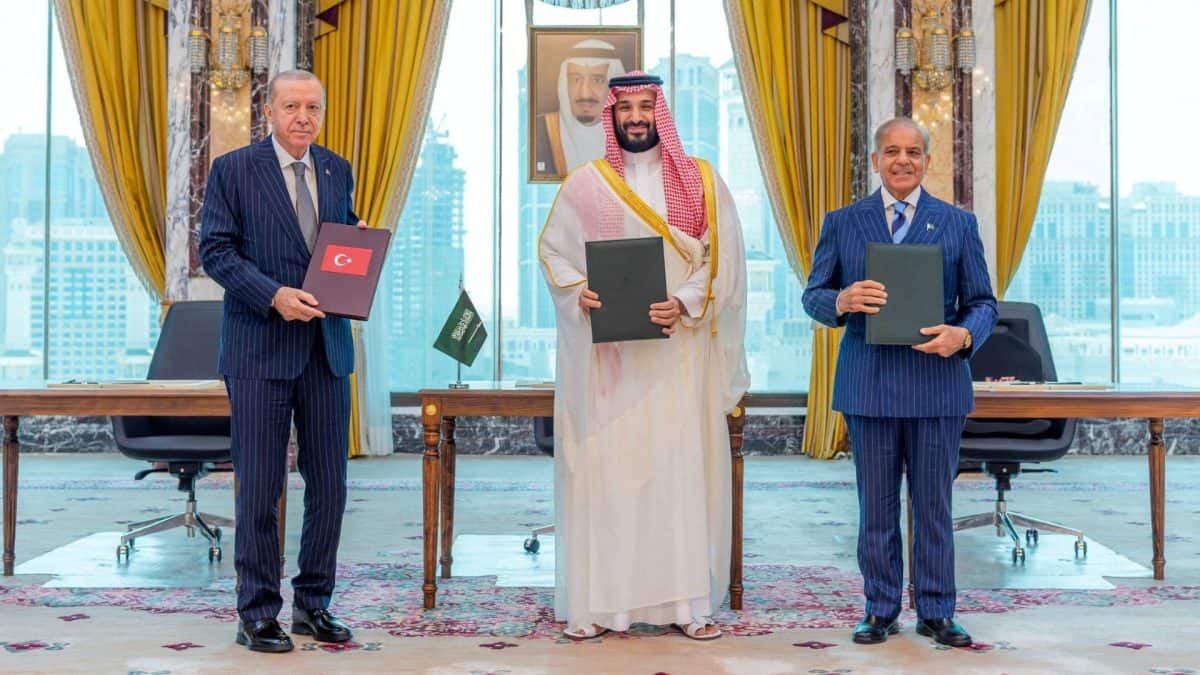
Three countries — Saudi Arabia, Turkey and Pakistan — made a special promise to help each other if one of them gets attacked.
They signed this agreement in a city called Mecca.
Saudi Arabia has a lot of money, Turkey has strong soldiers and flying drones, and Pakistan has the only nuclear weapons in the Muslim world.
The leaders think this promise will keep them safe.
But some people who study the world are worried.
They remember that a long time ago, many countries made similar promises to help each other.
When one small fight started in a place called Sarajevo, all the promises pulled many countries into a huge war.
The article calls this the old problem.
It could happen again in West Asia today.
So the new pact might actually make big wars more likely, not less.

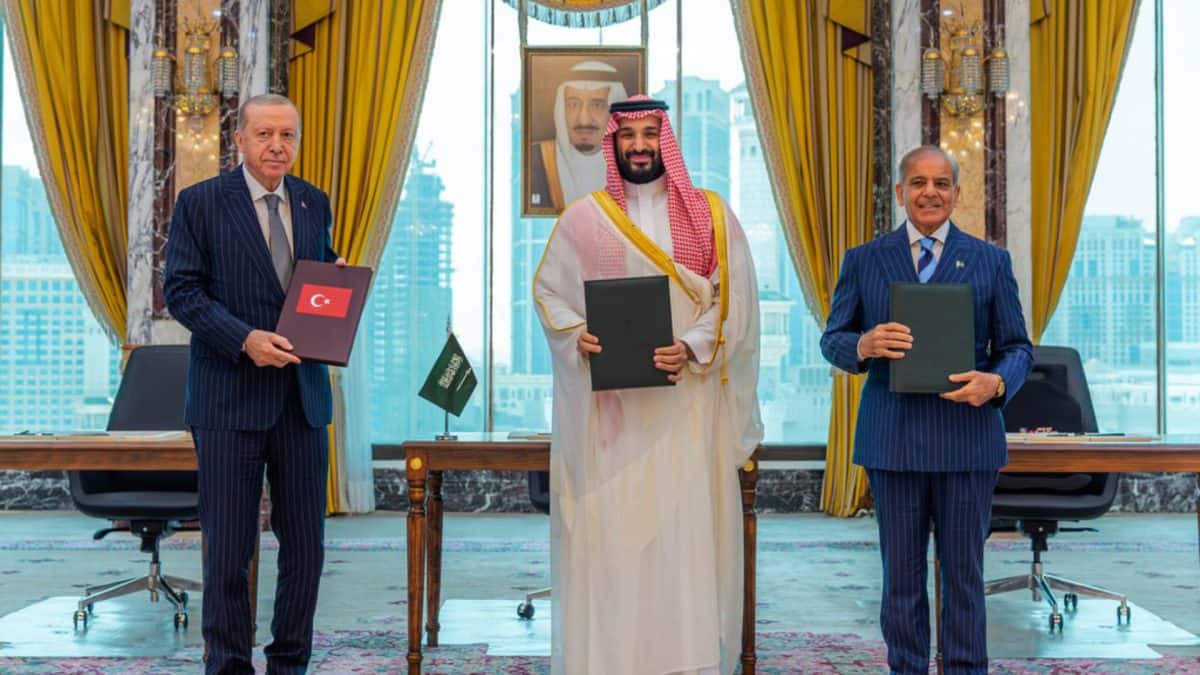
Saudi Arabia, Turkey and Pakistan signed a trilateral defence pact in Mecca declaring an armed attack on any one state an attack on all.
The pact builds on a bilateral Saudi-Pakistani mutual-defence understanding signed the previous year.
Saudi Arabia contributes money and political weight, Turkey brings NATO-standard forces and drones, while Pakistan supplies manpower and the Muslim world's only nuclear arsenal.
Riyadh sees the pact as insurance against possibly less dependable American security guarantees, especially after US and Israeli strikes on Iran in late February.
Analysts warn the interlocking alliance system could turn regional crises into wider conflicts, drawing parallels with pre-1914 Europe.
- Who
- Saudi Arabia, Turkey and Pakistan
- What
- Signed a trilateral mutual-defence pact in Mecca
- Where
- Mecca, Saudi Arabia, with implications for West Asia, India and NATO
- When
- Following a bilateral Saudi-Pakistani defence understanding signed the previous year (dates not specified)
- Why
- To hedge against less reliable American security guarantees, particularly after US and Israeli strikes on Iran in late February
Pact as deterrence (pro-pact view)
Pact as escalatory risk (critic view)
Purpose of the pact
Pact as deterrence (pro-pact view)
The Mecca agreement is meant to deter conflict and institutionalise credible commitments to stabilise the international system through predictable counter-balancing.
Pact as escalatory risk (critic view)
Risk of wider war
Pact as deterrence (pro-pact view)
Regularly describing the pact as a pre-1914-style trigger overstates the risk; command structures, automatic response mechanisms and integrated logistics remain rudimentary, so it is not an Islamic NATO in any operational sense.
Pact as escalatory risk (critic view)
Regional reaction
Pact as deterrence (pro-pact view)
The pact provides Saudi Arabia options without abandoning its Washington relationship, and practical limits mean neither Turkey nor Saudi Arabia would deploy against a nuclear-armed India.
Pact as escalatory risk (critic view)
Key facts
- Signatories
- Saudi Arabia, Turkey, Pakistan
- Agreement type
- Trilateral mutual-defence pact: attack on one is attack on all
- Location
- Mecca
- Saudi contribution
- Money, political weight, symbolic authority of the two holy mosques
- Turkish contribution
- NATO-standard forces, defence industry, combat-tested drones
- Pakistani contribution
- Manpower, operational experience, only nuclear arsenal in the Muslim world
- Trigger context
- American and Israeli strikes on Iran in late February
- Historical comparison
- Pre-1914 European alliance system, Sarajevo analogy
Sources
Related news
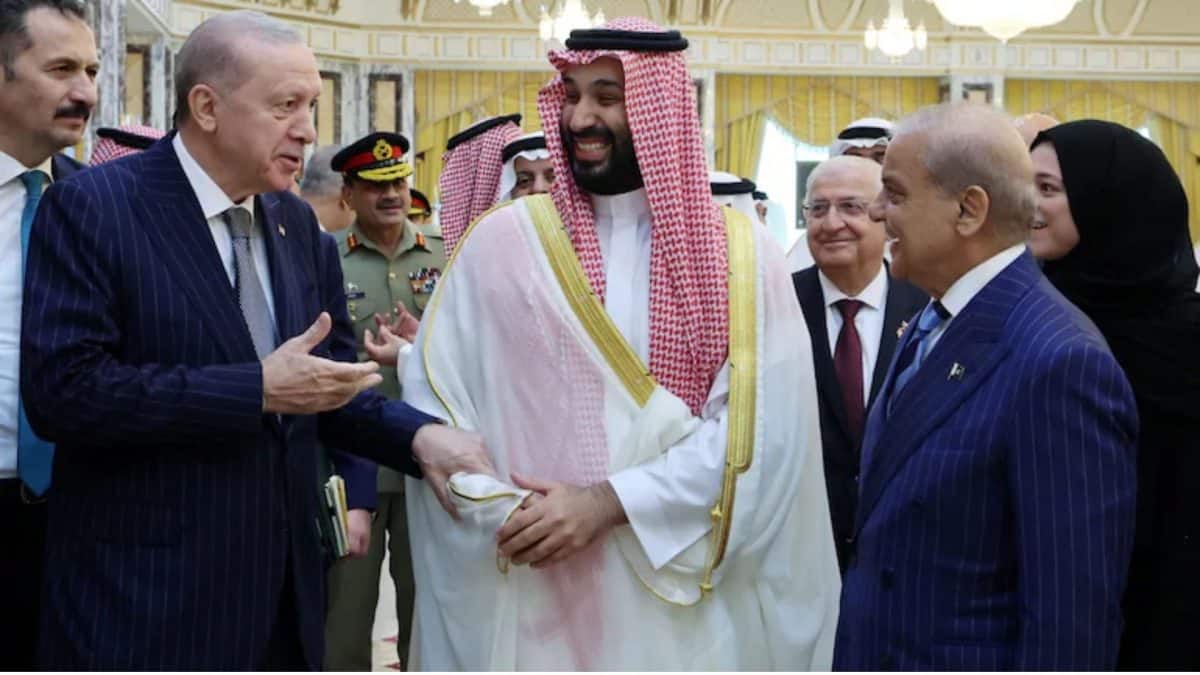
Turkey, Saudi Arabia and Pakistan Sign Mecca Defence Pact
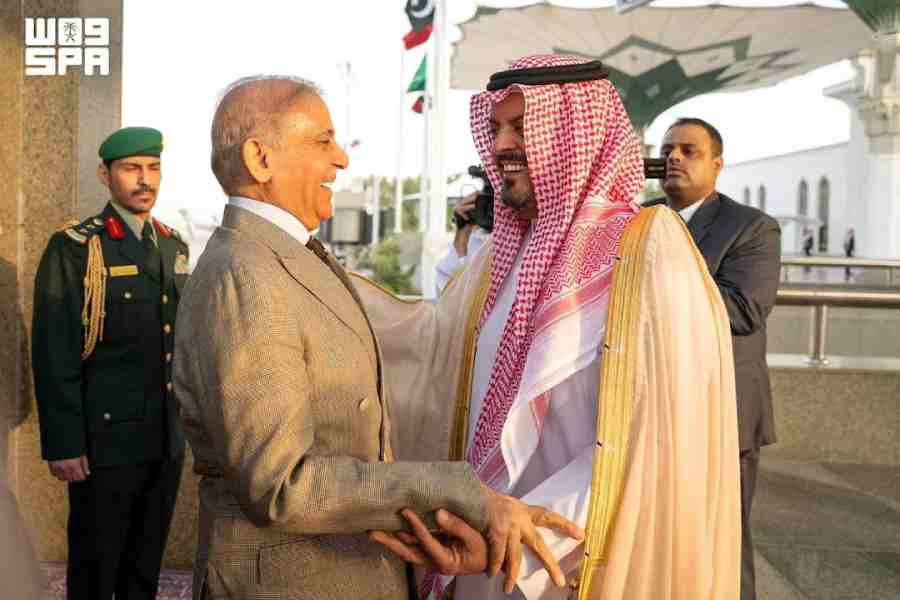
Pakistan, Saudi Arabia and Turkey Sign Mutual Defence Pact

Saudi Arabia, Turkey, Pakistan Sign Mecca Defence Agreement
India has no reason to fear Saudi-Turkey-Pakistan Mecca pact
India's Response to Mecca Pact Faces Strategic Test

Mecca Joint Defence Pact Risks Remaining Rhetorical, Report Warns
AI, Robotics and the Human Future of Warfare

Russia Says U.S. Missile Deployment to Norway Undermines Arms Talks
Mecca Pact Faces Questions Over Scope And Strategic Coherence
EU Unveils Greenland Investment Plan Amid Trump’s Control Push
Putin Meets U.S. Envoys as Ukraine Peace Talks Stall