

3 weeks ago
Mecca Joint Defence Pact Risks Remaining Rhetorical, Report Warns

Three countries — Saudi Arabia, Pakistan and Turkey — made a special promise called the Mecca Joint Defence Agreement.
They promised that if one of them is attacked, it counts as an attack on all three.
That sounds a lot like NATO, where countries agree to protect each other.
But experts say the promise is very vague, so nobody really knows if the countries would actually fight for each other.
The three countries do not share the same enemy, which makes the alliance hard to use.
For example, Iran has attacked Saudi Arabia with missiles, but Pakistan did not join the fight.
Saudi Arabia also works with Israel in secret, even though Turkey and Pakistan have their own complicated ties with Iran.
The countries say the pact will help them share secrets and build weapons together.
Experts call it more of a backup plan than a strong alliance like NATO, a way to feel safer in a part of the world that is changing fast.

Saudi Arabia, Pakistan and Turkey signed the Mecca Joint Defence Agreement on August 7 in Mecca, proclaiming a NATO-like principle of collective defence.
The pact declares that any armed attack against any one of the three states shall be regarded as an attack against them all, but analysts say it lacks a single shared threat.
A report by Bulgaria-based Modern Diplomacy warns the vague commitments risk remaining rhetorical, with no clear obligation for any country to go to war if another member is attacked.
Pakistan deployed troops in Saudi Arabia during Iranian attacks but did not directly join the conflict, casting doubt on the pact's credibility.
The pact will boost defence cooperation, intelligence-sharing and joint production of weaponry, but is seen as a 'backup plan' and 'a far cry' from a NATO-style alliance.
- Who
- Saudi Arabia, Pakistan and Turkey, the three signatory states
- What
- Signed the Mecca Joint Defence Agreement, a trilateral collective defence pact declaring that an armed attack on one member is regarded as an attack on all three
- Where
- Mecca, Saudi Arabia
- When
- August 7 (year not stated in the articles)
- Why
- As a hedge against a changing regional order, amid Iranian missile strikes on Saudi territory and Israeli military manoeuvres, and growing doubt in Riyadh about the reliability of US security guarantees
Backers of the Pact
Critics of the Pact
Strength of the alliance
Backers of the Pact
The pact unites an oil-rich economic powerhouse, the only Islamic country with a nuclear weapon and a NATO member with the second-largest military, and will boost defence cooperation, intelligence-sharing and joint weapons production.
Critics of the Pact
The pact lacks a single shared threat and is framed in vague terms; its NATO-like pledge 'reads more like a political statement' than a strong deterrent, and it is 'a far cry' from a NATO-style alliance.
Credibility of collective defence
Backers of the Pact
The agreement proclaims the NATO-like principle that an armed attack against any one of the three states is regarded as an attack against them all, intended to deter adversaries.
Critics of the Pact
Past conduct raises doubts: Pakistan deployed troops in Saudi Arabia during Iranian attacks but stopped short of direct military engagement, and the Saudis did not help Pakistan when it went to war with Taliban-ruled Afghanistan.
Key facts
- Agreement
- Mecca Joint Defence Agreement
- Signatories
- Saudi Arabia, Pakistan, Turkey
- Signed
- August 7, in Mecca, Saudi Arabia
- Core principle
- Any armed attack against one of the three states shall be regarded as an attack against them all (NATO Article 5-like)
- Planned cooperation
- Defence cooperation, intelligence-sharing, joint production of weaponry
- Key weakness
- No single shared threat; vague obligations, no clear trigger for a military response
- Assessment
- Described as a 'backup plan' and 'a far cry' from a NATO-style alliance
- US nuclear deal
- Riyadh signed a civil nuclear cooperation agreement with Washington that excludes the IAEA's Additional Protocol
Quotes
Report author
Author of the Modern Diplomacy report
“"The agreement states that an attack on one member is considered an attack on all three — language similar to Article 5 of NATO."”
 thehansindia.com
“"Simply declaring that ‘an attack on one is an attack on all’ does not, on its own, create a strong deterrent."”
thehansindia.com
Sources

Related news
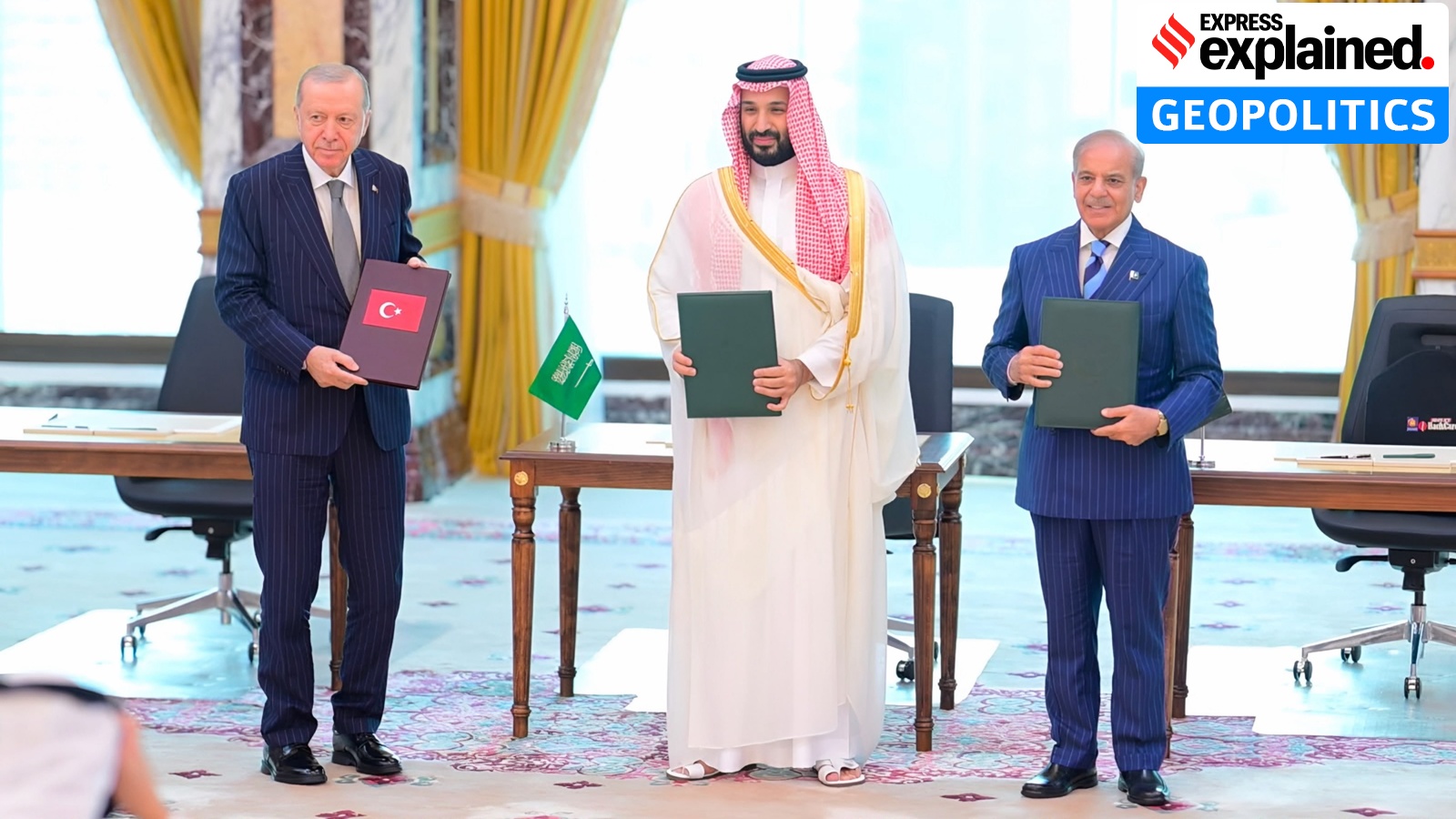
Saudi Arabia, Turkey, Pakistan Sign Mecca Joint Defence Agreement
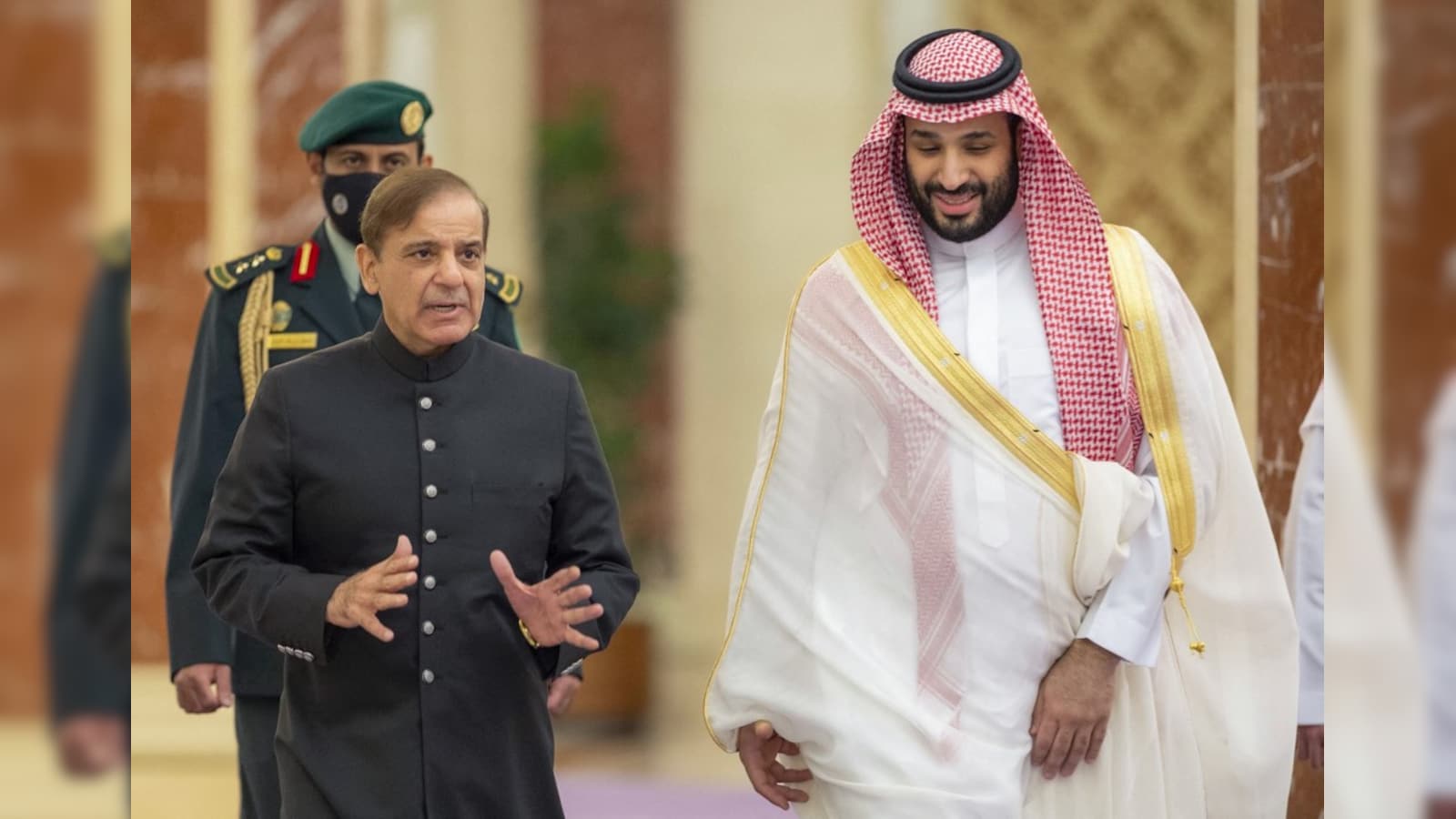
How Far Will Saudi Arabia Go for Pakistan's Mecca Pact?

Saudi Arabia, Turkey, Pakistan Sign Mecca Joint Defence Agreement
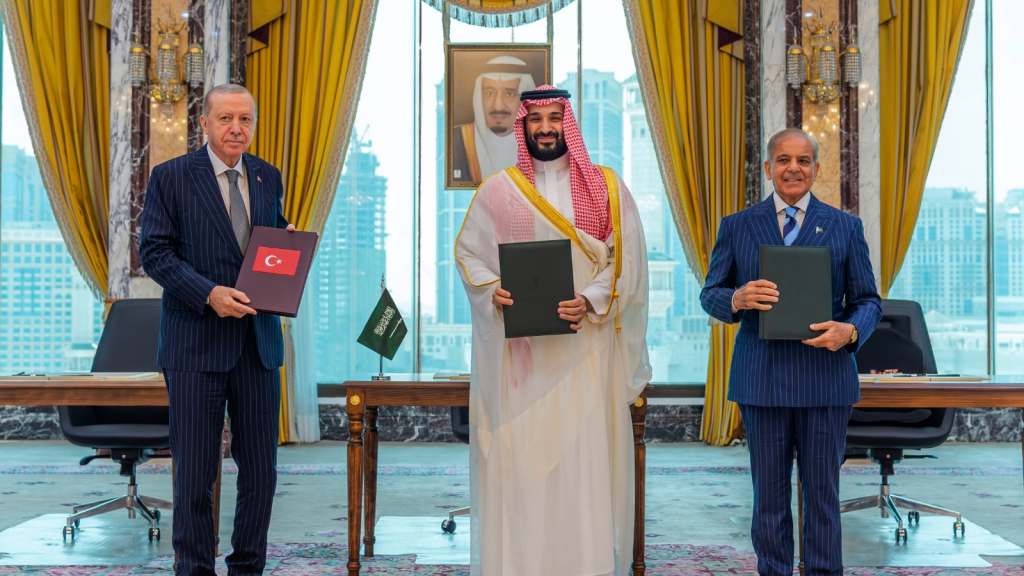
Mecca Defence Pact Raises Questions Over Its Intended Threat
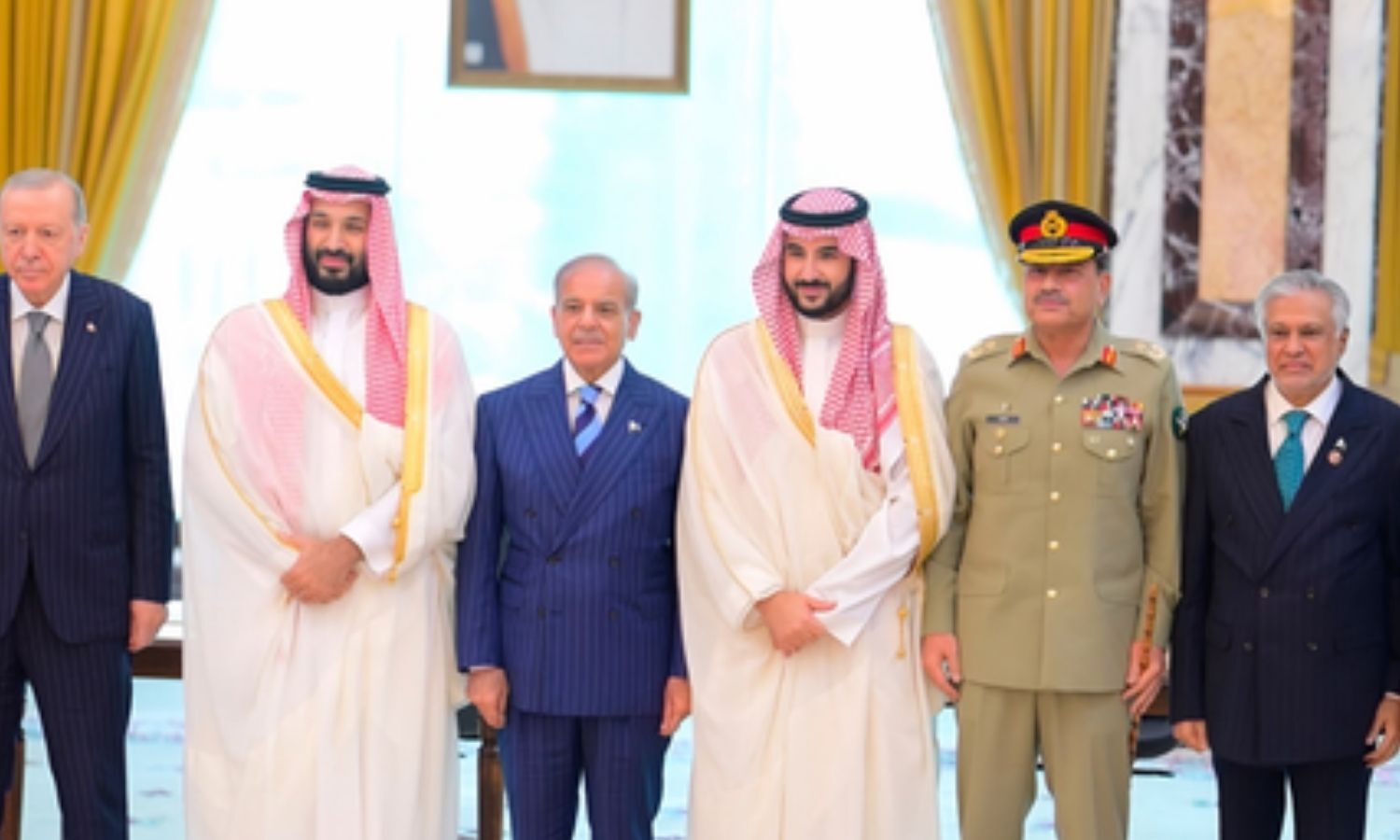
Mecca Defence Pact Faces Questions Over Its Political Cohesion
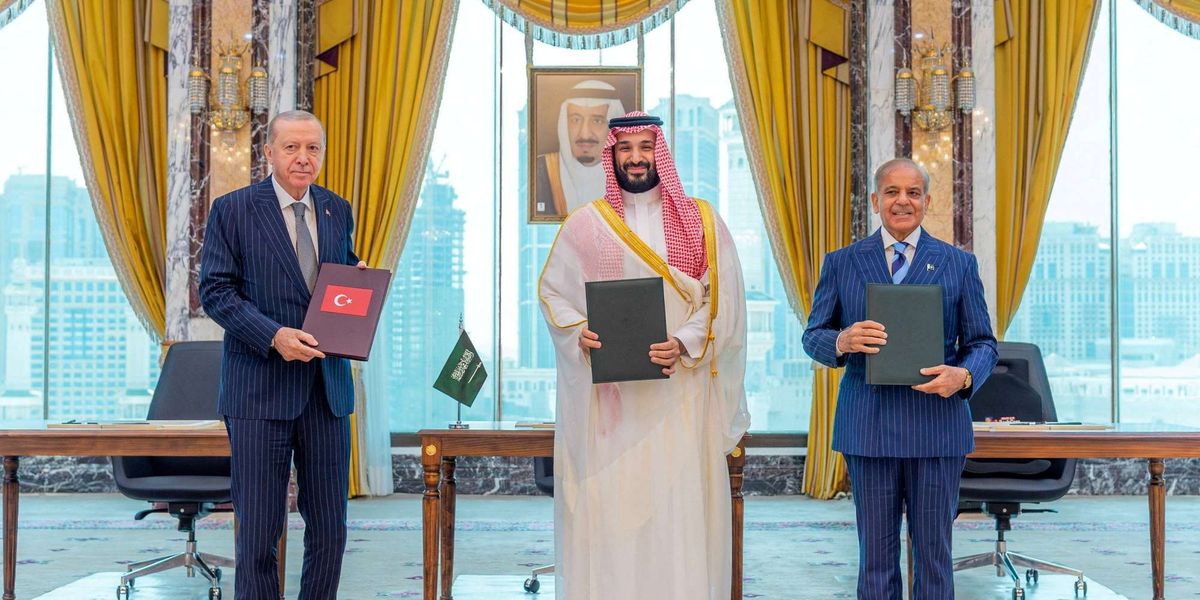
Saudi Arabia, Turkey and Pakistan sign Mecca Joint Defence Agreement
India Secures Uranium From Uzbekistan, Australia Amid Nuclear Expansion
Six Months Into Iran War, Political and Economic Costs Mount
IAEA Chief Backs Trump’s Proposed Meeting With Kim Jong Un
Six Months Into Iran War, No Winners and Global Costs
US-Iran War Deepens Tehran Economic Pain as Hormuz Diplomacy Continues
