2 weeks ago
Centre Bars States From Levying Taxes on Mineral Rights
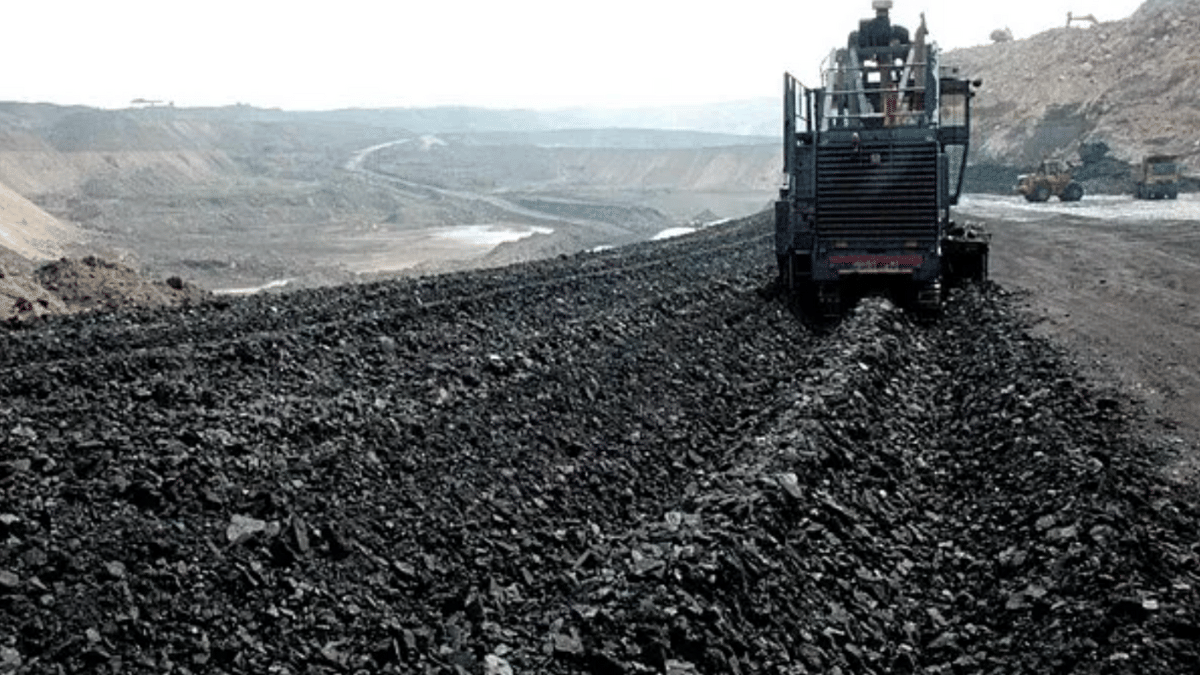
India has lots of rocks and minerals, like coal and iron, that companies dig out of the ground.
Those companies have to pay money to the government for mining.
Some state governments were charging many different extra taxes on top of the regular payments.
The companies said this made mining too expensive, so mining in India did not grow much.
To fix this, the central government in New Delhi passed a new law that stops states from charging those extra taxes on minerals.
The government says this will make mining cheaper and help the country grow stronger.
But opposition leaders are not happy about the new law.
In 2024, the Supreme Court, India's highest court, had said that states are allowed to charge these taxes.
The opposition says the new law goes against that court decision and takes away power from the states.
They also think the law was passed too quickly without a proper discussion.

Lok Sabha passed the Mines and Minerals (Development and Regulation) Amendment Bill 2026 in under 10 minutes without discussion, amid Opposition disruptions.
The bill bars state governments from imposing tax, cess or other levies on mineral rights and mineral-bearing lands through a new Section 9D in the MMDR Act, 1957.
The government says multiple and non-uniform state levies made mining commercially unviable, with the sector contributing less than two percent to India's economy.
The Opposition says the bill overturns the Supreme Court's July 2024 nine-judge bench judgement in Mineral Area Development Authority v. Steel Authority of India, which upheld states' power to tax mineral rights.
Congress MP Manish Tewari said the bill has grave implications for the federal balance of power and demanded it be referred to a Joint Parliamentary Committee for proper discussion.
The bill deems state levies not recovered before its commencement invalid, while amounts already deposited with states will not be refunded.
- Who
- The Indian central government and Lok Sabha, state governments, mining companies, and opposition leaders including Congress MP Manish Tewari
- What
- Lok Sabha passed the Mines and Minerals (Development and Regulation) Amendment Bill 2026, which bars states from imposing tax, cess or other levies on mineral rights and mineral-bearing lands
- Where
- New Delhi, India — Lok Sabha
- When
- August 2026 (passed on a Wednesday by Lok Sabha)
- Why
- To remove the heavy, multiple and unpredictable state levies that made mining commercially unviable and slow economic growth; mining currently contributes less than two percent to India's economy
Centre/Government
Opposition
State taxation of mineral rights
Centre/Government
Multiple, non-uniform and unpredictable state levies made mining commercially unviable; a centralised fiscal regime under the MMDR Act provides certainty, stability and predictability, boosting a sector that contributes less than 2% to the economy.
Opposition
The bill overturns the Supreme Court's July 2024 judgement in Mineral Area Development Authority v. Steel Authority of India, which upheld states' power to tax mineral rights, and encroaches on states' revenue under Entries 49 and 50 of the State List, violating the basic principle of federalism.
Parliamentary scrutiny
Centre/Government
The government passed the amendment in under 10 minutes to quickly unshackle the mining sector from a complex tax regime.
Opposition
Manish Tewari and other Opposition members said the bill has grave implications for the federal balance of power and should be referred to a Joint Parliamentary Committee and not passed without proper discussion in the House.
Key facts
- Bill
- Mines and Minerals (Development and Regulation) Amendment Bill 2026
- Legislation amended
- Mines and Minerals (Development and Regulation) Act, 1957 (MMDR Act)
- Passed by
- Lok Sabha, in under 10 minutes without discussion, amid Opposition disruptions
- Key provision
- New Section 9D bars states from imposing tax, cess or other levies on mineral rights and mineral-bearing lands
- Mining's share of India's economy
- Less than 2 percent
- 2024 Supreme Court ruling
- Nine-judge bench, 8:1 majority: royalty is not a tax; states can levy tax on mineral rights and mineral-bearing land (Mineral Area Development Authority v. Steel Authority of India)
- Treatment of prior levies
- Levies not recovered before the Act commences are deemed invalid; amounts already deposited with states will not be refunded
Sources
Related news
India Bill Bars States From Taxing Mineral Rights and Land

India Bill Bars States From Taxing Mines and Mineral Rights
India's mining tax overhaul reignites Centre-state tussle over revenue
Mineral Rights Amendment Bill Sparks States' Revenue Concerns

Parliament Passes Mines and Minerals Amendment Bill Curbing State Levies
Lok Sabha Passes Mineral Bill Curbing State Taxing Powers

Supreme Court Collegium Recommends New Rajasthan High Court Chief Justice

JudgeGPT Trial Shows AI’s Potential to Speed Judicial Justice
Debate Grows Over Bhumi Pujan At Indian State Events

Letter Urges Zohran Mamdani to Reconsider Mohan Bhagwat
CJI Says Rajasthan Acting Chief Justice Allegations Under Review