6 days ago
CJI Says Rajasthan Acting Chief Justice Allegations Under Review
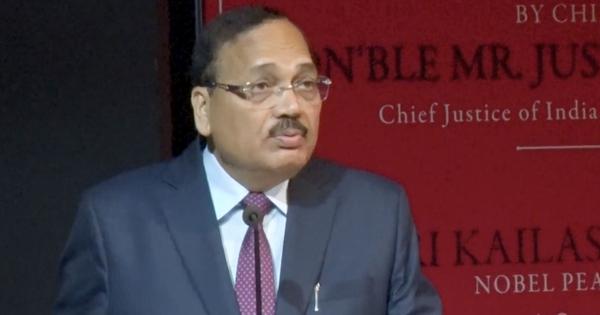
A Supreme Court judge made serious complaints about the acting head of the Rajasthan High Court.
He said court cases may have been listed in a way that helped wealthy people.
He also alleged that people close to the acting chief justice received certain administrative positions.
The judge asked India’s Chief Justice to replace him quickly.
The Chief Justice of India said the complaints are being examined.
He also said the accused judge must be allowed to explain his side.
The allegations cannot automatically be treated as proven facts.
A decision about a possible transfer will come after the materials and response are reviewed.

Chief Justice of India Surya Kant said allegations against Rajasthan Acting Chief Justice Sanjeev Prakash Sharma are being examined at the appropriate level.
Supreme Court Justice Sandeep Mehta alleged that Sharma manipulated case listings and used his position to secure administrative appointments for people close to him.
Mehta urged Kant to replace Sharma immediately and appoint a chief justice from another High Court.
Kant said Sharma must receive a fair opportunity to respond before any conclusions are reached.
Kant said a decision on Sharma’s transfer would follow consideration of Sharma’s response and the material submitted by Mehta.
- Who
- Chief Justice of India Surya Kant, Rajasthan Acting Chief Justice Sanjeev Prakash Sharma, and Supreme Court Justice Sandeep Mehta are central to the matter.
- What
- Allegations concerning Sharma’s case-listing decisions and administrative appointments are being examined, with a possible transfer under consideration.
- Where
- The allegations concern the Rajasthan High Court, including Lok Adalats in Jaipur and Ajmer.
- When
- Kant addressed the matter on Wednesday; Mehta’s letters were dated August 2, August 10, and August 17, and Sharma returned to the Rajasthan High Court in 2025.
- Why
- Mehta alleged that Sharma’s conduct harmed the institution and sought his immediate replacement.
Case for Immediate Action
Due Process Before Action
Whether Sharma should be replaced immediately
Case for Immediate Action
Justice Sandeep Mehta urged the Chief Justice of India to replace Sharma immediately, saying continued inaction was against the institution’s interests.
Due Process Before Action
Surya Kant said no conclusion should be reached solely because allegations were made and that Sharma must first be given a fair opportunity to respond.
Status of the allegations
Case for Immediate Action
Mehta alleged that Sharma manipulated case listings to favour wealthy litigants and used his position to secure appointments for people close to him.
Due Process Before Action
Kant said the allegations cannot be adjudicated in the public domain and must be examined alongside Sharma’s response before being treated as established findings.
Possible transfer
Case for Immediate Action
Mehta sought the appointment of a chief justice from another High Court and warned about the consequences of leaving Sharma in place.
Due Process Before Action
Kant said any transfer decision would be made only after reviewing Sharma’s response and the material submitted by Mehta.
Key facts
- Chief Justice of India
- Surya Kant
- Judge facing allegations
- Sanjeev Prakash Sharma, Acting Chief Justice of the Rajasthan High Court
- Complainant
- Supreme Court Justice Sandeep Mehta
- Allegations
- Manipulation of case listings and appointments of people close to Sharma to administrative posts
- CJI’s position
- Sharma must receive a fair opportunity to respond before any conclusion
- Possible action
- A decision on Sharma’s transfer will follow examination of both sides’ materials
- Relevant locations
- Rajasthan High Court; Lok Adalats in Jaipur and Ajmer
Quotes
Surya Kant
Chief Justice of India
“The contents of the letters cannot be adjudicated in the public domain and that the concerned judge must be given a fair opportunity to place his response before any conclusion is reached.”
 scroll.in
“The fact that allegations have been made, therefore, cannot by itself be treated as a finding against the judge.”
scroll.in
Sources
Related news

Justice Mehta Seeks Rajasthan High Court Leadership Change

Supreme Court Collegium Recommends New Rajasthan High Court Chief Justice
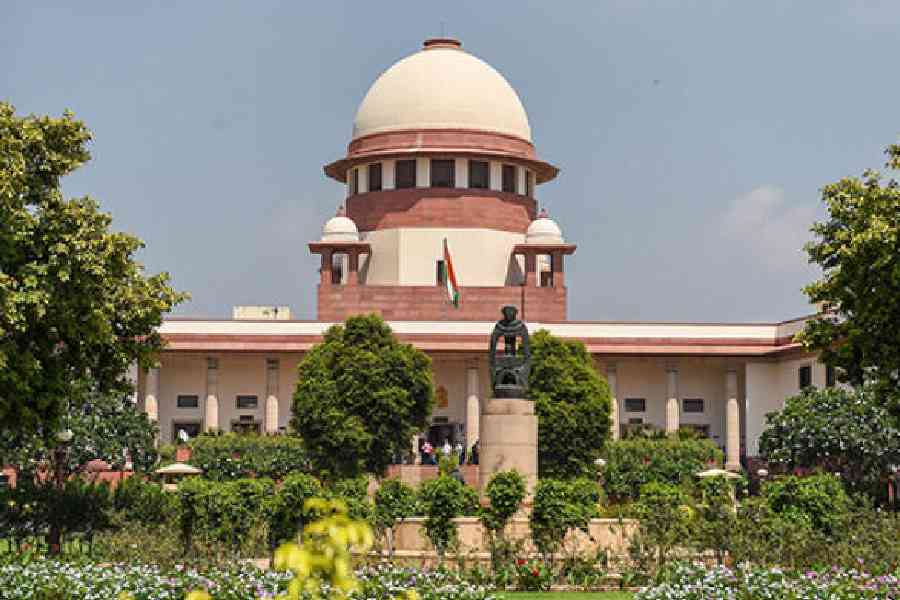
Mehta Seeks Sharma’s Transfer, Full-Time Rajasthan Chief Justice
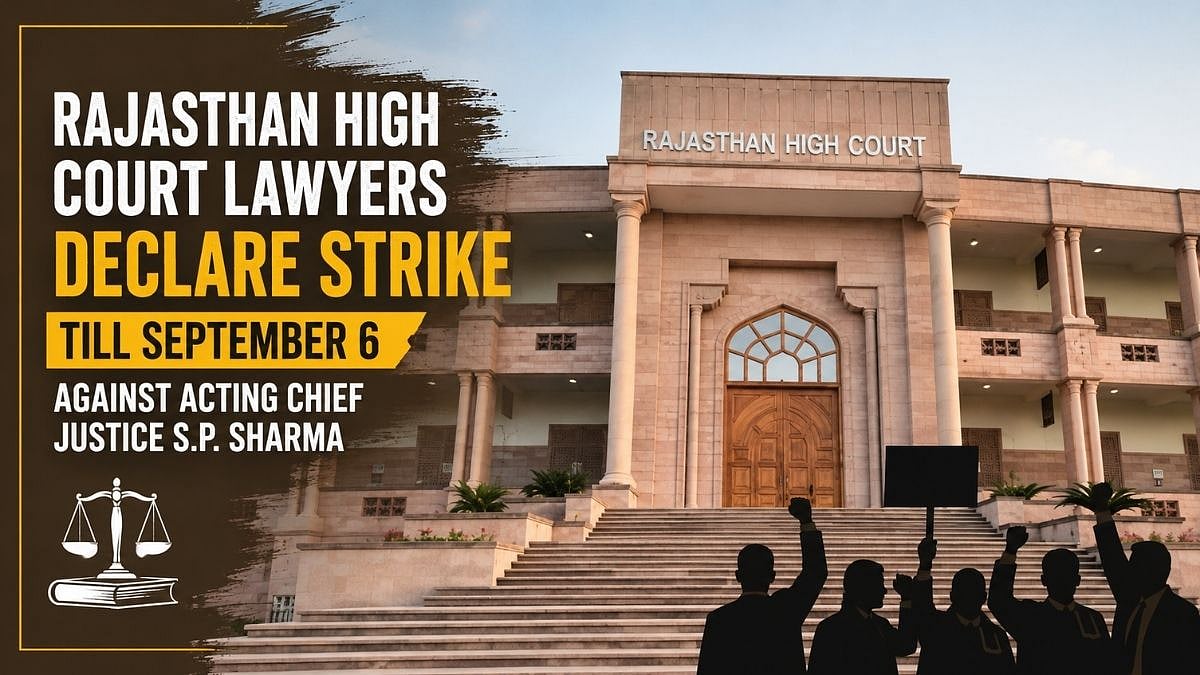
Rajasthan Lawyers Strike Over Allegations Against Acting Chief Justice
Rajasthan Lawyers Demand Action Over Acting Chief Justice Allegations
CJI Seeks Responses as Collegium Weighs High Court Appointments
JudgeGPT Trial Shows AI’s Potential to Speed Judicial Justice
Debate Grows Over Bhumi Pujan At Indian State Events
Letter Urges Zohran Mamdani to Reconsider Mohan Bhagwat