1 week ago
Ahluwalia Urges Urgent Judicial and Labour Reforms
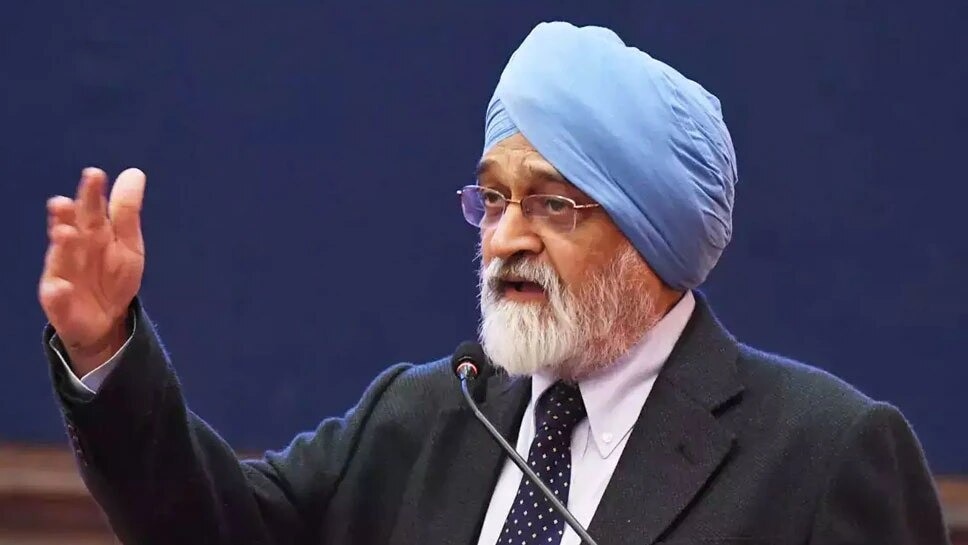
Montek Singh Ahluwalia says India’s courts need major and urgent changes.
He believes the central government cannot solve the problem by itself.
He suggested that the Supreme Court may need to lead the reform.
Many cases have remained unresolved for more than 20 years.
Another government adviser called the judicial system a major obstacle to faster economic growth.
Ahluwalia also discussed changes to labour laws.
He said the government combined 27 central labour laws into four, but the practical changes were limited.
He encouraged states to make their labour rules more attractive to companies.
He also said businesses should work more with state governments because many business rules come from the states.

Montek Singh Ahluwalia described India’s judicial system as being in an “unbelievable mess” and called for urgent reform.
Ahluwalia said the central government had limited power to fix the judiciary and suggested the Supreme Court should lead reform efforts.
More than 11.7 lakh cases had reportedly been pending for over 20 years as of July 16, 2026, according to National Judicial Data Grid data.
Ahluwalia said labour-law changes consolidated 27 central laws into four but made limited substantive changes, including raising a workforce threshold from 100 to 300.
He urged states to use their flexibility to adopt more investor-friendly labour rules and encouraged businesses to lobby state governments.
- Who
- Economist Montek Singh Ahluwalia, along with comments from Sanjeev Sanyal, Arjun Ram Meghwal, and Justice M. M. Sundresh.
- What
- Ahluwalia called for urgent judicial reform and discussed the scope of recent labour-law changes and the role of state governments.
- Where
- India, across the Supreme Court, High Courts, and district and subordinate courts.
- When
- The article cites comments made in April and September of the previous year, and data reported as of July 16, 2026.
- Why
- Ahluwalia said judicial delays and limited labour-law changes affect India’s economic development, investment attractiveness, and business compliance.
Calls for deeper reform
Existing changes and institutional limits
Who should lead judicial reform?
Calls for deeper reform
Ahluwalia said the central government has limited ability to fix the judicial system and suggested that the Supreme Court should take the lead.
Existing changes and institutional limits
The article does not identify a specific alternative institutional plan, but notes that Ahluwalia was uncertain about who should take responsibility and said the reform must come from within the judiciary.
Assessment of labour-law reform
Calls for deeper reform
Ahluwalia argued that substantive changes to labour laws have been limited and noted that the 300-worker threshold largely restored an earlier position.
Existing changes and institutional limits
He also credited the Centre with giving states greater flexibility, allowing them to consider raising the threshold beyond 300 to attract investment.
Economic impact of the judiciary
Calls for deeper reform
Sanjeev Sanyal described the judicial system as the single biggest hurdle to India becoming a developed economy and growing rapidly.
Existing changes and institutional limits
The article presents no direct rebuttal, but reports that the government and courts are managing a large backlog, including more than 11 lakh cases pending for over 20 years.
Key facts
- Long-pending cases
- 11,73,509 cases had been pending for more than 20 years across India’s courts, based on National Judicial Data Grid data as of July 16, 2026.
- Supreme Court and High Courts
- 4,52,152 cases had been pending for more than two decades across these courts.
- Allahabad High Court
- It had the highest reported number of cases pending for more than 20 years, at 1,61,598.
- Overall case backlog
- Justice M. M. Sundresh said 4.81 crore cases were pending across India’s courts in April.
- Central labour laws
- The government reduced the number of central labour laws from 27 to four.
- Workforce threshold
- The threshold for requiring government permission before reducing a company’s workforce was raised from 100 to 300 workers.
- State flexibility
- States may seek to raise the threshold beyond 300 through their own laws, subject to the Centre agreeing.
Quotes

Montek Singh Ahluwalia
Economist commenting on judicial and economic reforms
“If I were in any state, I would say, look, if you want to be competitive and attract foreign investment, you should be able to say, 'Look, I'm better than Vietnam, better than Malaysia, and better than Indonesia. I should have comparable labour laws.’ So why don't we, as a state, raise the threshold from 300 to 1,000 or even 5,000?”
 businesstoday.in
“Quite honestly, the judicial system is in an unbelievable mess. Unfortunately, I don't think the central government can set it right. Given the system we have, that reform has to come out of the judiciary.”
businesstoday.in
Sources
Related news
More Supreme Court judges welcome, but wider reforms needed: experts

India's Tribunal Reforms Bill 2026 Targets Ease of Justice

JudgeGPT Trial Shows AI’s Potential to Speed Judicial Justice

India’s Tribunal Reforms Bill Leaves Quasi-Judicial Independence Concerns

Parliament Clears Tribunals Reforms Bill, 2026 Setting Up Commission

Supreme Court Collegium Recommends New Rajasthan High Court Chief Justice
Debate Grows Over Bhumi Pujan At Indian State Events

Letter Urges Zohran Mamdani to Reconsider Mohan Bhagwat