1 week ago
NASA Abandons Mission to Save Swift Telescope from Earth Crash
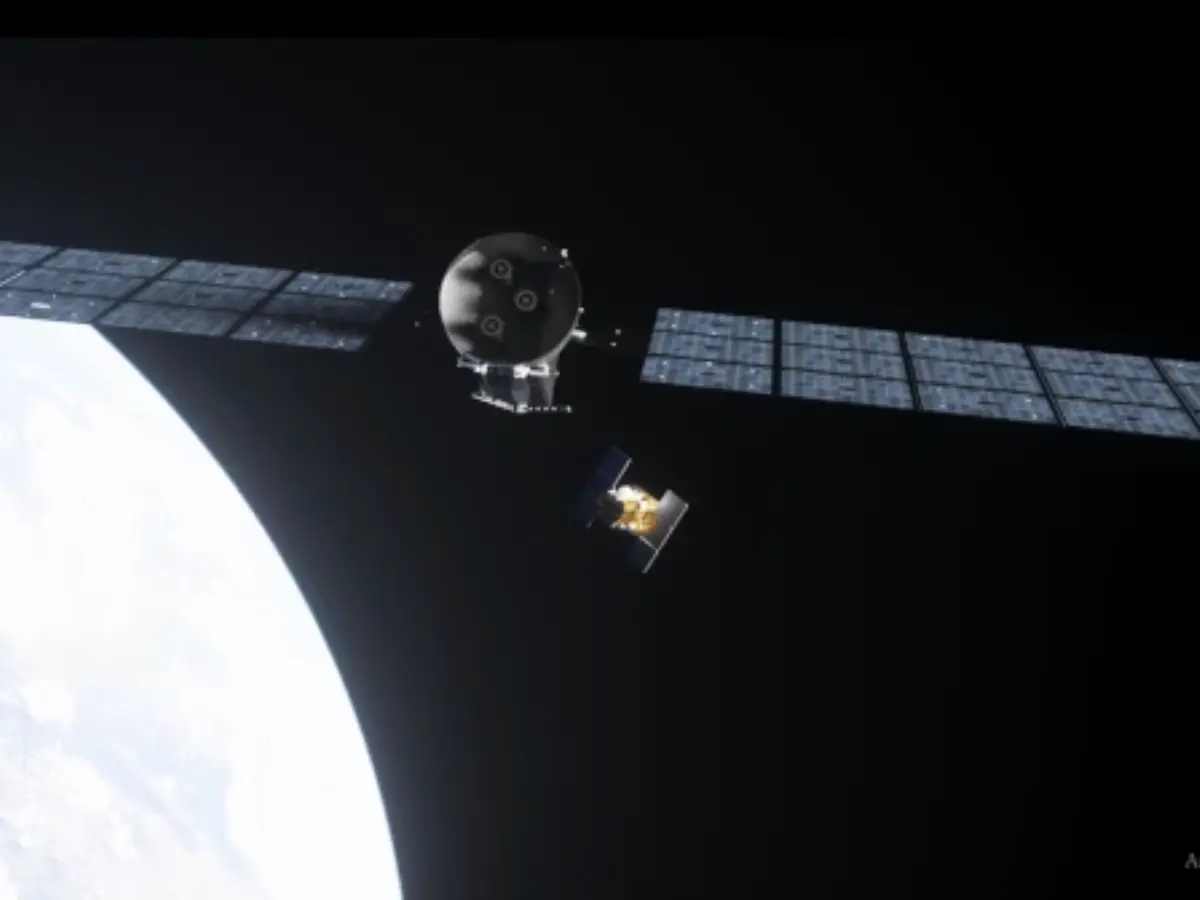
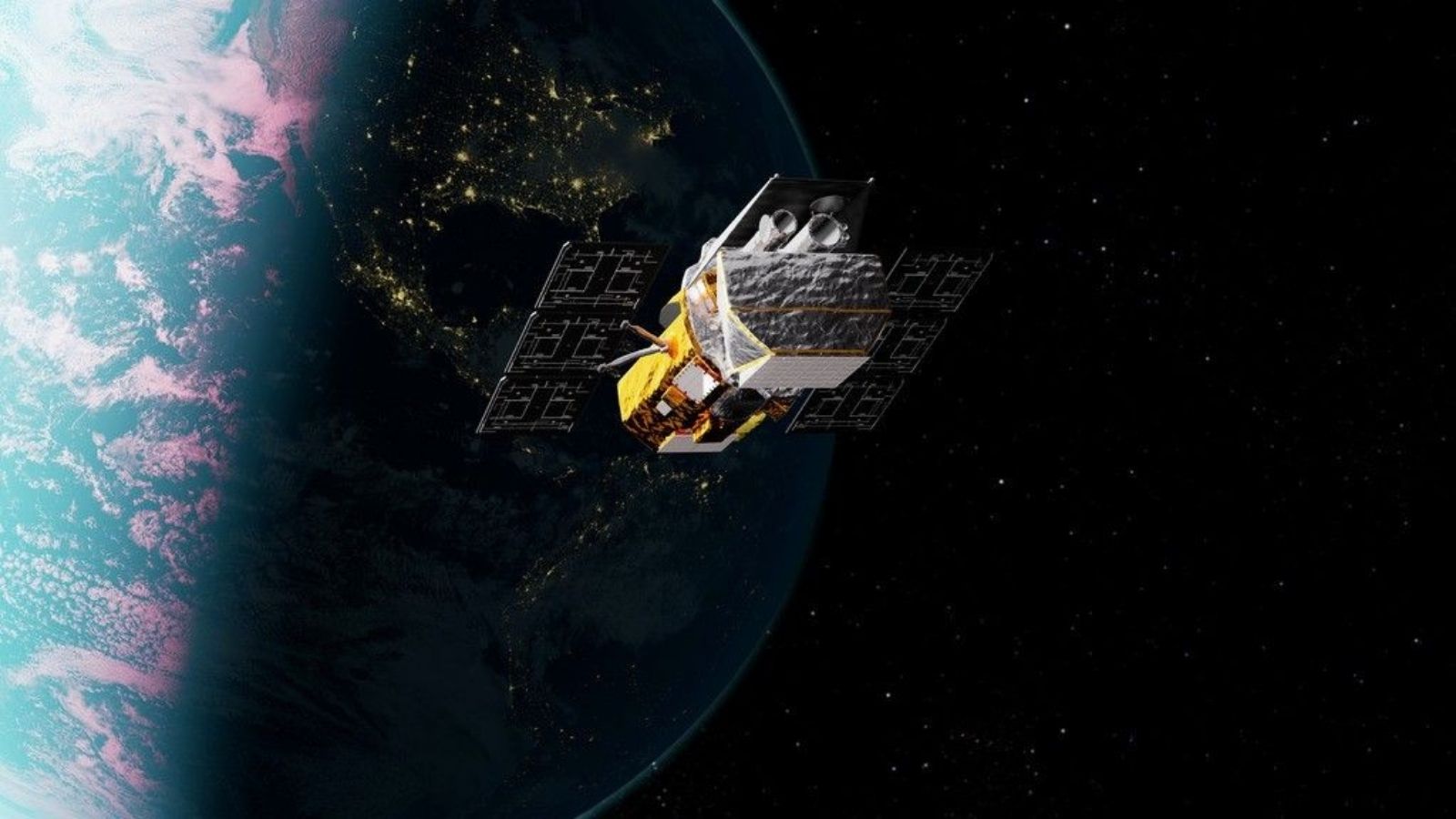
Swift is a space telescope that has watched powerful explosions called gamma-ray bursts since 2004.
It is now falling closer to Earth because its orbit is shrinking.
Solar storms and air drag have helped pull it down.
NASA wanted to save it before it fell too low to rescue.
A spacecraft called LINK was sent up on July 3 to grab Swift and move it higher.
LINK began spinning out of control and could not point properly.
NASA tried to fix LINK from the ground, but the rescue mission failed.
NASA says Swift will eventually come back down to Earth later this year.

NASA and Katalyst Space ended the LINK mission to capture and boost the Neil Gehrels Swift Observatory.
LINK, launched on July 3, entered an uncontrollable spin and developed continuing attitude-control problems.
NASA tried to slow LINK’s spin from Earth but could not restore reliable pointing and positioning.
Swift’s low-Earth orbit has decayed from about 600 kilometers to roughly 360 kilometers because of solar storms and atmospheric drag.
NASA says Swift will crash later this year, although it has not identified the exact impact area.
- Who
- NASA, Katalyst Space, the LINK spacecraft, and the Neil Gehrels Swift Observatory.
- What
- The planned mission to capture and raise Swift’s orbit was abandoned after LINK developed attitude-control problems.
- Where
- In low Earth orbit; NASA has not confirmed where Swift will fall.
- When
- LINK launched on July 3; the rescue mission was called off on Wednesday, and NASA says Swift will crash later this year.
- Why
- Swift’s orbit has rapidly decayed because of solar storms and atmospheric drag, while LINK could not maintain control.
Key facts
- Telescope launch
- The Neil Gehrels Swift Observatory was launched in 2004.
- Original orbit
- Swift was about 600 kilometers above Earth’s surface.
- Current reported altitude
- Its orbit had dropped to around 360 kilometers.
- Rescue spacecraft
- LINK was built by Katalyst Space for $30 million.
- Launch date
- LINK launched on July 3.
- Mission objective
- LINK was intended to capture Swift and carry it to a higher orbit.
- Mission outcome
- NASA and Katalyst Space concluded that capture and boosting would not occur.
- Expected end
- NASA says Swift will crash later this year, but has not specified the location.
Quotes
NASA Administrator Jared Isaacman
NASA Administrator
“Following continued monitoring and assessment of the LINK spacecraft, Katalyst Space and NASA together have concluded that due to ongoing attitude control issues, the mission will not include the capture and boost of NASA’s Neil Gehrels Swift Observatory.”
 wionews.com
“This is not the outcome we were working toward, but it does not change why this mission was worth attempting.”
wionews.com
Sources
Related news
NASA Abandons Swift Telescope Rescue After Booster Mission Fails

SpaceX Falcon 9 rocket stage believed to crash into Moon

SpaceX Falcon 9 Upper Stage Likely Crashes Into the Moon
NASA Orbiter Reveals 60-Foot Crater From SpaceX Rocket Impact
Stray SpaceX rocket believed to have slammed into Moon
NASA Launches Roman Telescope to Explore Cosmic Mysteries
Trump Honors Artemis II Crew, Establishes U.S. Space Academy

Trump Orders Commission to Design NASA-Led US Space Academy

Trump Signs Order Launching Proposed U.S. Space Academy

Artemis II Crew to Receive Congressional Space Medal of Honor