2 weeks ago
Avi Loeb says humans are searching for alien life all wrong
A long time ago, in 1950, a smart scientist named Enrico Fermi asked a funny question: "Where is everybody?"
He meant that since there are so many stars and planets in space, aliens should probably exist.
But even after looking for many years, people have not found any signs of them.
This puzzle is called the Fermi Paradox.
A scientist named Avi Loeb says we have not looked hard enough.
He thinks searching for radio messages is like waiting for a phone call that may never come.
Instead, he says we should look for alien machines or equipment floating near Earth, like the probes we sent into space.
Loeb runs a project called the Galileo Project that looks for these things.
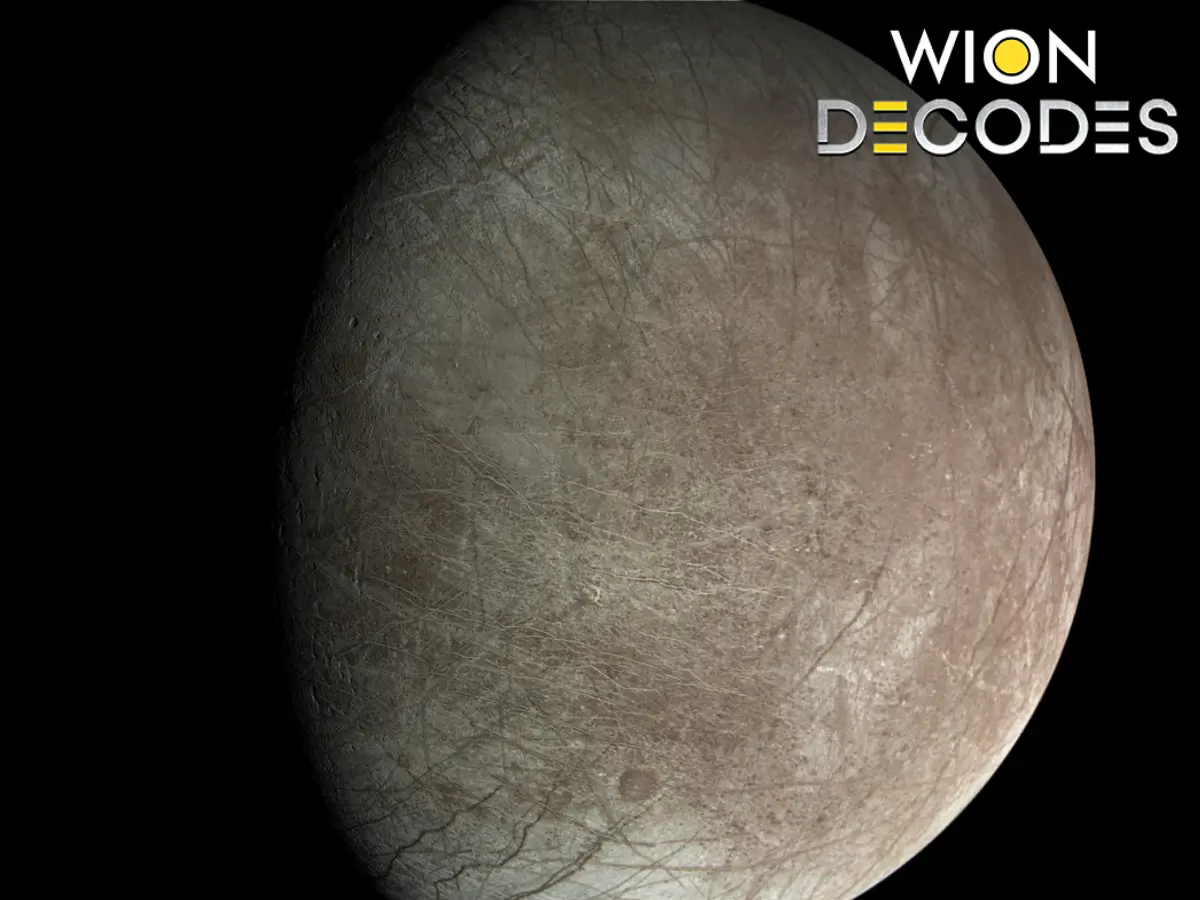
Some scientists also think aliens might live under thick ice on moons like Europa and Enceladus.
If we ever find proof of aliens, Loeb says we should respond quickly and carefully.

Avi Loeb, chair of the White House UAP Science Council, says humanity has not searched enough of the universe for alien life.
Physicist Enrico Fermi posed the question "Where is everybody?" in 1950, giving rise to the Fermi Paradox.
Scientists have proposed explanations including the difficulty of complex life, self-destruction, and aliens choosing not to be found.
Loeb argues that instead of waiting for radio signals, researchers should look for artefacts and equipment near Earth, like interstellar probes.
The Galileo Project studies technosignatures in physical space, and life may also exist under the surface ice of moons such as Europa and Enceladus.
- Who
- Avi Loeb, physicist and chair of the White House UAP Science Council; the core question was posed by Enrico Fermi in 1950.
- What
- Despite decades of searching, no alien life has been found, and Loeb argues the search method is wrong and should include looking for physical artefacts.
- Where
- Earth, the Milky Way, and the wider universe; possible life under the icy surfaces of Europa and Enceladus.
- When
- Fermi raised the question in 1950, and the search for extraterrestrial life continues today.
- Why
- Humanity has struggled to explain why no extraterrestrial life has been detected despite the statistical probability of its existence.
Traditionalists: Listen for radio signals
Avi Loeb: Look for physical artefacts
How to search for alien life
Traditionalists: Listen for radio signals
Huge telescopes on Earth and in space search for radio signals that could have originated from an advanced civilisation.
Avi Loeb: Look for physical artefacts
Loeb says radio searching is like waiting for a phone call; a better way is to look for artefacts and equipment floating near Earth.
Why we haven't found aliens
Traditionalists: Listen for radio signals
Complex intelligent life is hard and requires rare conditions, so Earth may be the exception that made it through.
Avi Loeb: Look for physical artefacts
Advanced civilisations may have self-destructed, or aliens may know about us and simply not want to be found.
Where life might exist
Traditionalists: Listen for radio signals
Intelligent life needs planets with plate tectonics, a magnetic field, a large moon, and a gas giant to keep asteroids away.
Avi Loeb: Look for physical artefacts
Life in the universe might be most common under surface ice, in places like Europa and Enceladus, without space travel or radios.
Key facts
- Key Figures
- Avi Loeb (White House UAP Science Council chair); Enrico Fermi (posed the question in 1950)
- Core Question
- "Where is everybody?" - the Fermi Paradox
- Loeb's Argument
- We haven't scoured much of the universe; our best telescope can only detect interstellar objects bigger than Starship
- Proposed Method
- Search for artefacts and interstellar probes near Earth instead of waiting for radio signals
- Project
- Galileo Project - focuses on technosignatures in physical space
- Radio Signal Limitation
- Signals take tens of thousands of years to cross the Milky Way
- Theories for Silence
- Life is hard; civilisations self-destruct; aliens don't want to be found
- Candidate Locations
- Subsurface oceans of Europa and Enceladus, several kilometres deep under ice
Quotes

Avi Loeb
Chair of the White House UAP Science Council and astrophysicist
“"Searching for radio communication signals is like waiting for a phone call. A better way is to look for artefacts and equipment belonging to them floating near Earth, just like we have the Voyager probes billions of kilometres away."”
 wionews.com
“"We haven't scoured much of the universe. Even within the orbit of the Earth around the Sun, our best telescope can only detect the reflection of sunlight from interstellar objects that are bigger than our largest rocket, Starship."”
wionews.com
Sources
Related news

NASA Finds Earth Microbes Could Survive Near Moon’s South Pole
Ukrainian Astronomers Report More Than 20 UFOs Near the Moon

Hyderabad-Born Astronomer Behind Study of Mysterious 'Black Hole Star'

Lunar South Pole May Preserve Earth Microbes, Study Finds
Europa's Hidden Ocean May Hold Clues to Life
NASA Discovers Ammonia Compounds on Europa
Europa's Ice May Transport Life-Supporting Chemicals to Ocean

Europa's Ocean Floor May Lack Conditions for Life