2 weeks ago
NASA's Roman telescope will change our view of the universe
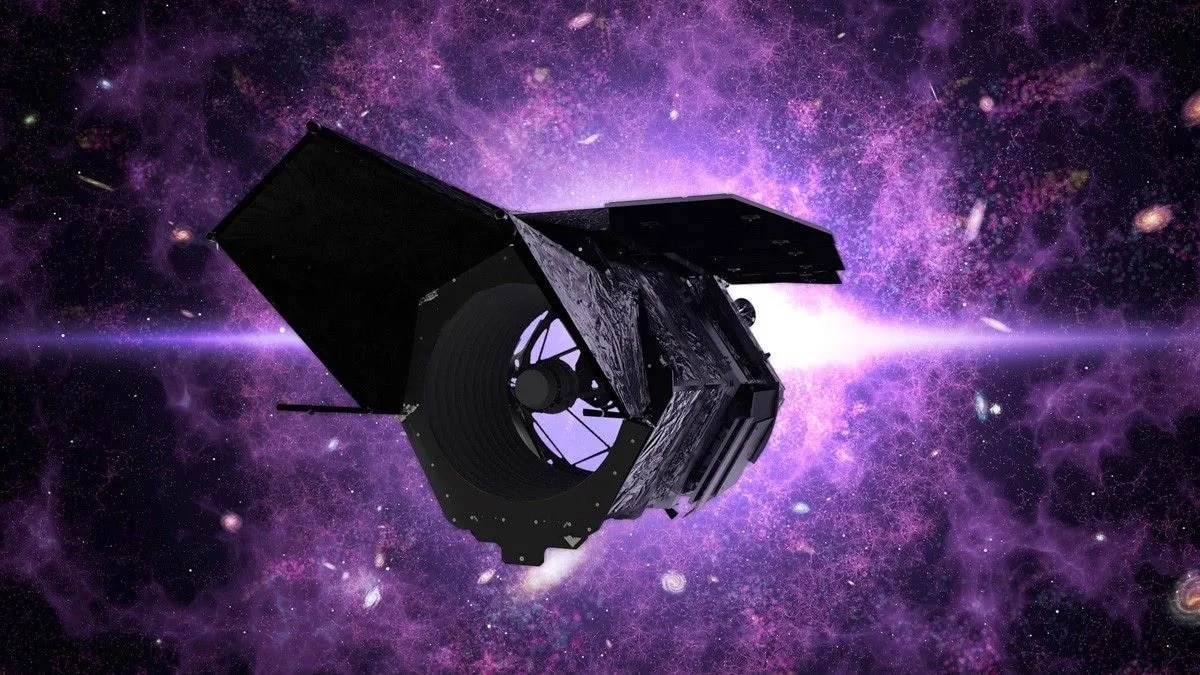
Two space telescopes, Hubble and Roman, have different jobs.
Hubble is like a zoom lens that studies small patches of sky in great detail.
Roman is like a wide-angle lens that can photograph a huge part of the sky at once.
Roman's view is at least 100 times bigger than Hubble's.
In its first five years, Roman will see about 50 times more sky than Hubble saw in 30 years.
Roman is extra good at seeing infrared light, which helps it spot faraway galaxies.
It will use those big surveys to learn about dark matter and dark energy.
Roman will also hunt for planets outside our solar system.
Roman isn't replacing Hubble — NASA says they will work together, along with the James Webb Space Telescope.
Each telescope has its own special strength.

Roman's field of view will be at least 100 times larger than Hubble's, with NASA estimating it will image about 50 times as much sky in five years as Hubble covered in 30.
Hubble observes ultraviolet, visible and near-infrared light, while Roman is optimised for infrared at visible and near-infrared wavelengths.
Roman's Wide Field Instrument will measure light from a billion galaxies, supporting studies of dark matter and dark energy.
Roman's Coronagraph Instrument will demonstrate technology to directly image exoplanets while its instruments survey the Milky Way.
Roman will operate about 1.5 million kilometres from Earth at the Sun-Earth L2 point, far beyond Hubble's orbit of about 483 kilometres above Earth.
- Who
- NASA, which is developing the Nancy Grace Roman Space Telescope to complement the Hubble Space Telescope and the James Webb Space Telescope.
- What
- Roman will survey enormous stretches of the universe with a field of view at least 100 times larger than Hubble's, studying dark matter, dark energy and exoplanets.
- Where
- Roman will operate about 1.5 million kilometres from Earth near the second Sun-Earth Lagrange point (L2), while Hubble orbits about 483 kilometres above Earth.
- When
- Roman's first five years of operation, during which it is expected to image about 50 times as much sky as Hubble covered in 30 years; the article does not state a launch date.
- Why
- Scientists need enormous datasets of millions or billions of objects to answer big questions in cosmology, such as the nature of dark matter and dark energy.
Key facts
- Telescope
- Nancy Grace Roman Space Telescope (Roman)
- Operator
- NASA
- Primary mirror
- 2.4 metres (7.9 feet) — same size as Hubble's
- Field of view
- At least 100 times larger than Hubble's
- Sky coverage
- About 50 times as much sky in five years as Hubble covered in 30
- Wavelengths
- Visible and near-infrared, optimised for infrared
- Location
- About 1.5 million km from Earth at Sun-Earth L2
- Key instruments
- Wide Field Instrument (a billion galaxies) and Coronagraph Instrument (exoplanets)
Sources
Related news
NASA Launches Roman Telescope to Map the Dark Universe
NASA’s Roman Telescope Set to Probe Dark Energy, Exoplanets

NASA Launches Roman Telescope to Probe Dark Energy Mysteries
NASA Launches Roman Telescope to Explore Cosmic Mysteries
NASA Launches Roman Telescope to Probe Universe’s Mysteries