3 weeks ago
Saudi-Turkey-Pakistan Defence Pact Raises Security Concerns For India
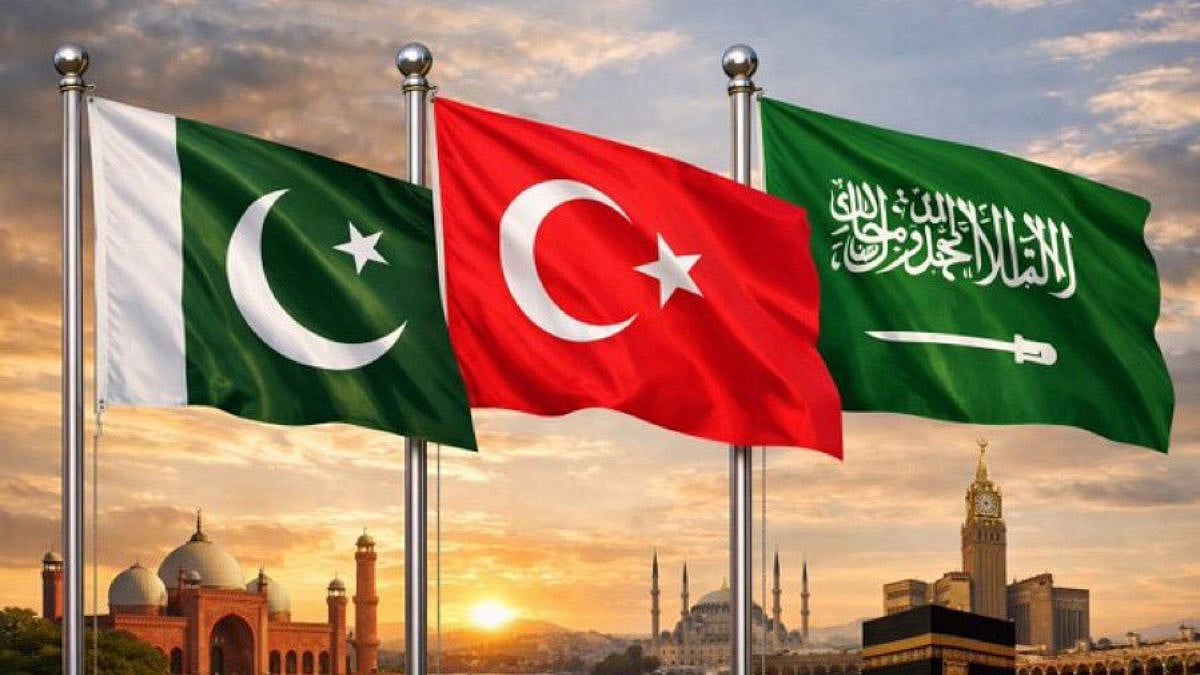
Some countries make special promises to help each other if one of them is attacked.
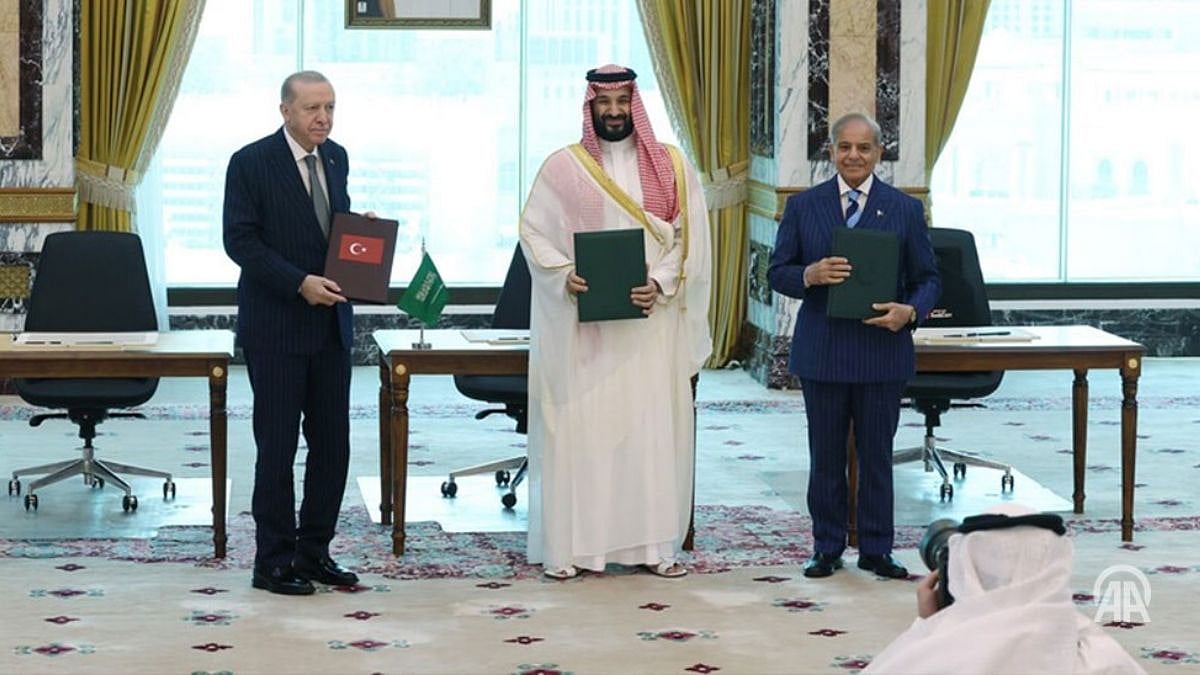
In August, Pakistan, Turkey and Saudi Arabia signed a promise called the Mecca Joint Defence Agreement.
The promise says that an attack on one country is treated as an attack on all three.
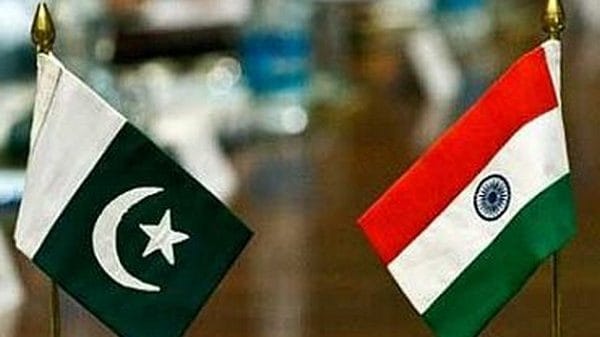
India is paying close attention because it has fought wars with Pakistan before.
India's army deputy chief said India already faced three countries on its border: Pakistan, China and Turkey.
Saudi Arabia joining the pact could make that four.
India and Saudi Arabia are close partners, trading $43 billion worth of goods, and India buys about 14% of its oil from Saudi Arabia.
Pakistan's foreign minister says the agreement is purely defensive, but Turkey's foreign minister compares it to NATO's safety promise, which worries India.
Experts disagree about what the pact really means, with some saying it is mostly about Israel.
For now, the pact has no clear plan or command structure, so India is watching to see what happens.

Pakistan, Turkey and Saudi Arabia signed the Mecca Joint Defence Agreement on August 7, declaring that an armed attack on any of the three would be regarded as an attack on all.
Indian Army Deputy Chief Lt Gen Rahul R Singh said India effectively faced three adversaries on a single border: Pakistan as the active frontline combatant, China sharing real-time satellite intelligence, and Turkey supplying drones; the pact could theoretically make Saudi Arabia a fourth.
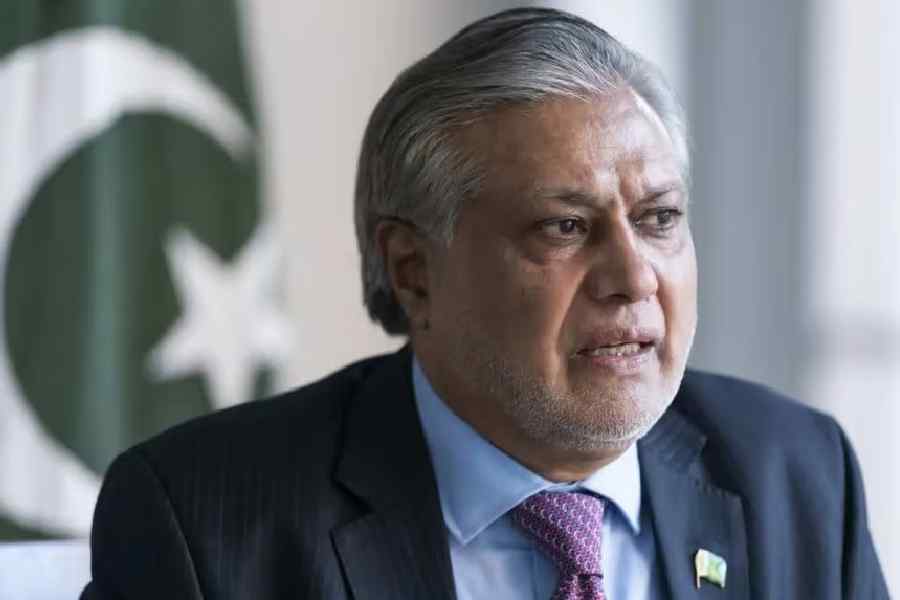
Pakistan's Foreign Minister Ishaq Dar describes the agreement as 'purely defensive', while Turkey's Foreign Minister Hakan Fidan compares it to NATO's Article 5 collective-defence clause.
India and Saudi Arabia share a strategic partnership with $43 billion in trade, and Saudi Arabia supplies around 14% of India's crude oil.
The pact currently lacks a joint command and defined triggers for collective action, and analysts are divided, with some calling it largely symbolic and mainly a hedge against America's declining role as a security provider.
- Who
- Pakistan, Turkey and Saudi Arabia as signatories, with India as the principal concerned party; commentators include Indian Army Deputy Chief Lt Gen Rahul R Singh, Pakistan's Foreign Minister Ishaq Dar, Turkey's Foreign Minister Hakan Fidan and former diplomats Kanwal Sibal, Talmiz Ahmad and Husain Haqqani.
- What
- Signing of the Mecca Joint Defence Agreement, a collective-defence pact under which an armed attack on any of the three signatories is regarded as an attack on all.
- Where
- The agreement is named after Mecca; the articles do not state where the signing ceremony took place.
- When
- The agreement was signed on August 7, following the 88-hour Operation Sindoor war between India and Pakistan in May 2025.
- Why
- Pakistan's foreign minister says the pact is purely defensive, while analysts see it as a regional hedge against America's declining role as a security provider; former ambassador Talmiz Ahmad says it is chiefly a deterrent against Israel, while India fears it could embolden Pakistan and treaty-bind Saudi Arabia to oppose New Delhi.
Signatories' Perspective
Indian and Analysts' Perspective
Purpose of the pact
Signatories' Perspective
Pakistan's Foreign Minister Ishaq Dar says the agreement is purely defensive in nature.
Indian and Analysts' Perspective
Former foreign secretary Kanwal Sibal calls it a direct security threat to India, warning that Pakistan could feel more emboldened to pursue combative diplomacy and take risks on the terrorism front.
Strength of the alliance
Signatories' Perspective
Turkey's Foreign Minister Hakan Fidan compares the Mecca pact to NATO's Article 5 collective-defence clause.
Indian and Analysts' Perspective
The pact lacks a joint command and defined triggers for collective action; one diplomat calls the NATO comparison absurd, noting NATO has a secretariat, shared budget and command structure.
Saudi Arabia's alignment
Signatories' Perspective
Saudi Arabia and Pakistan have deep military ties, including a bilateral security pact, with Pakistan deploying roughly 8,000 soldiers and JF-17 jets to the Kingdom.
Indian and Analysts' Perspective
India and Saudi Arabia share a strategic partnership with $43 billion in trade and around 14% of India's crude oil supply; Sibal notes Saudi Arabia has equities in India it cannot ignore.
Key facts
- Agreement
- Mecca Joint Defence Agreement
- Signatories
- Pakistan, Turkey, Saudi Arabia
- Signed
- August 7
- Core clause
- Armed attack on one member regarded as attack on all
- India-Saudi trade
- $43 billion
- Saudi Arabia's share of India's crude oil
- Around 14%
- Pakistan deployments to Saudi Arabia (April-May)
- Roughly 8,000 soldiers and about 16 JF-17 Thunder fighter jets
- Saudi financial support to Pakistan
- $6B (2018), $4.2B (2021), around $8B (2022), with deposit rollovers through 2026
Quotes
Former foreign secretary Kanwal Sibal
Former Indian Foreign Secretary and former ambassador to Ankara
“Hakan Fidan, Turkey's Foreign Minister, remarked that the Mecca Joint Defence Agreement is similar to NATO's Article 5 collective‑defence clause.”
 NDTV
NDTV
“"Saudi Arabia has equities in India it cannot ignore. Türkiye will have to take into account its own vulnerabilities. We have cards to play."”
 freepressjournal.in
Former ambassador and West Asia expert Talmiz Ahmad
Former Indian ambassador and West Asia specialist
“"The pact is a product of the recent West Asia conflicts and emerges from the failure of the US as the regional security guarantor."”
freepressjournal.in
Sources
Related news

Saudi Arabia, Turkey, Pakistan Sign Mecca Defence Agreement
Mecca Defence Pact: Would Saudi and Turkey Fight for Pakistan?
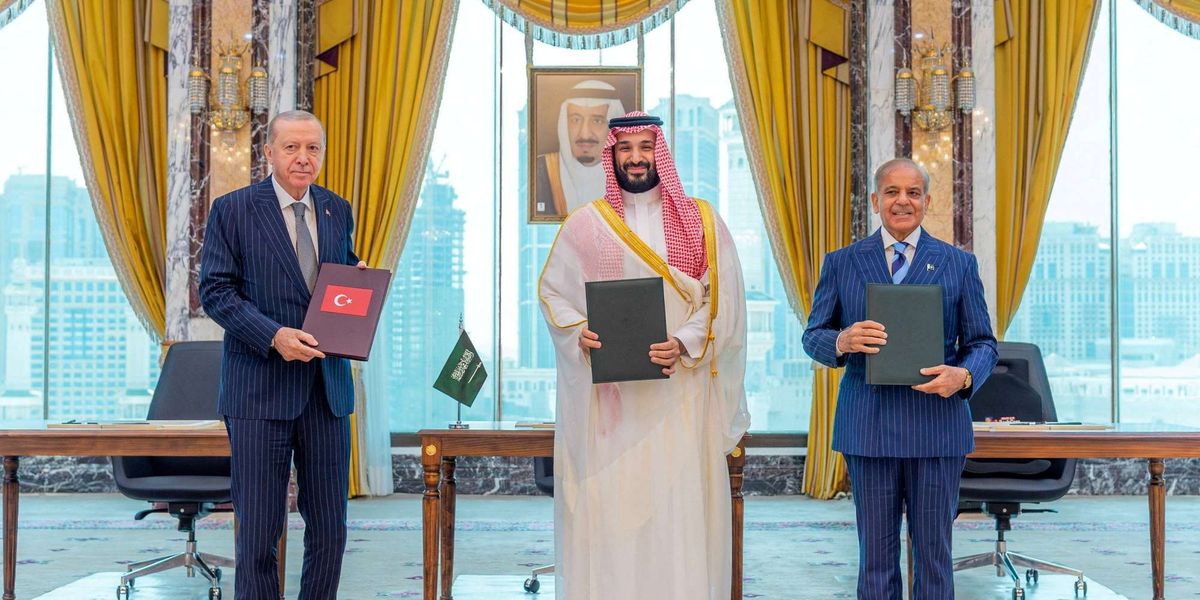
Saudi Arabia, Turkey and Pakistan sign Mecca Joint Defence Agreement
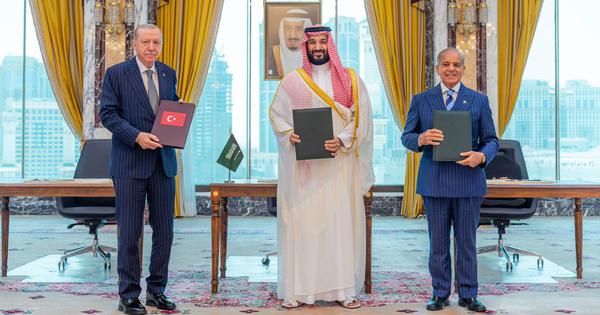
India assessing security implications of Pakistan-Saudi-Turkiye pact
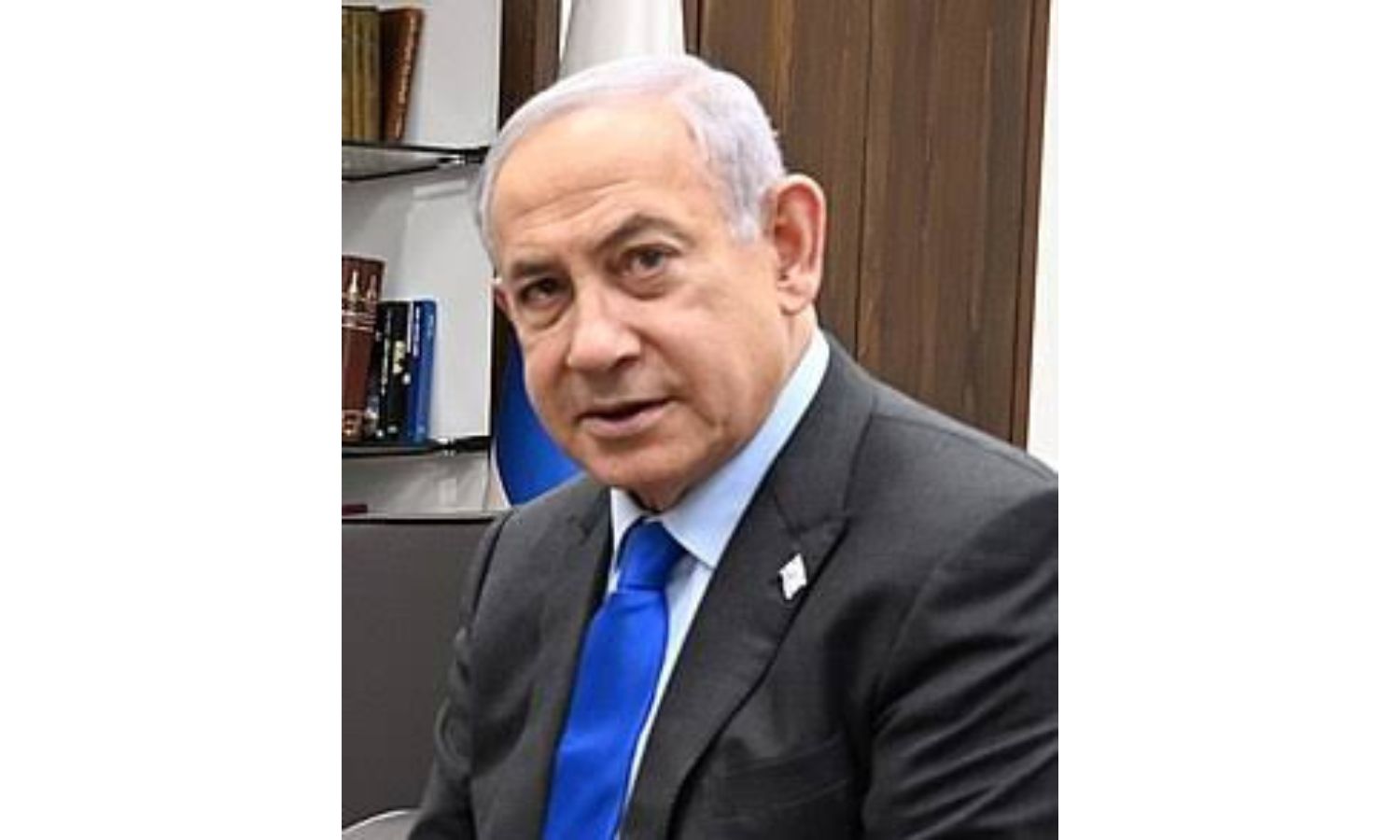
Pakistan seeks Mecca pact front against Israel and India
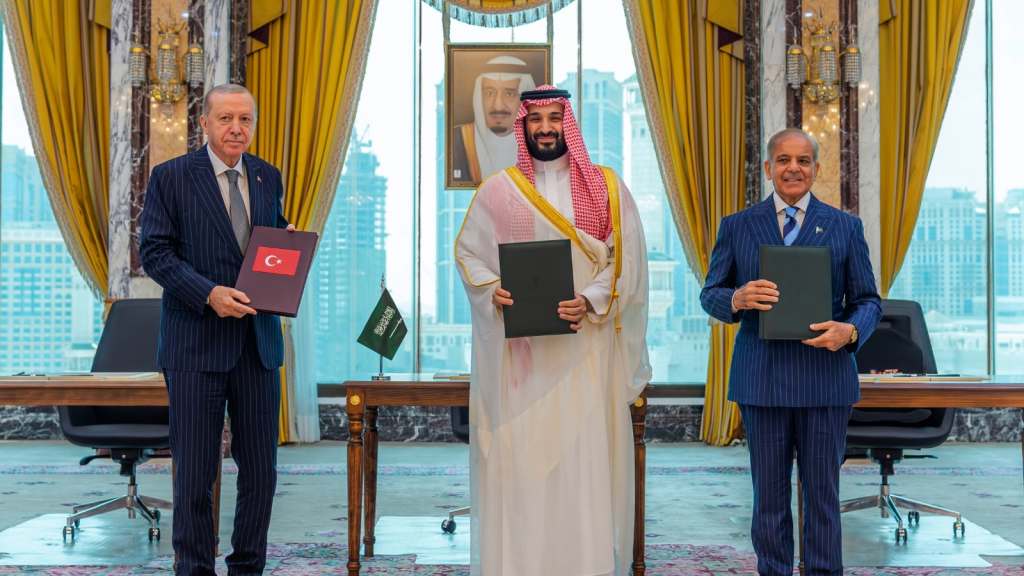
India urged to respond carefully to Pakistan-Saudi-Turkey defence pact
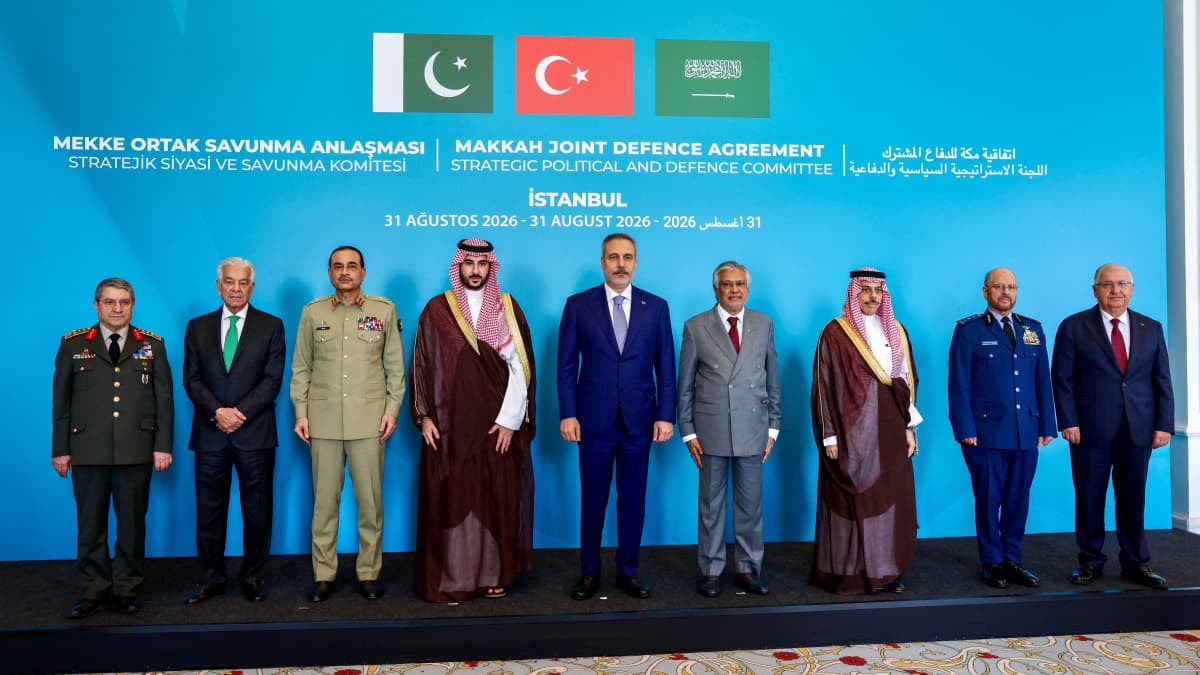
Saudi, Turkey and Pakistan Build Riyadh Defence Pact Secretariat
India Rejects Hague Ruling Upholding Pakistan Water Treaty
Pakistan, Saudi Arabia, Türkiye Hold First Makkah Pact Meeting
India Keeps Indus Treaty Suspended as Pakistan Warns Region
Iran Rejects US Threats Amid Wider West Asia Tensions