

3 weeks ago
Pakistan seeks Mecca pact front against Israel and India
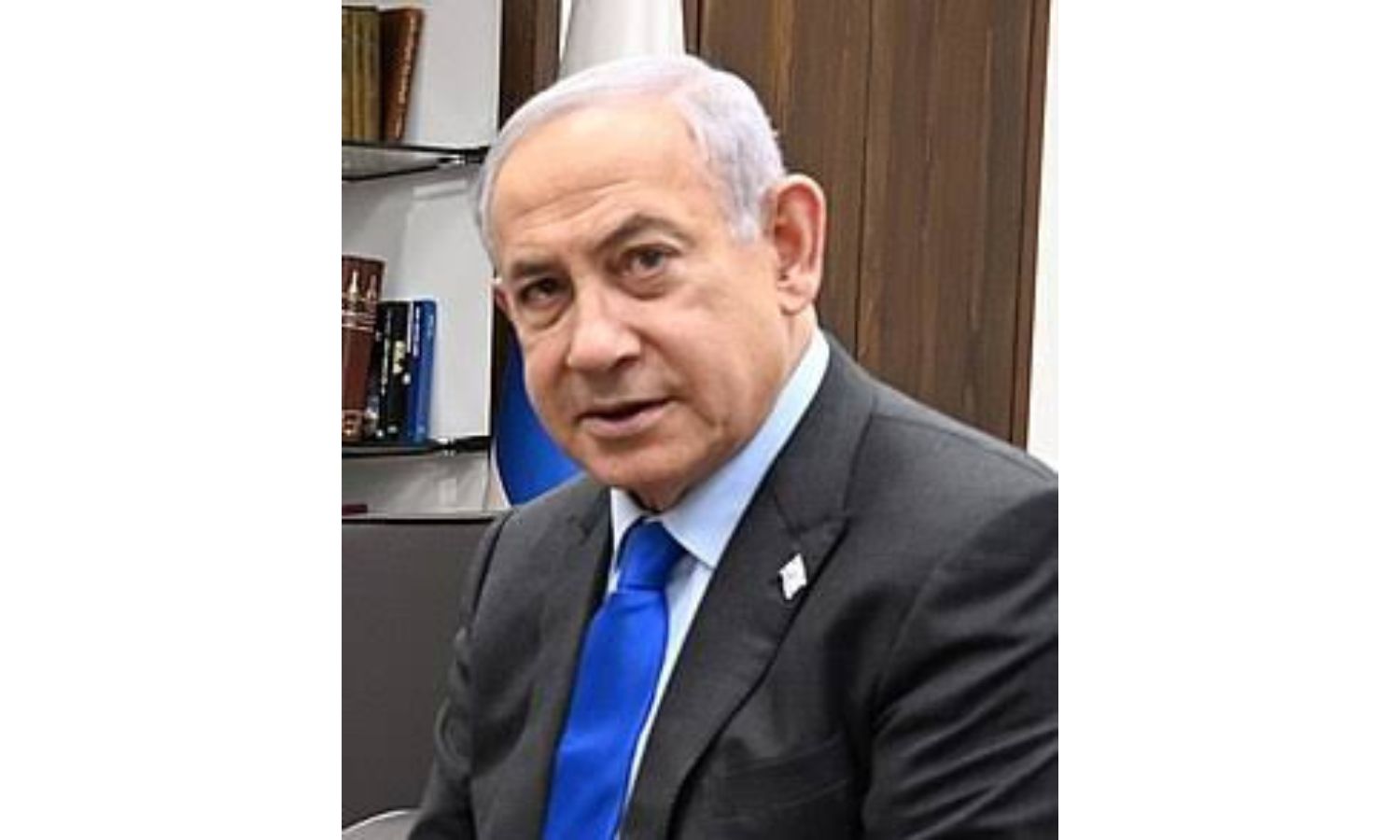
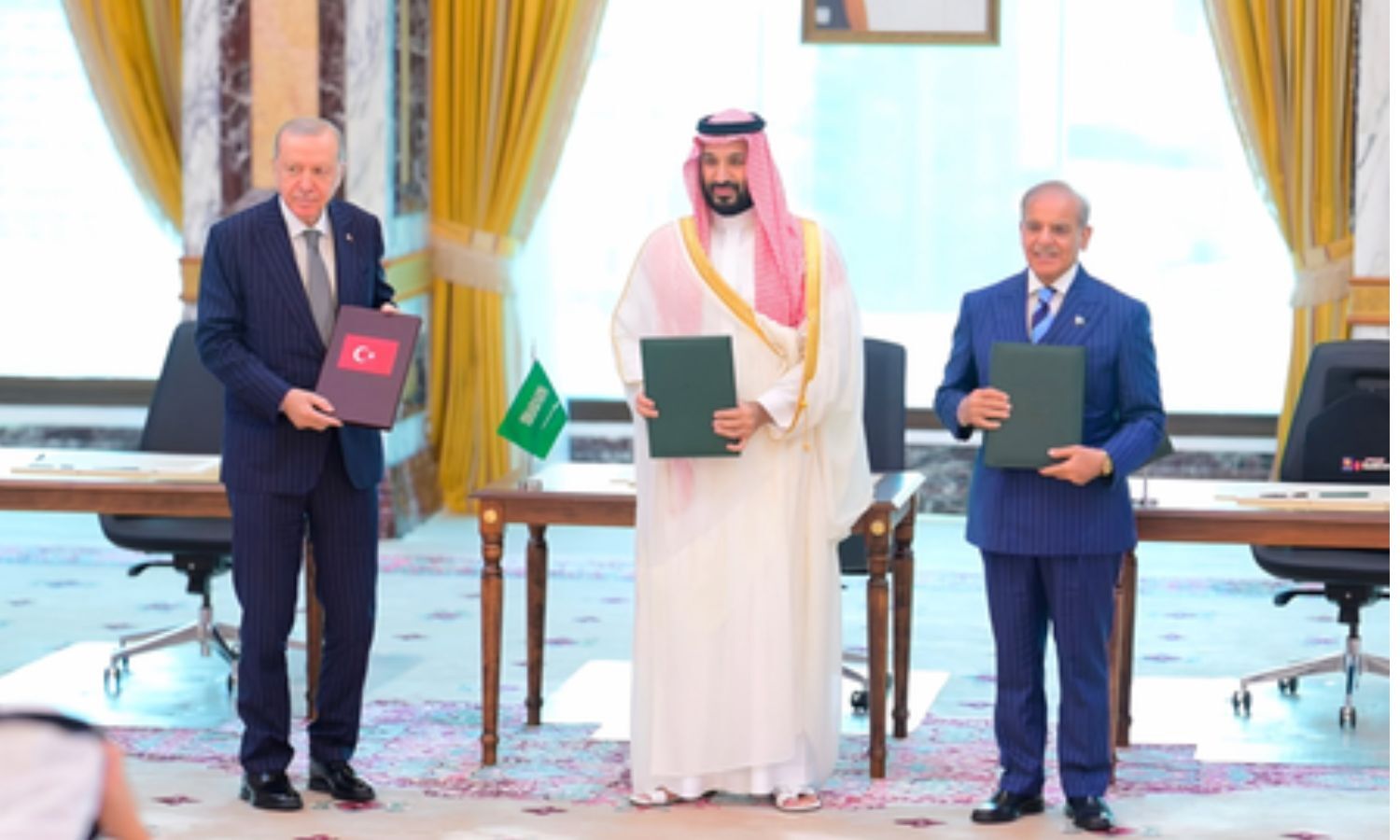
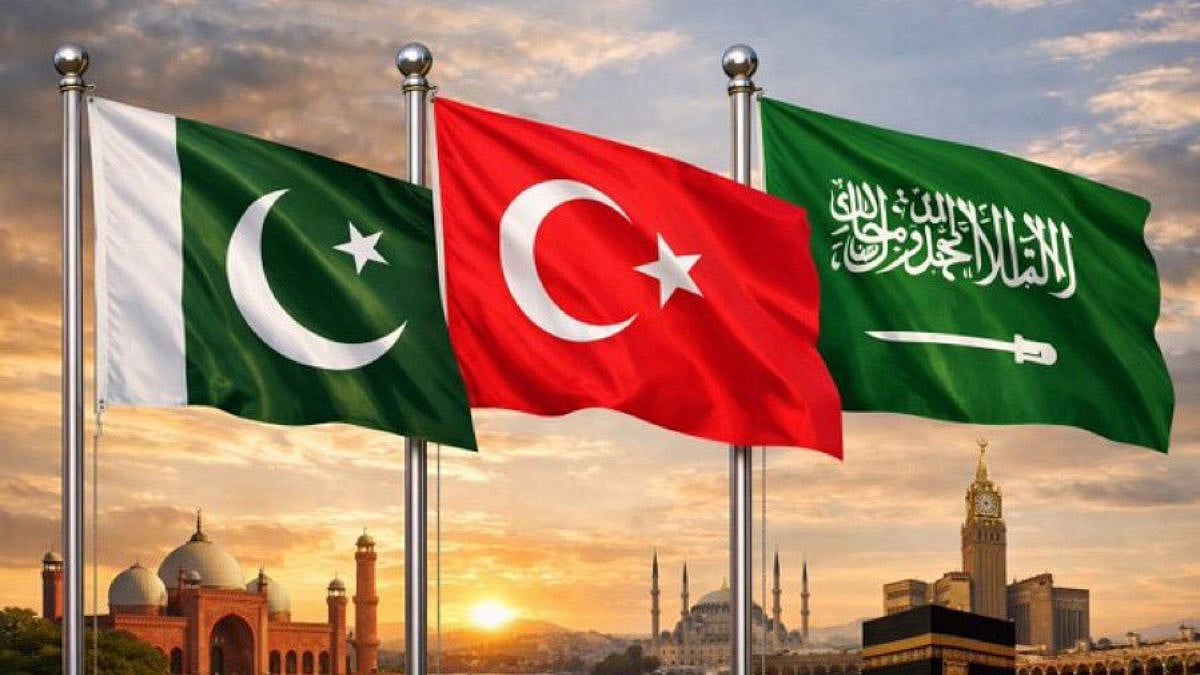
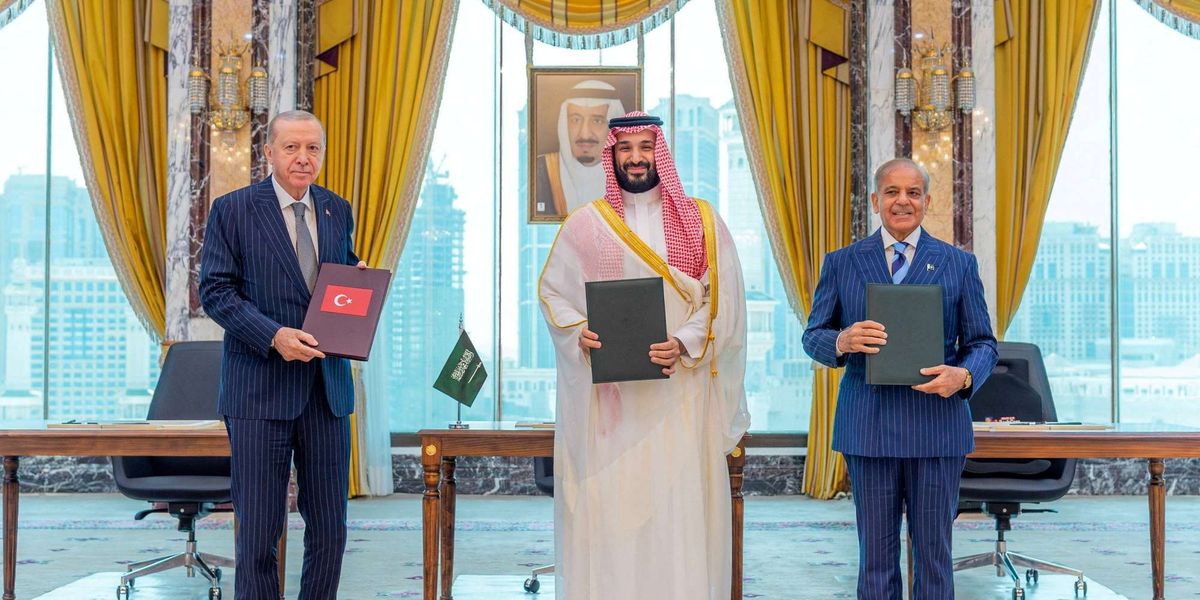
Three countries — Pakistan, Saudi Arabia and Turkey — signed a special promise called the Mecca Joint Defence Agreement.
The promise says that if one of them is attacked, the other two will help defend it.
The agreement was first meant to protect Saudi Arabia from a possible attack by Iran.
But Pakistan wants the agreement to be about something bigger.
Pakistan's defence minister said Muslim countries should join together against Israel and India.
Saudi Arabia has a tricky problem now.
It supports the Palestinian people and wants to be the leader of the Muslim world.
But it might also want to become friends with Israel one day, and India is one of its close friends.
So Pakistan's idea makes things complicated for Saudi Arabia.
Egypt, which was part of the talks earlier, stayed out of the agreement for now.

Pakistan, Saudi Arabia and Turkey signed the Mecca Joint Defence Agreement on August 7, 2026, covering a combined population of roughly 380 million people.
Just hours after signing, Pakistan's Defence Minister Khawaja Asif called for Muslim countries to unite in a military front against Israel and India.
The pact, initially envisaged as mutual defence against a potential Iranian attack on Saudi Arabia, mirrors Nato's Article 5 clause and is dubbed by some the 'Islamic Nato', though Turkish leaders say it is aimed at no country.
Analysts say an explicitly anti-Israel interpretation would complicate Saudi Arabia's potential normalisation with Israel under the Abraham Accords.
Saudi Arabia could more comfortably join defence against Iran and the Houthis than a bloc confronting Israel or India, a strong Saudi ally, according to analysts.
- Who
- Pakistan, Saudi Arabia and Turkey as signatories, with Pakistan's Defence Minister Khawaja Asif calling to expand the alliance's purpose
- What
- Pakistan aims to turn the Mecca Joint Defence Agreement into a broader united Muslim military front against Israel and India
- Where
- Mecca, Saudi Arabia, where the trilateral pact was signed, with implications spanning the Middle East and South Asia
- When
- August 7, 2026, when the pact was signed in Mecca; Asif's call came just hours later
- Why
- Pakistan argues the threat posed by Israel extends beyond Palestine to the Muslim world as a whole and has long pushed for stronger Muslim military coordination
Pakistan's push to expand the pact
The pact's defensive framing and Riyadh's constraints
Purpose of the alliance
Pakistan's push to expand the pact
Pakistan's Defence Minister Khawaja Asif wants Muslim countries to unite in a military front against Israel and India, arguing the threat extends beyond Palestine to the Muslim world as a whole.
The pact's defensive framing and Riyadh's constraints
The pact's signed text is carefully worded, defensive and directed against nobody; it was originally envisaged to deter a potential Iranian attack on Saudi Arabia, and Turkish leaders insist it is not aimed at any country.
Saudi Arabia and Israel
Pakistan's push to expand the pact
Saudi Arabia supports Palestinian statehood, does not recognise Israel and leads the Islamic world, so an explicitly anti-Israel pact would fit its public posture.
The pact's defensive framing and Riyadh's constraints
Normalisation with Israel remains a logical next step for Riyadh under the Abraham Accords and would make projects like the India-Middle East-Europe Economic Corridor more viable; an anti-Israel pact would make that more difficult, and India is a strong Saudi ally.
Impact on India
Pakistan's push to expand the pact
The pact raises Pakistan's global and regional standing, opens the door to Pakistani-Turkish defence industry ties with Saudi and Chinese backing, and reflects Pakistan regaining influence in the Gulf, shrinking India's strategic space.
The pact's defensive framing and Riyadh's constraints
Saudi Arabia and Turkey are unlikely to openly join Pakistan if India responds militarily to Pakistan-sponsored attacks again; the pact's mutual defence commitments have limits, as seen when Pakistan mediated rather than threatened Iran over attacks on Saudi targets.
Key facts
- Pact name
- Mecca Joint Defence Agreement
- Signing date
- August 7, 2026
- Member states
- Pakistan, Saudi Arabia, Turkey
- Combined population
- Roughly 380 million
- Collective defence clause
- An armed attack on any one member is regarded as an attack on all three
- Original purpose
- Deterring a potential Iranian attack on Saudi Arabia
- Egypt's status
- Joined negotiations earlier but kept away; Turkey's foreign minister expects it to join soon
- Pakistan's Defence Minister
- Khawaja Asif
Quotes

Recep Tayyip Erdogan
Turkish President
““now you can’t even touch our hair””
 deccanchronicle.com
““our next target is Turkey””
deccanchronicle.com
Sergio Restelli
Italian political advisor, author and geopolitical expert cited in the report
“Projects such as the India-Middle East-Europe Economic Corridor ultimately become far more viable in a region where Saudi Arabia and Israel can cooperate, and Saudi Arabia has often considered joining the Abraham Accords before the Hamas terrorist attack in October 2023.”
 thehansindia.com
“Asif called for Muslim countries to unite against Israel and advocated a united military front, arguing that the threat posed by the Jewish state extended beyond Palestine to the Muslim world as a whole.”
thehansindia.com
Sources
Related news

Saudi Arabia, Turkey, Pakistan Sign Mecca Defence Agreement
Saudi-Turkey-Pakistan Defence Pact Raises Security Concerns For India
Saudi Arabia, Turkey and Pakistan sign Mecca Joint Defence Agreement
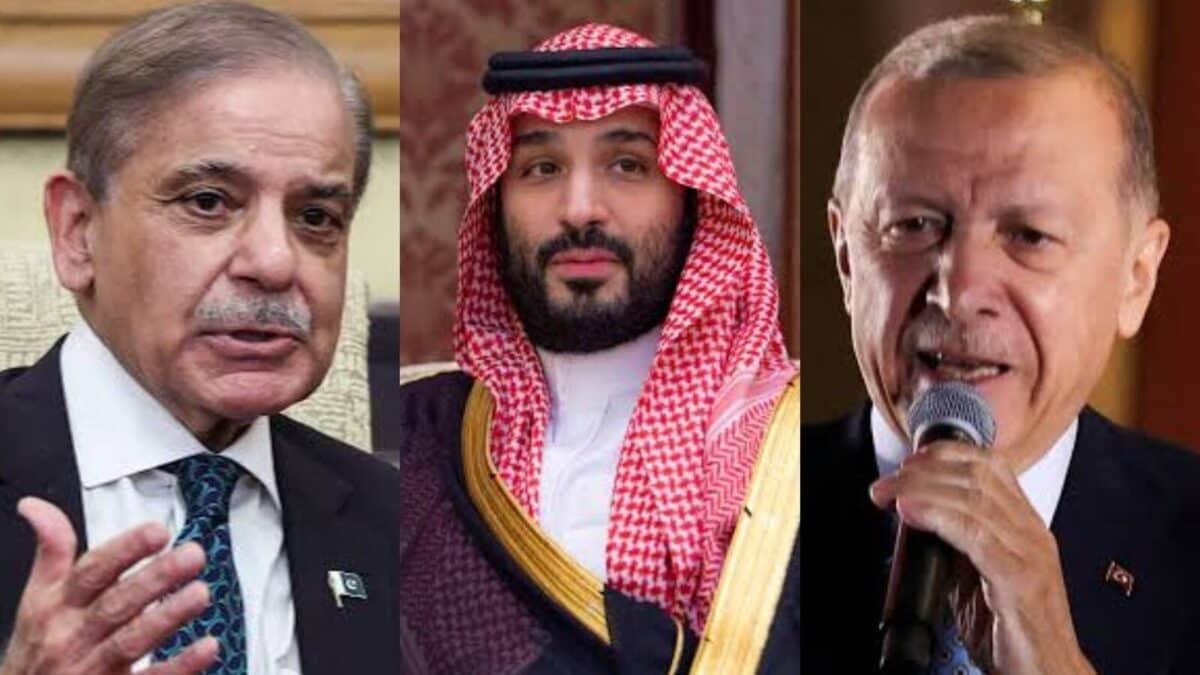
Saudi Arabia, Turkey, Pakistan 'Islamic NATO' Pact Raises India Concern
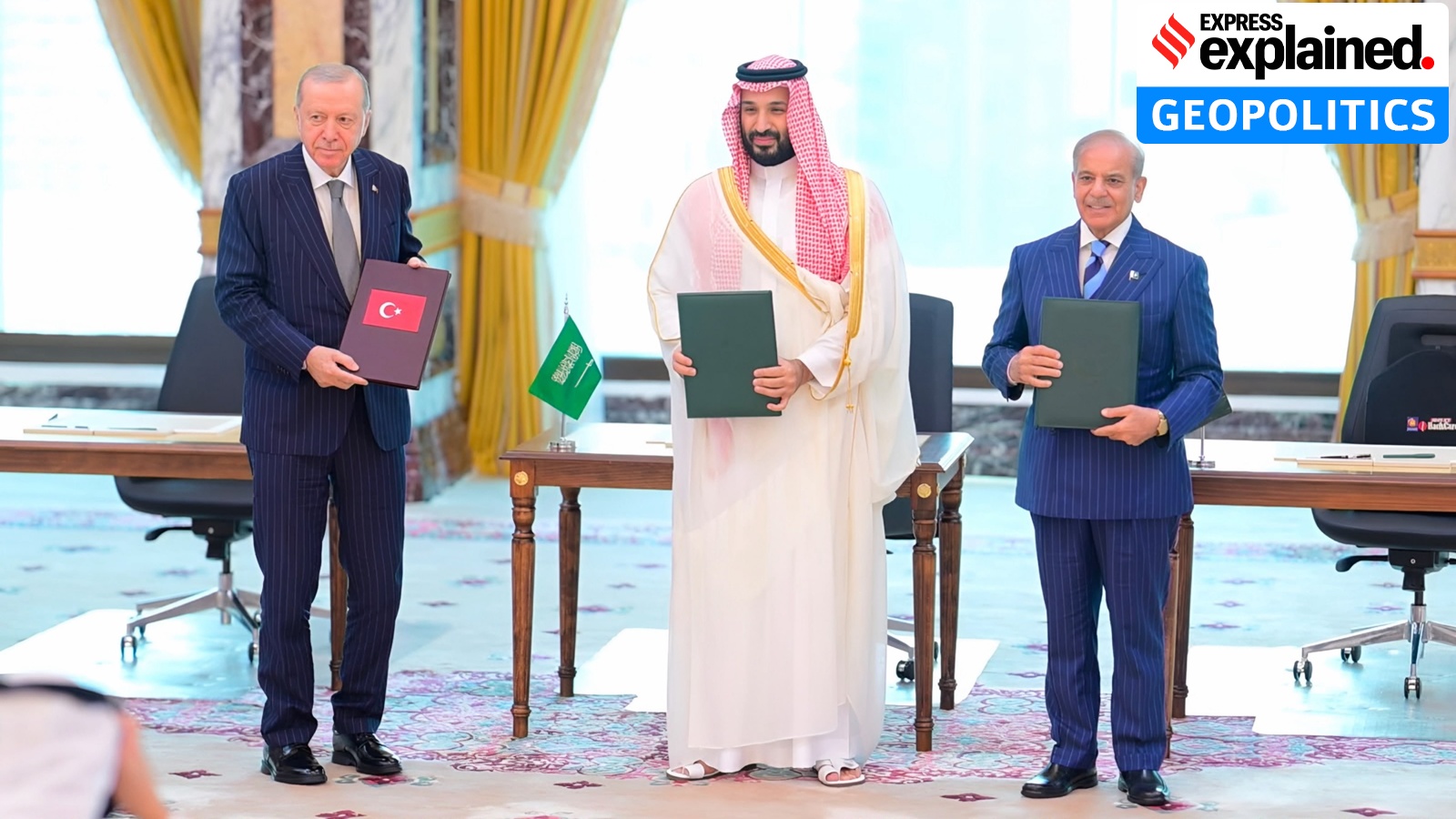
Saudi Arabia, Turkey, Pakistan Sign Mecca Joint Defence Agreement
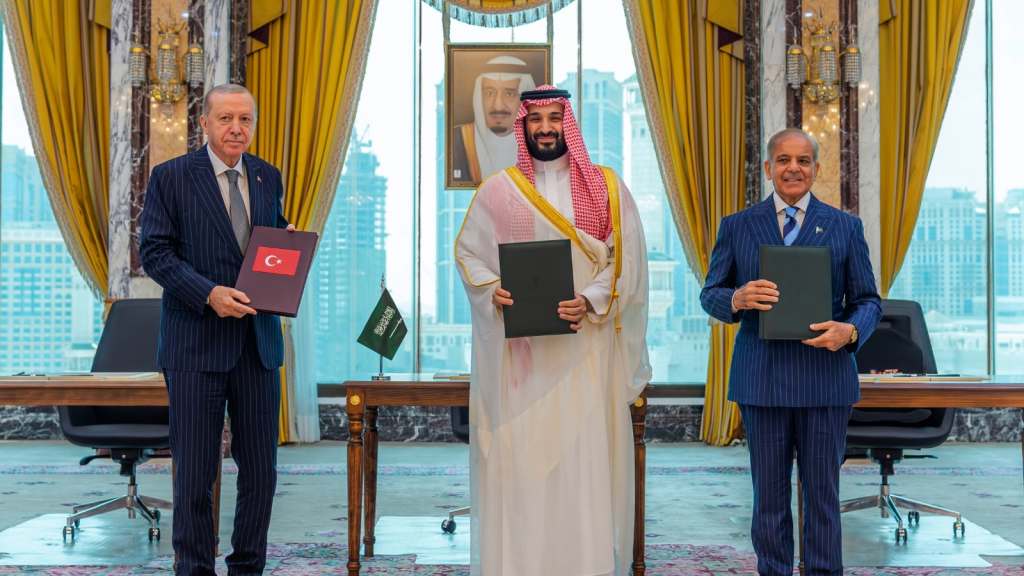
India urged to respond carefully to Pakistan-Saudi-Turkey defence pact

Government Defends 7.8% GDP Growth as Congress Raises Doubts
BRICS Expansion Puts Membership and Reform at New Delhi Summit

Piyush Goyal Defends India’s 7.8% GDP Growth Amid Criticism

Mahua Moitra Questions India’s 7.8% GDP Growth Figures
Goyal Defends India’s 7.8% GDP Growth Amid Data Debate
