

3 weeks ago
India urged to respond carefully to Pakistan-Saudi-Turkey defence pact
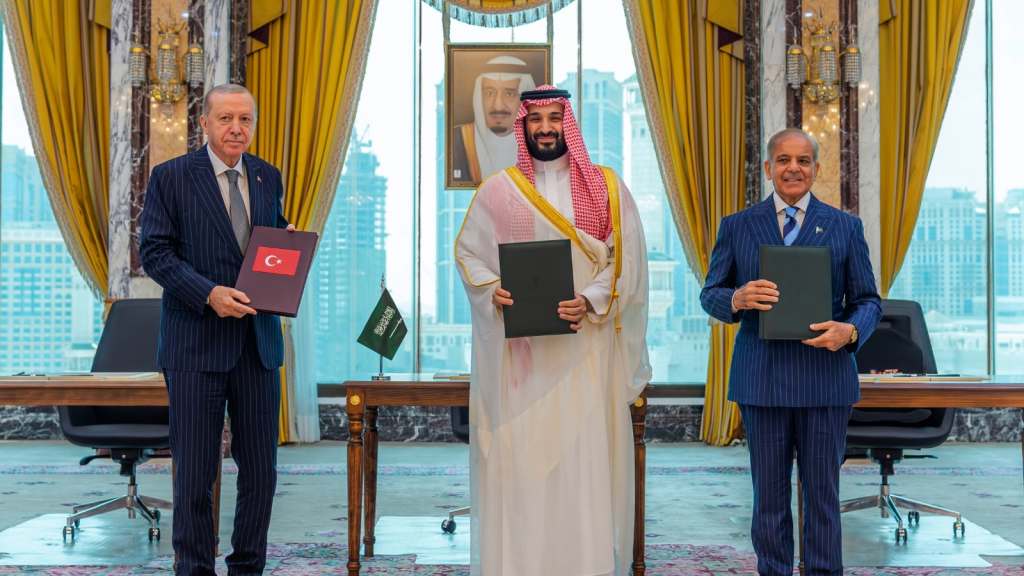
Saudi Arabia, Turkey, and Pakistan signed a paper called the Mecca Joint Defence Agreement.
In it, they promised to help each other if one of them is attacked.
Some people in India are scared that this means Pakistan can now cause trouble for India without getting in trouble.
The writer of this article says that fear is probably not right.
Helping a friend who is attacked is normal, but countries usually only help when the attack was unprovoked.
If Pakistan secretly supports troublemakers, that is different, and the other two countries probably would not step in.
The writer also says the agreement is more like words on paper than a real army team.
He thinks India should stay calm and keep talking to Saudi Arabia and Turkey.
India should also make its own defences stronger and watch new military technology deals.
In the end, being careful is better than being scared.

Saudi Arabia, Turkey, and Pakistan signed the Mecca Joint Defence Agreement, which includes a mutual defence provision.
The article says calling the pact an 'Islamic NATO' is premature because it lacks a unified command, joint mechanisms, and institutionalised doctrine.
The three signatories have divergent priorities: Saudi Arabia hedges against Iran, Turkey seeks defence export markets, and Pakistan seeks bailouts and leverage over India.
The author argues the pact does not give Pakistan a blank cheque for terrorism, since mutual defence applies only to unprovoked external aggression.
India is urged to seek reassurances, maintain firm deterrence, deepen Gulf economic ties, and monitor Turkey–Pakistan military technology co-development.
- Who
- Saudi Arabia, Turkey, and Pakistan, the signatories of the Mecca Joint Defence Agreement; and India, which is weighing how to respond.
- What
- The signing of the Mecca Joint Defence Agreement, a mutual defence pact described as a collective deterrence umbrella for West Asia.
- Where
- West Asia, centred on the Saudi-Turkish-Pakistani axis; with direct implications for India and the Indian Ocean region.
- When
- Recently announced after about a year of negotiations; the article gives no specific date.
- Why
- To create collective deterrence against regional conflicts, especially those involving Iran, while each signatory pursues its own strategic goals.
Calibrated engagement
Strategic alarm
Is the pact an 'Islamic NATO'?
Calibrated engagement
No — calling the Mecca Agreement an 'Islamic NATO' is premature because it lacks a unified command structure, joint command mechanisms, and institutionalised doctrine.
Strategic alarm
Yes — the mutual defence provision formally creates a tripartite axis of Saudi capital, Turkish military technology, and Pakistani manpower and nuclear status.
Does it shield Pakistani terrorism against India?
Calibrated engagement
No — mutual defence treaties apply to unprovoked external aggression, and Riyadh and Ankara would be unlikely to intervene in Indian counter-terrorism strikes.
Strategic alarm
Yes — Pakistan could treat the pact as a Saudi-Turkish protective shield for cross-border terrorism, with Turkey's diplomatic support during Operation Sindoor as a precedent.
Should India be worried?
Calibrated engagement
No — India should neither panic nor dismiss the pact; it should seek discreet reassurances and deepen economic ties with Saudi Arabia and the Gulf.
Strategic alarm
Yes — the pact's technology integration and intelligence-sharing genuinely enhance Pakistan's conventional capabilities and cannot be written off as grandstanding.
Key facts
- Agreement
- Mecca Joint Defence Agreement
- Signatories
- Saudi Arabia, Turkey, Pakistan
- Core provision
- Mutual defence clause combining the three countries' capabilities
- Article's assessment
- Collective deterrence umbrella for West Asia, not a formal military alliance
- What it lacks
- Unified military headquarters, joint command mechanisms, institutionalised doctrine
- Turkey during Operation Sindoor
- Diplomatic and rhetorical support plus drone sales; no tangible military assistance
- Saudi Arabia during Operation Sindoor
- Remained silent, signalling careful neutrality
- Recommended Indian approach
- Calibrated diplomacy with Riyadh, firm deterrence, deeper GCC ties, fast-tracked defence innovation
Sources
Related news
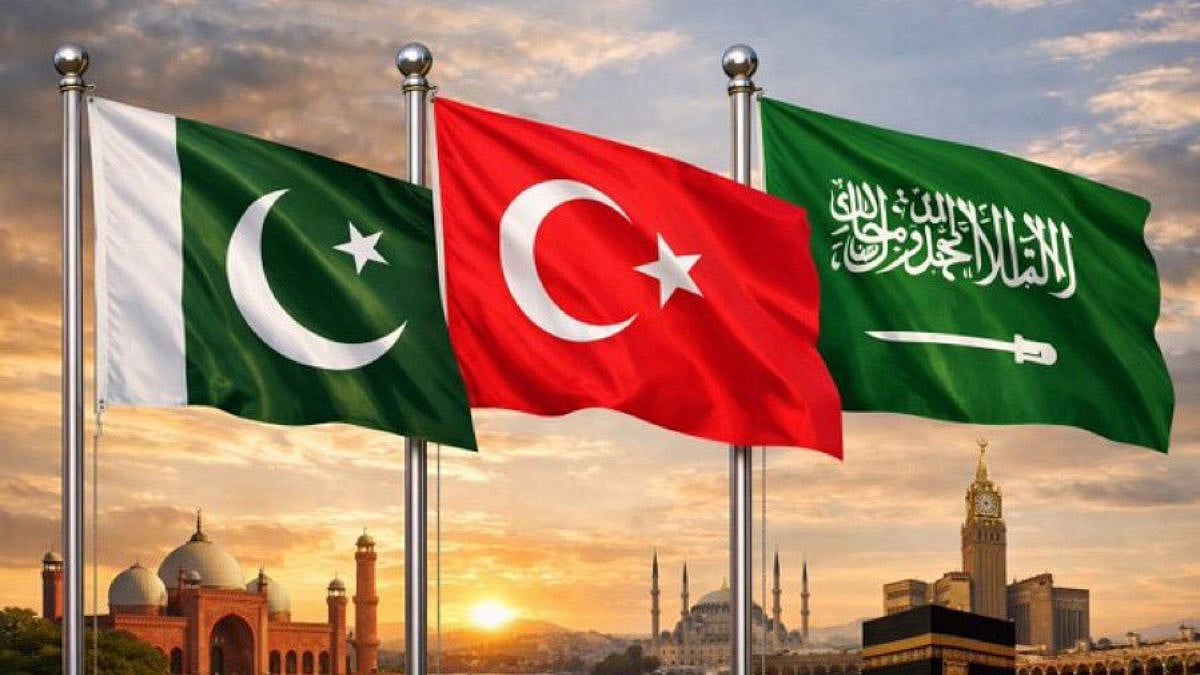
Saudi-Turkey-Pakistan Defence Pact Raises Security Concerns For India

Saudi Arabia, Turkey, Pakistan Sign Mecca Defence Agreement
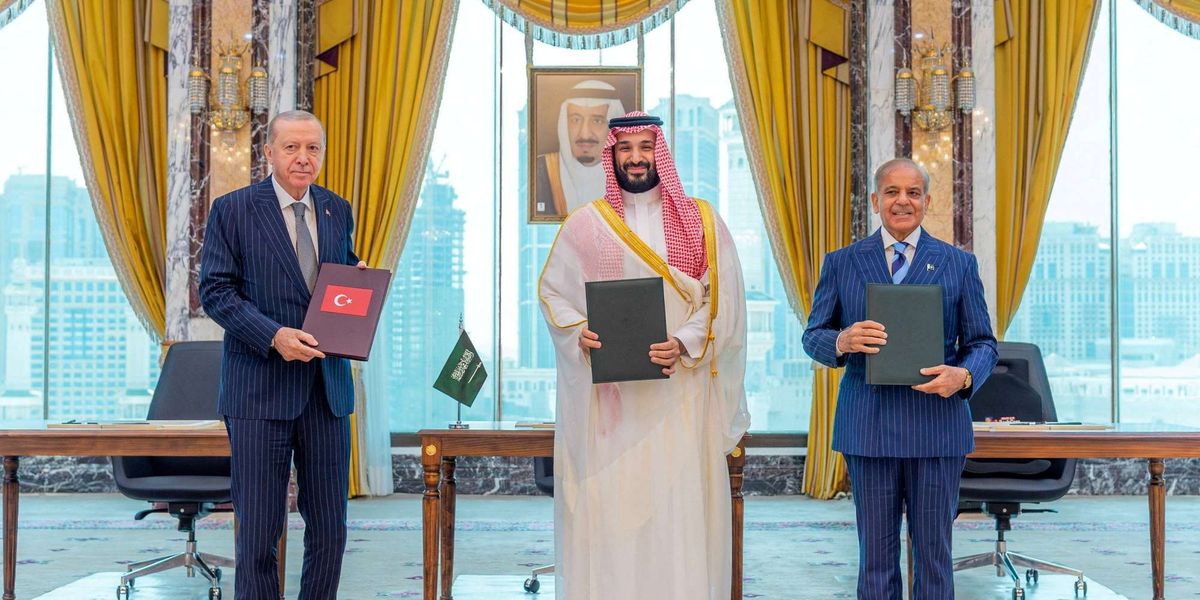
Saudi Arabia, Turkey and Pakistan sign Mecca Joint Defence Agreement
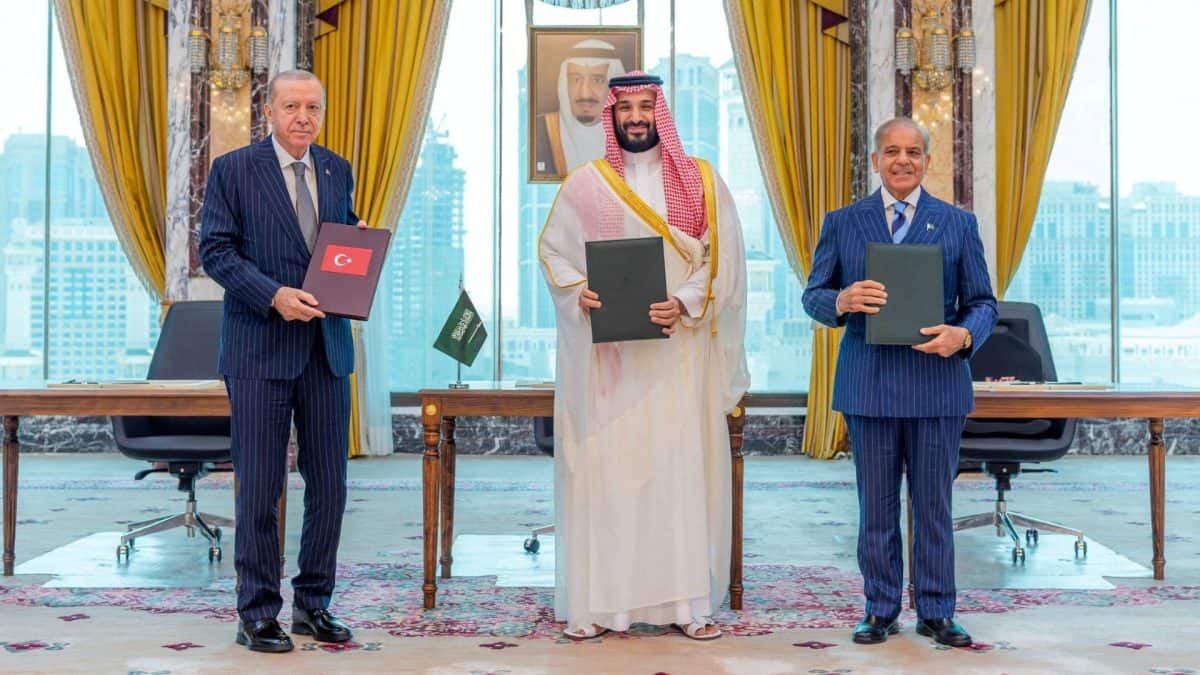
India has no reason to fear Saudi-Turkey-Pakistan Mecca pact
Pakistan seeks Mecca pact front against Israel and India
India's Response to Mecca Pact Faces Strategic Test
Pentagon Turmoil Deepens as Hegseth Tightens Grip on Military

Germany Blames Russia for Leipzig Drone Attack, Europe Vows Response
Erdogan Says Turkey Would Consider Full Shanghai Cooperation Organisation Membership
Augsburg Train Station Closed After Explosion, Suspicious Object Found

Taliban Offers Afghan Mineral Wealth as Washington Weighs Engagement
