5 days ago
Nepal Flood Warns of Rising Himalayan Glacier Disaster Risks

A large piece of ice and rock broke away from a mountain in Nepal.
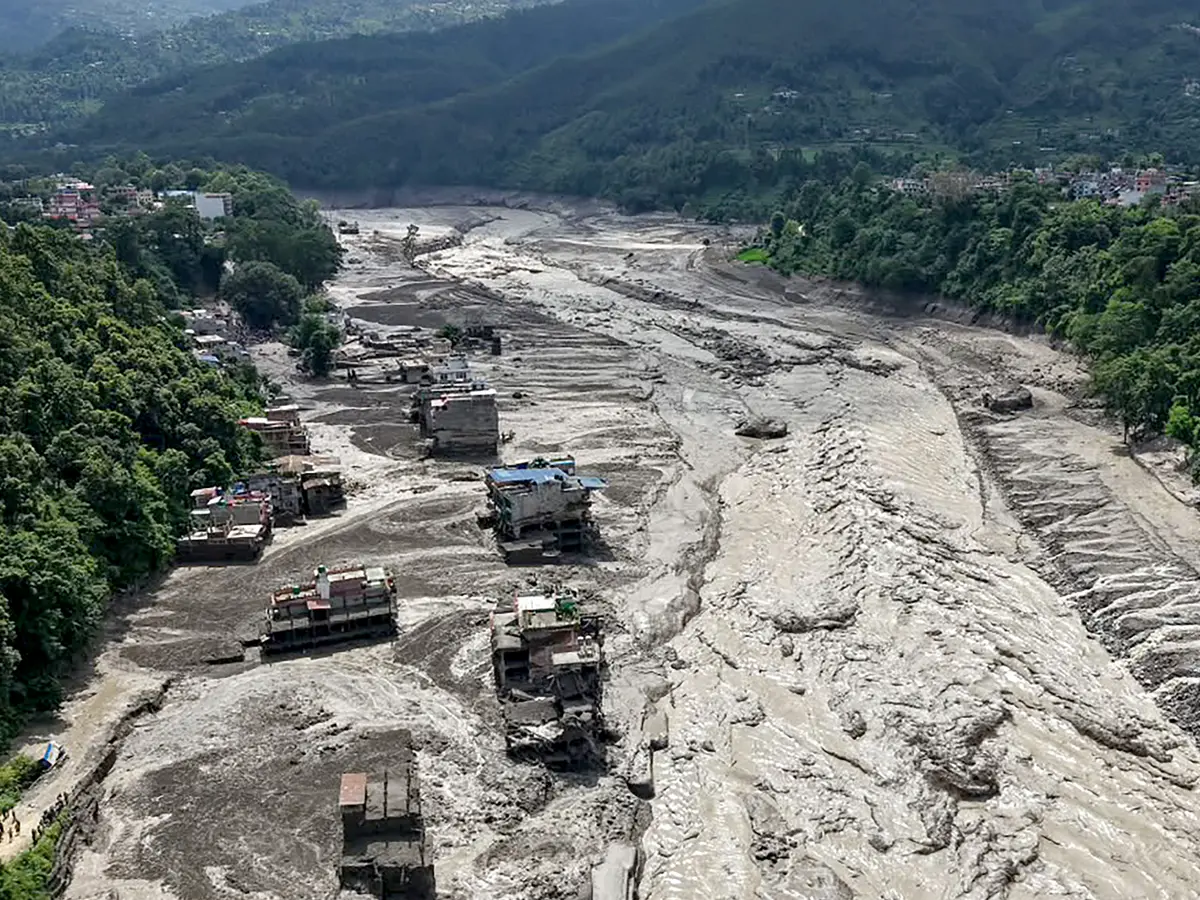
It fell into the Bhote Koshi River and helped create a sudden flood.
Dr Sharma said this was not caused by an earthquake, although the collapse made the ground shake.
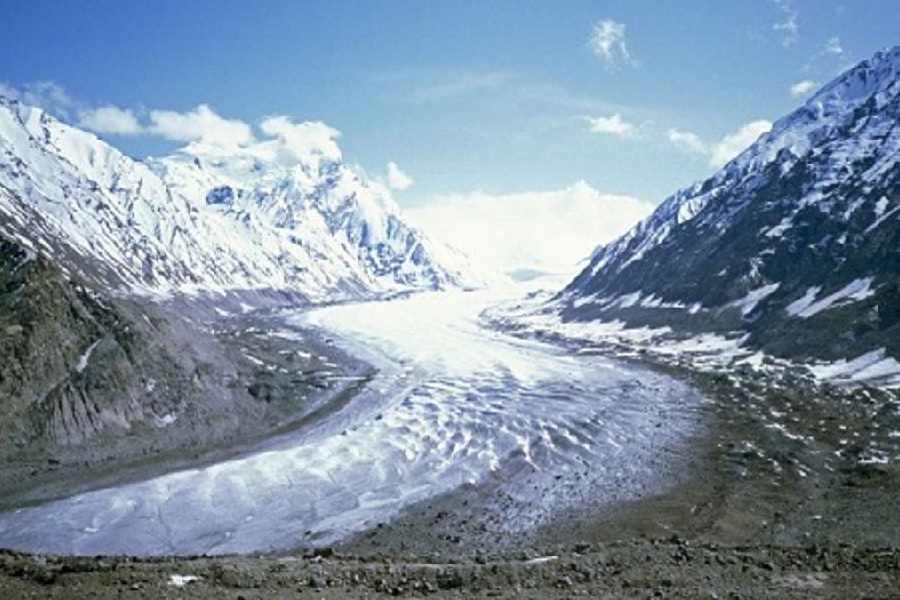
Warmer temperatures are making some glaciers weaker and easier to break apart.
Melting glaciers are also creating more glacial lakes.
If the walls of these lakes break, large floods can rush downstream.
Scientists can reduce the danger by watching glaciers, rivers and lakes more closely.
Countries in the Himalayan region need to share information because rivers cross borders.
The Nepal flood is therefore a warning that similar disasters may become more frequent.

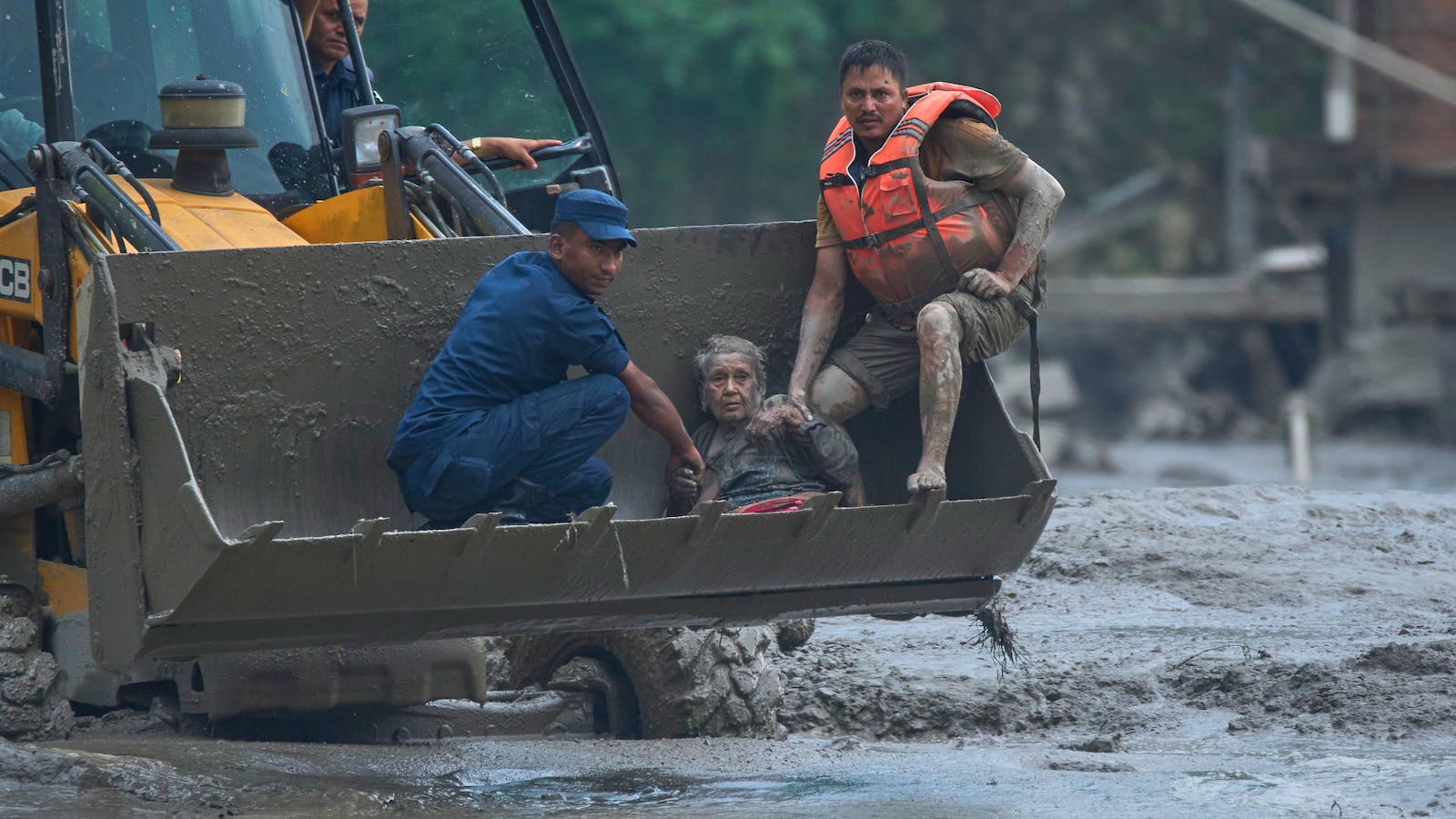
Dr Eklabya Sharma said a massive glacier-rock collapse on Nepal’s side triggered a landslide and flooding in the Bhote Koshi River.
Sharma rejected earlier suggestions that an earthquake caused the event, saying the collapse created earthquake-like tremors.
He linked increasing glacier instability to rising temperatures and said the Hindu Kush Himalaya’s glacial lakes have grown from about 3,000 in the 1990s to roughly 8,000 by 2024.
Sharma called for systematic monitoring of glaciers, glacial lakes, permafrost, rivers and vulnerable settlements across the region.
He said cooperation among the eight Hindu Kush Himalayan countries is necessary because floods can cross political borders and affect downstream communities.
- Who
- The event affected communities in Nepal, and Dr Eklabya Sharma provided the scientific assessment.
- What
- A sudden flood followed a massive glacier-rock collapse and landslide that affected the Bhote Koshi River.
- Where
- The collapse occurred on Nepal’s side near the Bhote Koshi River, which borders Nepal and Tibet.
- When
- The interview describes the event as occurring in 2026; it also references a separate Bhote Koshi flood in July 2025.
- Why
- Sharma attributed the collapse to high-altitude glacier warming and weakening, while warning that inadequate monitoring increases disaster risks.
Expert Assessment
Alternative Reports and Current Practice
Cause of the tremors
Expert Assessment
Dr Sharma said a glacier mass collapse caused the tremors and rejected an earthquake as the trigger.
Alternative Reports and Current Practice
Some earlier reports had suggested that an earthquake caused the event.
Preparedness and monitoring
Expert Assessment
Sharma argued that regular monitoring of glaciers, glacial lakes, permafrost and river basins is urgently needed to identify high-risk areas and issue warnings.
Alternative Reports and Current Practice
The interview states that monitoring is currently limited, with only a few of the region’s roughly 8,000 glacial lakes being monitored.
Key facts
- Trigger identified
- A massive glacier-rock collapse created a landslide and cascading flooding.
- Earthquake explanation
- Dr Sharma said the event was not caused by an earthquake, though the collapse produced tremors.
- Glacial lakes
- The number in the Hindu Kush Himalaya region was described as rising from about 3,000 in the 1990s to roughly 8,000 by 2024.
- Regional scope
- The Hindu Kush Himalaya region spans eight countries and contains 10 major rivers flowing across national borders.
- Main warning
- Sharma said rising temperatures are making high-altitude glaciers looser and increasing the likelihood of avalanches and floods.
- Recommended action
- He called for risk mapping, river-basin monitoring, warnings for vulnerable areas and cooperation among regional countries.
- Mitigation example
- For glacial-lake risks, Sharma said natural moraine walls may need to be stabilised or reinforced.
Quotes
Dr Eklabya Sharma
Ecologist and Himalayan science and policy expert interviewed about the Nepal flood
“Political borders don't stop such mishaps. So, what happens in the Kosi river of Nepal impacts Bihar in India and similarly what happens in Tibet impacts Nepal.”
 rediff.com
“The Nepal flood is a warning as to how much we are ready to curtail our emissions.”
rediff.com
Sources
Related news
Nepal Flash Flood Exposes South Asia’s Cross-Border Risks
Nepal Flood Catastrophe Signals Need for Himalayan Cooperation

Nepal Flash Floods Expose Glacier Risks Amid Climate Concerns
Glacial Floods Expose the Growing Himalayan Disaster Threat

Bhotekoshi Flood Revives Nepal’s Rising Himalayan Disaster Fears
Why Nepal Remains Vulnerable to Glacial Floods and Earthquakes
Nepal Plans New Landslide Warning System Along China Border

Nepal Thanks India as Glacial Disaster Rescue Efforts Continue
Nepal Warns of Heavy Rain After Deadly Floods
Nepal Flood Exposes Delayed Alerts and Cross-Border Warning Gaps

Bhotekoshi Flood Crisis: Nepal PM Shah Calls for Courage