1 hr ago
Supreme Court Says National Symbols Must Respect Conscience
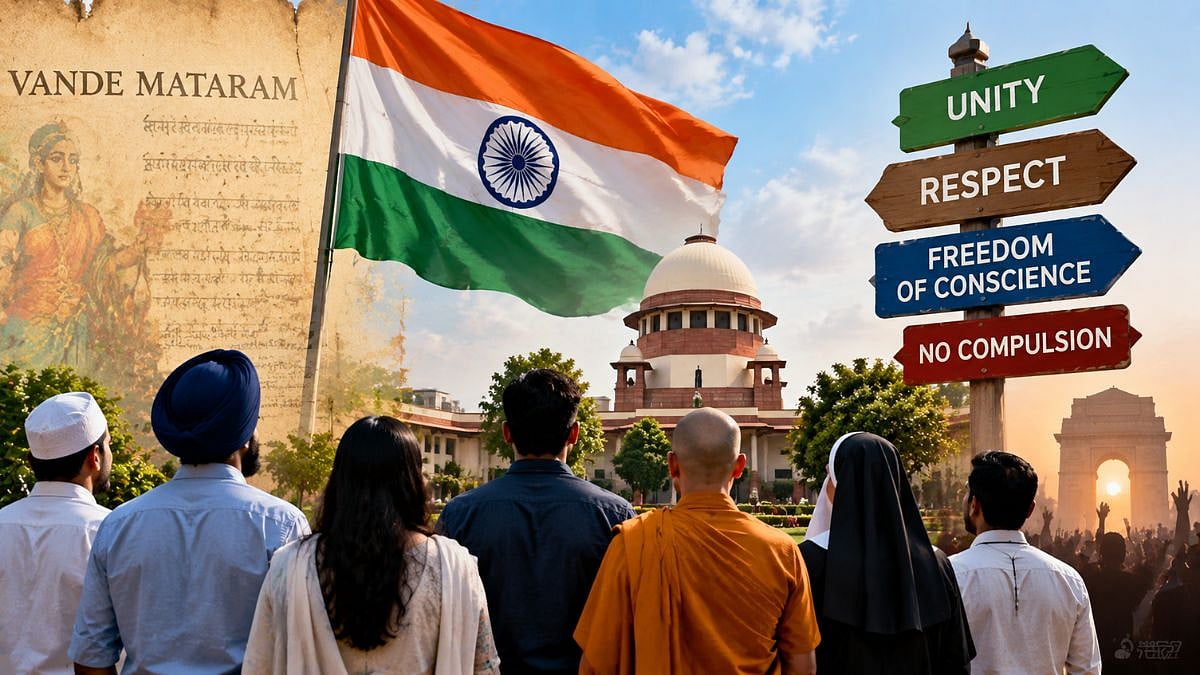
The Supreme Court examined whether people can be punished for not singing Vande Mataram.
It observed that refusing to sing should not automatically lead to criminal punishment.
Some people may have religious or personal beliefs that prevent them from singing certain words.
In an earlier case, three children did not sing Jana Gana Mana for religious reasons.
They still stood respectfully while the anthem was played.
The court protected them because respect and singing were not treated as the same thing.
Vande Mataram is an important part of India’s freedom struggle.
The article says national symbols should bring people together, not be used to test someone’s loyalty.
It also says patriotism should be freely expressed rather than forced by the government.

The Supreme Court observed that people should not face criminal prosecution merely for refusing to sing Vande Mataram.
A three-member Bench headed by Chief Justice Surya Kant relied on the principle from the Bijoe Emmanuel case.
The earlier case protected three Jehovah’s Witness children who stood respectfully but did not sing Jana Gana Mana.
The article distinguishes respecting a national symbol from being compelled to participate in singing it.
It argues that national symbols should unite citizens rather than become tests of loyalty or instruments of state coercion.
- Who
- The Supreme Court of India, through a three-member Bench headed by Chief Justice Surya Kant, considered the rights of citizens who do not sing Vande Mataram.
- What
- The court observed that refusal to sing Vande Mataram should not by itself lead to criminal prosecution or punishment.
- Where
- Before the Supreme Court of India in India.
- When
- The article does not provide a specific date; it describes the matter as a present controversy.
- Why
- The issue concerns the balance between protocols for national symbols and constitutionally protected freedom of conscience.
Conscience Protections
Compulsory Participation
Whether singing should be mandatory
Conscience Protections
The article argues that citizens should not face criminal prosecution or punishment merely for declining to sing Vande Mataram, especially when they remain respectful.
Compulsory Participation
Those demanding compulsory singing support requiring participation in the national song, although the article does not provide further detail about their reasoning.
Meaning of respect
Conscience Protections
The Supreme Court’s approach distinguishes respect for a national symbol from actually singing it, following the principle associated with the Bijoe Emmanuel case.
Compulsory Participation
The compulsory-participation position treats singing the national song as an expected expression of patriotism.
Role of national symbols
Conscience Protections
The article says national symbols should unite citizens and should not become tests of loyalty or tools of state coercion.
Compulsory Participation
Supporters of compulsory singing seek a common public expression of national loyalty through participation.
Key facts
- Court
- Supreme Court of India
- Bench
- A three-member Bench headed by Chief Justice Surya Kant
- Song at issue
- Vande Mataram
- Earlier precedent
- The Bijoe Emmanuel case protected children who declined to sing Jana Gana Mana for religious reasons.
- Central principle
- Respect for a national symbol and participation in singing it are not necessarily the same.
- Constitutional concern
- Protocols for national symbols cannot override freedom of conscience.
- Article’s broader argument
- National symbols should unite citizens, not be used to measure loyalty or compel patriotism.
Sources
Related news
Supreme Court Examines Penal Action For Refusing Vande Mataram
Supreme Court Protects Conscientious Objectors in Vande Mataram Case

Why Jana Gana Mana and Vande Mataram Can Coexist
Supreme Court Signals No Criminal Case Over Unsing Vande Mataram
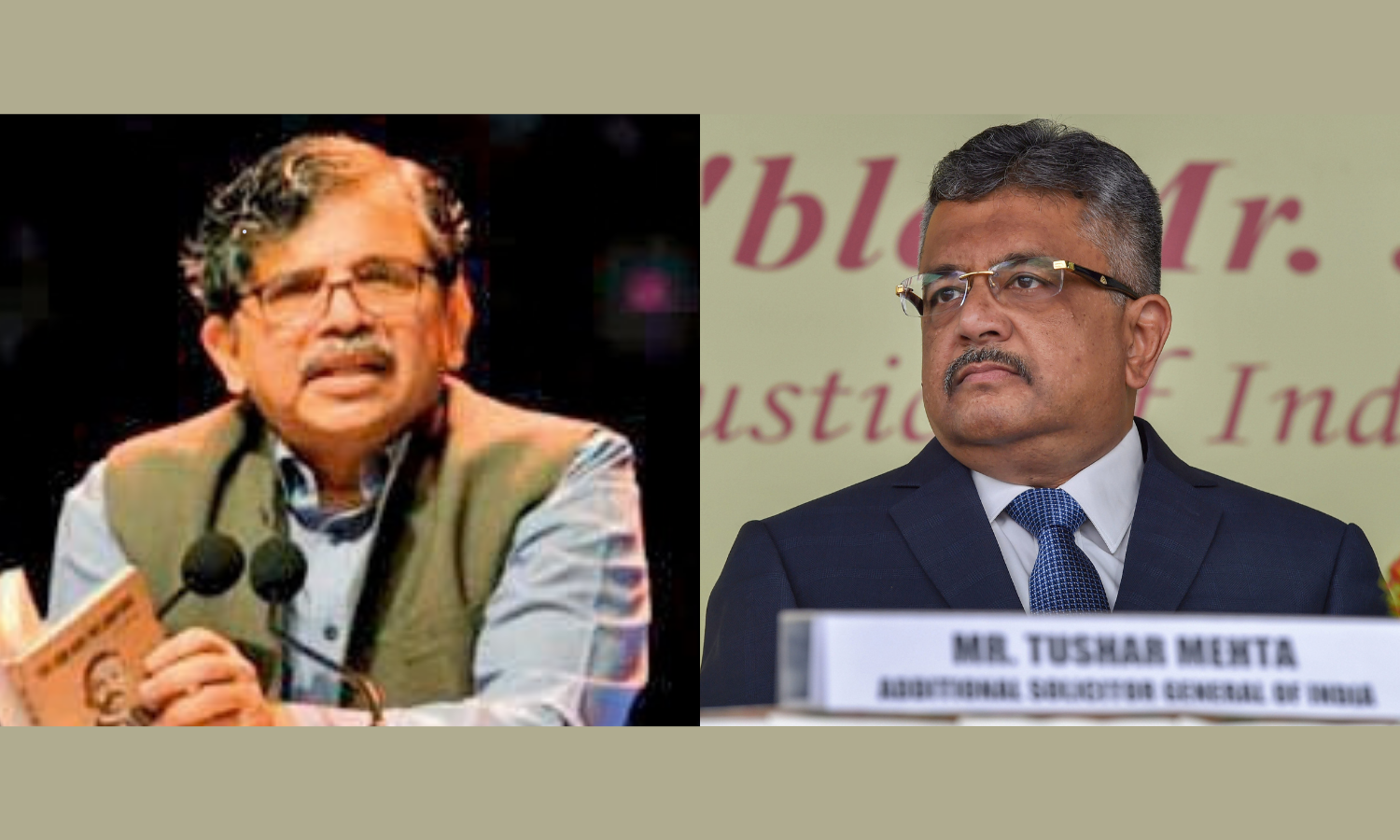
Supreme Court Examines Vande Mataram Law Amid Heated Exchange
Karnataka High Court Hears Challenge to Vande Mataram Curbs

India's Seed Industry Seeks Faster Science-Based Approvals
Telangana Creates Unified Bureau for Traffic and Road Safety
Legal Opinions Back Chandrasekaran’s Third Tata Sons Term
BJD to Hold Odisha Protest Against MMDR Act September 28