1 hr ago
Supreme Court Examines Vande Mataram Law Amid Heated Exchange
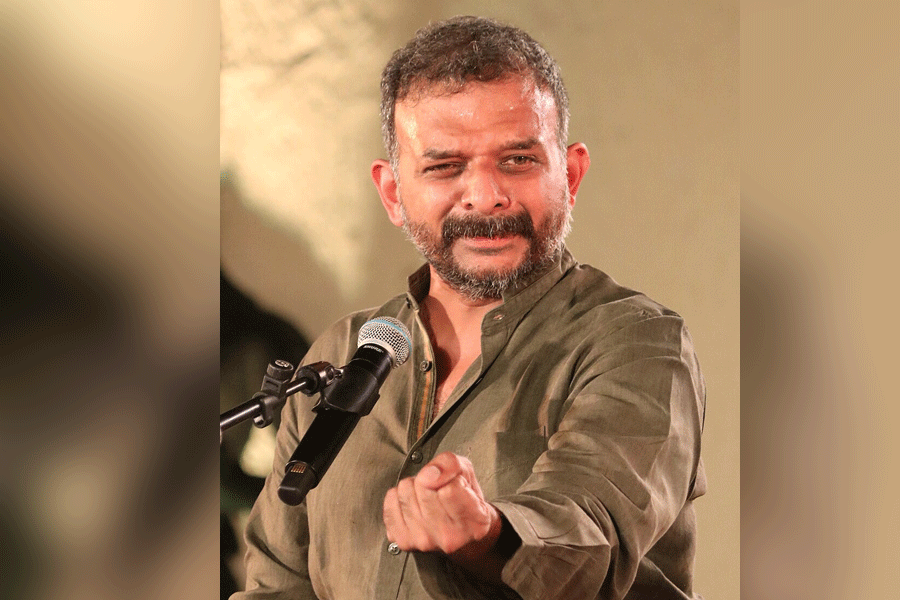
TM Krishna asked the Supreme Court to review a new law about Vande Mataram.
The law gives the song protections similar to those for the national anthem.
Government directions also ask people to sing all six stanzas at official events.
Krishna’s lawyer said the law does not clearly explain which parts of the song are covered.
He also argued that some stanzas raise religious and secular concerns.
The government lawyer disagreed and said the petition took too narrow a view of secularism.
The two lawyers argued sharply during the hearing.
The court referred to an earlier decision protecting children who respectfully declined to sing the national anthem.
It said people should not be criminally punished for refusing to sing because of conscience or religion.

TM Krishna’s plea challenges the 2026 amendment extending criminal protection to Vande Mataram.
The petition argues that the song’s last four stanzas conflict with India’s secular character.
S Muralidhar questioned the undefined meaning of “national song” and the MHA’s ungazetted directions.
Tushar Mehta defended the amendment and objected to what he called a narrow view of secularism.
The Supreme Court said conscientious objectors should not face criminal penalties for declining to sing.
- Who
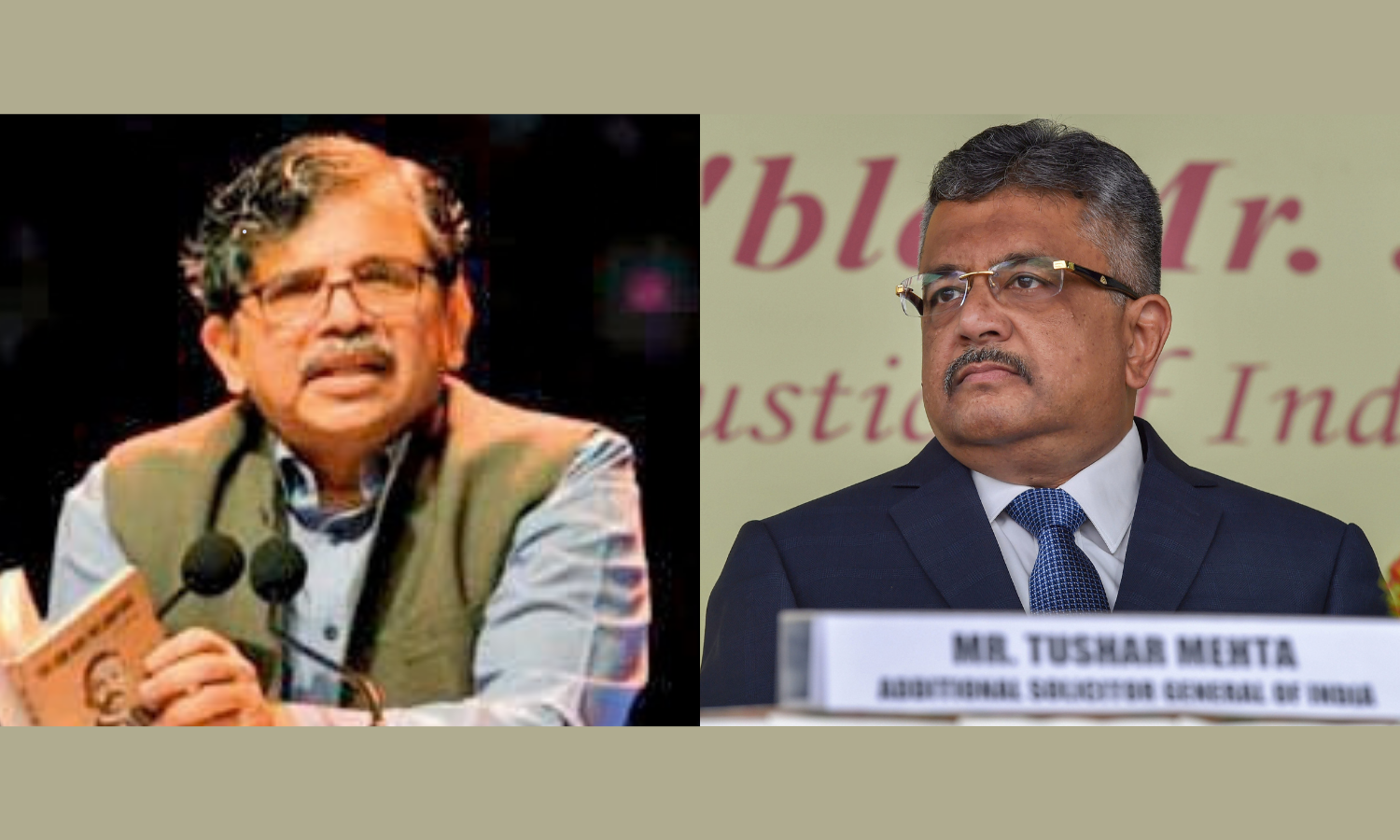
- TM Krishna, represented by Senior Advocate S Muralidhar, challenged the law; Solicitor General Tushar Mehta represented the government before the Supreme Court.
- What
- The Supreme Court heard a challenge to the 2026 amendment extending penal protection to Vande Mataram and to directions requiring all six stanzas at official functions.
- Where
- The Supreme Court.
- When
- Why
- The petition argues that the amendment is unclear, was enacted without sufficient consensus, and that the last four stanzas conflict with secular and religious-freedom principles.
Petitioner's Arguments
Government's Response
Meaning of the national song
Petitioner's Arguments
S Muralidhar argued that the amendment does not define “national song” or identify the applicable version and stanzas; he said the established understanding concerned the first two stanzas.
Government's Response
The government opposed the challenge, while the court said determining the national song was a matter for the democratic state rather than the judiciary.
Secularism and religious freedom
Petitioner's Arguments
The petition argues that the last four stanzas violate the nation’s secular character and that people should be protected if they decline to sing on religious or conscientious grounds.
Government's Response
Tushar Mehta argued that “secularism cannot be this narrow.” The court indicated that conscientious objectors should not face criminal penalties for declining to sing.
Legislative and executive process
Petitioner's Arguments
Muralidhar argued that the amendment was enacted hastily and that the Ministry of Home Affairs directions were issued through an ungazetted Office Memorandum.
Government's Response
Mehta defended the law-making process and said it must follow constitutional methods, rejecting Muralidhar’s request to withdraw his reference to “Naxalites.”
Key facts
- Petitioner
- Carnatic musician and author TM Krishna
- Challenged law
- Prevention of Insults to National Honour (Amendment) Act, 2026
- Original law
- Prevention of Insults to National Honour Act, 1971
- Government directions
- Ministry of Home Affairs directions requiring the complete six stanzas at official functions
- Petitioner’s concern
- The amendment does not define “national song” or specify which stanzas are covered
- Court’s reference
- The 1986 Bijoe Emmanuel judgment protecting children who respectfully declined to sing the national anthem
- Court’s indication
- Conscientious objectors, including those declining on religious grounds, should not face criminal consequences
Quotes
Joymalya Bagchi
Supreme Court judge hearing the petition
“Nobody who feels an infraction of Article 25, 26 rights (freedom to practice religion under the Constitution) or a conscientious objector would be subjected to (penal consequences),”
 deccanchronicle.com
“I can repeat what I said. One has to go by law. I am not sorry about what I said. I said that is the constitutional way, not what the Naxalite wants. And I am not sorry about it.”
deccanchronicle.com
Sources
Related news
Supreme Court Examines Penalties for Refusing Vande Mataram
Supreme Court Examines Challenge to Six-Stanza Vande Mataram Mandate

Why Jana Gana Mana and Vande Mataram Can Coexist
Karnataka High Court Hears Challenge to Vande Mataram Curbs
Karnataka Court Challenge Targets Two-Stanza Vande Mataram Order

Nagaland Vande Mataram Protest Enters Second Day Amid Legal Review
Congress Slams Delay in Ram Temple Donation Theft Chargesheet

Uttar Pradesh rushes to file Ayodhya temple theft chargesheet
Supreme Court Told Ram Mandir Theft Cases Number 105