1 hr ago
ISRO’s ‘Naughty Boy’ Boosts EOS-05 Orbit, Saving Propellant
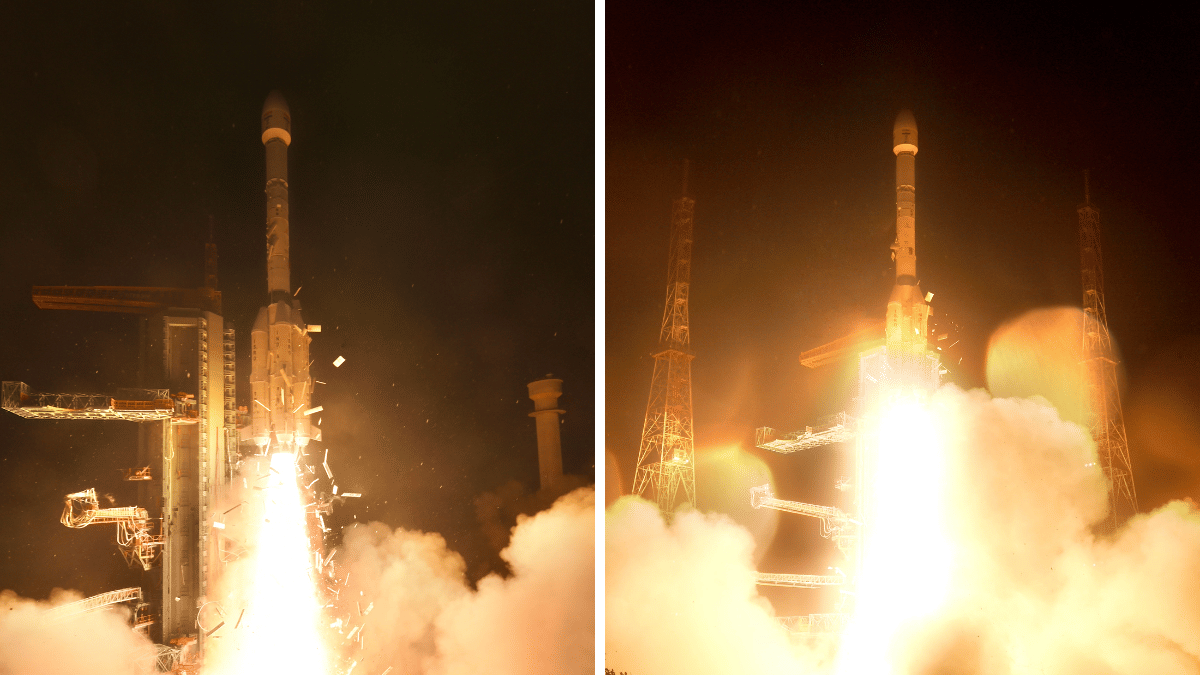
ISRO launched a rocket called GSLV-F17 carrying the EOS-05 satellite.
The rocket is sometimes nicknamed the “Naughty Boy” because it had failures early in its history.
This time, it worked better than expected.
It placed the satellite higher than planned in space.
EOS-05 is designed to watch India continuously from a very high orbit.
It can provide information about weather, disasters, infrastructure and regional surveillance.
Because the rocket did more of the work, the satellite may need less of its own fuel.
The saved fuel could help EOS-05 operate for longer.

ISRO launched the GSLV-F17 rocket from Sriharikota early on 4 September, carrying the EOS-05 satellite.
The rocket placed EOS-05 into a geosynchronous transfer orbit with a 171-kilometre perigee, 31,026-kilometre apogee and 19.28-degree inclination.
The mission document had expected an initial orbit with a 28,934-kilometre apogee, meaning the satellite reached about 2,092 kilometres higher than planned.
EOS-05 will use its onboard propulsion to reach and circularise at an altitude of about 36,000 kilometres above the equator.
The higher-than-expected orbit may reduce fuel use and potentially extend the satellite’s operational life beyond the typical five-to-seven-year range.
- Who
- The Indian Space Research Organisation launched the GSLV-F17 rocket carrying the EOS-05 satellite.
- What
- The launch placed EOS-05 into a higher-than-planned geosynchronous transfer orbit.
- Where
- The rocket launched from Sriharikota, India.
- When
- Early on 4 September; the article describes it as ISRO’s first successful launch of 2026.
- Why
- EOS-05 is intended to provide continuous observation of India and nearby regions for weather, disaster, infrastructure and surveillance needs.
Key facts
- Rocket
- GSLV-F17
- Satellite
- EOS-05 earth observation satellite
- Actual transfer orbit
- 171-kilometre perigee, 31,026-kilometre apogee and 19.28-degree inclination
- Planned apogee
- 28,934 kilometres, according to the mission document
- Final operating altitude
- About 36,000 kilometres above the equator
- Expected benefit
- Reduced onboard propellant use and potentially longer operational life
- Typical mission life
- Earth observation satellites generally operate for five to seven years, according to the article
Quotes
Senior ISRO official
An unnamed senior ISRO official who explained the potential operational-life benefit.
“Yet another outstanding achievement by ISRO and a proud moment for our nation. The successful launch of GSLV-F17 carrying EOS-05, India’s first-ever imaging satellite from Geosynchronous orbit is a reflection of the excellence, innovation and growing capabilities that define India’s space sector.”
 theprint.in
“The mission life of an earth observation satellite is anywhere between five to seven years. But when you attain better than nominal conditions, you can extend the satellite’s life.”
theprint.in
Sources
Related news
ISRO Launches EOS-05 for Frequent Imaging of India

ISRO Launches EOS-05 Toward India’s First Geo-Imaging Orbit
ISRO Sets September Launch for EOS-05 Earth-Imaging Satellite

ISRO Launches EOS-05, India's First Geosynchronous Imaging Satellite

ISRO’s GSLV to Carry Heaviest Payload in 25 Years

India’s GSLV-F17 Set to Launch EOS-05 From Sriharikota

India GDP Base-Year Revision Triggers Political Growth Data Storm

BJP Plans Month-Long Mobilisation Around Modi’s 25 Years

JPC Examines FCRA Bill as BJP MP Arvind Thanks Leaders

India Hails GSLV-F17 Launch as Major Space Milestone

Letters Debate Domestic Labour, Himalayan Disasters, Prices And Dated Rules