1 week ago
Iran-Backed Attacks Test Turkey-Pakistan-Saudi Arabia Defence Pact

Iran and groups supported by Iran have attacked some countries in the Middle East.
One of those countries is Saudi Arabia, which was targeted by the Houthis using drones.
Saudi Arabia recently signed a defence agreement with Turkey and Pakistan.
The agreement says an attack on one country should be treated as an attack on all three.
However, Turkey’s foreign minister said the countries must consult about what help should be given.
He also said the attacked country must formally ask for assistance.
This means the agreement does not automatically require the other countries to send soldiers.
Experts therefore question whether the pact will be used in the current conflict.

Iran and its Houthi proxy have targeted infrastructure in Saudi Arabia amid the reported US-Iran war and Strait of Hormuz standoff.
The Mecca Joint Defence Agreement, signed on 7 August 2026, says an attack on one member should be treated as an attack on all three.
Turkey, Pakistan and Saudi Arabia have not publicly indicated that they would respond militarily to the latest attacks.
Turkey’s foreign minister has described consultation and a formal request for assistance as conditions for determining any response.
Experts say the pact lacks automatic military obligations, a joint command structure and a defined response mechanism, potentially limiting its effectiveness.
- Who
- Iran and its Houthi allies are accused of targeting Saudi Arabia, while Turkey, Pakistan and Saudi Arabia are parties to the defence agreement.
- What
- Iran-backed attacks have raised questions about whether the Mecca Joint Defence Agreement would produce a joint military response.
- Where
- The reported attacks involved Saudi Arabia, including Najran and Jazan, amid tensions around the Strait of Hormuz and the wider Middle East.
- When
- The agreement was signed on 7 August 2026; the reported US-Iran war began on 28 February 2026, and an earlier strike on Saudi Arabia’s East-West oil pipeline occurred in April 2026.
- Why
- The article says Iran is targeting oil infrastructure and alternate export routes to disrupt energy supplies, raise crude prices and increase pressure on the United States and Israel.
Pact Provides Collective Deterrence
Pact Has Limited Automatic Force
Meaning of the agreement
Pact Provides Collective Deterrence
The agreement states that an attack on one member is an attack on all, and its supporters present the combined military capabilities as a deterrent.
Pact Has Limited Automatic Force
The text has not been fully published, and Turkey’s foreign minister has said members must consult about the nature and scale of assistance.
Response to Saudi attacks
Pact Provides Collective Deterrence
A coordinated response could demonstrate that attacks on Saudi Arabia carry consequences for the attacker.
Pact Has Limited Automatic Force
Neither Turkey nor Pakistan has announced military action against Iran or the Houthis, and Saudi Arabia has not invoked the pact over the reported proxy strikes.
Future reliability
Pact Provides Collective Deterrence
The pact could deepen defence cooperation, including technology from Turkey, funding from Saudi Arabia and personnel from Pakistan.
Pact Has Limited Automatic Force
Experts say it lacks a NATO-like command structure, common budget and defined response mechanism; past examples suggest political commitments may not lead to military intervention.
Key facts
- Defence pact
- The Mecca Joint Defence Agreement links Turkey, Pakistan and Saudi Arabia.
- Signing date
- 7 August 2026
- Stated principle
- An armed attack against one member is described as an attack against all three.
- Key limitation
- The agreement reportedly requires consultation and does not establish an automatic military response.
- Saudi targets
- The Houthis said they targeted a sensitive site at Najran airport and an Aramco facility in Najran.
- Military estimates
- The three countries reportedly have about 1.4 million active personnel, 3,400 aircraft, 6,000 tanks and more than 340 naval assets combined.
- Oil-price strategy
- An expert cited in the article said Iran wants oil disruption and sustained prices above $100 per barrel to increase international pressure on Washington.
Quotes
Balaji Rao Mudili
Research Analyst at Bonanza
“The division of labour is explicit as well, with Saudi Arabia financing and funding defence projects, Turkey supplying advanced defence technology, and Pakistan providing frontline manpower. Combined, the three fields have roughly 1.4 million active personnel, with Pakistan 660,000, Turkey 481,000, Saudi Arabia 247,000, along with about 3,400 aircraft, 6,000 tanks and over 340 naval assets. Turkey has NATO's second-largest military after the US, and Pakistan is the only nuclear-armed Muslim کشور”
 livemint.com
“The Tehran plan is simple: disrupt the oil supply and fuel the crude oil price rise. This will weigh on the global economy due to soaring inflation and fiscal deficit. So, Iran's strategy is to prolong the war as long as they can and keep the oil supply tap off through the Strait of Hormuz and other routes.”
livemint.com

Hakan Fidan
Turkey’s foreign minister
“An attack on a member country will be considered a common threat only if that country formally requests assistance.”
livemint.com
Sources
Related news

Saudi Arabia, Turkey, Pakistan Sign Mecca Joint Defence Agreement
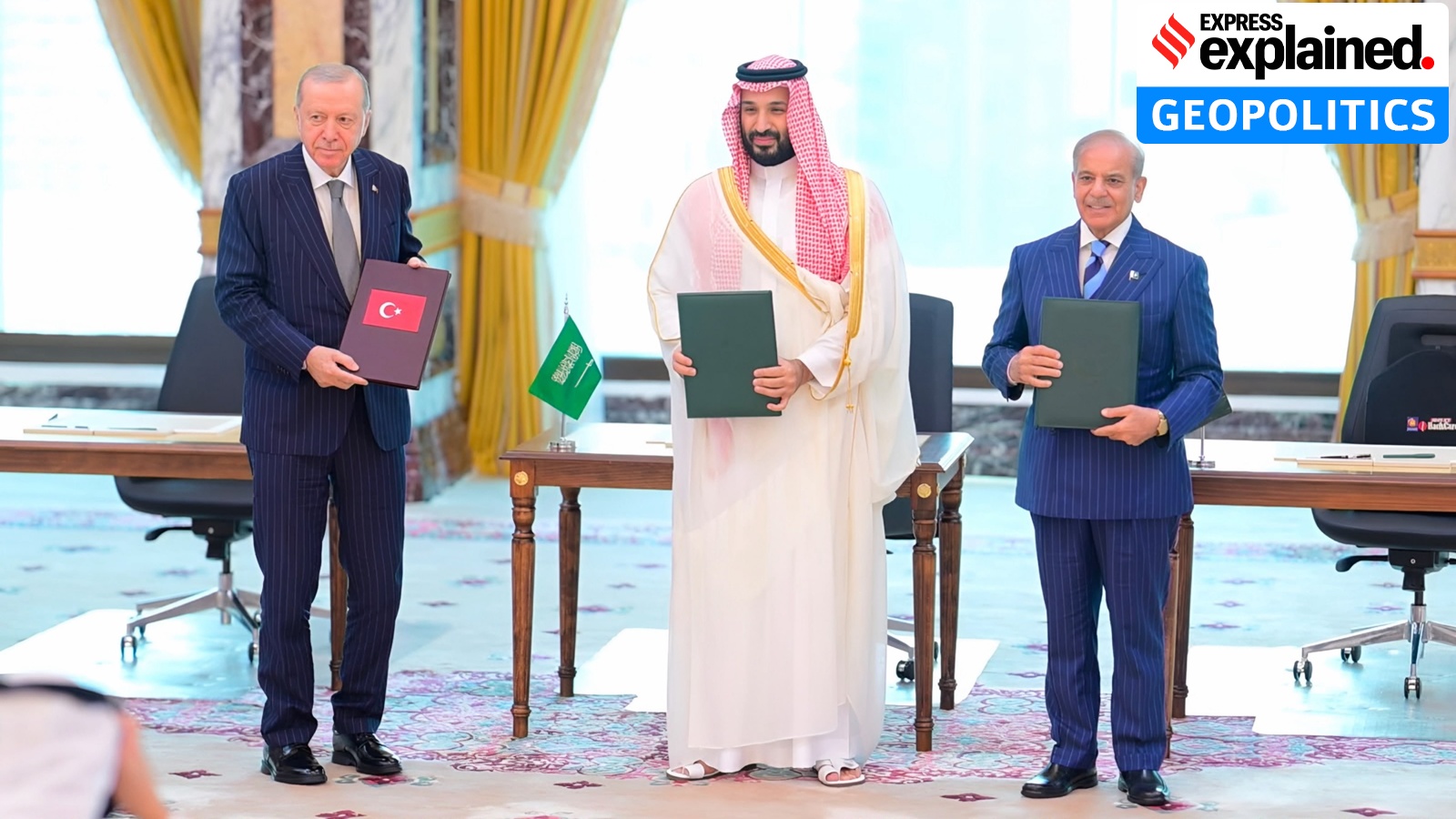
Saudi Arabia, Turkey, Pakistan Sign Mecca Joint Defence Agreement

Turkey, Saudi Arabia and Pakistan Begin Defence Pact Talks
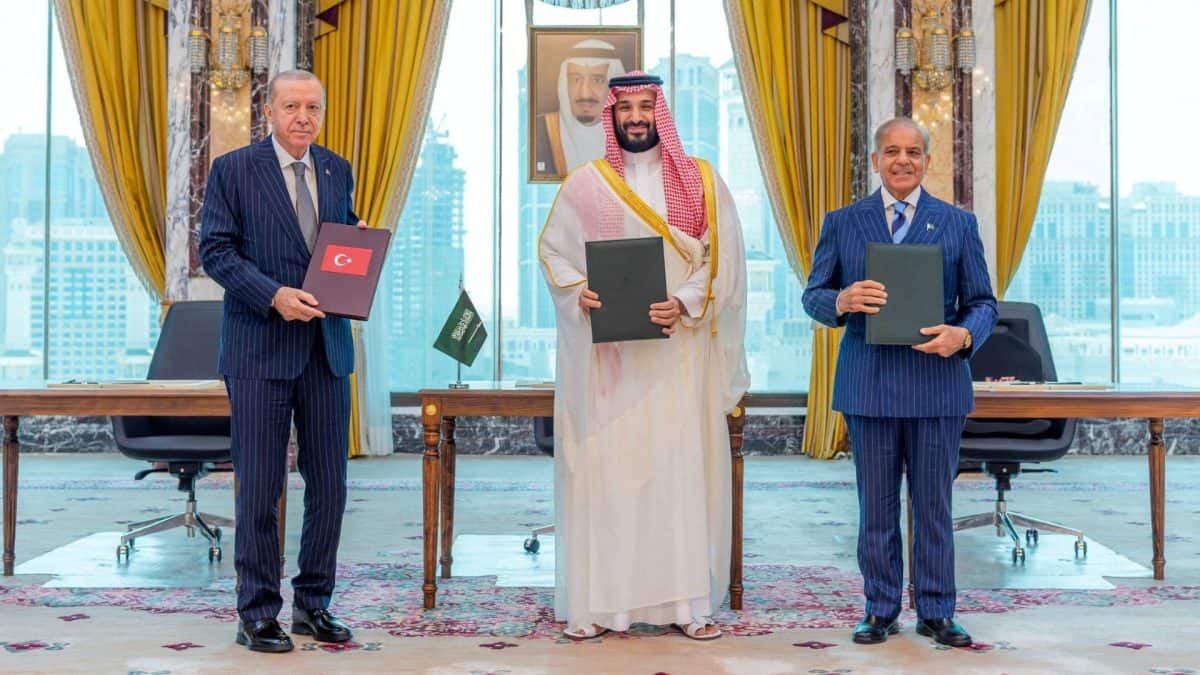
Why Pakistan’s Mecca Pact May Not Shield It From India

Mecca Joint Defence Pact Risks Remaining Rhetorical, Report Warns
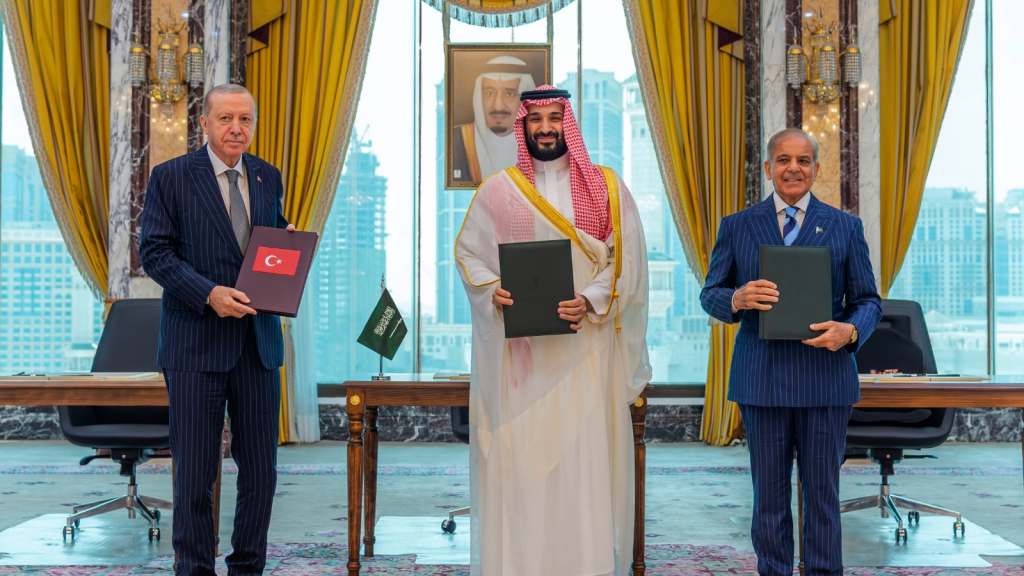
Mecca Defence Pact Raises Questions Over Its Intended Threat

Chevron Plans $7 Billion Venezuela Expansion Amid U.S. Oil Push

Saudi Arabia Says Iranian Tanker Attack Killed Two Sailors
U.S.-Iran Exchange Escalates Across Middle East, Markets Slide
Trump Aides Seek Quiet Iran War Before Midterm Elections
US Warns Middle East Travelers Amid Escalating Iran-Linked Tensions