1 week ago
Mecca Defence Pact Raises Questions Over Its Intended Threat
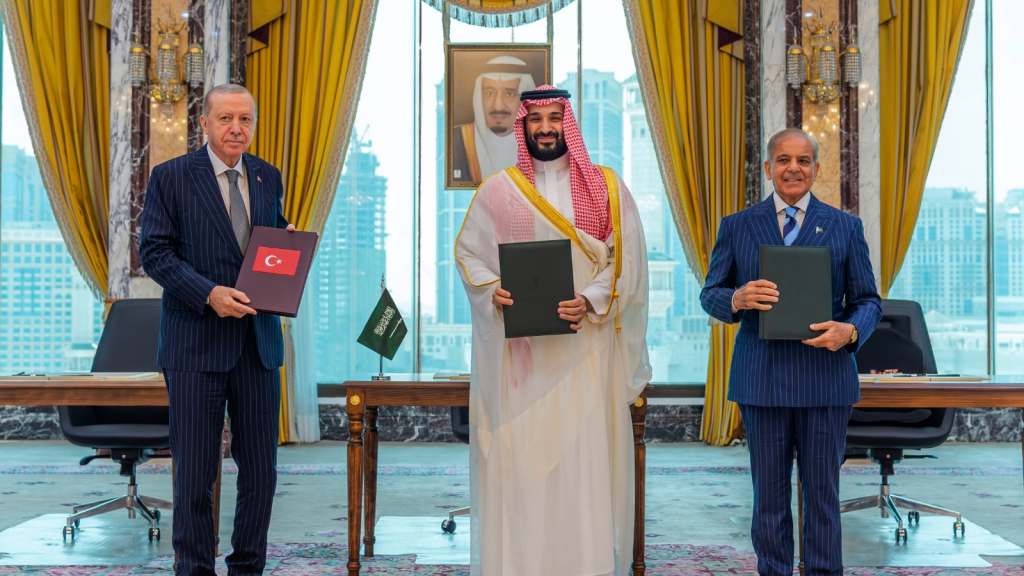
Saudi Arabia, Turkey and Pakistan have agreed to help defend one another if any of them is attacked.
Their agreement does not clearly say who they would fight or exactly where it applies.
The Houthis, Iran and Israel are discussed as possible threats.
However, each country worries about different dangers.
Saudi Arabia is concerned about regional attacks and shipping disruptions.
Turkey is especially concerned about Israel’s presence in Syria.
Pakistan is more focused on India and Afghanistan.
Some people see the pact as a possible alliance of Sunni countries, while others doubt that the countries would respond together in every conflict.
The article says that bringing Iran into a peaceful regional agreement may be a better long-term solution.

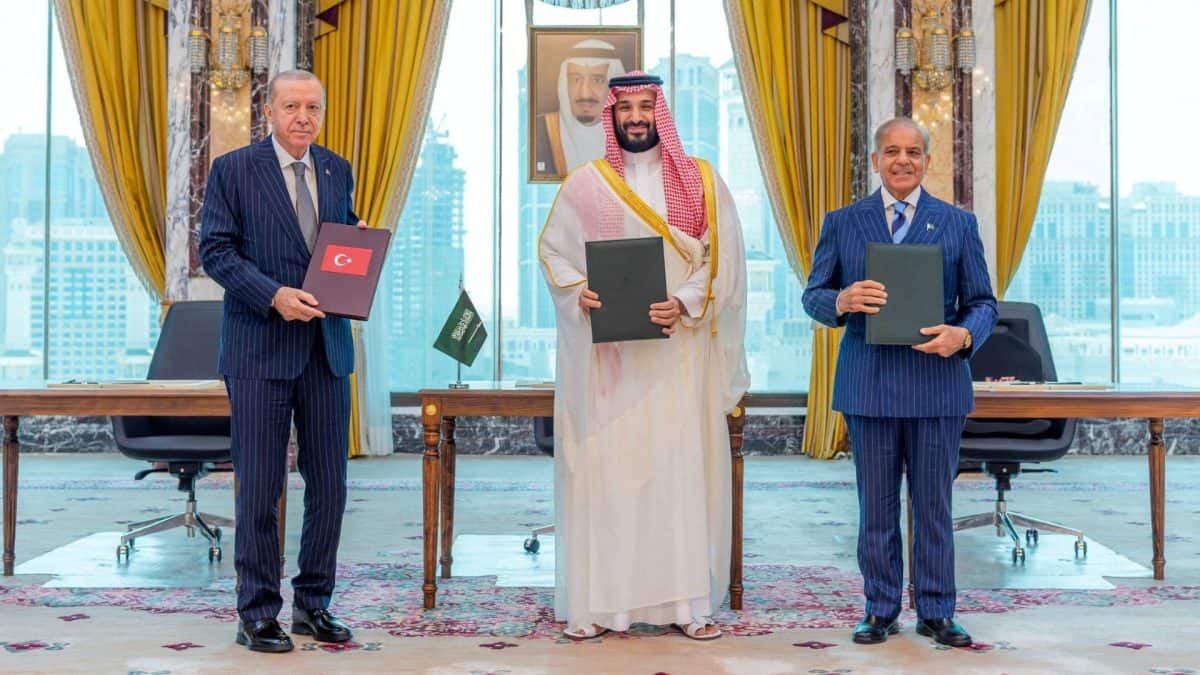
Saudi Arabia, Turkey and Pakistan signed the Mecca Joint Defence Agreement, pledging to treat an attack on one as an attack on all.
The agreement does not publicly define the commitments, geographic scope or specific adversary covered by the pact.
The analysis identifies the Houthis, Iran and Israel as possible threats, while noting that the three signatories have different security priorities.
The pact has prompted speculation over whether it represents a Sunni alliance or an Islamic equivalent of NATO.
The article argues that incorporating Iran into a broader regional settlement could offer a lasting alternative to conflict and disruption of oil supplies.
- Who
- Saudi Arabia, Turkey and Pakistan signed the Mecca Joint Defence Agreement.
- What
- The pact says an armed attack against any one of the three states will be regarded as an attack against all three.
- Where
- The agreement was signed in connection with a summit in Makkah, Saudi Arabia.
- When
- It was announced after the Makkah Al-Mukarramah Summit; the article does not give the summit date.
- Why
- The stated purpose is collective defence, although the pact does not specify a particular adversary or the precise scope of its commitments.
Supporters and Strategic Rationale
Skeptics and Strategic Concerns
Collective defence
Supporters and Strategic Rationale
The agreement could give the three countries a mechanism to respond jointly to an armed attack and strengthen their regional security cooperation.
Skeptics and Strategic Concerns
The pact does not explain the military obligations, geographic limits or circumstances requiring a joint response, making its practical value uncertain.
Possible Islamic NATO
Supporters and Strategic Rationale
The arrangement could be viewed as a formal collective-defence alliance among major Muslim states, potentially increasing Saudi Arabia’s protection.
Skeptics and Strategic Concerns
The countries do not share the same threat perceptions: Turkey, Pakistan and Saudi Arabia have different security priorities, and Pakistan previously declined to join Saudi-led action against the Houthis in 2015.
Approach to Iran
Supporters and Strategic Rationale
The pact could help counter Iranian influence and protect Saudi Arabia from possible retaliation, according to the analysis’s discussion of the Iran threat.
Skeptics and Strategic Concerns
Treating Iran as an enemy could deepen regional divisions; the article argues that including Iran in a negotiated settlement would better protect regional stability and oil supplies.
Key facts
- Agreement
- Mecca Joint Defence Agreement
- Signatories
- Saudi Arabia, Turkey and Pakistan
- Collective-defence clause
- An armed attack against one state is to be regarded as an attack against all three.
- Possible threats discussed
- The Houthis, Iran and Israel
- Unresolved issues
- The commitments, geographic scope and situations covered by the agreement are not publicly specified in the article.
- Regional disruption
- The article says the Strait of Hormuz remains closed and Houthi attacks have closed the Bab el-Mandeb for Saudi oil shipments to Asian markets.
- Proposed alternative
- The article advocates mainstreaming Iran into a peaceful regional settlement and lifting sanctions through an agreement.
Quotes
Saudi Arabia, Turkey and Pakistan
The three countries that issued the joint statement following the Makkah Al-Mukarramah Summit
“any armed attack against any of the three states shall be regarded as an attack against them all”
 indianexpress.com
Sources
Related news
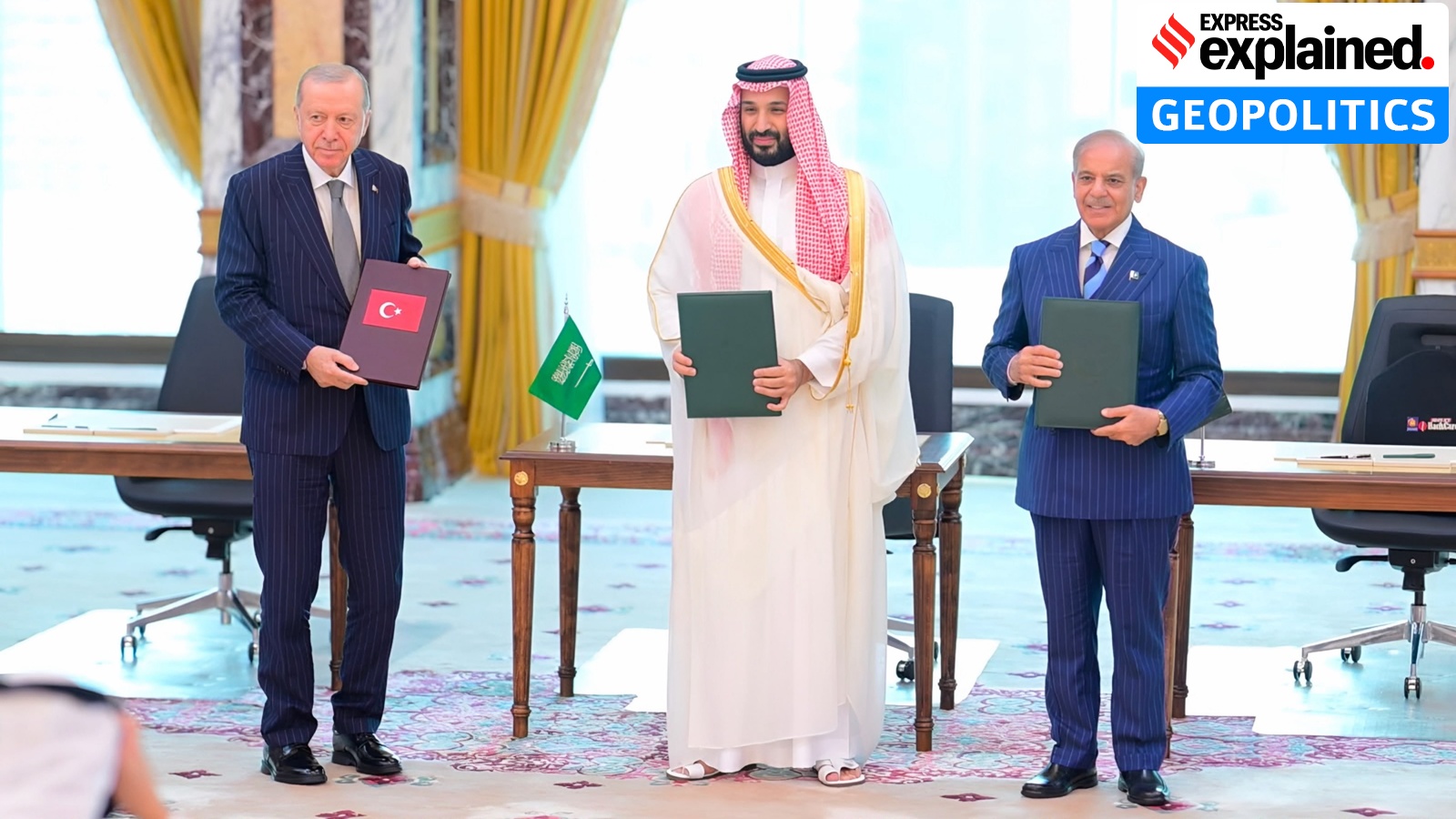
Saudi Arabia, Turkey, Pakistan Sign Mecca Joint Defence Agreement

Mecca Joint Defence Pact Risks Remaining Rhetorical, Report Warns
Pakistan seeks Mecca pact front against Israel and India
Mecca Defence Pact Needn't Scare India, Editorial Says
Why Pakistan’s Mecca Pact May Not Shield It From India

Saudi Arabia, Turkey, Pakistan Sign Mecca Defence Agreement

Chevron Plans $7 Billion Venezuela Expansion Amid U.S. Oil Push

Saudi Arabia Says Iranian Tanker Attack Killed Two Sailors
U.S.-Iran Exchange Escalates Across Middle East, Markets Slide
Trump Aides Seek Quiet Iran War Before Midterm Elections
US Warns Middle East Travelers Amid Escalating Iran-Linked Tensions