

3 weeks ago
Saudi Arabia, Turkey, Pakistan Sign Mecca Joint Defence Agreement

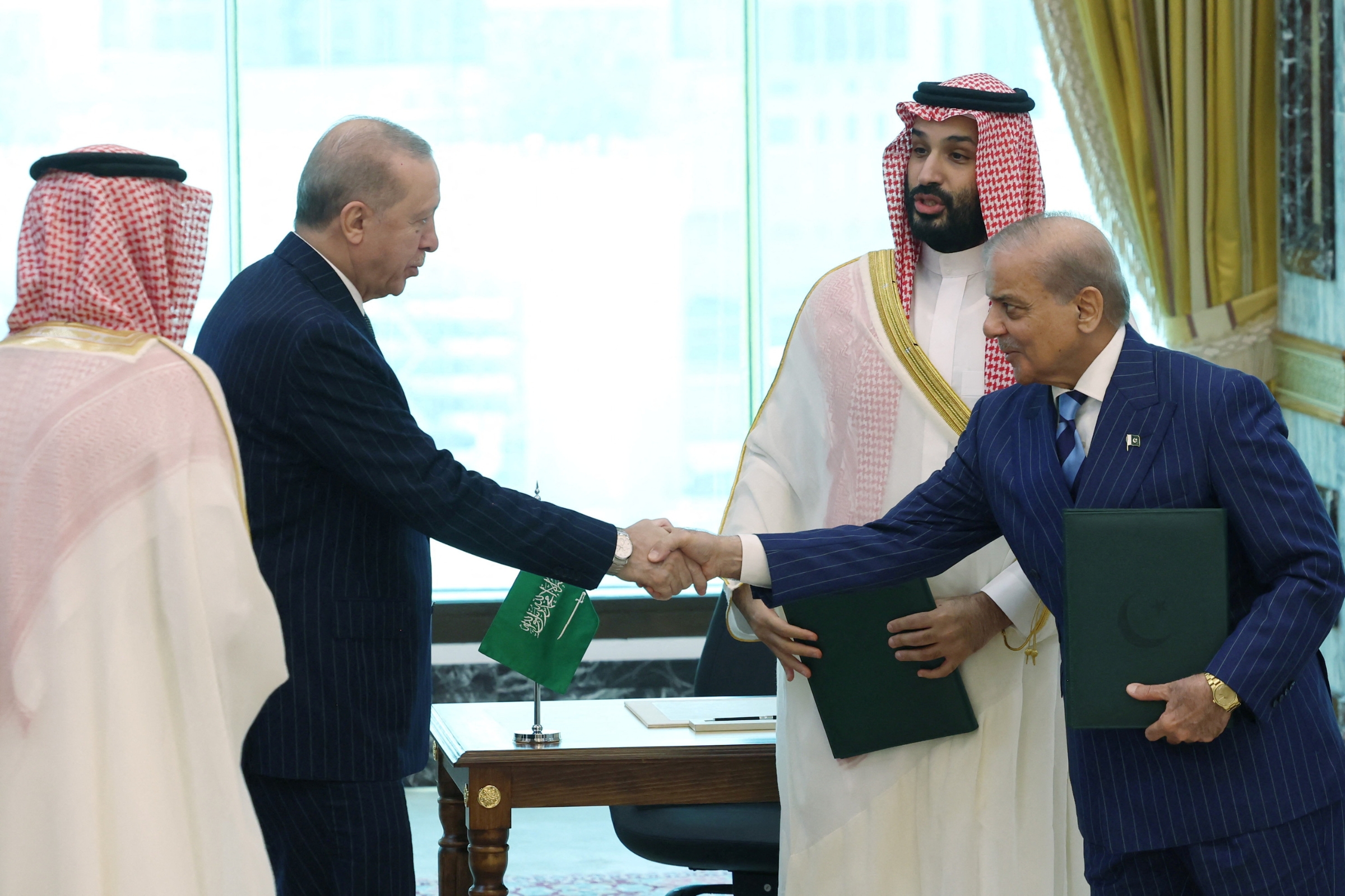
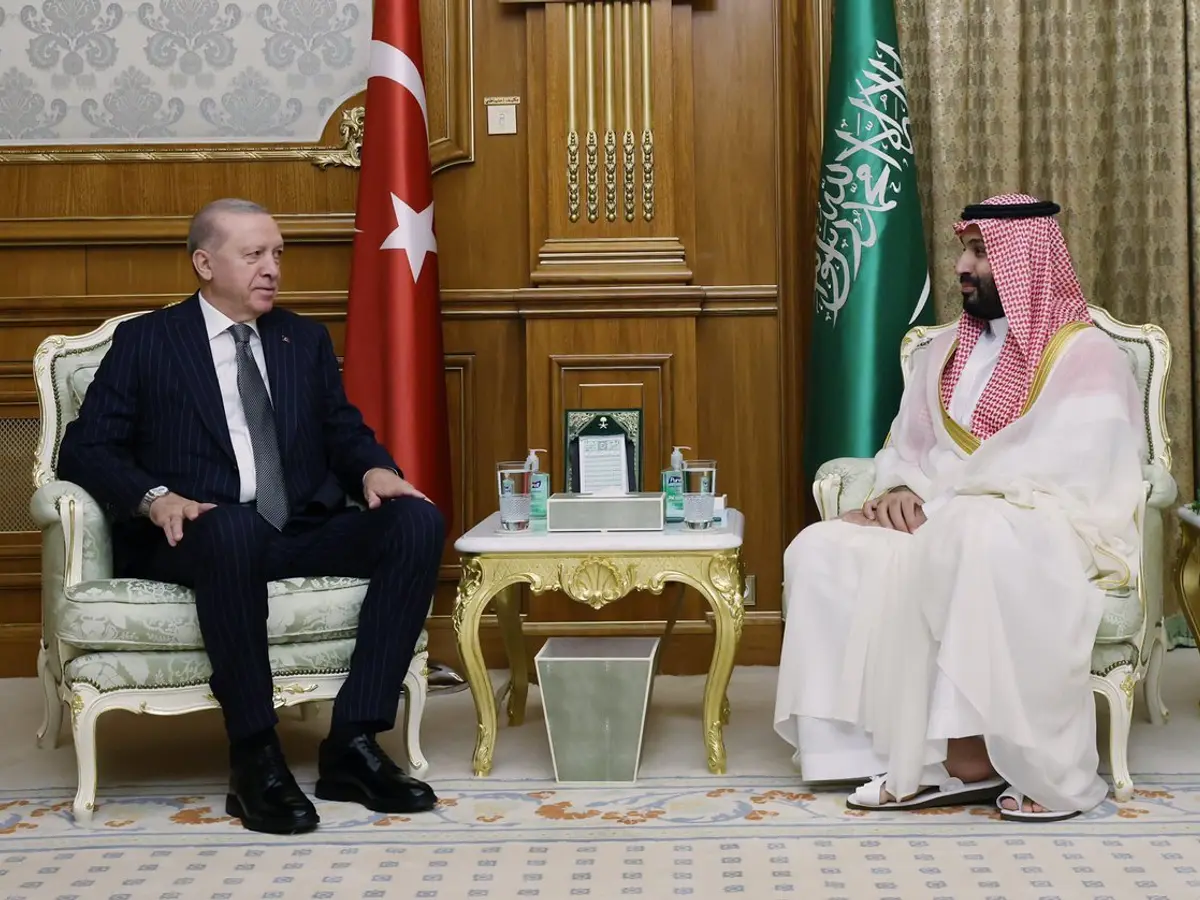
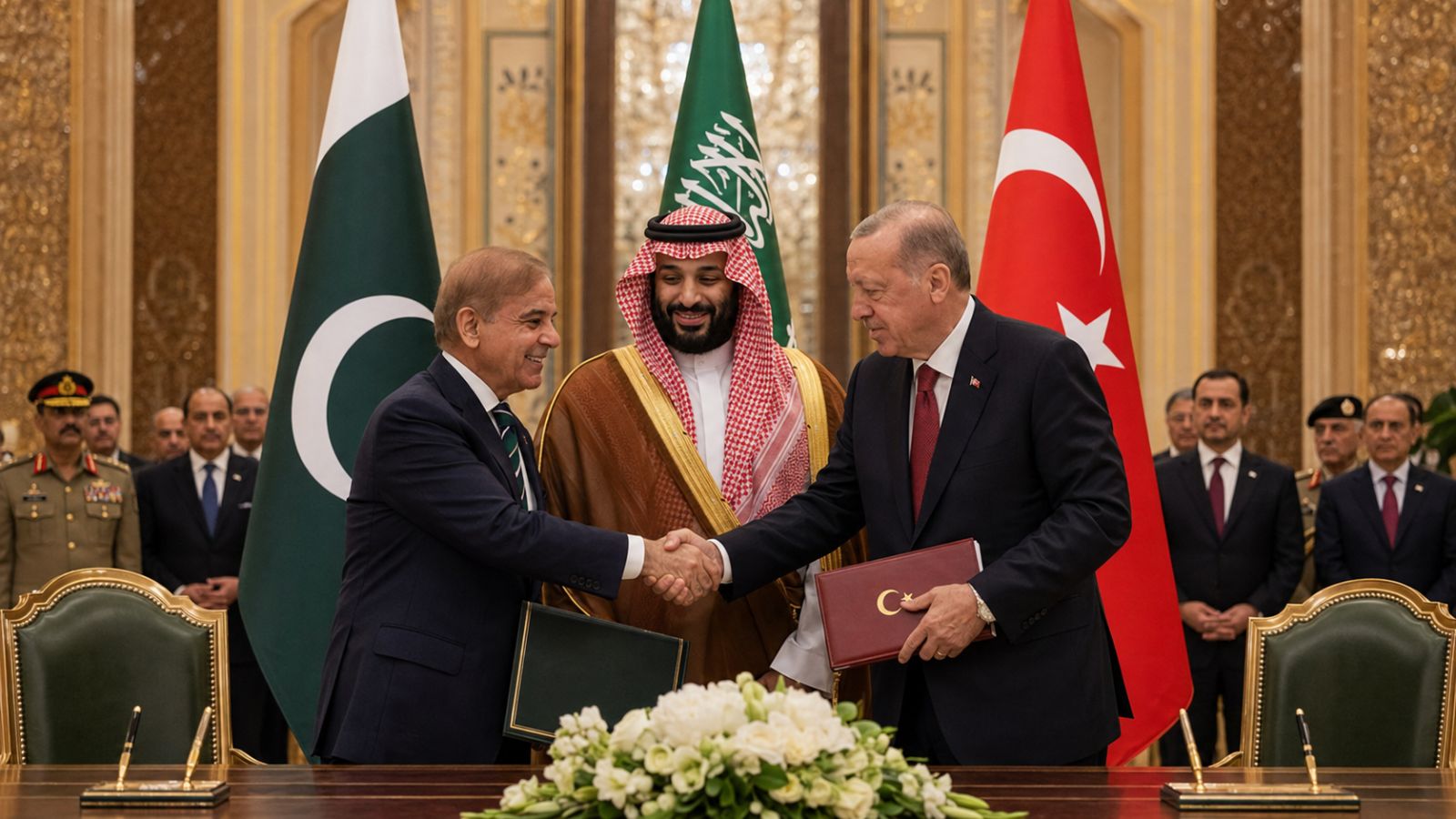
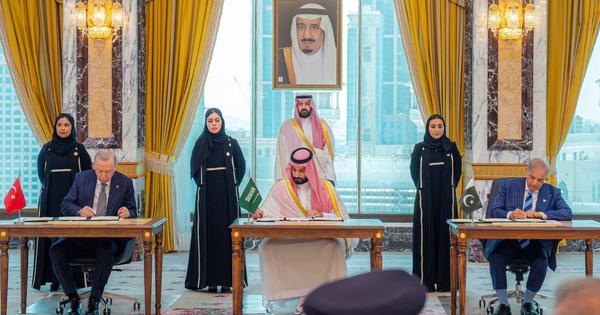
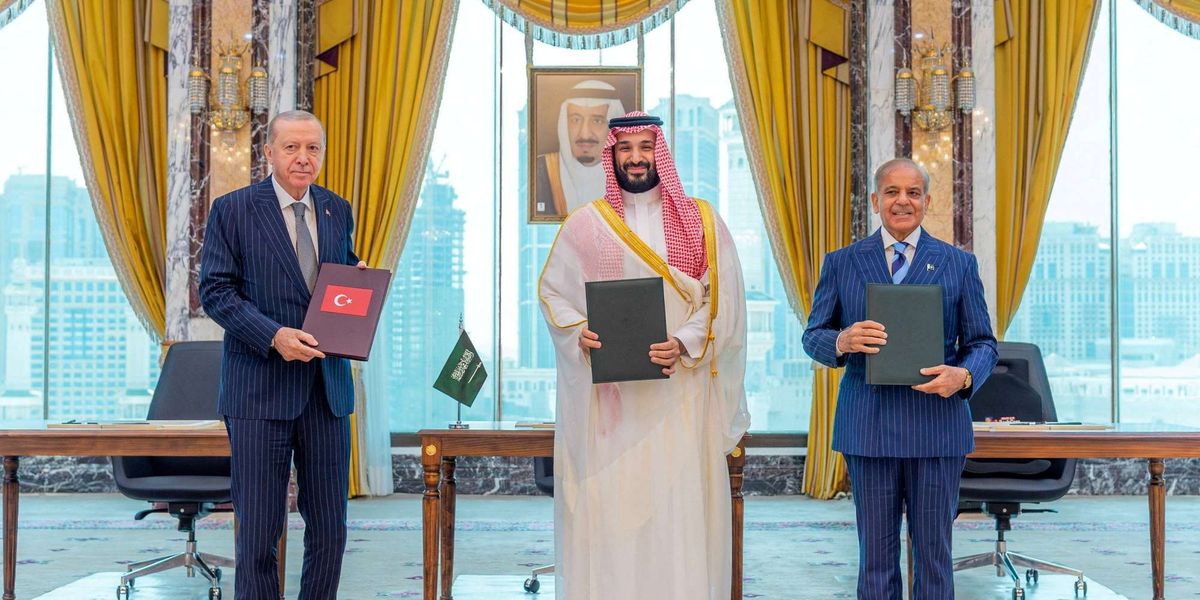
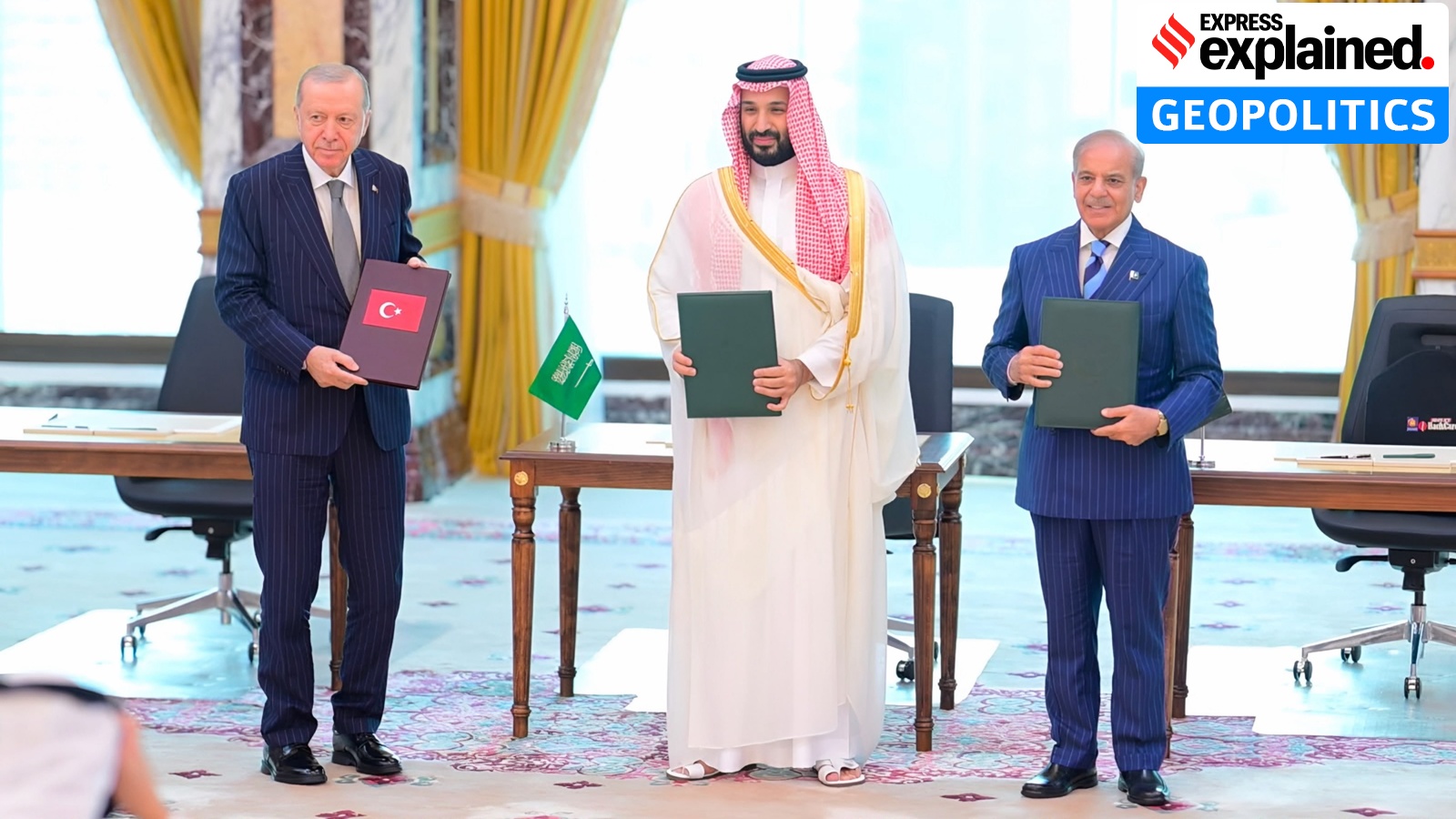
Three countries that are friends — Saudi Arabia, Turkey, and Pakistan — met in the holy city of Mecca and signed a special promise called the Makkah Joint Defence Agreement.
The promise says that if any one of them is attacked, the other two will treat it as an attack on all three, like friends who stick together.
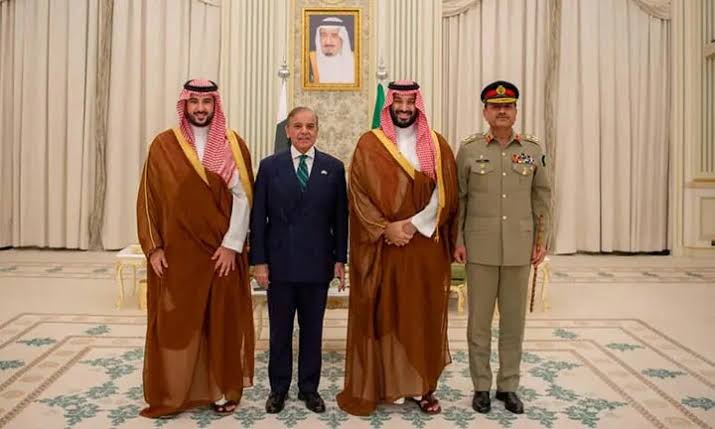
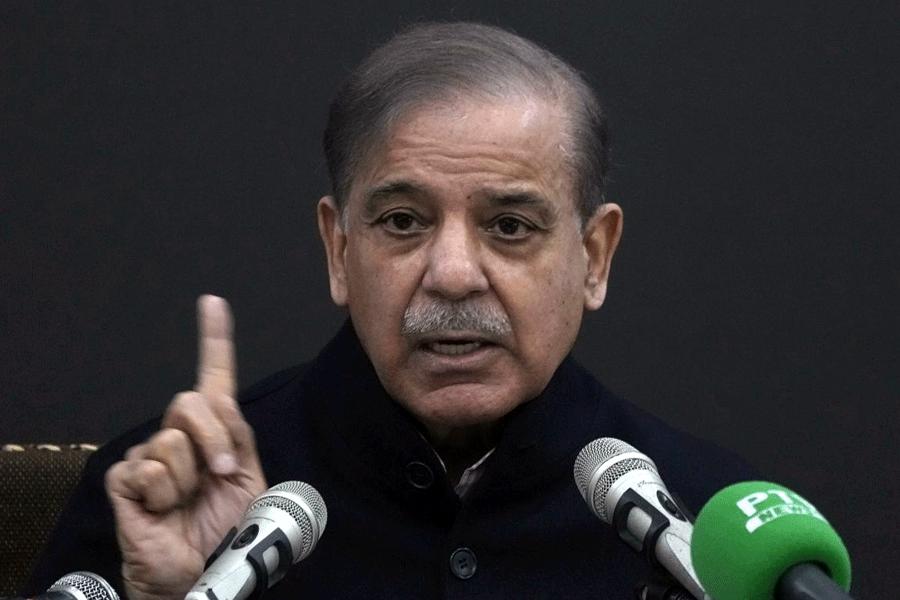
The leaders who signed it were Saudi Arabia's Crown Prince Mohammed bin Salman, Turkey's President Recep Tayyip Erdogan, and Pakistan's Prime Minister Shehbaz Sharif, who came with his top army general, Asim Munir.
They said the agreement is only for protection, is not meant to be used to attack anyone, and other countries can join later if they want.
It happened because there has been a lot of fighting in the Middle East, including a war between the United States, Israel, and Iran.
Iran and its friends have fired missiles and drones at Saudi Arabia and other Gulf countries, and many ships carrying oil have been blocked near a narrow waterway called the Strait of Hormuz.
Saudi Arabia has been hit many times, so it wants strong allies to help keep it safe.
Turkey has the second-largest military in NATO, and Pakistan is the only Muslim country with nuclear weapons.
Iran said the agreement would not make Saudi Arabia safer, and India is watching closely.
The leaders hope the promise will bring peace and safety to their people.

Saudi Arabia, Turkey and Pakistan signed the Makkah (Mecca) Joint Defence Agreement on Friday, August 7, after the Makkah Al-Mukarramah Summit for Joint Defence at the Al-Safa Palace in Mecca.
The pact's core clause stipulates that any armed attack against any one of the three states is regarded as an attack against all three, though detailed military commitments were not specified.
Turkish and Saudi officials said the agreement is purely defensive, targets no country, is open to other regional countries and does not replace existing defence arrangements.
The signing follows nearly a year of negotiations and comes amid the U.S.-Israel war with Iran that has brought missile and drone fire on Gulf states and shut down most shipping through the Strait of Hormuz.
Iran criticised the pact, with lawmaker Ebrahim Rezaei saying it would not improve Saudi Arabia's security, while India's Ministry of External Affairs spokesperson Randhir Jaiswal said India is closely following the agreement.
- Who
- Saudi Crown Prince Mohammed bin Salman, Turkish President Recep Tayyip Erdogan and Pakistani Prime Minister Shehbaz Sharif
- What
- Signed the Makkah (Mecca) Joint Defence Agreement, a trilateral pact under which an armed attack on any one of the three states is regarded as an attack against all three
- Where
- Al-Safa Palace in Mecca, Saudi Arabia, following the Makkah Al-Mukarramah Summit for Joint Defence
- When
- Friday, August 7, 2026
- Why
- To strengthen collective deterrence amid the U.S.-Israel war with Iran, repeated missile and drone attacks on Gulf states, and disruption of shipping through the Strait of Hormuz
Defensive and Open Pact
Response to Iran and Israel
Nature of the pact
Defensive and Open Pact
Turkish and Saudi officials say the agreement is purely defensive, targets no country, is open to other regional countries and does not replace existing bilateral or multilateral defence arrangements.
Response to Iran and Israel
The pact follows repeated missile and drone attacks by Iran and its allies on Saudi Arabia and other Gulf states since the U.S.-Israel attack on Iran began, and the three nations are concerned by what they see as the aggressive military stances of both Israel and Iran.
Nuclear dimension
Defensive and Open Pact
Saudi officials said the pact is not linked to any nuclear ambitions or an arms race and is not an attempt to create a military alliance or sectarian bloc.
Response to Iran and Israel
Analyst Mansoor Ahmed said the accord would likely not include a nuclear component, with Pakistan's atomic deterrent focused on the threat it perceives from India.
Effectiveness of the pact
Defensive and Open Pact
Abdulaziz Sager of the Gulf Research Center said the summit shows a growing willingness among regional powers to coordinate on security and could contribute to a more regionally driven security architecture.
Response to Iran and Israel
Iranian lawmaker Ebrahim Rezaei said the agreement would not improve Saudi Arabia's security and urged Riyadh to change its regional policies instead of seeking security from other countries.
Key facts
- Agreement name
- Makkah Joint Defence Agreement (also referred to as the Mecca Joint Defence Agreement)
- Signatories
- Crown Prince Mohammed bin Salman, President Recep Tayyip Erdogan, Prime Minister Shehbaz Sharif
- Core provision
- An armed attack against any one of the three states is regarded as an attack against all three, with enhanced defence cooperation
- Signing date and location
- Friday, August 7, 2026, at the Al-Safa Palace in Mecca, Saudi Arabia
- Negotiations
- Nearly a year of talks first reported by Reuters in January; Turkish Foreign Minister Hakan Fidan favoured a broader regional agreement
- Background conflict
- The Middle East has been in turmoil since the October 7, 2023 Hamas attack on Israel; after the U.S. and Israel attacked Iran on February 28, Iran, Yemen's Houthis and Iraqi Shi'ite militias have struck Gulf states and shut down most shipping through the Strait of Hormuz
- Military profile
- Turkey has NATO's second-largest military; Pakistan is the only nuclear-armed Muslim country; Saudi Arabia is one of the world's top oil exporters and home to Islam's holiest sites
- Pakistan deployment
- About 8,000 troops, fighter jets, drones and an air-defence system deployed to Saudi Arabia
Quotes
Saudi Crown Prince Mohammed bin Salman
Saudi Arabia’s Crown Prince
“"Although taking place amid heightened tensions in the Gulf, the visit carries significance beyond the immediate crisis and short-term considerations. It will further strengthen bilateral relations, deepen strategic cooperation, enhance coordination on regional and international issues of mutual interest and also reinforce multilateral cooperation."”
 rediff.com
“"The political symbolism of the summit is significant. Three of the Muslim world’s most influential states are convening at a moment of heightened uncertainty, demonstrating a growing willingness among regional and middle powers to coordinate more closely on security matters."”
 indianexpress.com
 theprint.in
theprint.in
theprint.in
Sources

Pakistan, Saudi and Turkiye ink joint defence agreement to treat attack on one as attack on all
‘Attack on one, attack on all’: What’s in Saudi Arabia-Turkey-Pakistan defence deal? What it means
Pak, Saudi and Turkiye sign joint defence pact
Saudi Arabia, Turkey and Pakistan seal landmark Makkah Joint Defence Agreement
Saudi Arabia, Pakistan And Türkiye Sign Mecca Joint Defence Pact: What It Means For India

'Attack on one is attack on all': Pak, Saudi, Turkiye sign joint defence pact
Saudi Arabia, Turkey, Pakistan pledge mutual defence as Middle East turmoil escalates
Saudi Arabia, Turkey and Pakistan sign joint defence deal amid regional turmoil
Pakistan, Saudi Arabia, Türkiye sign defence pact amid conflict in West Asia
Related news

Pakistan, Saudi Arabia, Turkey Sign 'Attack on One' Defence Pact
Saudi Arabia, Turkey and Pakistan sign Mecca Joint Defence Agreement
Saudi Arabia, Turkey and Pakistan Sign Joint Defence Pact

Turkey, Saudi Arabia and Pakistan Begin Defence Pact Talks
Pakistan-Saudi-Turkiye Defence Pact Framed as Regional Peace Message
Saudi Arabia, Turkey, Pakistan Sign Mecca Joint Defence Agreement
Iran Seizes Fuel-Smuggling Vessel in Gulf, Arrests 11 Crew
Trump Floats Renaming Strait of Hormuz as “Trump Strait”

Chevron Plans $7 Billion Venezuela Expansion Amid U.S. Oil Push
Saudi Tanker Hit in Hormuz, Killing Two Filipino Sailors

Indian Stocks Extend Three-Day Losing Streak as Oil Rises