6 hrs ago
Indian Stocks Slide as Oil, Conflict and Yields Rise

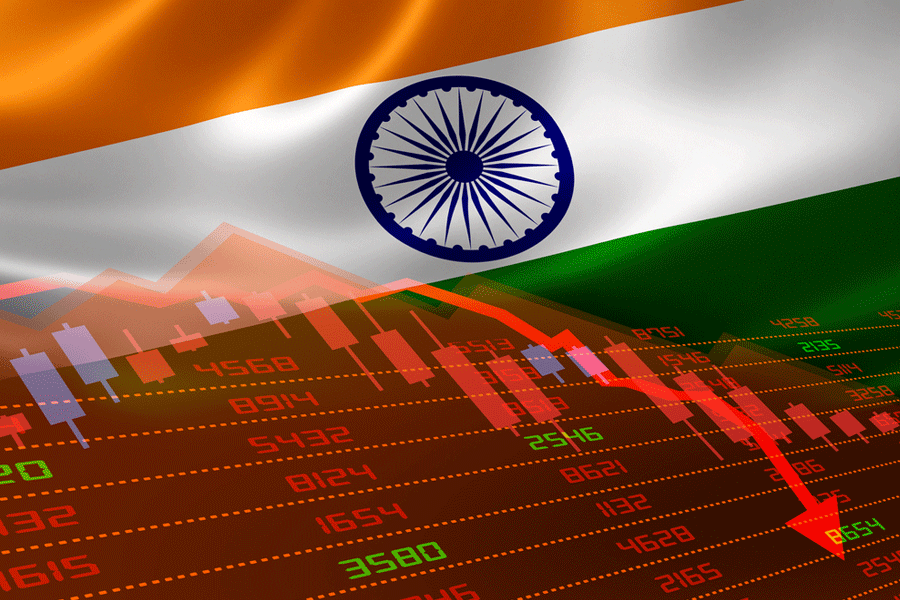
Indian share prices fell sharply at the start of September.
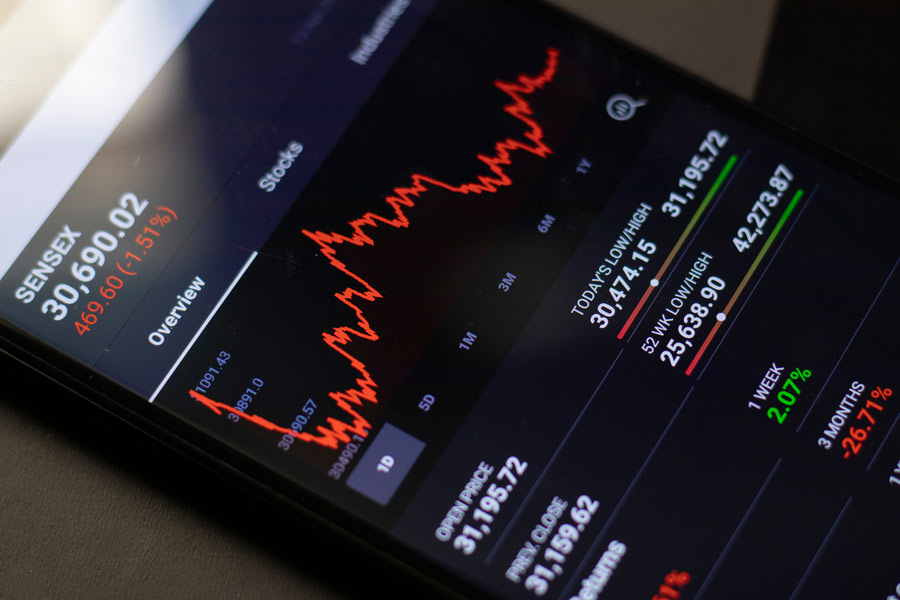
The Sensex lost more than 800 points, and the Nifty also dropped.
One major reason was that crude oil became more expensive.
Investors worried that fighting between the United States and Iran could interrupt oil supplies.
This matters to India because it imports most of the oil it uses.
Higher US bond yields also made investments in the United States more attractive.
Car companies saw their shares fall because some August sales were weaker than expected.
Some analysts said India’s economic growth, tax collections and foreign-exchange reserves could still support the market.

The Sensex fell more than 800 points to an intraday low of 76,136, while the Nifty dropped over 250 points to 23,787.
Brent crude rose toward $96 a barrel amid fears that US-Iran military action could disrupt supplies through the Strait of Hormuz.
Higher US government bond yields made dollar assets more attractive and increased pressure on emerging markets such as India.
Auto stocks led the decline after August vehicle sales failed to meet market expectations; the NSE auto index fell more than 3%.
Realty, information technology, consumer, banking and other sectors declined, while the India VIX rose 3.6%.
- Who
- Indian stock-market investors, companies, and foreign investors were affected; the market outlook was also assessed by V K Vijayakumar of Geojit Investments.
- What
- The Sensex and Nifty fell sharply, with auto stocks leading a broad sectoral decline.
- Where
- Indian stock exchanges and markets, amid developments involving the United States, Iran and the Strait of Hormuz.
- When
- At the start of September, during morning and intraday trading.
- Why
- Selling pressure was linked to higher crude prices, escalating US-Iran military action, rising US bond yields and disappointing August auto sales.
External Risks
Domestic Supports
Near-term market direction
External Risks
The US-Iran conflict, higher crude prices and rising US bond yields could prolong selling pressure and make investors more cautious.
Domestic Supports
Strong first-quarter GDP data, GST collections, credit growth, automobile numbers and improving earnings prospects could support Indian equities.
Oil-price impact
External Risks
Higher oil prices could raise India’s import bill and put pressure on inflation, the fiscal position and the rupee because India imports around 85%-90% of its crude.
Domestic Supports
V K Vijayakumar said the oil shock was not yet a major threat because India’s current account deficit was 0.5% and its foreign-exchange reserves were ample.
Key facts
- Sensex intraday low
- 76,136
- Nifty intraday low
- 23,787
- Brent crude
- Moved toward $96 a barrel after rising more than 2% in early Asian trade
- India’s crude imports
- Around 85%-90% of requirements
- US 10-year yield risk
- V K Vijayakumar said a rise to 5% could trigger a major global equity correction
- India’s current account deficit
- 0.5%, according to Vijayakumar
- India’s foreign-exchange reserves
- About $730 billion
- Market volatility
- India VIX rose 3.6%
Quotes
Dr V K Vijayakumar
Chief Investment Strategist at Geojit Investments
“The big threat is the rising bond yields in the U.S. The macro construct in the US indicates further hardening of the bond yields. If the 10-year yield touches 5% that has the potential to trigger a big correction in equity markets globally.”
 financialexpress.com
“Unfortunately, the headwinds also are equally strong. The escalation of the US-Iran conflict and the consequent 5% spurt in Brent crude overnight to $96 is a sentiment negative.”
financialexpress.com
Sources
Related news
Sensex, Nifty Plunge as West Asia Tensions Lift Oil Prices

Sensex crashes 600 points, Nifty nears 24,250; investors lose ₹3 lakh crore

Sensex Sinks 493 Points, Nifty Ends Below 24,200

Indian Markets Open Lower as US-Iran Tensions Lift Oil
Sensex, Nifty drop as crude hits $91 on Iran-US tensions

Indian Stocks Close Lower as West Asia Tensions Lift Crude
U.S.-Iran Exchange Escalates Across Middle East, Markets Slide
Trump Aides Seek Quiet Iran War Before Midterm Elections
US Warns Middle East Travelers Amid Escalating Iran-Linked Tensions

Silver Rate Today: Prices Fall 0.83% Across Indian Cities