1 week ago
Mecca Pact Offers Pakistan No Blank Security Cheque
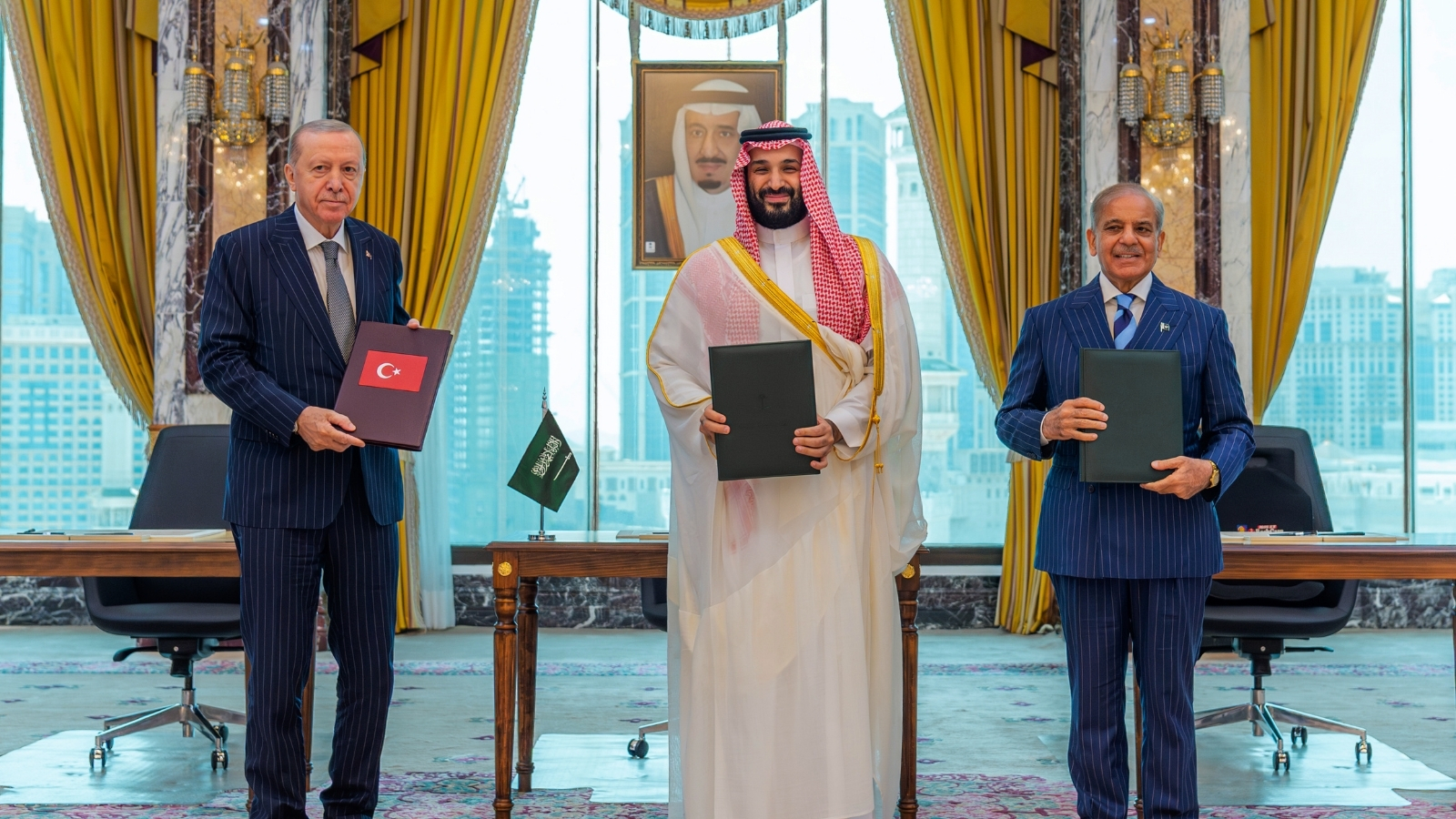
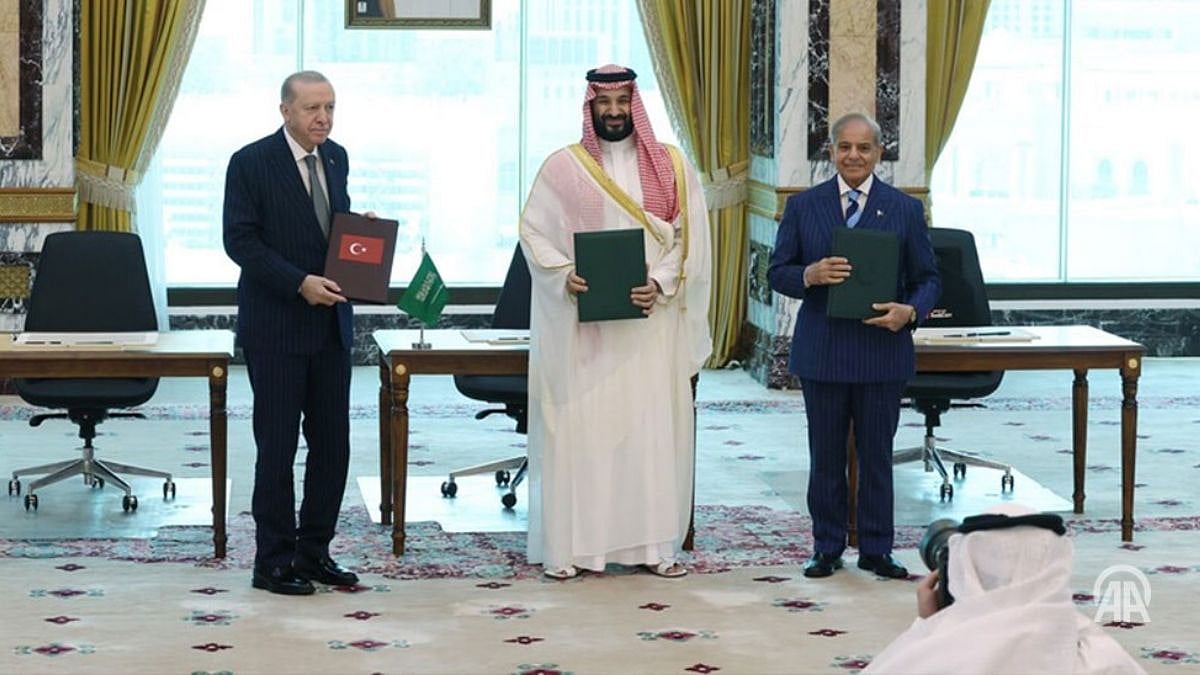
Pakistan, Saudi Arabia and Türkiye signed a defence agreement.
It says that an attack on one country should be treated as an attack on all three.
Some people think this could give Pakistan extra protection in a conflict with India.
The article says the agreement is meant for defence and does not give unlimited permission to respond.
International law still requires that self-defence be necessary and proportionate.
Saudi Arabia and Türkiye would have to make a political decision before helping Pakistan in a crisis involving India.
Both countries have important trade and other interests with India.
The article concludes that these interests make them more likely to restrain tensions than encourage a larger conflict.

Pakistan, Saudi Arabia and Türkiye concluded the Mecca Joint Defence Agreement on August 7.
The pact says an armed attack on one party will be treated as an attack on all.
The article says the agreement is defensive and does not expand existing self-defence rights under international law.
Any response involving India would require Saudi and Turkish political decisions that an Indian action constituted an armed attack on Pakistan.
The author argues that Saudi and Turkish economic interests, along with Pakistan’s constraints, favor containment over escalation.
- Who
- Pakistan, Saudi Arabia and Türkiye signed the agreement; India is examining its implications.
- What
- The Mecca Joint Defence Agreement establishes that an armed attack on one party will be regarded as an attack on all.
- Where
- The agreement was concluded in Mecca.
- When
- The agreement was concluded on August 7.
- Why
- It is presented as a collective-deterrence arrangement against external aggression amid concerns about the reliability of traditional security arrangements in West Asia.
Expanded Security Interpretation
Defensive and Limited Interpretation
Protection for Pakistan
Expanded Security Interpretation
The agreement’s mutual-defence clause could be read as giving Pakistan broader security cover if it faces an attack.
Defensive and Limited Interpretation
The clause applies to an armed attack and does not automatically protect Pakistan from the consequences of state-sponsored terrorism or proxy activity.
Possible Response to India
Expanded Security Interpretation
A conflict involving India could potentially trigger mutual assistance if Saudi Arabia and Türkiye regarded an Indian action as an attack on Pakistan.
Defensive and Limited Interpretation
Such assistance would require a deliberate political determination by both countries, and the article says their interests make escalation unlikely.
Strategic Effect
Expanded Security Interpretation
The pact alters the diplomatic and security calculations surrounding Pakistan and the wider region.
Defensive and Limited Interpretation
Although it changes the region’s diplomatic geometry, it does not overcome Saudi and Turkish incentives to protect their economic and strategic relationships with India.
Key facts
- Agreement
- Mecca Joint Defence Agreement
- Parties
- Pakistan, the Kingdom of Saudi Arabia and the Republic of Türkiye
- Core provision
- An armed attack on one party shall be regarded as an attack on all.
- Legal basis
- The article links the provision to Article 51 of the Charter of the United Nations.
- Saudi-India trade
- India’s trade with Saudi Arabia exceeds $40 billion annually.
- Saudi priorities
- Regime stability, Vision 2030, energy markets and management of Iranian influence.
- Pakistan’s constraints
- Economic fragility, dependence on external financing and limited capacity to absorb uncontrolled escalation.
Sources
Related news
How Far Will Saudi Arabia Go for Pakistan's Mecca Pact?
India urged to respond carefully to Pakistan-Saudi-Turkey defence pact
Mecca Defence Pact: Would Saudi and Turkey Fight for Pakistan?
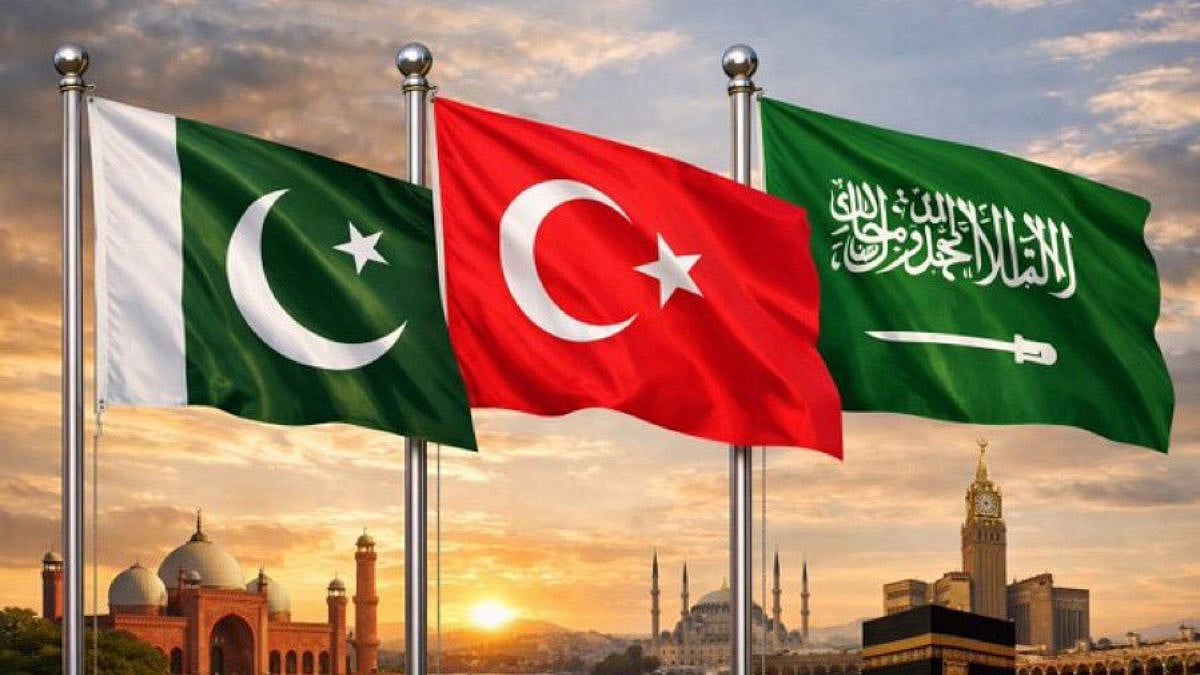
Saudi-Turkey-Pakistan Defence Pact Raises Security Concerns For India
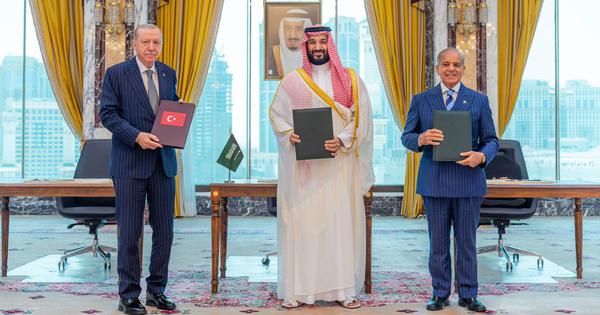
India assessing security implications of Pakistan-Saudi-Turkiye pact
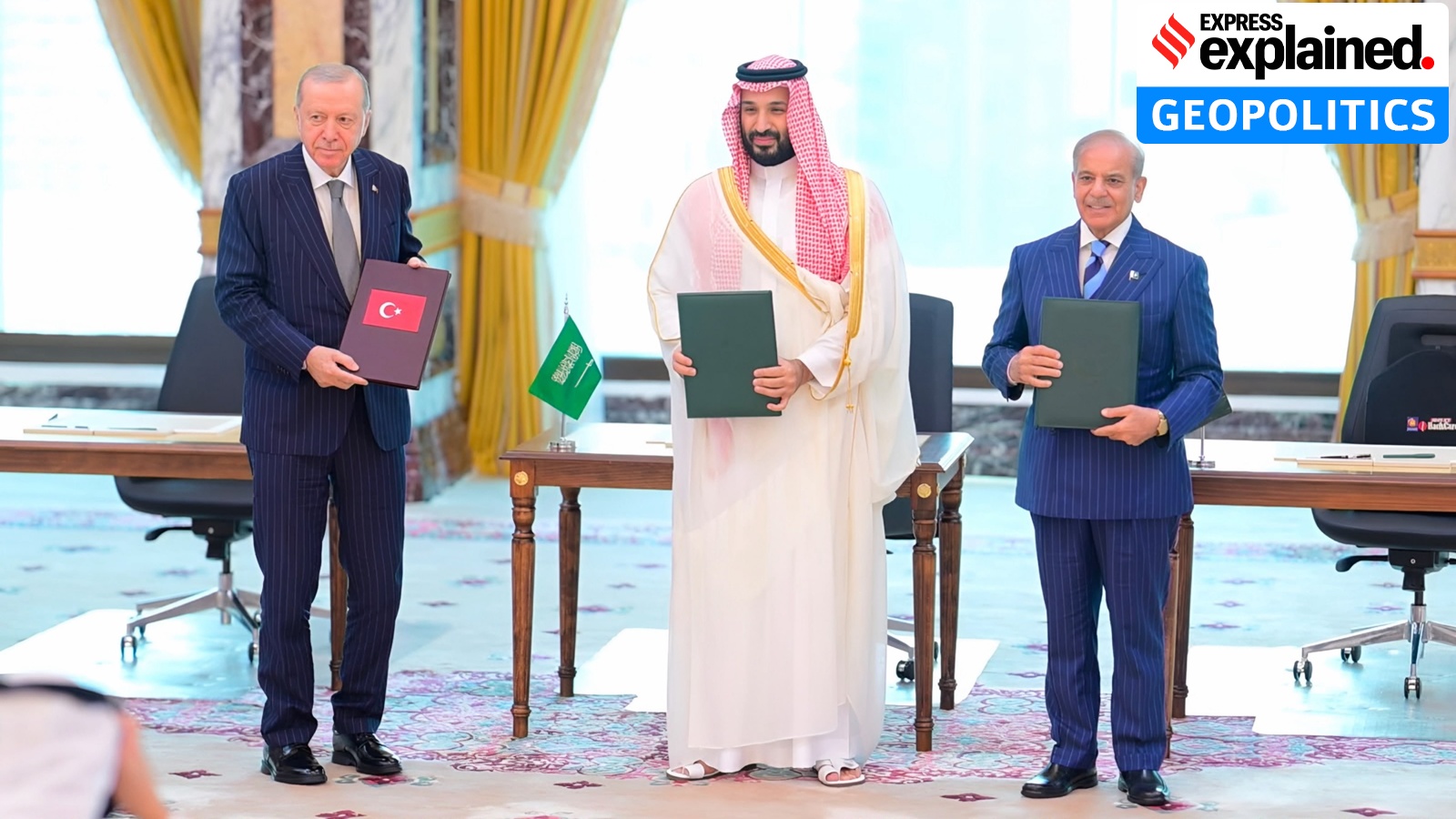
Saudi Arabia, Turkey, Pakistan Sign Mecca Joint Defence Agreement
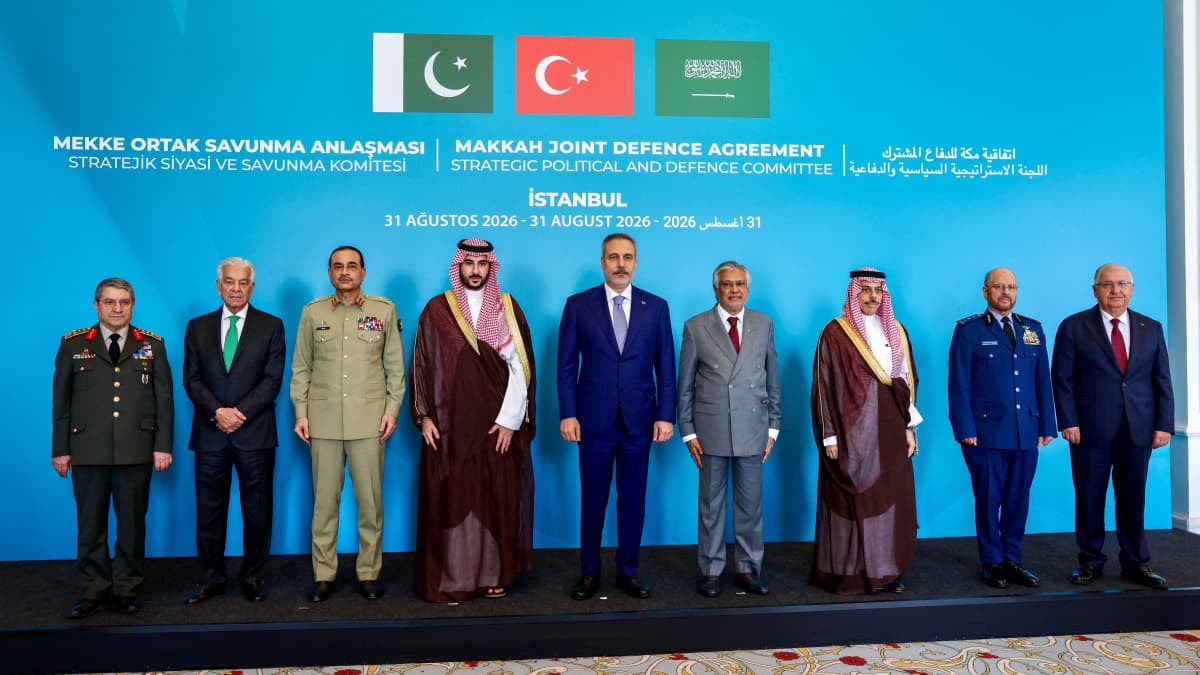
Saudi, Turkey and Pakistan Build Riyadh Defence Pact Secretariat

Pakistan-Turkiye-Saudi Defence Pact Raises Serious Questions for India

India Watches Cautiously as MECCA Pact Members Meet
Pakistan, Saudi Arabia, Türkiye Hold First Makkah Pact Meeting
Bangladesh Weighs Joining Mecca Pact Amid Non-Alignment Concerns