2 days ago
Pakistan-Turkiye-Saudi Defence Pact Raises Serious Questions for India

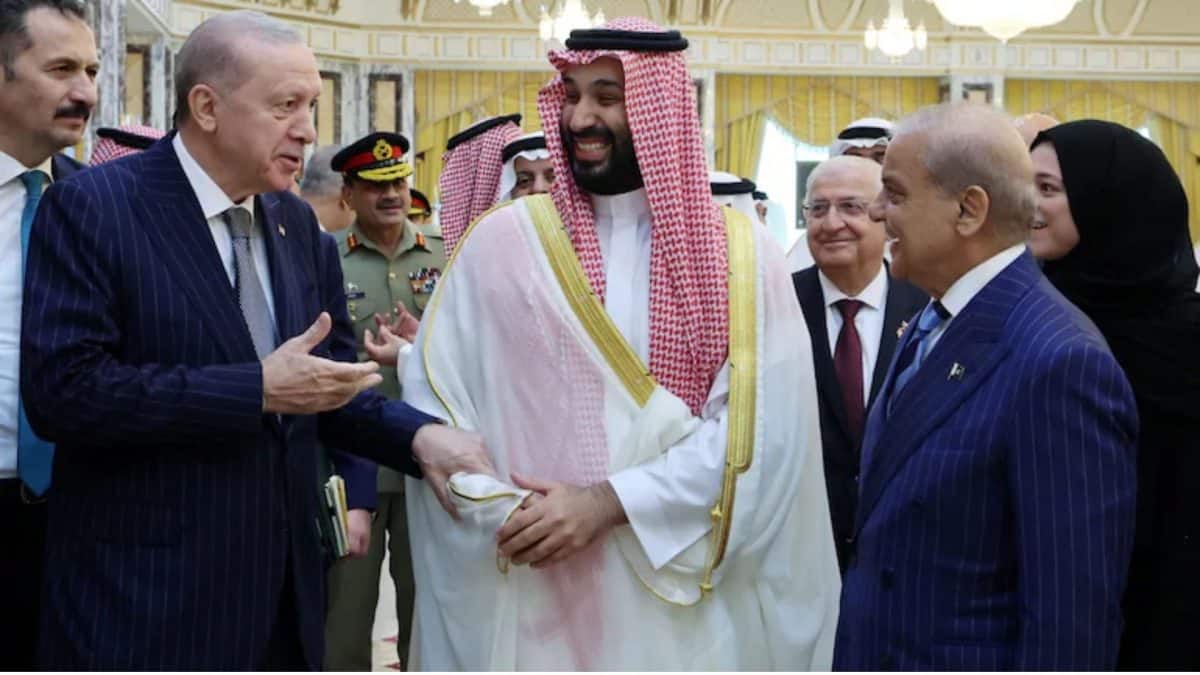
Saudi Arabia, Turkiye and Pakistan have made a new defence agreement.
It says that an attack on one of them would be treated as an attack on all three.
The countries say the agreement is meant to discourage attacks and improve regional security.
However, the full agreement has not been released.
It is also unclear whether the three countries have a shared plan for fighting a war.
Each country may see a different country as its biggest security threat.
Pakistan is especially concerned about India, while Saudi Arabia and Turkiye have other major concerns.
India is worried because many Indians live and work in the Gulf and India gets much of its energy from the region.
The pact could also increase Pakistan's influence in West Asia.

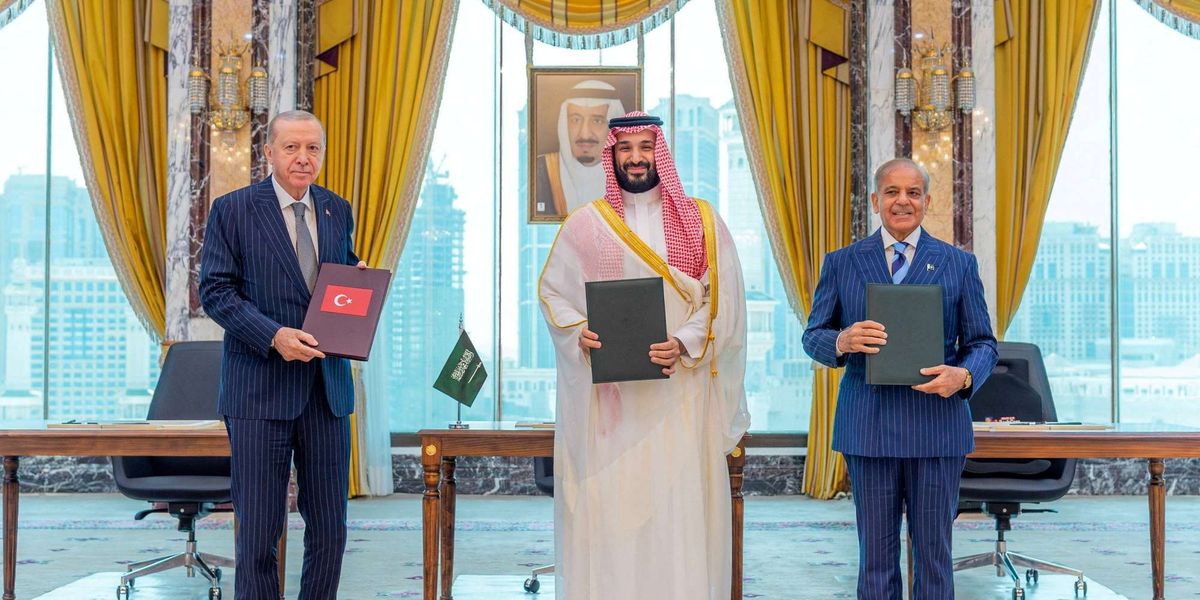
Saudi Arabia, Turkiye and Pakistan signed a joint defence agreement in Makkah on August 7, 2026.
The pact says an armed attack on one member will be treated as an attack on all three.
The agreement's unpublished text leaves unclear how the members would respond if deterrence failed.
The pact reflects concerns about reduced US military influence, Israeli operations and regional maritime security.
India is watching the impact on Gulf security, energy supplies, its diaspora and Pakistan's regional military profile.
- Who
- Saudi Arabia, Turkiye and Pakistan signed the agreement; India is assessing its possible implications.
- What
- A joint defence pact treats an armed attack on one member as an attack on all three.
- Where
- The trilateral pact was signed in Makkah, Saudi Arabia, and its headquarters are expected to be in Riyadh.
- When
- The trilateral agreement was signed on August 7, 2026; a Saudi-Pakistan bilateral defence agreement was announced on September 17, 2025.
- Why
- The countries say it will strengthen collective deterrence and regional security amid changing security conditions in West Asia.
Supporters' View
Critics' View
Regional deterrence
Supporters' View
Supporters describe the pact as a way to combine Turkiye's military-industrial capability, Saudi Arabia's financial strength and Pakistan's nuclear capability to strengthen collective deterrence.
Critics' View
Critics note that the agreement's full text is unpublished and that there is no evidence of a NATO-style operational command or a clear shared war doctrine.
Strategic alignment
Supporters' View
The agreement is presented as regional burden sharing, with countries taking greater responsibility for their own defence as US military influence declines.
Critics' View
The three countries may define their main threats differently: Pakistan focuses on India, Saudi Arabia on Iran and Israel, and Turkiye potentially on Israel's regional actions, making collective defence difficult.
Implications for India
Supporters' View
The pact could support stability, secure maritime trade and protect energy routes in areas important to the Gulf economies.
Critics' View
India could face reduced influence in its western security flank and must consider Pakistan's expanding military profile when responding to any future cross-border terror attack.
Key facts
- Signatories
- Saudi Arabia, Turkiye and Pakistan
- Signing date
- August 7, 2026
- Signing location
- Makkah, Saudi Arabia
- Core commitment
- An armed attack on one member will be regarded as an attack on all three.
- Planned headquarters
- Riyadh, Saudi Arabia
- Maritime coalition
- Saudi Arabia initiated a 14-nation coalition on July 30 to protect shipping and energy routes.
- India-related concern
- The article identifies the welfare of nine million Indians in the Gulf and India's energy supplies as major interests.
Sources
Related news
Saudi Arabia, Turkey and Pakistan sign Mecca Joint Defence Agreement
India assessing security implications of Pakistan-Saudi-Turkiye pact
Why India Need Not Lose Sleep Over Saudi-Pakistan-Turkiye Deal

Saudi Arabia, Turkey, Pakistan Sign Mecca Joint Defence Agreement
US faces diminished West Asia role after Pakistan-Turkiye-Saudi pact

Saudi Arabia, Turkey, Pakistan Sign Mecca Defence Agreement

Trump Floats Renaming Strait of Hormuz as ‘Trump Strait’

Chevron Plans $7 Billion Venezuela Expansion Amid U.S. Oil Push

Saudi Arabia Says Iranian Tanker Attack Killed Two Sailors
U.S.-Iran Exchange Escalates Across Middle East, Markets Slide
Trump Aides Seek Quiet Iran War Before Midterm Elections