

1 hr ago
Nepal’s Floods Spur Calls for a New Himalayan Disaster Compact
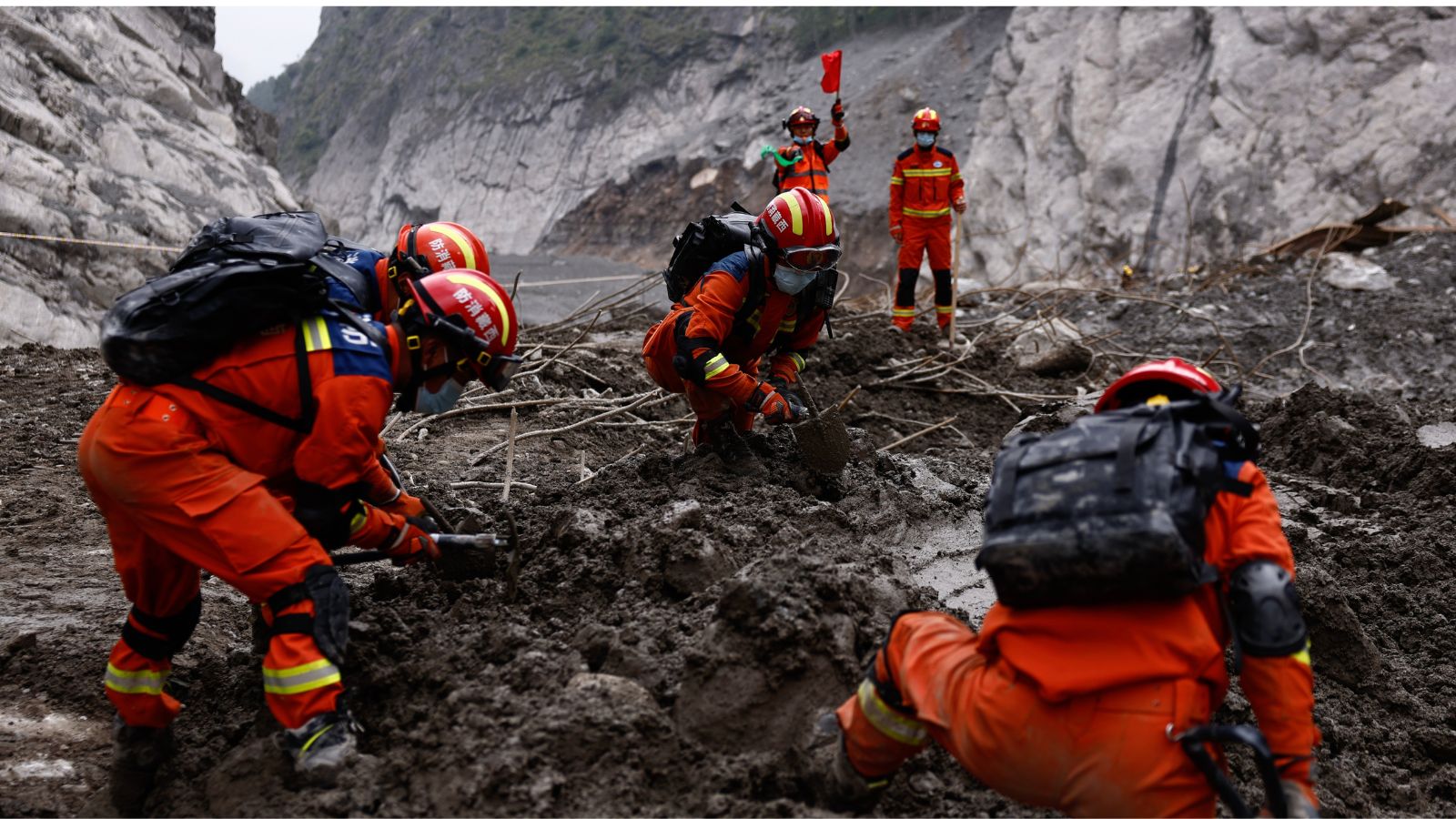
A glacier collapse in the mountains caused a powerful flood in Nepal.
The flood damaged roads, bridges, power projects and health facilities.
Water and debris can travel from high mountains into communities far away.
The article says disasters become worse when warnings do not reach people or when communities lack plans and equipment.
People in affected communities want useful warnings, training and a role in making decisions.
Nepal and neighboring countries need to share information because rivers and hazards cross borders.
The author also says development should avoid making fragile mountain areas more dangerous.
The proposed Himalayan disaster compact would make governments, scientists, communities and other organizations share responsibility for safety and recovery.

A glacier collapse near the Nepal-Tibet border on August 26 sent ice, rock, mud and water through interconnected valleys.
The resulting torrent destroyed or disrupted roads, bridges, hydropower facilities and health infrastructure.
The article says Himalayan hazards require cross-border monitoring, data sharing and faster warnings.
Communities want trusted warnings, evacuation plans, rescue equipment, preparedness training and stronger local leadership.
The proposed disaster compact would link climate responsibility, ecosystem-sensitive development and long-term regional recovery.
- Who
- Communities in Nepal, along with Nepalese, neighboring Himalayan governments, scientists, institutions and international organizations.
- What
- A glacier collapse triggered a destructive torrent, prompting calls for a new regional disaster-preparedness and climate-responsibility compact.
- Where
- Near the Nepal-Tibet border and through interconnected Himalayan river valleys, with implications for downstream regions including India.
- When
- The glacier collapse occurred on August 26; the article discusses the continuing catastrophe and longer-term preparedness needs.
- Why
- The article argues that warming, cross-border hazards, inadequate preparedness and vulnerable development require shared monitoring, community leadership, sustained investment and international climate support.
Key facts
- Trigger
- A glacier collapse near the Nepal-Tibet border released ice, rock, mud and water.
- Damage
- Roads, bridges, hydropower and health infrastructure were destroyed or disrupted.
- Community needs
- Residents called for functioning warnings, local information centres, communication technology, rescue equipment and preparedness training.
- Regional priority
- Nepal, India, China, Bhutan and other Himalayan countries are urged to share upstream observations, satellite information, river conditions and warnings.
- Preparedness focus
- The article recommends evacuation plans, shelters, community response teams, health-system continuity and sustained investment.
- Climate responsibility
- The author calls for climate finance, loss-and-damage support, scientific capacity and locally controlled adaptation for Nepal.
- Development concern
- Roads, tourism, hydropower, mining and settlement can amplify exposure if poorly planned in steep and dynamic landscapes.
Sources
Related news
Nepal Flood Catastrophe Signals Need for Himalayan Cooperation
Nepal Flash Flood Exposes South Asia’s Cross-Border Risks
Melting Glaciers Push Nepal Toward Its Adaptation Threshold

Glacier Collapse, Not Earthquake, Triggered Tibet-Nepal Border Flood

Nepal Flood Exposes Himalayan Risks and Data-Sharing Failures
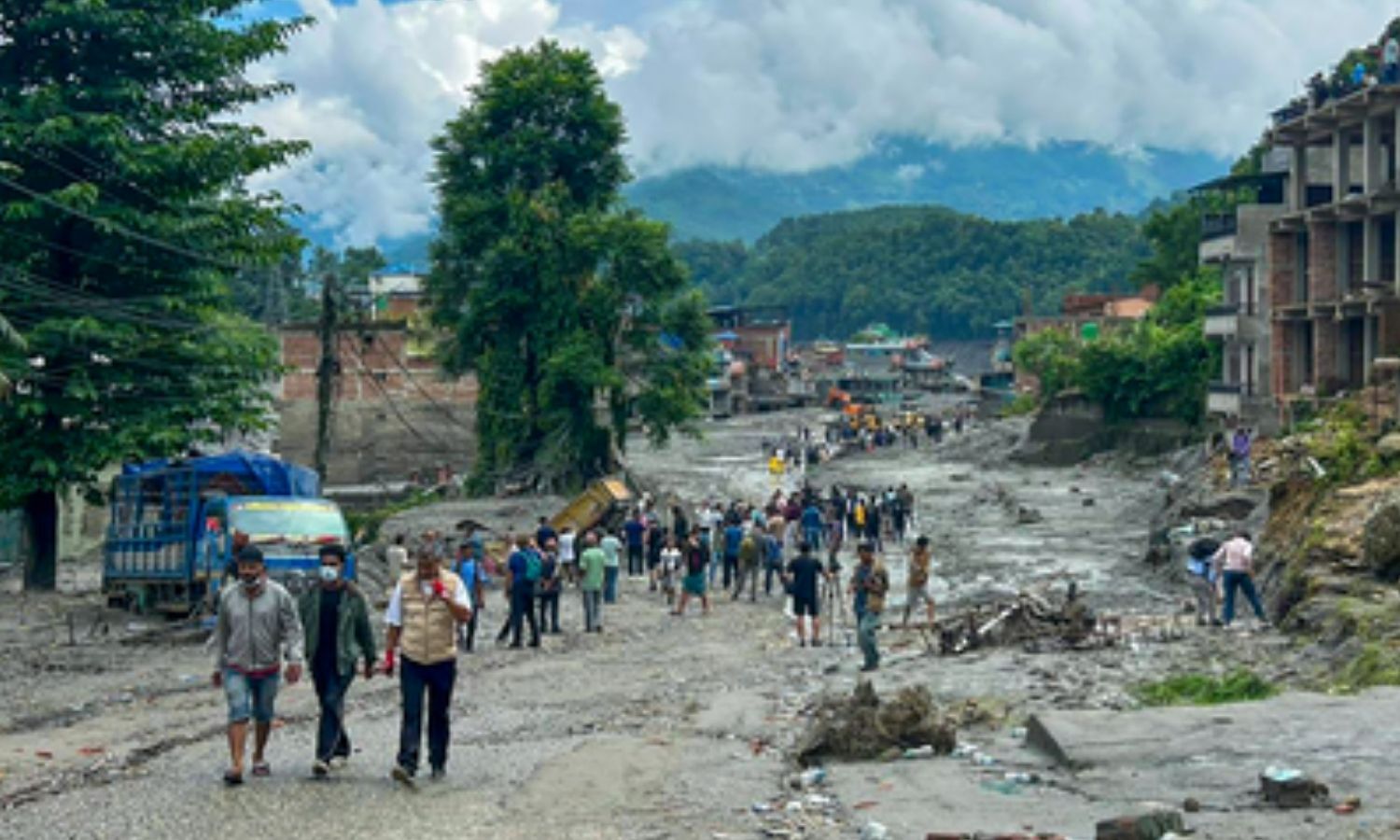
Nepal Flood Disaster Spurs Calls for Himalayan Cooperation
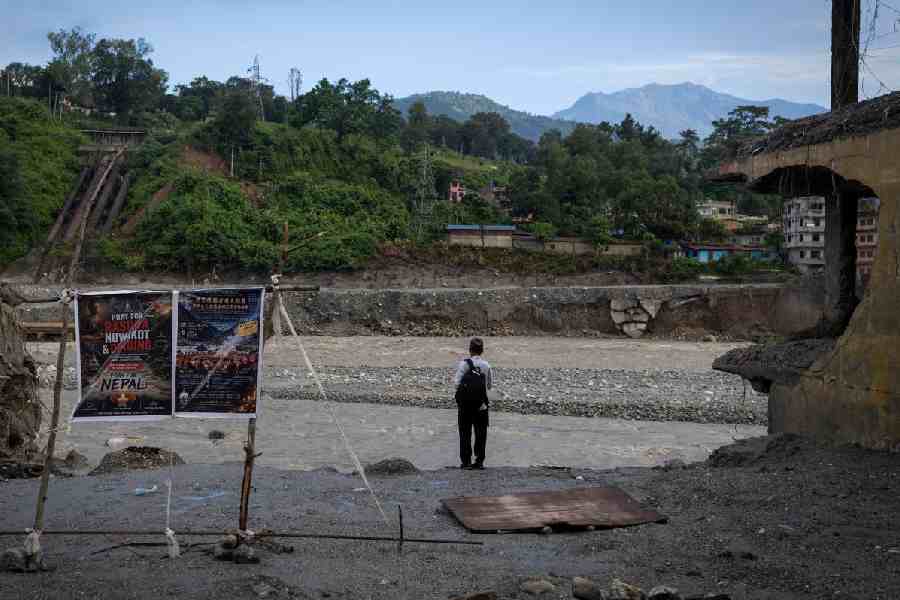
Nepal races to restore roads as tunnel rescue continues
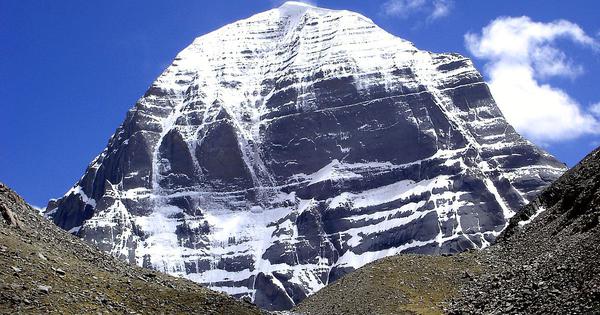
How China’s Takeover Dramatically Reshaped the Kailash-Manasarovar Pilgrimage
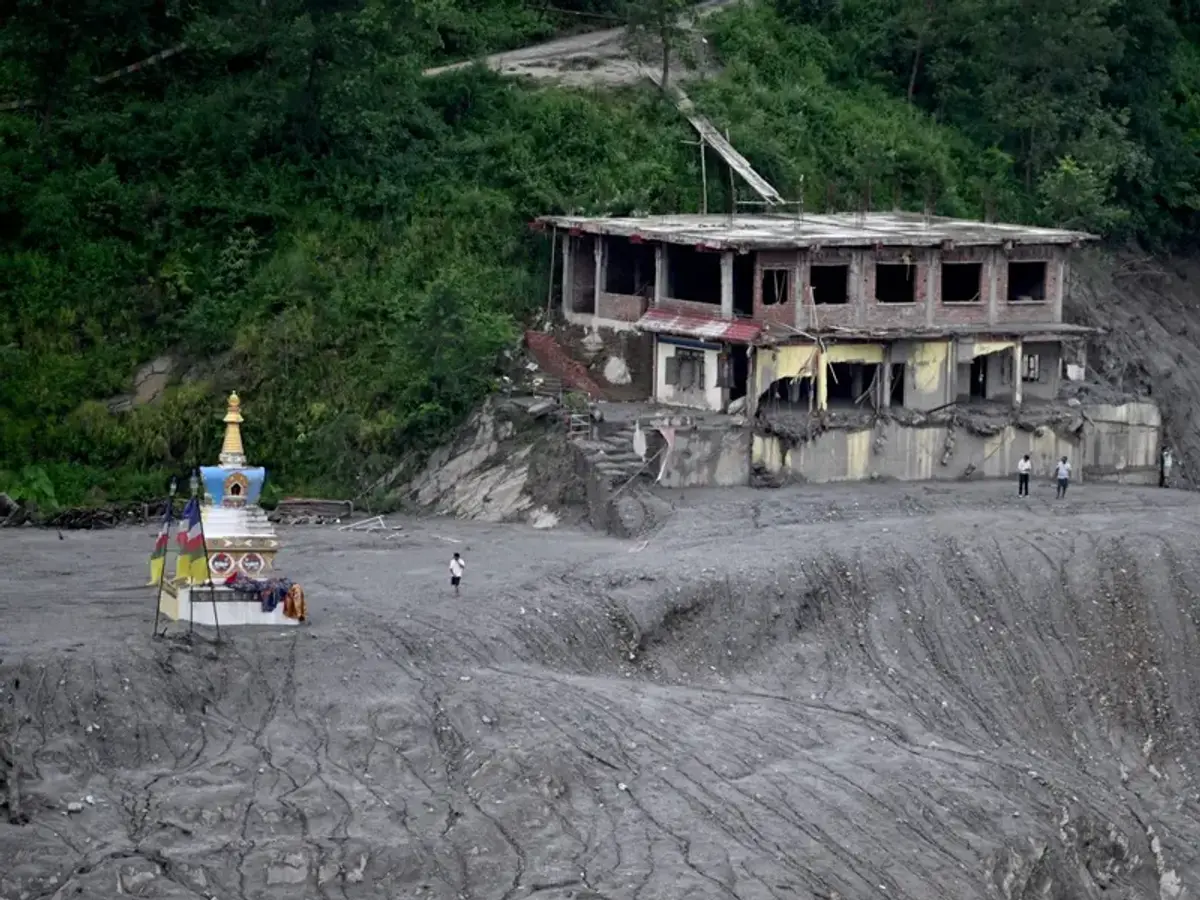
Indian Embassy Seeks DNA Samples to Identify Flood Victims

Himalayan Disaster Exposes the Need for Borderless Warning Systems
