1 week ago
Pakistan’s Alliance Strategy Faces Questions Over Loyalty and Economic Direction

Pakistan has joined many security partnerships over the years.
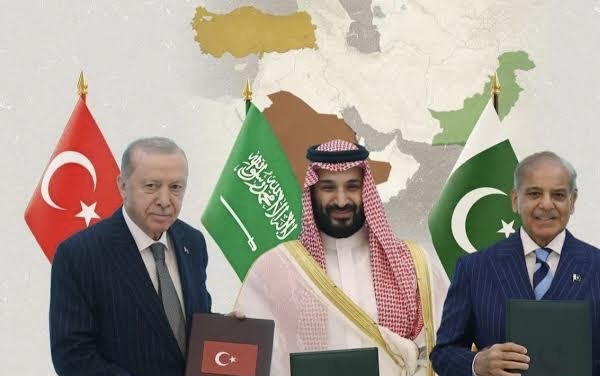
A new agreement connects Pakistan with Turkey and Saudi Arabia.
It says an attack on one country would be treated as an attack on all three.
A research report says Pakistan often seeks alliances because it needs financial help.
The report also questions whether Pakistan always supports its allies when they need help.
Pakistan has worked with countries including the United States, China, and Saudi Arabia.
Its close relationship with China could affect how it handles Middle Eastern issues.
The report says Pakistan’s nuclear weapons and defense industry may also make it attractive to other countries.

A report says Pakistan’s alliances are driven largely by the need for financial assistance during its economic crisis.
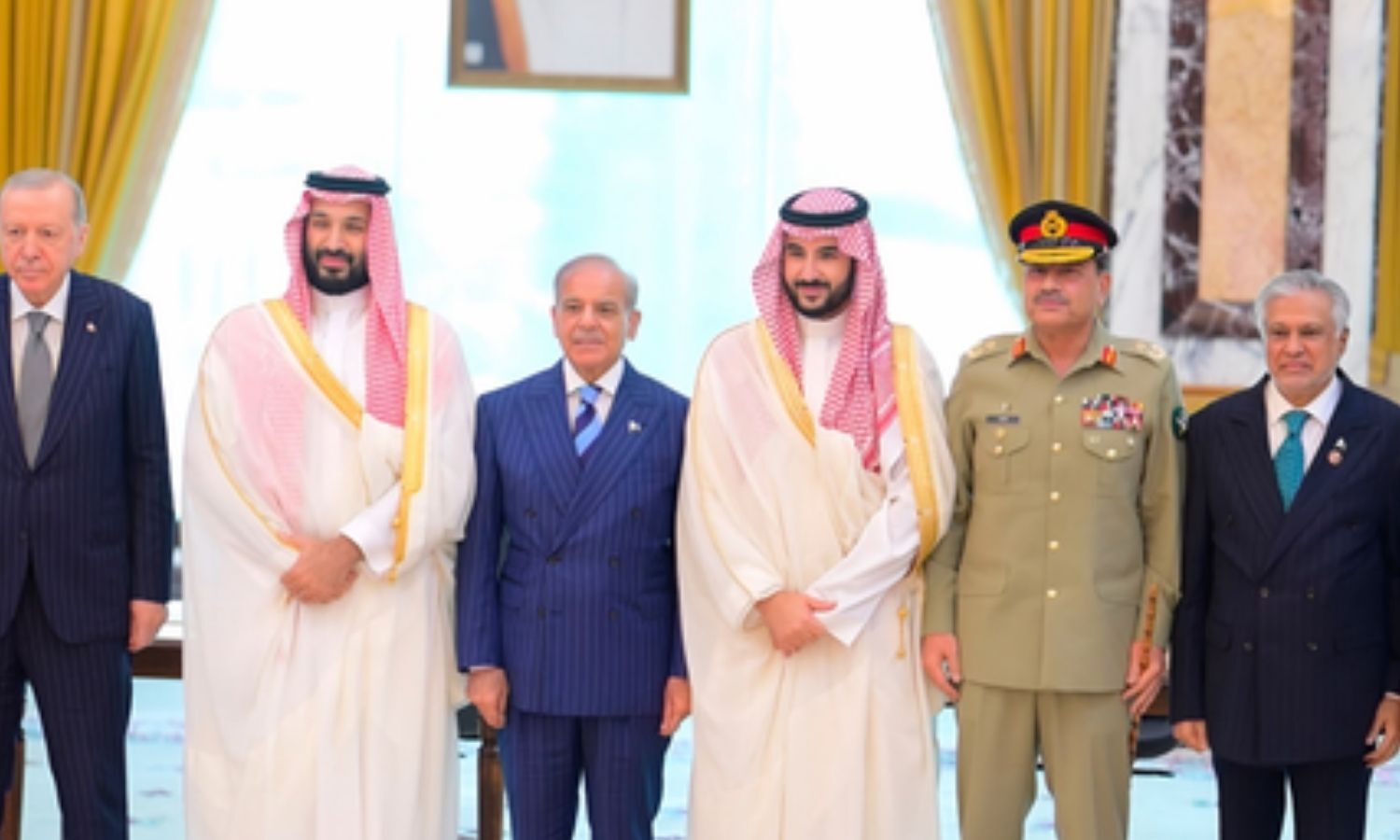
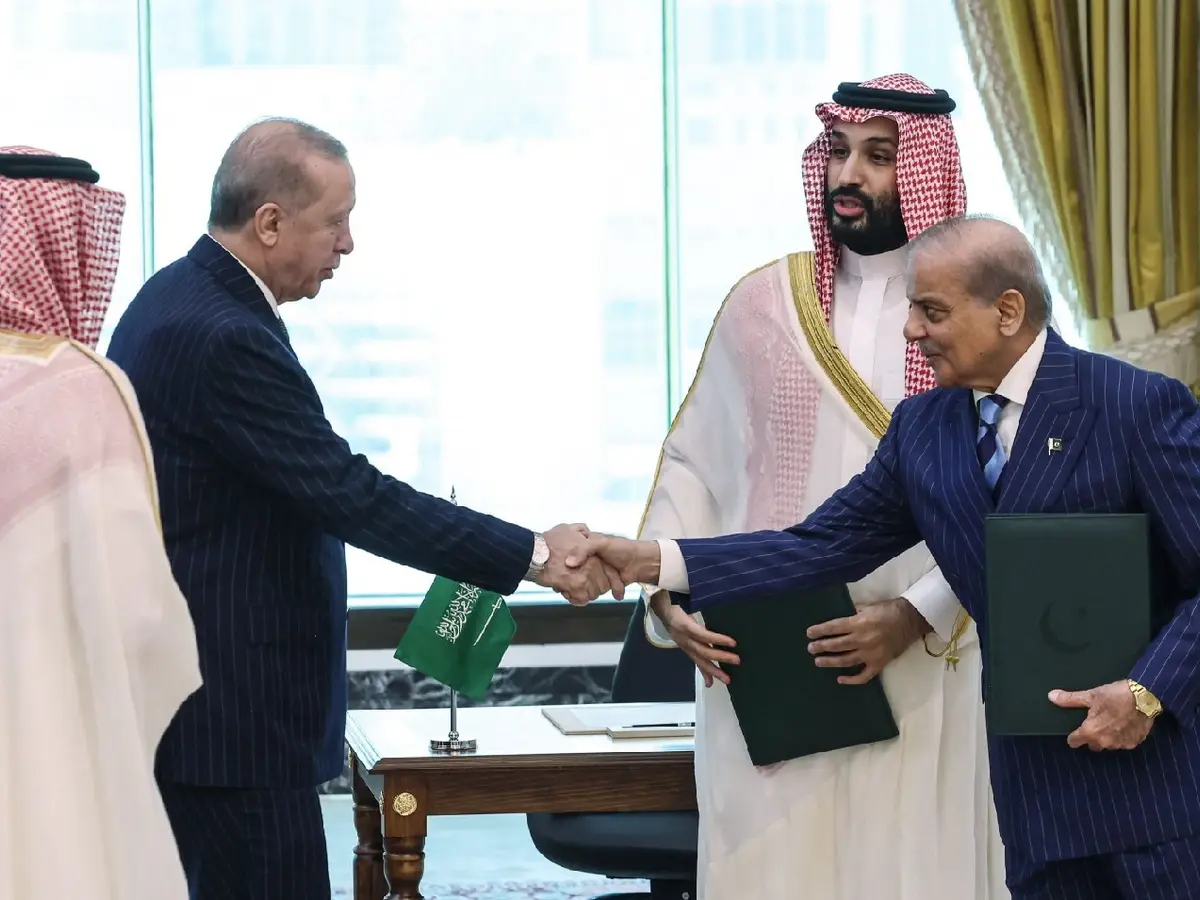
Turkey, Pakistan, and Saudi Arabia signed the Mecca Joint Defence Agreement on August 7.
The agreement treats an armed attack on one signatory as an attack on all three.
The report cites Pakistan’s extensive alliance history and questions its reliability as a partner.
Pakistan’s ties with China and dependence on Middle Eastern financial support may limit its independent decision-making.
- Who
- Pakistan, Turkey, and Saudi Arabia signed the Mecca Joint Defence Agreement; the assessment was published by the Politeia Research Foundation.
- What
- The agreement creates a mutual-defense commitment, while the report questions Pakistan’s alliance record and long-term economic strategy.
- Where
- The agreement concerns Turkey, Pakistan, and Saudi Arabia; the report was discussed in the Islamabad/New Delhi context.
- When
- The agreement was signed on August 7; the report also refers to Pakistan’s alliances from 1954 through September 2025.
- Why
- The report says Pakistan seeks alliances partly to obtain short-term financial assistance amid a persistent economic crisis and to advance security interests.
Report’s concerns
Strategic rationale cited in the report
Alliance reliability
Report’s concerns
The Politeia Research Foundation report questions Pakistan’s loyalty, citing its limited or conflicting support for past partners.
Strategic rationale cited in the report
Pakistan has repeatedly joined security arrangements and played strategic roles, including helping channel United States assistance to the Mujahideen after the Soviet invasion of Afghanistan.
Economic strategy
Report’s concerns
The report says Pakistan’s reliance on short-term assistance from oil-rich Middle Eastern countries reflects the absence of a long-term economic strategy.
Strategic rationale cited in the report
The alliances provide Pakistan with financial relief and security partnerships during a persistent economic crisis.
Independence in foreign policy
Report’s concerns
Pakistan’s close relationship with China and need for Chinese support to contain India could make unilateral action in the Middle East difficult.
Strategic rationale cited in the report
Pakistan’s neutral mediation during the recent Iran War suggests it may prioritize independent mediation rather than automatically support Arab partners.
Key facts
- Agreement
- The Mecca Joint Defence Agreement was signed by Turkey, Pakistan, and Saudi Arabia.
- Mutual-defense clause
- An armed attack against any one of the three states is to be regarded as an attack against all of them.
- Pakistan’s alliance history
- The report lists Pakistan’s participation in the 1954 Mutual Defence Assistance Agreement, SEATO, CENTO, the Islamic Military Counter Terrorism Coalition, and later agreements with Saudi Arabia.
- China relationship
- Pakistan has an “all-weather strategic cooperative partnership” with China and coordinates closely with it.
- Economic concern
- The report says Pakistan relies on oil-rich Middle Eastern countries for short-term economic relief.
- Past alliance conduct
- The report says Pakistan did not support the United States during the Vietnam War and pursued a dual policy after the 9/11 attacks.
- Recent Iran War position
- The report says Pakistan acted as a neutral mediator rather than siding with Arab partners.
Quotes
Politeia Research Foundation report
Research report analyzing Pakistan’s foreign and defence partnerships
“During the recent Iran War, Pakistan preferred to act as a neutral mediator rather than lean in support of Arab friends.”
 thehansindia.com
“Unlike its South Asian counterparts, Pakistan seems addicted to alliances.”
thehansindia.com
Sources
Related news
Pakistan’s New Gulf Alliance Revives Questions About Old Alignments
Pakistan’s Mediator Role Faces Scrutiny Amid Regional Alliances
How Far Will Saudi Arabia Go for Pakistan's Mecca Pact?

Mecca Joint Defence Pact Risks Remaining Rhetorical, Report Warns
Mecca Defence Pact Faces Questions Over Its Political Cohesion
Pakistan hesitates as Houthi attacks expose Mecca Pact cracks

India’s Wind Pipeline Signals Sharp Capacity and Manufacturing Surge

India’s Solar Module Glut Threatens Factories With Low Utilisation
Modi-Xi Signals May Help Reset India-China Ties

India’s Fourth BRICS Chair Faces a Much Larger Summit

Nepal Families Seek Missing Loved Ones After Deadly Flash Floods