1 week ago
Pakistan’s New Gulf Alliance Revives Questions About Old Alignments
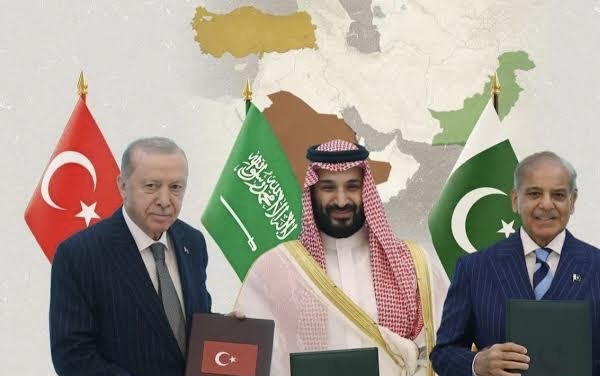
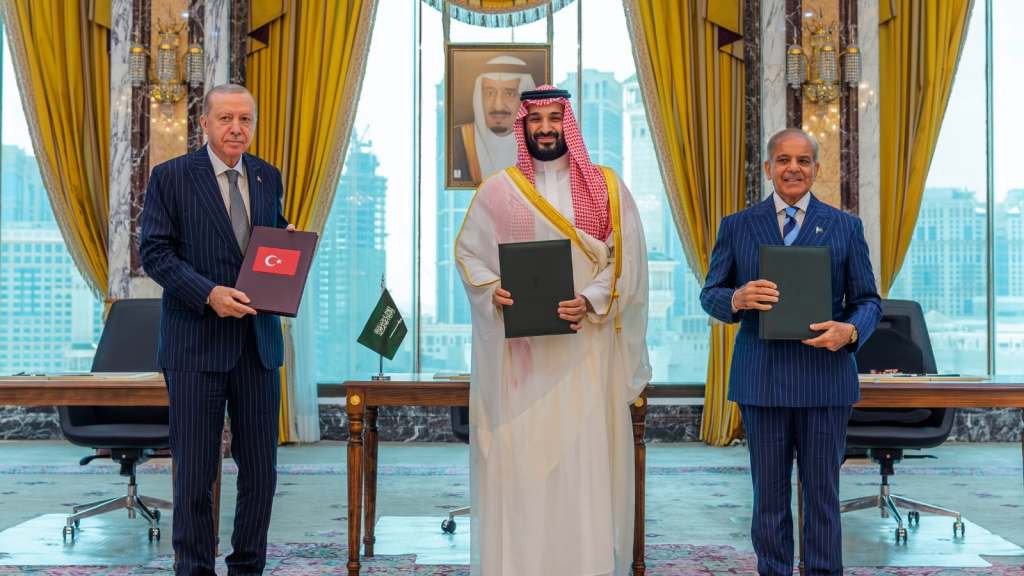
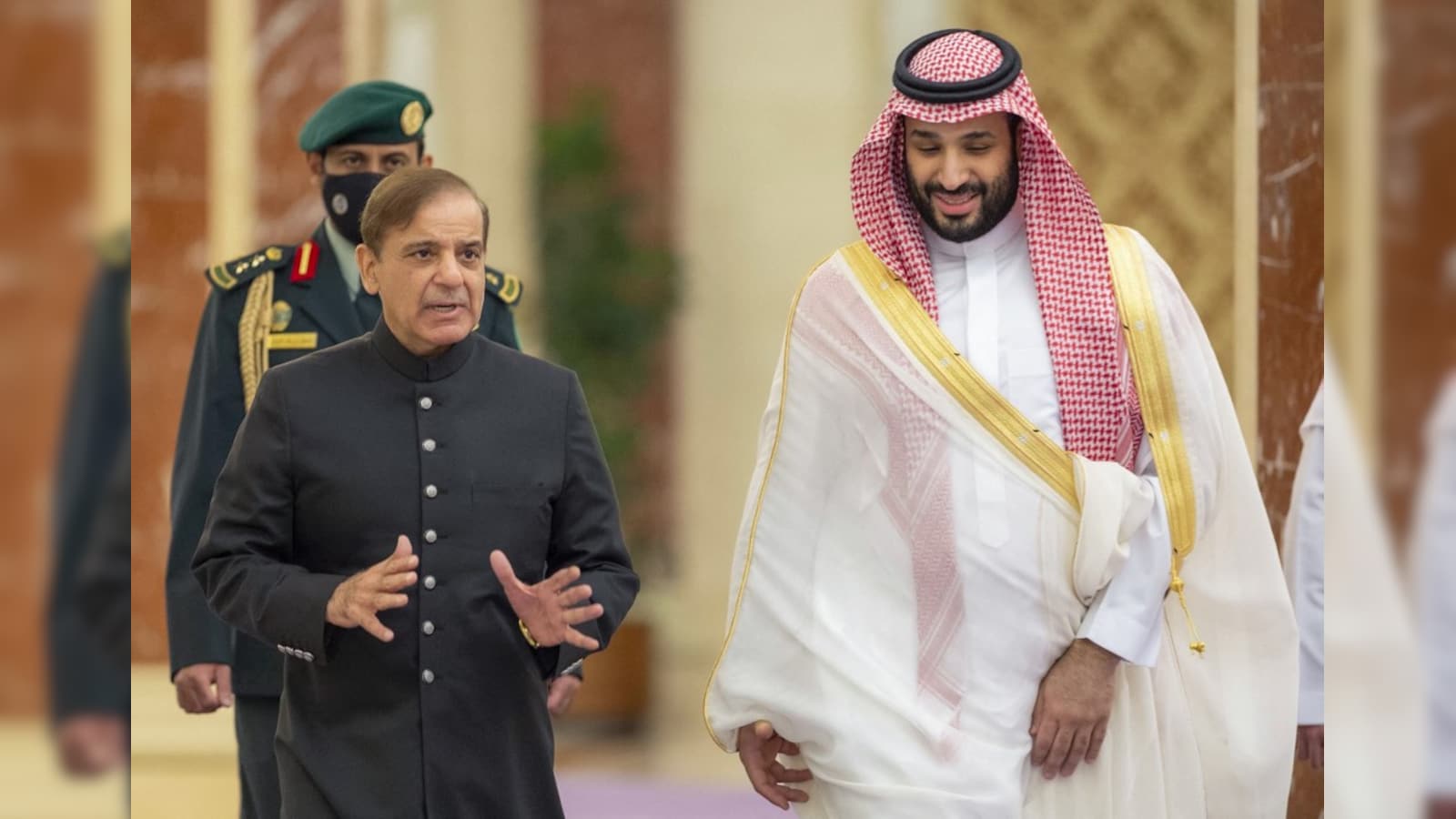
Saudi Arabia, Türkiye and Pakistan have announced a new defense agreement.
Each country appears to want something different from the partnership.
Saudi Arabia wants more protection from threats such as Iran and the Houthis.
Türkiye wants a stronger role in the Gulf region.
Pakistan wants money, investment and greater importance internationally.
The article compares this agreement with older alliances involving Pakistan.
It says those earlier alliances often failed because the countries involved had different goals.
Saudi Arabia and Türkiye have also disagreed over Syria, Qatar, Egypt and other issues.
The writer therefore doubts whether the new partnership will become a strong and lasting military alliance.

The Mecca Joint Defence Agreement links Saudi Arabia, Türkiye and Pakistan in a new tripartite security arrangement.
The article says Saudi Arabia seeks deterrence, Türkiye seeks greater Gulf influence, and Pakistan seeks financial support and strategic relevance.
Pakistan’s earlier participation in CENTO and SEATO did not deliver collective security during its 1965 and 1971 wars.
The Organisation of Islamic Cooperation and regional cooperation initiatives also faced internal divisions or limited effectiveness.
The article argues that disagreements between Riyadh and Ankara could limit the new pact’s ability to provide lasting strategic cooperation.
- Who
- Saudi Arabia, Türkiye and Pakistan are the principal parties to the Mecca Joint Defence Agreement.
- What
- They have formed a tripartite defense arrangement that the article compares with Pakistan’s earlier alliances.
- Where
- The agreement concerns cooperation in and around the Gulf and broader West Asian region.
- When
- The article discusses the agreement in the context of 2025 and refers to related events through 2026.
- Why
- Saudi Arabia seeks deterrence, Türkiye seeks greater regional influence, and Pakistan seeks financial assistance, investment and strategic relevance.
Supporters of the Agreement
Critics of the Agreement
Strategic purpose
Supporters of the Agreement
The agreement can bring together Saudi Arabia’s security needs, Türkiye’s regional reach and Pakistan’s military capabilities.
Critics of the Agreement
The article argues that the arrangement is transactional and rests on different national objectives rather than a shared strategic vision.
Pakistan’s role
Supporters of the Agreement
Pakistan can serve as a bridge between South Asia and West Asia while gaining financial assistance, investment and diplomatic support.
Critics of the Agreement
The writer says Pakistan has historically sought patrons and contributed little deployable security, making it more likely to become a wedge than a bridge.
Durability
Supporters of the Agreement
The pact is presented by officials from the three countries as a new axis with potential strategic importance.
Critics of the Agreement
Critics point to disputes between Saudi Arabia and Türkiye over Syria, the Muslim Brotherhood, Qatar, Egypt, Jamal Khashoggi and Nagorno-Karabakh as evidence of serious internal tensions.
Key facts
- Agreement
- The Mecca Joint Defence Agreement is described as a Saudi-Türkiye-Pakistan tripartite axis.
- Saudi Arabian concerns
- The article identifies Iran and the Houthi insurgency as key security concerns for Riyadh.
- Pakistan’s earlier alliances
- Pakistan joined CENTO and SEATO during the Cold War, but the article says they provided no collective security during the 1965 and 1971 wars.
- CENTO
- CENTO emerged after Iraq withdrew from the Baghdad Pact in 1958 and was disbanded in 1979.
- SEATO
- Pakistan withdrew from SEATO in 1973.
- OIC
- Pakistan used the Organisation of Islamic Cooperation to raise the Kashmir issue, but the article says internal divisions limited its strategic value.
- Regional cooperation
- The Regional Cooperation for Development was created by Iran, Türkiye and Pakistan in 1964 and later gave way to the Economic Cooperation Organisation in 1985.
Sources
Related news

Pakistan’s Alliance Strategy Faces Questions Over Loyalty and Economic Direction

Mecca Joint Defence Pact Risks Remaining Rhetorical, Report Warns
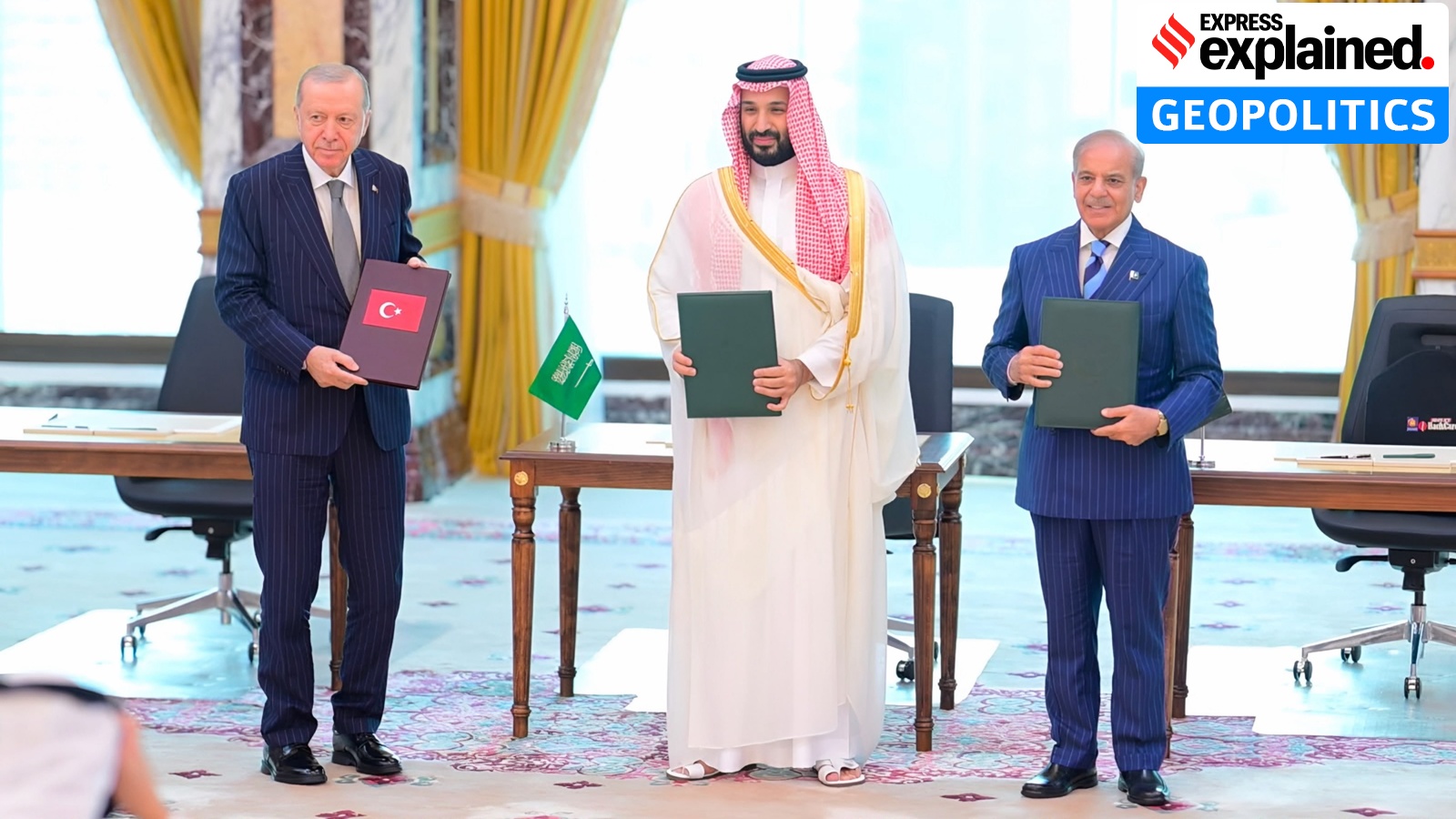
Saudi Arabia, Turkey, Pakistan Sign Mecca Joint Defence Agreement
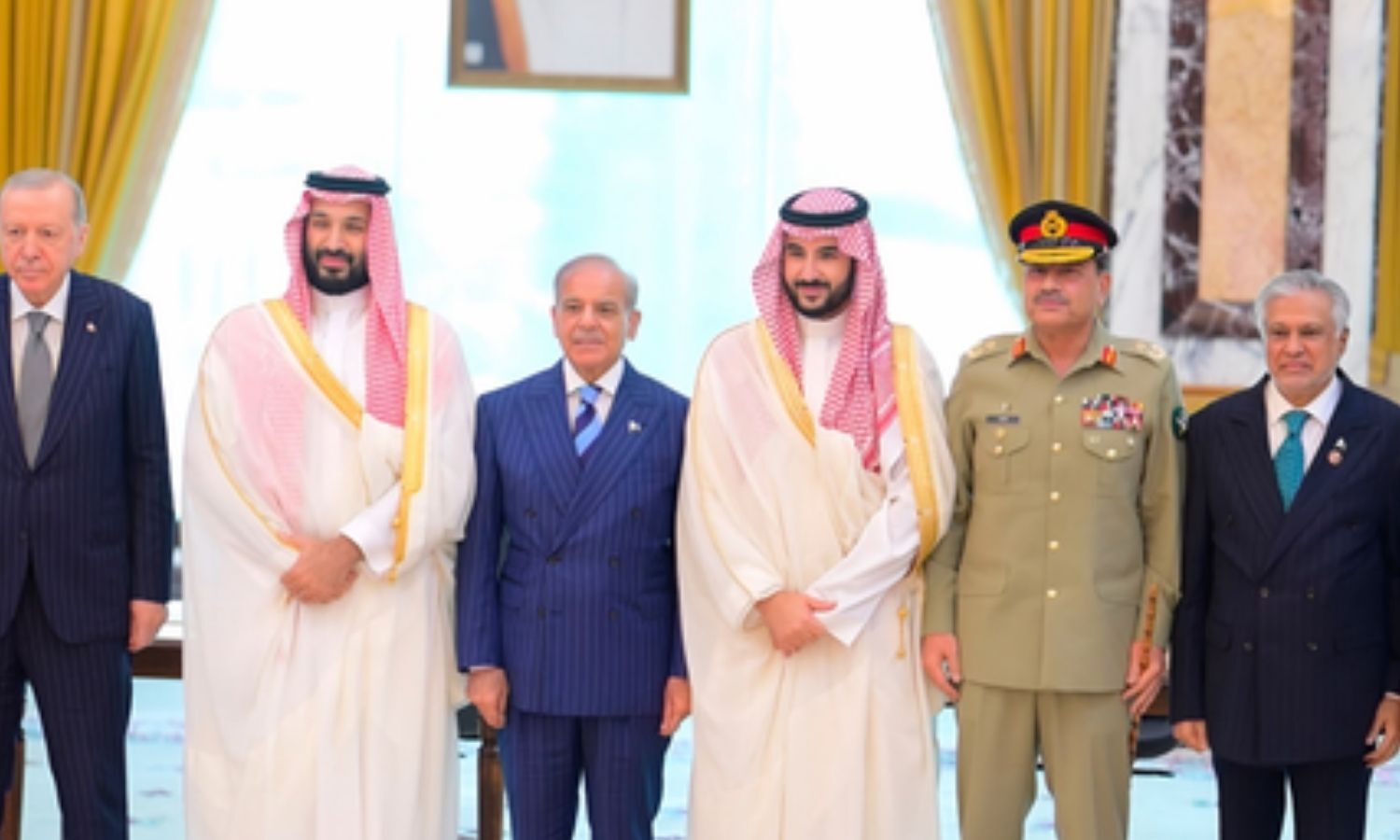
Mecca Defence Pact Faces Questions Over Its Political Cohesion
Mecca Joint Defence Agreement exposes Arab weakness, analyst says
How Far Will Saudi Arabia Go for Pakistan's Mecca Pact?

Sharma and Malik share halfway lead at Telangana Golconda Masters

India Replaces Sri Lanka as 2027 Women’s Champions Trophy Host
Centre Assures JDU Bihar’s Interests In Farakka Treaty Decision

India’s Record Wheat Harvest Opens $1.5 Billion Export Window
West Bengal CM Crushes Nearly 2 Lakh Seized Syrup Bottles