2 weeks ago
New Saudi alliances aim to deter Iran without joining war
Saudi Arabia is a big country in the Middle East that sells a lot of oil.
Lately, it has been attacked by some of its neighbors and their friends, who shoot missiles and drones at its oil places and ships.
Saudi Arabia does not want to join a big war that the United States and Israel are fighting against Iran.
So it is trying to find ways to protect itself without starting a bigger fight.
It made a promise with Turkey and Pakistan to help protect each other.
It is also building a group of countries to guard ships in the Red Sea.
Some people think these new teams will make enemies think twice before attacking.
But the attacks have not stopped yet, and others worry the new plans might pull Saudi Arabia into the war anyway.
The kingdom's leaders hope the plans will keep it safe while it stays out of the fighting.

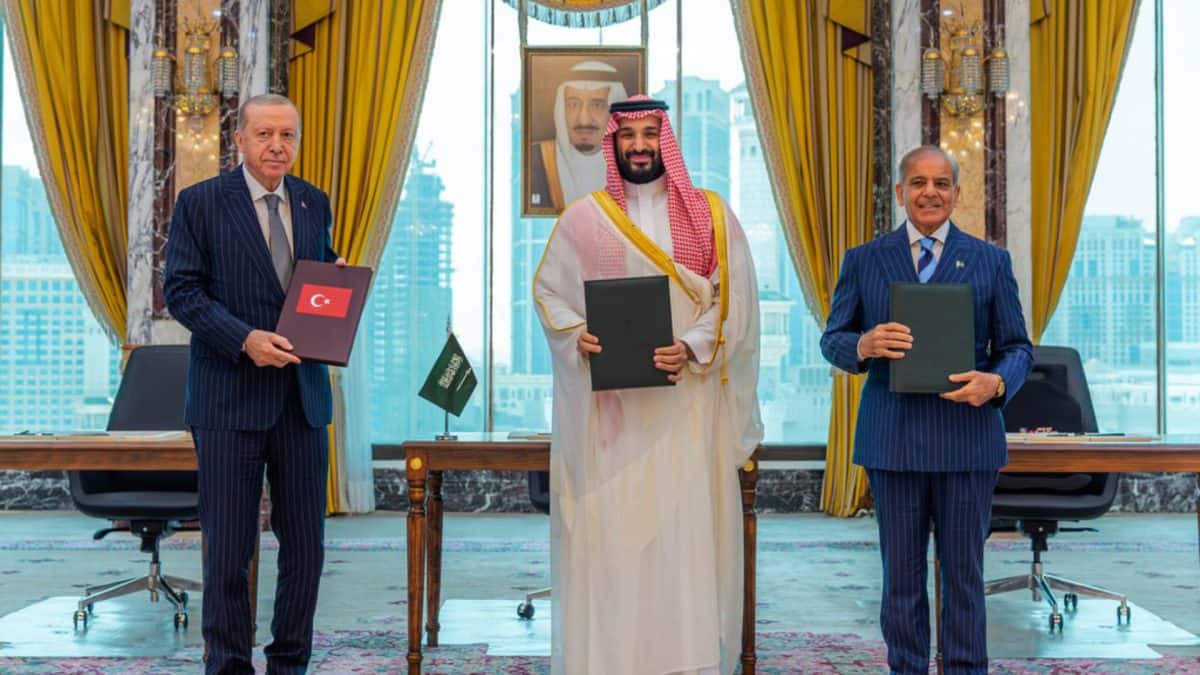
Saudi Arabia is deepening regional defence partnerships to deter Iran and its allies while trying to stay out of the United States–Israel war with Iran.
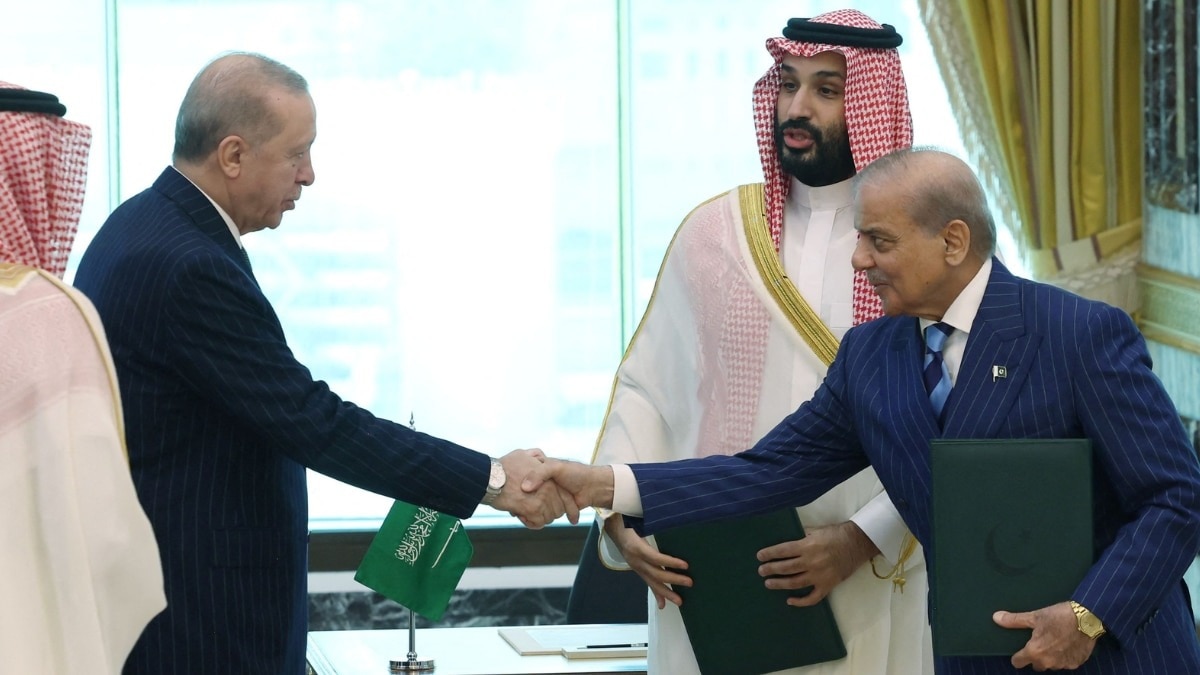
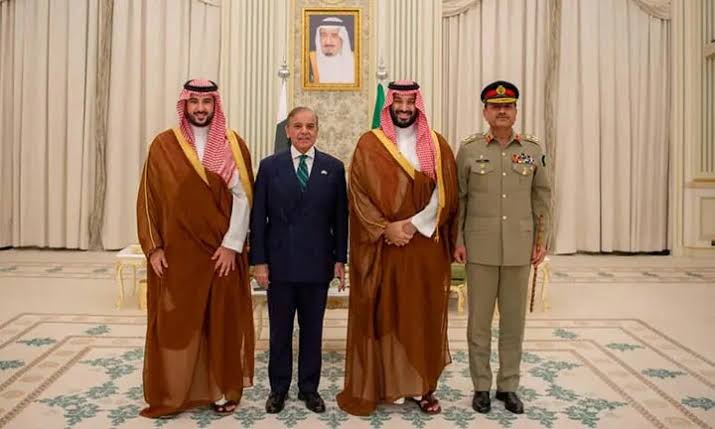
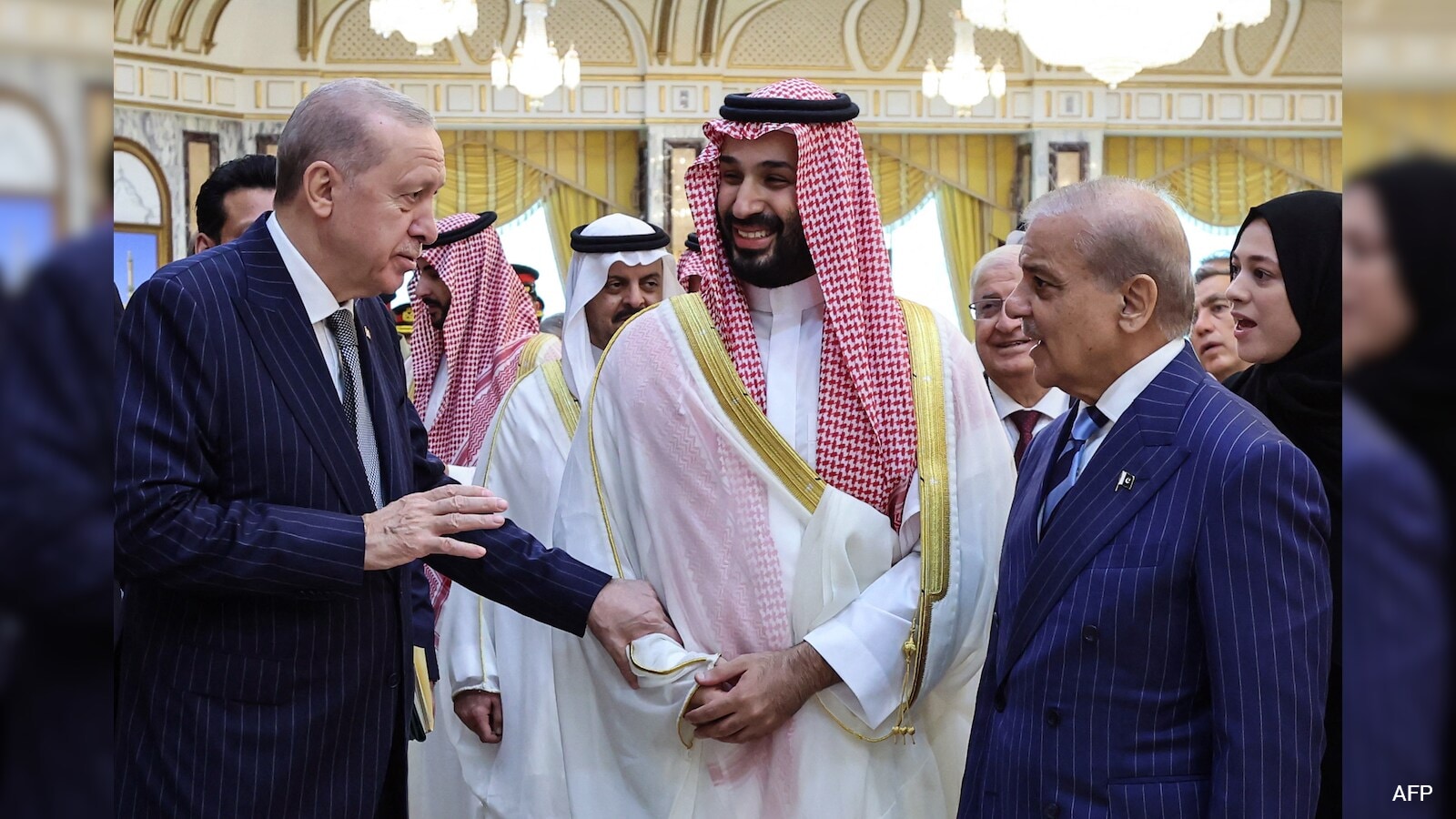
The kingdom announced a joint defence agreement with Turkey and Pakistan in Mecca, which Turkey said is technically similar to NATO's Article 5.
Riyadh plans to lead a multinational maritime coalition in the Red Sea; 14 regional countries have signed on, with more expected.
Yemen's Houthis ended a four-year truce last month, opened a southern front and attacked Saudi oil infrastructure and shipping.
Saudi Arabia and the United States carried out their first publicly announced joint airstrikes against Iraqi militias two weeks ago.
- Who
- Saudi Arabia, which is seeking to deter Iran and its regional allies, including Yemen's Houthis and Iraqi militias, while avoiding direct participation in the US–Israel war on Iran.
- What
- The kingdom is building regional defensive alliances, including a Red Sea maritime coalition and a defence pact with Turkey and Pakistan, after coming under attacks on its oil infrastructure and shipping.
- Where
- Saudi Arabia and the wider region, including Yemen, Iraq, the Red Sea and the Strait of Hormuz, with the pact signed in Mecca and coalition meetings scheduled this week in Jeddah.
- When
- The United States and Israel launched the war on Iran on February 28; the Houthis ended their four-year truce last month, and the new defence arrangements were announced in recent weeks.
- Why
- To deter Iran and its allies from further attacks on the kingdom while preserving diplomatic space to avoid being pulled into the wider regional war.
Deterrence through new alliances
Escalation risk from new commitments
Do new alliances deter or escalate?
Deterrence through new alliances
Analysts say Saudi Arabia needs collective security arrangements because restraint has been read by Iran and its allies as acceptance of being targeted; deterrence requires showing a willingness to go further up the ladder.
Escalation risk from new commitments
Every new defence commitment risks making the kingdom a more direct participant in the wider war it has spent months trying to avoid; Western diplomats worry about European states being drawn into the conflict in Yemen.
Meaning of the Turkey–Pakistan pact
Deterrence through new alliances
Turkey's foreign minister says the pact is technically similar to NATO's Article 5, and the agreement carries the message of Muslim nations pledging to defend one another as part of a shared Ummah.
Escalation risk from new commitments
Analysts say the commitment in practice remains unclear: any response would require consultations among all three countries and only if the attacked country requested it, and joint military action is currently unlikely.
Iran's view versus Riyadh's position
Deterrence through new alliances
Iran has downplayed the arrangement, saying it had no reason to be concerned so long as it correctly identifies the enemy and the threat, and portraying it as a move away from dependence on outside powers.
Escalation risk from new commitments
Riyadh argues that a multinational maritime coalition is necessary to protect Red Sea shipping and that the pact with Turkey and Pakistan is needed to safeguard the kingdom's economy after repeated attacks.
Key facts
- Defence pact
- Saudi Arabia, Turkey and Pakistan signed a joint defence agreement in Mecca
- Maritime coalition
- 14 regional countries have signed on for the Red Sea coalition, more expected
- War start date
- United States and Israel launched war on Iran on February 28
- Houthi truce
- Four-year truce ended last month; naval blockade and oil infrastructure attacks declared
- First public retaliation
- Joint US–Saudi airstrikes against Iraqi militias two weeks ago
- Upcoming meetings
- Red Sea coalition meetings scheduled this week in Jeddah
- 2019 precedent
- Earlier Houthi strikes cut Saudi oil production in half
Quotes
Yasmine Farouk
Project director for the Gulf and the Arabian Peninsula at Crisis Group
“"Saudi Arabia’s way to signal to Iran that we are willing to go further up the ladder, of course [first that] of diplomacy before crossing the line of diplomacy to the other side."”
 firstpost.com
“"The agreement carries the message of Muslim nations pledging to defend one another as part of a shared “Ummah”, or Muslim nation."”
firstpost.com
Sources
Related news
Saudi Arabia, Turkey, Pakistan Sign NATO-Like Defense Pact in Mecca
Saudi Arabia, Turkey and Pakistan Sign Joint Defence Pact

Saudi Arabia, Turkey, Pakistan Sign Joint Defence Pact in Mecca
Pakistan-Saudi-Turkey NATO-Style Defence Pact Aims to Deter Iran

Iran-Backed Attacks Test Turkey-Pakistan-Saudi Arabia Defence Pact

Pakistan-Turkiye-Saudi Defence Pact Raises Serious Questions for India

Chevron Plans $7 Billion Venezuela Expansion Amid U.S. Oil Push

Saudi Arabia Says Iranian Tanker Attack Killed Two Sailors
U.S.-Iran Exchange Escalates Across Middle East, Markets Slide
Trump Aides Seek Quiet Iran War Before Midterm Elections
US Warns Middle East Travelers Amid Escalating Iran-Linked Tensions