3 weeks ago
ICMR Team Deployed to Gujarat Over Chandipura Virus Outbreak
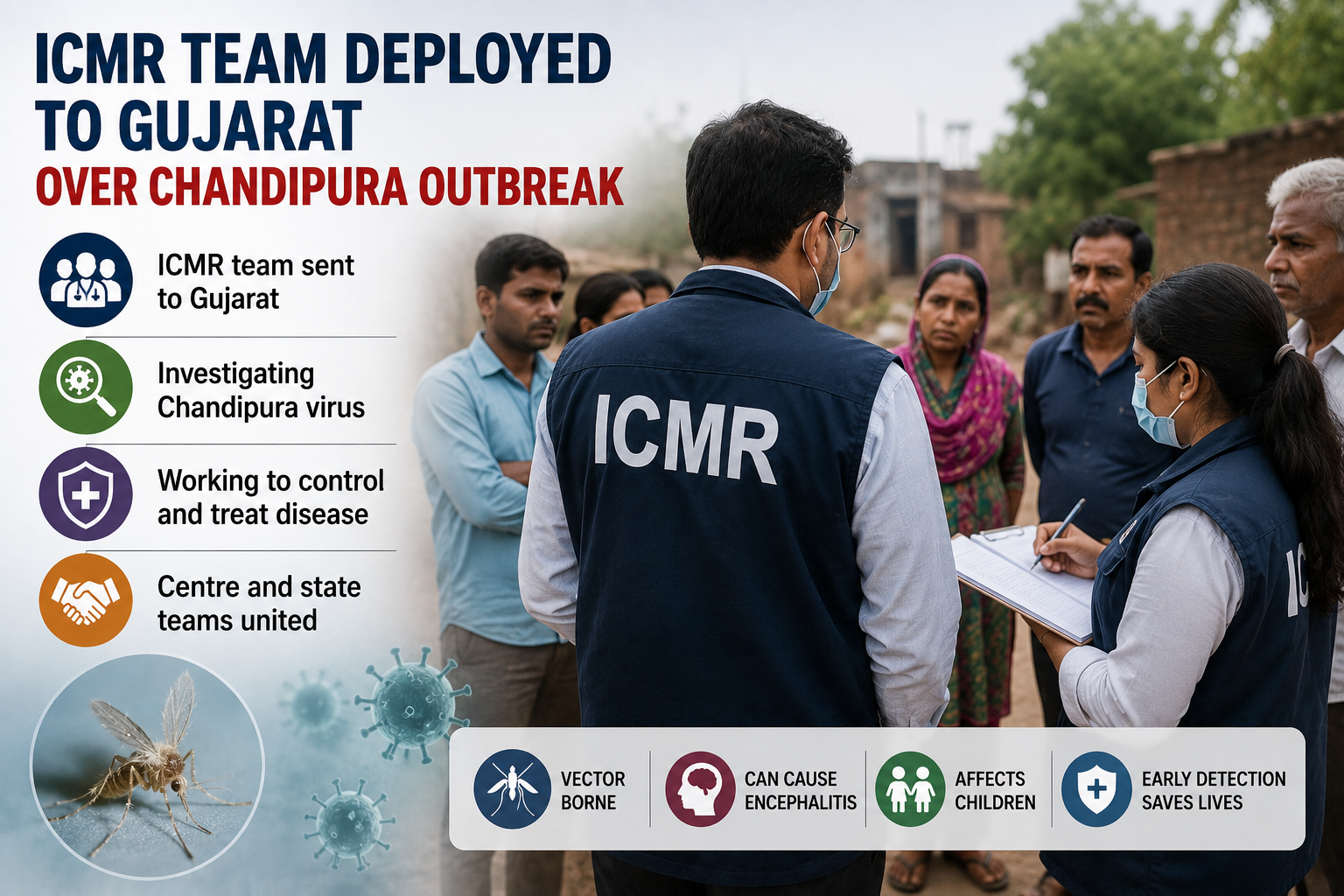
Some children in a part of India called Gujarat are getting very sick from a tiny germ called the Chandipura virus.
To help, a group of very smart doctors and scientists from India's medical research organisation are going to Gujarat.
Their boss, Dr. Rajiv Bahl, says they want to find out how the virus works and how to stop it from spreading.
They also hope to find ways to treat people who get sick.
The virus can come from tiny biting bugs like sandflies, mosquitoes, and ticks.
A person who gets sick may start with a fever, and can become very ill, even going into a coma.
The World Health Organisation says that in the past, many people who got this virus in India did not survive.
Scientists have actually been studying this virus in Gujarat for the last two years, and this is not the first time it has made people sick.
A big previous outbreak happened about two years ago, and now a team of experts has been sent to Gujarat to help again.

A national ICMR expert team has been deployed to Gujarat to investigate the Chandipura virus outbreak and strengthen the response.
ICMR Director General Dr. Rajiv Bahl said the team is working with state authorities to understand the disease, control its spread and explore treatment approaches.
The Union Health Ministry also deployed a National Joint Outbreak Response Team (NJORT) to Gujarat and Rajasthan.
According to WHO, the Chandipura virus belongs to the Rhabdoviridae family and is transmitted by vectors including sandflies, mosquitoes and ticks.
WHO says the virus is associated with acute encephalitis syndrome, particularly in children, with past Indian outbreaks recording case-fatality rates of 56-75%.
- Who
- ICMR experts led by Director General Dr. Rajiv Bahl, working with state authorities, the Union Ministry of Health and Family Welfare and the National Centre for Disease Control (NCDC); children are particularly affected.
- What
- Investigation of and response to a Chandipura virus outbreak, including controlling its spread and exploring possible treatment approaches.
- Where
- Gujarat, with the National Joint Outbreak Response Team also deployed to Rajasthan.
- When
- Current outbreak timing is not specified; the latest major previous outbreak was reported about two years ago.
- Why
- To understand the disease, control its spread and explore possible treatment approaches.
Key facts
- Outbreak location
- Gujarat (response also extended to Rajasthan)
- Lead responders
- ICMR, NCDC and the Union Ministry of Health and Family Welfare
- Virus family
- Rhabdoviridae
- Transmission vectors
- Sandflies, mosquitoes, ticks
- Main risk group
- Children (acute encephalitis syndrome)
- Symptoms
- Fever, progressing to convulsions, coma and, in severe cases, death
- Case-fatality rate
- 56-75% in previous Indian outbreaks (per WHO)
Quotes
Dr. Rajiv Bahl
Director General of the Indian Council of Medical Research
“"Several new things are being done there to understand, control and then eventually even treat the disease," Bahl said.”
 deccanchronicle.com
Sources
Related news
India deploys outbreak response team as Chandipura virus spreads
Chandipura virus outbreak kills 22 children in Gujarat

Chandipura virus kills 27, confirmed cases rise to 41 in Gujarat

Chandipura Virus Outbreak: Children Most at Risk, Government Responds

Gujarat Chandipura Outbreak Reaches 42 Cases and 28 Deaths
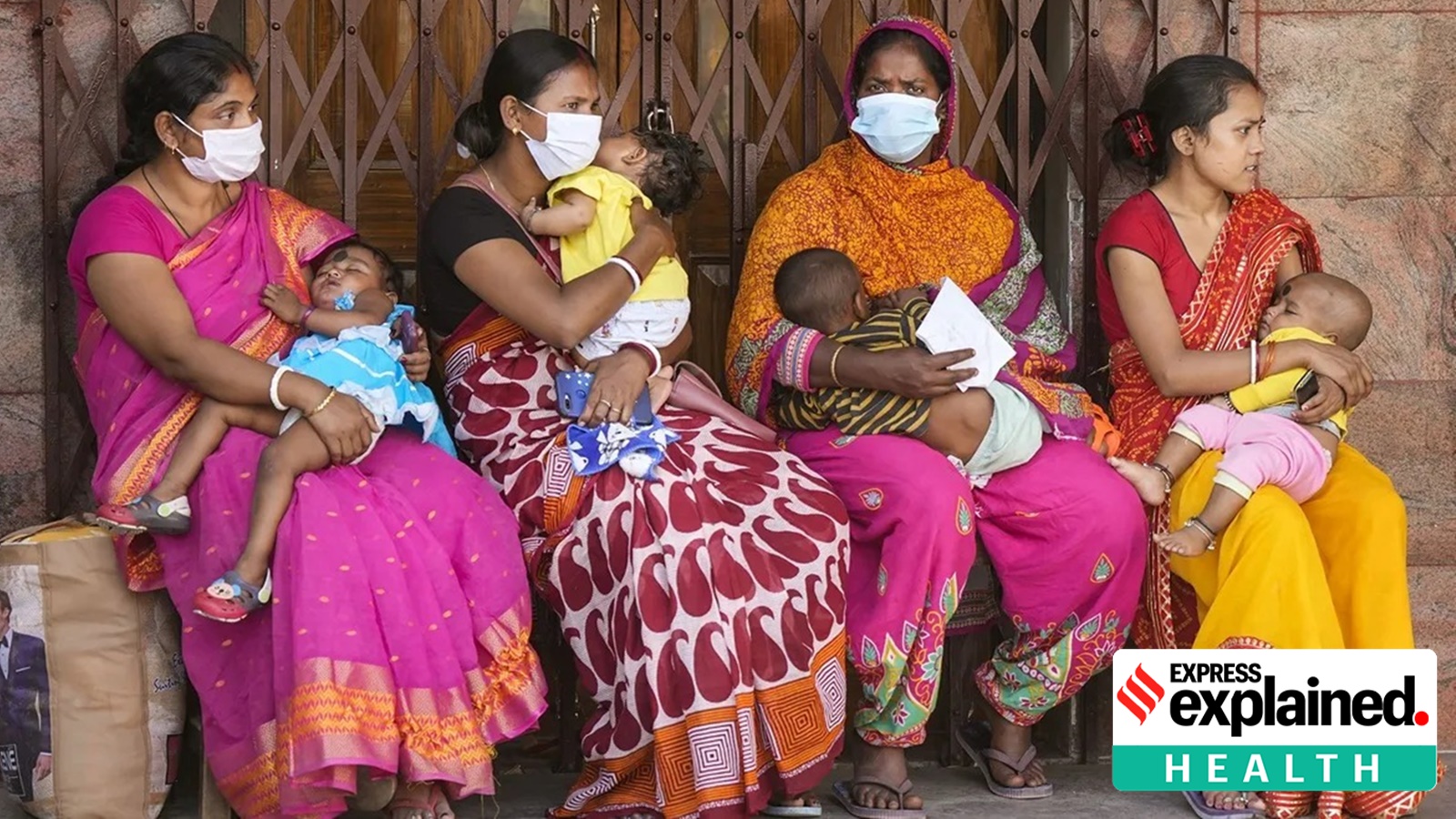
Chandipura virus kills 25 children in Gujarat as spread baffles experts

Flu Precautions: When Masks and N95s May Help
Sixty-Five Doctors Apply for AIIMS Delhi Director’s Post

India's Seasonal H1N1 Surge Prompts Advisories, Doctors Urge Calm
India's H1N1 Cases Rise, ICMR Urges Calm and Precautions

ICMR Says Seasonal H1N1 Surge Needs No Masks