1 week ago
ICMR Says Seasonal H1N1 Surge Needs No Masks

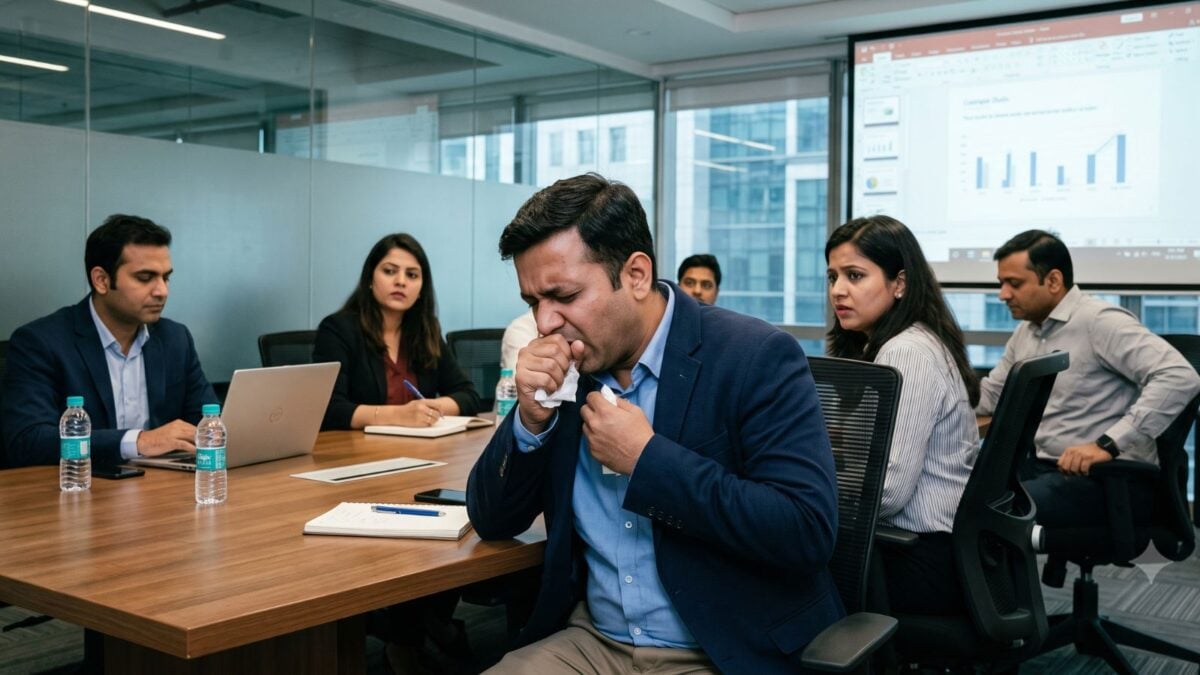
India is seeing more seasonal flu infections than usual.
The main virus involved is called H1N1.
Smaller numbers of other flu viruses and mild COVID-19 cases are also being found.
Rajiv Bahl of ICMR said nearly all cases are mild and usually improve with rest, fluids and basic care.
He said most people do not need to wear masks for this flu.
People should wash their hands, cover coughs and keep some distance from sick people.
Older adults, pregnant women and people with weak immune systems should ask their doctors about flu vaccination.
Health workers are testing samples across India to watch how the virus changes.

India’s current respiratory-infection surge is driven mainly by seasonal Influenza A subtype H1N1, with limited H3N2, Influenza B and mild SARS-CoV-2 circulation.
ICMR chief Rajiv Bahl said about 98–99% of cases are mild, self-limiting and manageable at home.
Instead of routine masks, officials recommend hand hygiene, respiratory etiquette and keeping one to two meters from symptomatic people.
High-risk groups may consider the Northern Hemisphere flu vaccine after consulting their doctors; universal vaccination is not part of the national programme.
Delhi has reported more than 2,600 influenza cases this year, while ICMR is monitoring mutations through 73 sentinel hospitals and 167 laboratories.
- Who
- The Indian Council of Medical Research, led by director general Rajiv Bahl, provided the assessment; Union Health Minister J.P. Nadda previously chaired a review meeting.
- What
- India is experiencing a seasonal respiratory-infection surge led by Influenza A subtype H1N1.
- Where
- Across India, with more than 2,600 influenza cases reported in Delhi and significant activity in Karnataka, Maharashtra and Kerala.
- When
- The assessment was given on Tuesday; the article says the increase has occurred this year, and a government review meeting was held on 21 August.
- Why
- The surge reflects the seasonal circulation of H1N1, which undergoes small mutations that help it continue infecting people.
Key facts
- Main strain
- Influenza A subtype H1N1 accounts for nearly 98% of circulating Influenza A cases nationally.
- Case severity
- About 98–99% of cases are described as mild, self-limiting and manageable at home.
- Delhi cases
- Delhi has reported more than 2,600 influenza cases this year.
- Delhi strain share
- H1N1 accounts for approximately 70–75% of Delhi’s total influenza infections.
- Recommended precautions
- Hand hygiene, respiratory etiquette and one-to-two-meter distancing from symptomatic people.
- Vaccination advice
- High-risk people may consider the Northern Hemisphere flu vaccine in consultation with physicians; universal vaccination is not currently included in the national immunization programme.
- Surveillance network
- ICMR is tracking respiratory infections through 73 sentinel hospitals and 167 virus research and diagnostic laboratories.
Quotes

Rajiv Bahl
Director general of the Indian Council of Medical Research
“Flu viruses have a very classical way of behaving; they keep on having small mutations every year. That mutation helps them to keep on infecting people even if they had the flu last year.”
 livemint.com
“There should not be any cause of panic that we can see, any cause of concern. It is a large number of cases with the same H1N1 strain, which is the seasonal influenza.”
livemint.com
Sources
Related news

Delhi H1N1 Cases Rise; ICMR Says No New Strain
ICMR Says No New H1N1 Strain, Cautions High-Risk Groups

India's H1N1 Cases Rise, ICMR Urges Calm and Precautions

ICMR Says Seasonal H1N1 Flu Rise Needs No Panic

No new H1N1 strain identified as seasonal surge continues

ICMR Says No New H1N1 Strain as Delhi Cases Rise
Flu Precautions: When Masks and N95s May Help
Sixty-Five Doctors Apply for AIIMS Delhi Director’s Post

India's Seasonal H1N1 Surge Prompts Advisories, Doctors Urge Calm