

3 weeks ago
Mecca Defence Pact Needn't Scare India, Editorial Says
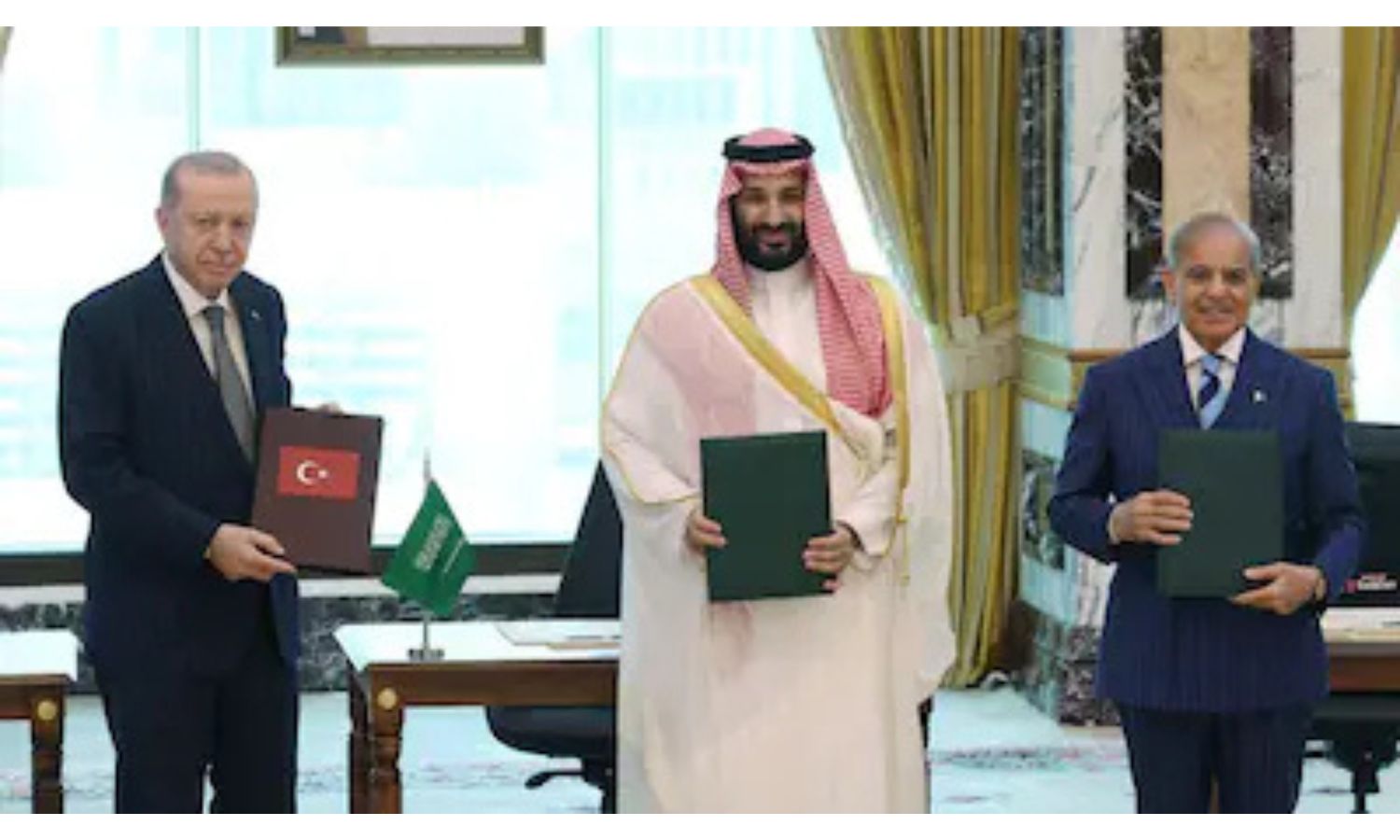
Three countries — Saudi Arabia, Pakistan, and Turkey — agreed to help protect each other, like a team of friends who promise to look out for one another.
Such agreements are called defence pacts, and this one is named the Mecca Joint Defence Agreement.
The pact is mainly meant to be ready in case Iran, another country in the region, becomes a danger.
Saudi Arabia is especially worried that Iran might one day get nuclear weapons.
The article says the agreement is for defence, not for starting fights.
It explains that if someone attacked Pakistan, the other countries would not have to join the fight automatically.
There is also no part of the agreement that shares nuclear weapons between the countries.
India, which has had conflict with Pakistan in the past, is told it does not need to be scared of this pact.
The article calls the pact a way for these countries to feel safer without relying only on the United States for protection.
In short, the agreement is seen as a defensive shield in a region where wars and tense peace often alternate.

Saudi Arabia, Pakistan and Turkey signed a Nato-style collective defence agreement, the Mecca Joint Defence Agreement, aimed at a perceived threat from Iran and its proxies.
The editorial argues the pact is mainly a shield for Saudi Arabia's historical apprehensions over a Shiite-majority Iran possibly going nuclear.
The agreement has no categorical nuclear-sharing clause and would not automatically draw allies into a conflict if any nation, such as India, attacked Pakistan, the article says.
The pact is seen as diversification from a strategy placing all faith in the United States as a single security guarantor, amid attacks on allies from Iran's proxies like the Houthis in Yemen.
The article concludes India need not fear what may be termed an 'Islamic Nato' of Sunni Muslim-majority nations including Pakistan.
- Who
- Saudi Arabia, Pakistan and Turkey, the signatories of the Mecca Joint Defence Agreement.
- What
- Signed a Nato-style collective defence pact seen as aimed at countering a threat from Iran and its proxies.
- Where
- The pact is named after Mecca; the article focuses on the Middle East (West Asia) region.
- When
- Not specified in the article; it refers to current Middle East security tensions.
- Why
- To provide a defensive shield against Iran's perceived threat and to diversify security guarantees beyond reliance on the United States as a single guarantor.
Editorial: India and the region need not fear
Worried security scenarios
Should India fear an 'Islamic Nato'?
Editorial: India and the region need not fear
The editorial argues India need not fear the pact, as it is not about Sunni Muslim-majority nations ganging up with Pakistan and contains no categorical nuclear-sharing clause.
Worried security scenarios
Some security scenarios imagine the Saudi Arabia-Pakistan-Turkey alliance as terrifying, reminiscent of Cold War-era confrontation and deterrence.
Is the pact purely defensive?
Editorial: India and the region need not fear
The agreement should be seen as a purely defensive shield, guided by Saudi Arabia's apprehensions about Iran, and would not automatically draw allies into a conflict such as an attack on Pakistan.
Worried security scenarios
As a Nato-style collective defence pact clearly aimed at Iran, it adds to a restive region defined by periodic aggression and could give Iran an excuse to further nuclear ambitions.
Key facts
- Agreement
- Mecca Joint Defence Agreement
- Signatories
- Saudi Arabia, Pakistan, Turkey
- Agreement type
- Nato-style collective defence pact
- Perceived target
- Threat from Iran and its proxies
- Nuclear clause
- No categorical nuclear-sharing clause
- Prior arrangement
- Bilateral Saudi Arabia-Pakistan strategic mutual agreement
- Members
- Three (tripartite agreement)
Sources
Related news
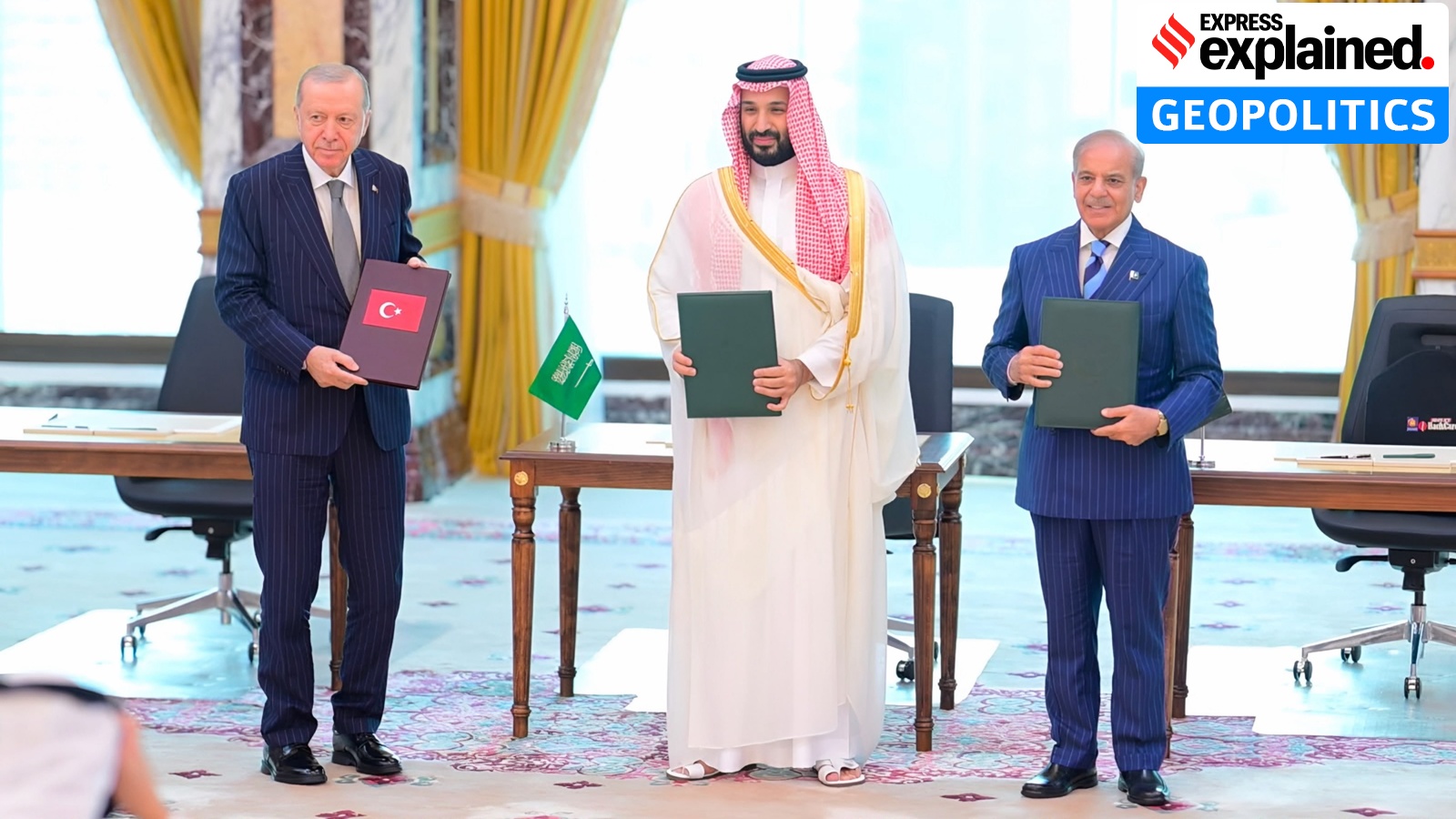
Saudi Arabia, Turkey, Pakistan Sign Mecca Joint Defence Agreement

Saudi Arabia, Turkey, Pakistan Sign Mecca Defence Agreement
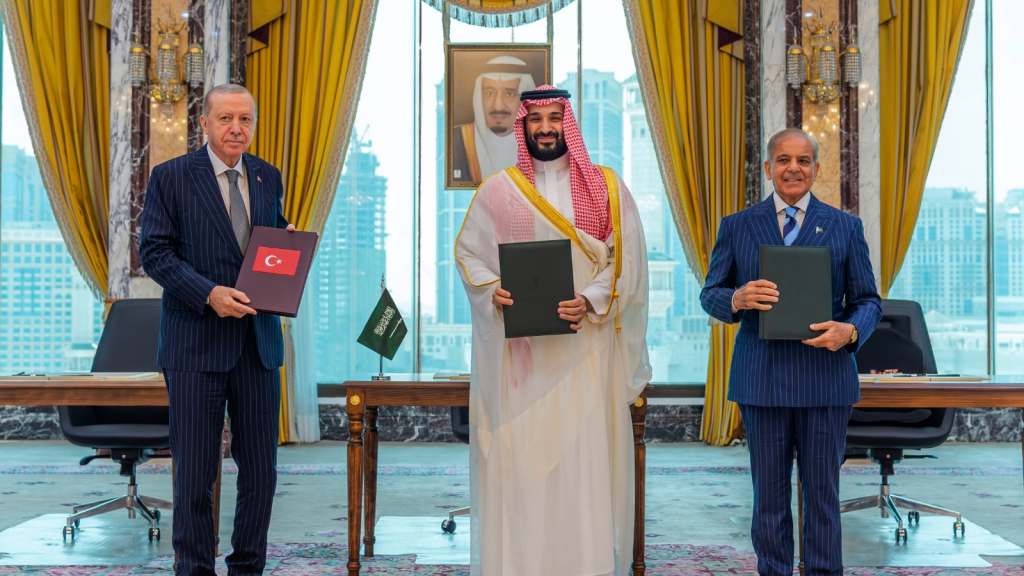
Mecca Defence Pact Raises Questions Over Its Intended Threat

Mecca Joint Defence Pact Risks Remaining Rhetorical, Report Warns
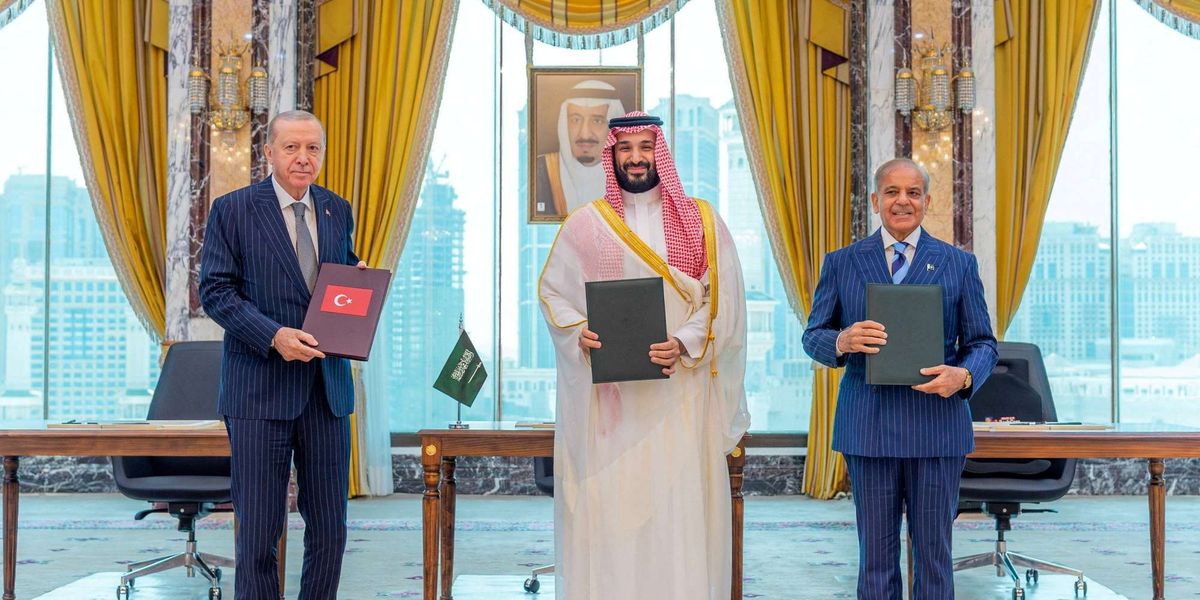
Saudi Arabia, Turkey and Pakistan sign Mecca Joint Defence Agreement
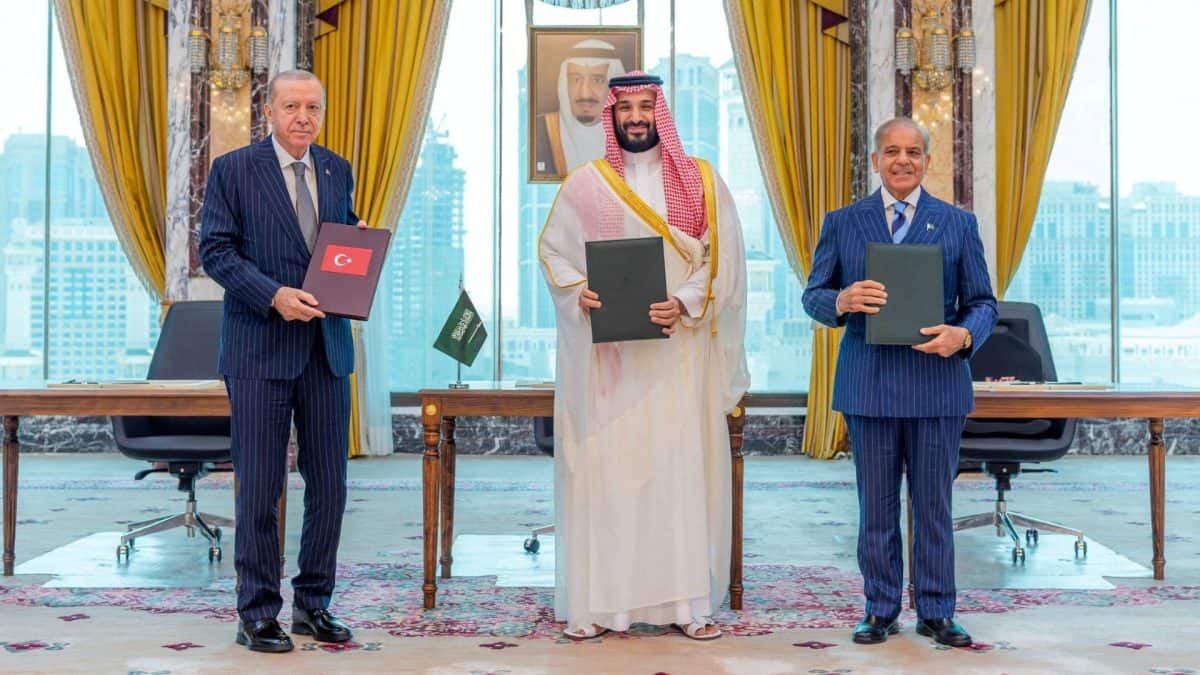
Why Pakistan’s Mecca Pact May Not Shield It From India
Pentagon Turmoil Deepens as Hegseth Tightens Grip on Military

Germany Blames Russia for Leipzig Drone Attack, Europe Vows Response
Erdogan Says Turkey Would Consider Full Shanghai Cooperation Organisation Membership
Augsburg Train Station Closed After Explosion, Suspicious Object Found

Taliban Offers Afghan Mineral Wealth as Washington Weighs Engagement
