

6 days ago
Aditya-L1 Findings Clarify Magnetic Heating of the Sun’s Corona

The Sun’s visible surface is about 5,500°C, but its outer atmosphere is millions of degrees hot.
Scientists have long wondered why the outside is hotter than the surface.
India’s Aditya-L1 spacecraft studied the Sun’s atmosphere to investigate this mystery.
Its observations suggest that changing and reconnecting magnetic fields provide most of the energy heating the corona.
The study estimates that magnetic activity accounts for about 93% of the energy needed.
Waves from turbulent activity on the Sun’s surface provide the rest.
Solar eruptions can disturb satellites, communications, navigation and power systems on Earth.
More observations could improve scientists’ understanding of these events.
Researchers say the findings are important but do not end the scientific debate.

Aditya-L1 observations indicate that magnetic-field rearrangement and reconnection help heat the Sun’s corona.
The study estimates this magnetic mechanism supplies about 93% of the corona’s energy requirement.
Waves produced by turbulent activity on the Sun’s surface contribute the remaining energy.
Understanding solar activity could help protect satellites, communications, navigation systems and power infrastructure.
Researchers caution that one study cannot settle the longstanding debate over coronal heating.
- Who
- Indian researchers using observations from the Aditya-L1 mission.
- What
- A study found that magnetic-field rearrangement and reconnection may provide about 93% of the energy heating the Sun’s corona.
- Where
- In the Sun’s outer atmosphere, using observations from the Aditya-L1 mission.
- When
- The articles do not specify when the observations or study were conducted.
- Why
- To understand why the corona is millions of degrees hot and improve knowledge of solar activity that can affect technological infrastructure.
Scientific significance
Scientific caution
What the findings show
Scientific significance
Aditya-L1 provides evidence that repeated magnetic-field rearrangement and reconnection are a major source of the corona’s extreme heat.
Scientific caution
The corona-heating problem remains complex, and the findings should not be treated as the final answer.
Meaning for India’s space program
Scientific significance
The mission demonstrates the value of sustained observation, indigenous space science and investment in fundamental research.
Scientific caution
The results should be independently scrutinized, reproduced and incorporated into the wider international body of solar physics before broader claims are made.
Key facts
- Mission
- Aditya-L1
- Scientific problem
- Why the Sun’s corona is far hotter than its visible surface
- Visible surface temperature
- Approximately 5,500°C
- Corona temperature
- Up to millions of degrees
- Magnetic mechanism
- Estimated to account for about 93% of the corona’s energy requirement
- Other contribution
- Waves generated by turbulent activity on the solar surface provide the remainder
- Potential impacts
- Solar eruptions can disrupt satellites, communications, navigation systems and power infrastructure
Sources
Related news

Sun's magnetic dance holds key to hot corona mystery

Scientists Study Total Solar Eclipse to Unravel Sun's Corona Mystery
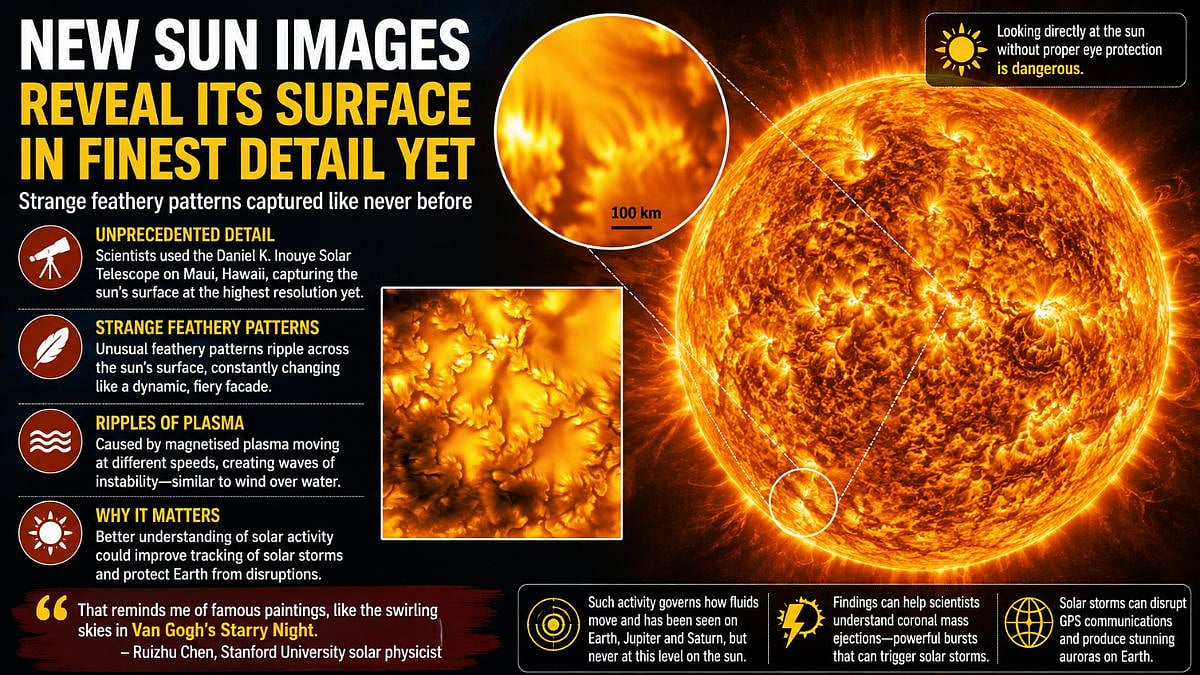
New Images Reveal Sun's Surface in Finest Detail Yet

Sun's Surface Reveals Swirling Vortices in Highest-Resolution Images
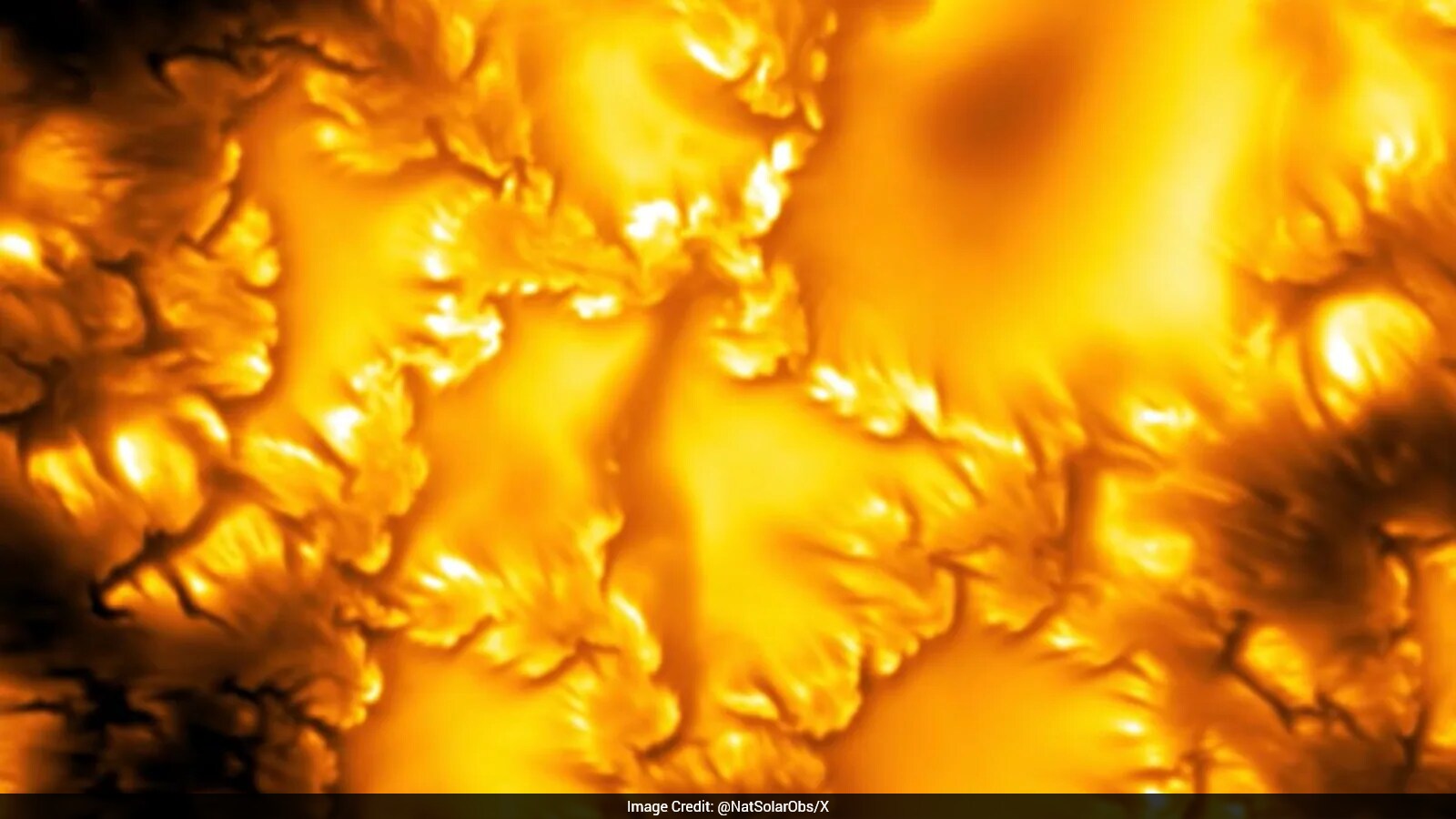
Scientists Spot Tiny Swirls on Sun for the First Time

India’s Space Ambitions Expand From Moon to Mars, Venus

Next Lunar Eclipse Set for February 2027 Across India, World

Why Soil Is Brown: Humus, Iron, and Earth’s Colour

2026 Blood Moon Eclipse Draws Global Attention and Zodiac Claims

Smartphone Tips for Capturing the 2026 Partial Lunar Eclipse
