2 weeks ago
Sun's magnetic dance holds key to hot corona mystery

The Sun has a bright, glowing surface, and around it is a layer of gas called the corona.
Surprisingly, this outer layer is much hotter than the Sun's surface - about a million degrees hot!
That seems strange, because things usually get cooler the farther you get from a fire.
Scientists call this the 'corona mystery.'
Some thought heat might be carried up by waves, while others thought magnetic fields might snap and release energy like rubber bands.
Indian scientists used a special satellite called Aditya-L1 to study the Sun closely.
They found that the waves only provide a tiny part - about 7 per cent - of the energy.
The rest comes from magnetic fields that snap, reconnect, and rearrange themselves.
This helps explain why the Sun's corona is so hot.
The scientists now plan to study more solar eruptions to make sure their discovery is correct.

Scientists at the Indian Institute of Astrophysics used Aditya-L1 observations to investigate why the Sun's corona is vastly hotter than its visible surface.
The study found that waves travelling through the Sun's magnetic environment account for only about 7 per cent of the energy in regions where solar eruptions occur.
Published in The Astrophysical Journal, the findings suggest that the Sun's reconfiguring magnetic fields account for the bulk of the energy transfer.
The analysis is based on a single coronal mass ejection observed in August 2024, and researchers say more events are needed to confirm the results.
The hot-corona mystery dates to an 1869 total solar eclipse, when a green spectral line was initially thought to come from a hypothetical element called 'coronium.'
- Who
- Scientists at the Indian Institute of Astrophysics (IIA), Bengaluru, led by R. Ramesh
- What
- Used Aditya-L1 observations to show that the Sun's reconfiguring magnetic fields, not waves, account for the bulk of energy heating the corona
- Where
- Observed from Aditya-L1, positioned about 1.5 million km from Earth, with research conducted in India
- When
- Based on a coronal mass ejection observed in August 2024
- Why
- To explain why the Sun's corona is about a million degrees hot while the visible surface is only about 6,000 degrees
Key facts
- Research institution
- Indian Institute of Astrophysics (IIA), Bengaluru
- Observatory
- Aditya-L1, launched in 2023
- Distance from Earth
- About 1.5 million km
- Energy from waves
- About 7 per cent in eruption regions
- Solar surface temperature
- About 6,000 degrees
- Corona temperature
- About 1 million degrees, reaching tens of millions during eruptions
- Event studied
- Coronal mass ejection in August 2024
- Journal
- The Astrophysical Journal
Quotes
Dibyendu Nandi
Solar physicist at the Raman Research Institute, Bengaluru
“Physicists have for decades used mathematics and computers to model how the Sun’s magnetic fields store and release energy. What was missing was direct observational evidence of how the energy is actually transferred during such eruptions.”
 telegraphindia.com
“This work shows the unique capability of continuous observations with the Aditya‑L1 instrument. Establishing whether the results hold over a statistically significant number of events would be an important future step.”
telegraphindia.com
Sources
Related news

Aditya-L1 Findings Clarify Magnetic Heating of the Sun’s Corona

Scientists Study Total Solar Eclipse to Unravel Sun's Corona Mystery
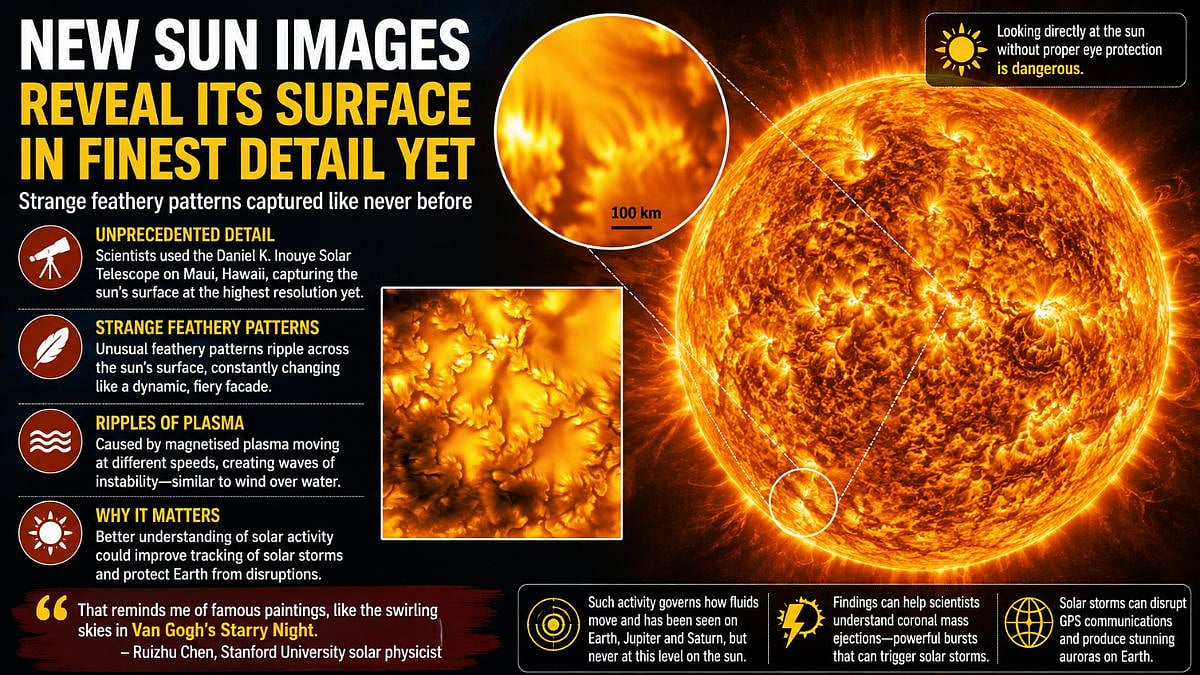
New Images Reveal Sun's Surface in Finest Detail Yet

Sun's Surface Reveals Swirling Vortices in Highest-Resolution Images
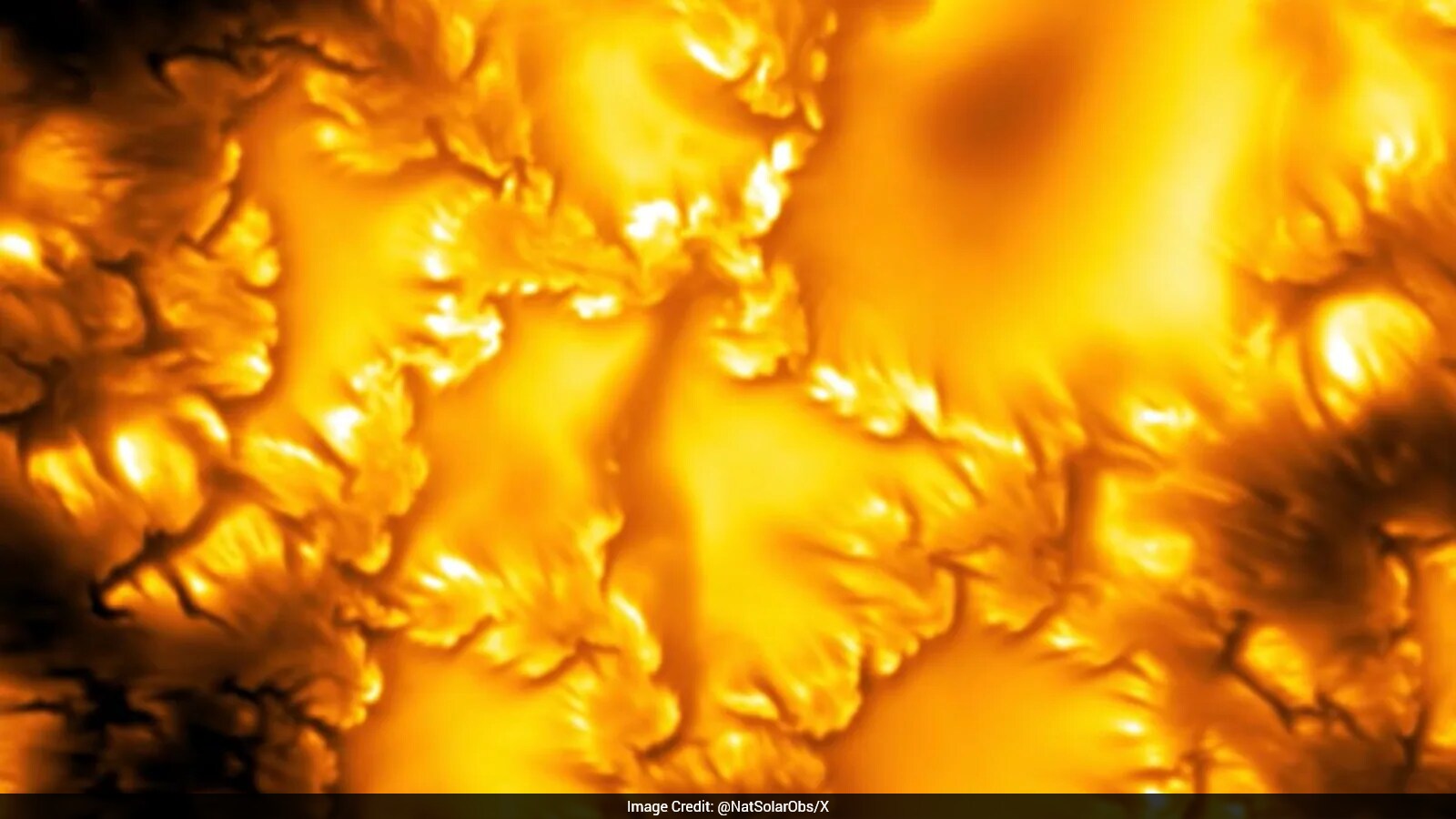
Scientists Spot Tiny Swirls on Sun for the First Time

Total Solar Eclipse 2026: Europe's First Since 1999

Annapurni Subramaniam Becomes First Indian Woman to Win COSPAR Medal

Anthropic Offers $50,000 AI Grants for Rare Disease Research

Rare Red Aurora Lights Ladakh Sky
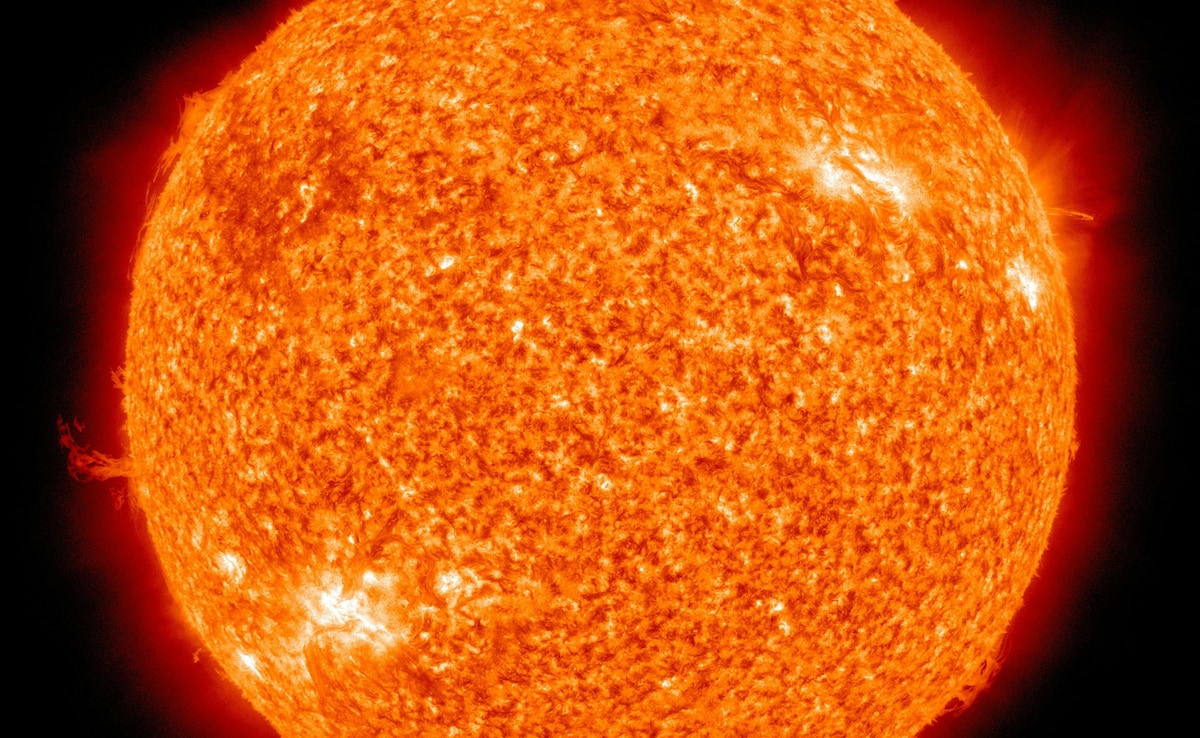
Aditya-L1 Prepares for Solar Maximum and CMEs