3 weeks ago
Scientists Spot Tiny Swirls on Sun for the First Time
The Sun is a giant ball of very hot glowing gas.
Scientists want to understand how it works.
They used a very powerful telescope on a mountain in Hawaii to look at the Sun.
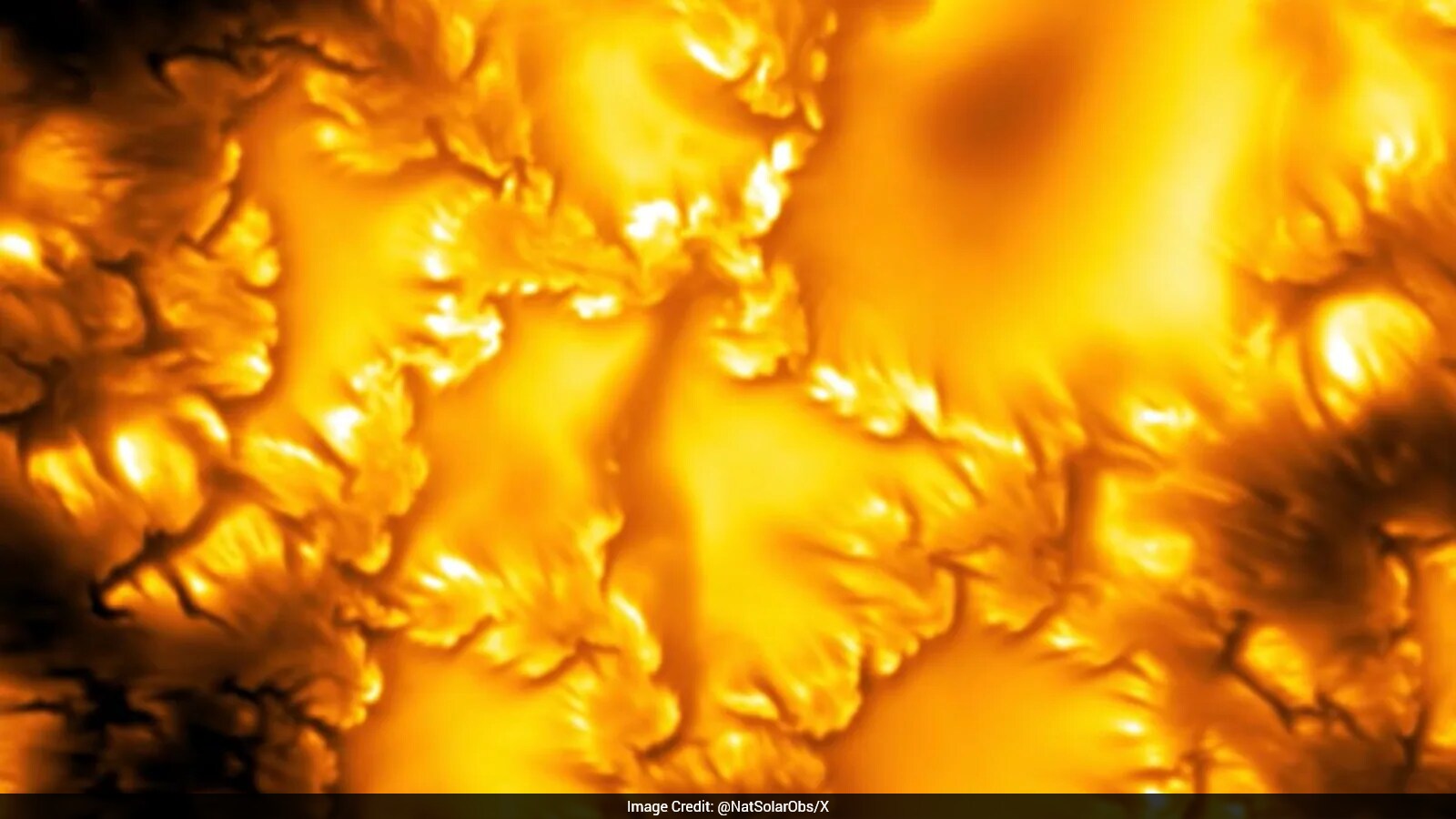
The telescope showed the Sun's surface in amazing detail.
Scientists saw tiny spinning swirls there for the first time ever.
These little whirlpools happen when layers of gas move past each other at different speeds.
The swirls can twist the Sun's magnetic fields, like twisting rubber bands.
When those twisted fields snap, they release a burst of energy.
That energy can sometimes affect Earth, like disturbing satellites and power grids.
This discovery helps scientists solve mysteries about the Sun.

For the first time, scientists spotted tiny swirling patterns called Kelvin-Helmholtz instability on the Sun's surface.
The observations were made with the National Science Foundation's Daniel K Inouye Solar Telescope near the summit of Haleakala on Maui, Hawaii.
Images and time-lapse video captured unprecedented detail of the Sun's photosphere near a magnetically active sunspot.
The swirls may twist the Sun's magnetic field lines together, helping explain the buildup of energy behind solar flares and coronal mass ejections.
The findings were published in the journal Nature; the phenomenon was previously seen in ocean waves, clouds, and the atmospheres of Jupiter and Saturn.
- Who
- Scientists using the National Science Foundation's Daniel K Inouye Solar Telescope.
- What
- Captured the first observations of Kelvin-Helmholtz instability — tiny swirling patterns — on the Sun's surface.
- Where
- On the Sun's visible surface (photosphere), observed with the telescope near the summit of Haleakala on Maui, Hawaii.
- When
- Not specified in the articles.
- Why
- To better understand solar activity and how the Sun's magnetic energy builds up, which drives solar flares and coronal mass ejections.
Key facts
- Telescope
- Daniel K Inouye Solar Telescope (National Science Foundation)
- Location
- Near the summit of Haleakala, Maui, Hawaii
- Phenomenon observed
- Kelvin-Helmholtz instability on the Sun (first time)
- Observation target
- Magnetically active area near a sunspot
- Published in
- Nature
- Potential impact
- Could explain magnetic flux braiding behind solar flares and coronal mass ejections
- Previously observed in
- Lake and ocean waves, clouds, atmospheres of Jupiter and Saturn
Sources
Related news
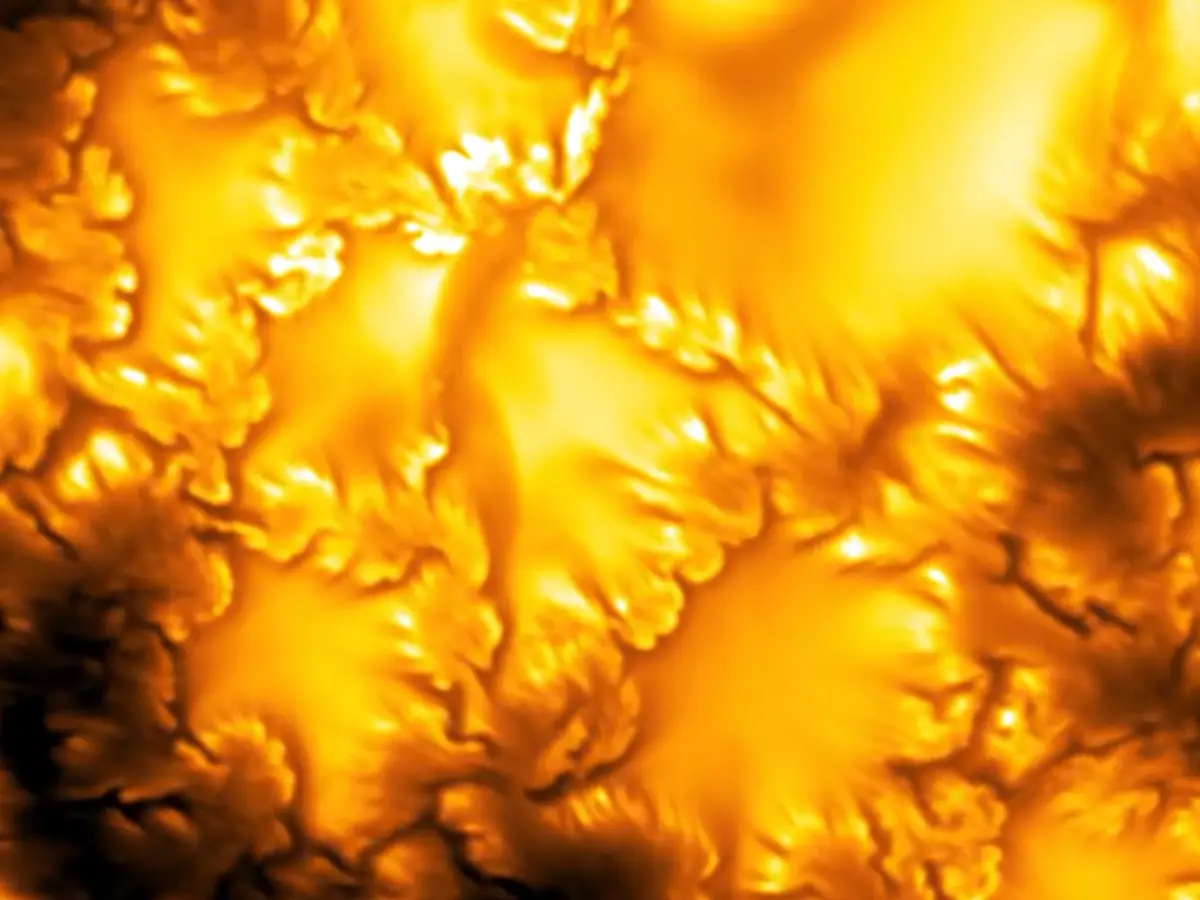
Sun's Surface Reveals Swirling Vortices in Highest-Resolution Images
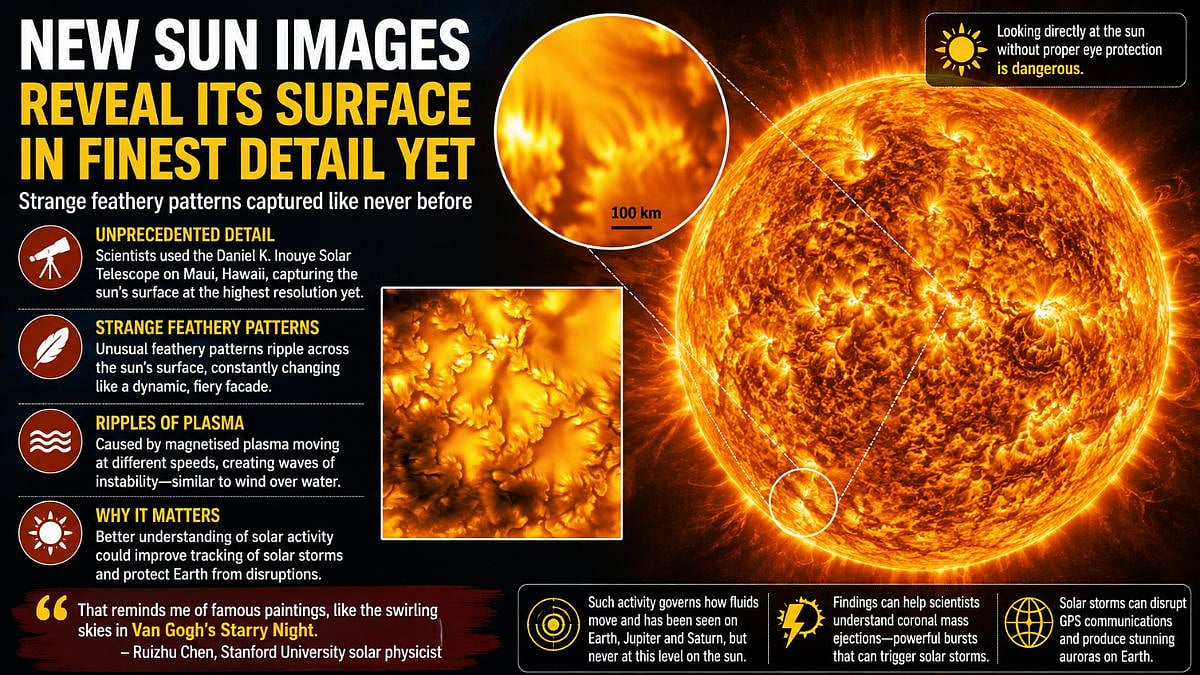
New Images Reveal Sun's Surface in Finest Detail Yet

Sun's magnetic dance holds key to hot corona mystery

Aditya-L1 Findings Clarify Magnetic Heating of the Sun’s Corona
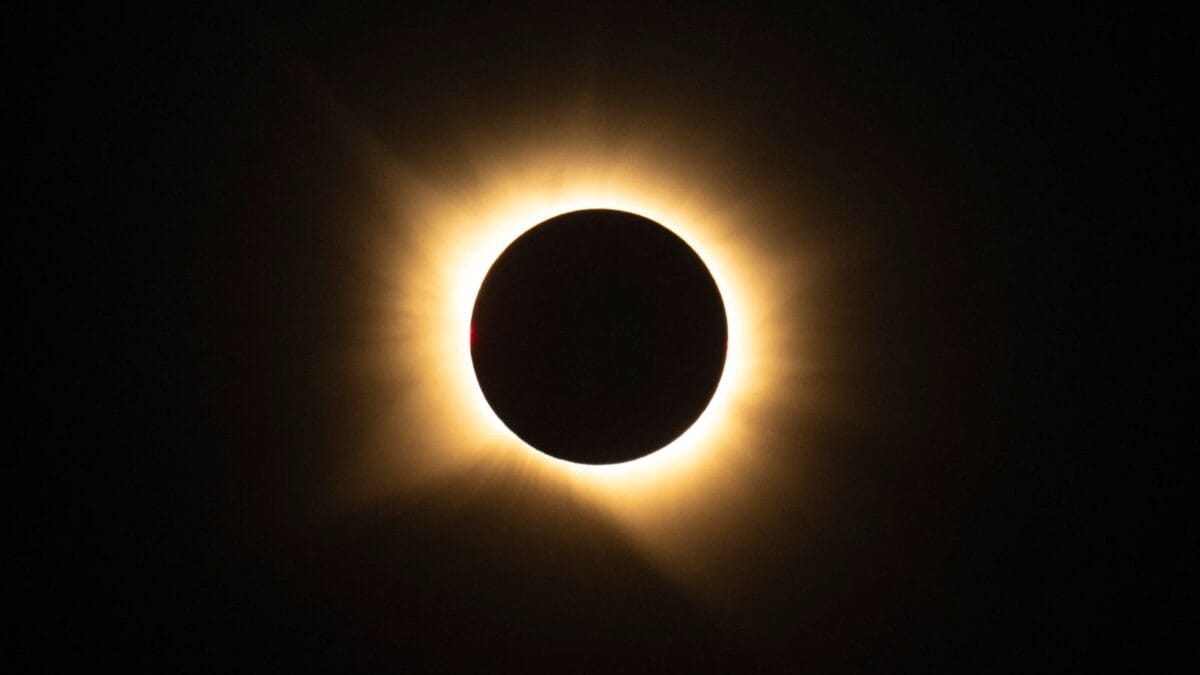
Scientists Study Total Solar Eclipse to Unravel Sun's Corona Mystery

Gujarat farmer's well waves puzzle Morbi; officials cite groundwater recharge

China’s Hypersonic Weapons Could Threaten Aircraft Near US Bases

Tropical Storm Moke Brings More Rain to Flooded Hawaii
Hurricane Lala batters Hawaii: over 40,000 left without power

Hurricane Lala Strengthens, Threatens Hawaii's Big Island with Flooding

Tropical Storm Lala Nears Hawaii With Possible Hurricane Landfall