2 weeks ago
Scientists Study Total Solar Eclipse to Unravel Sun's Corona Mystery
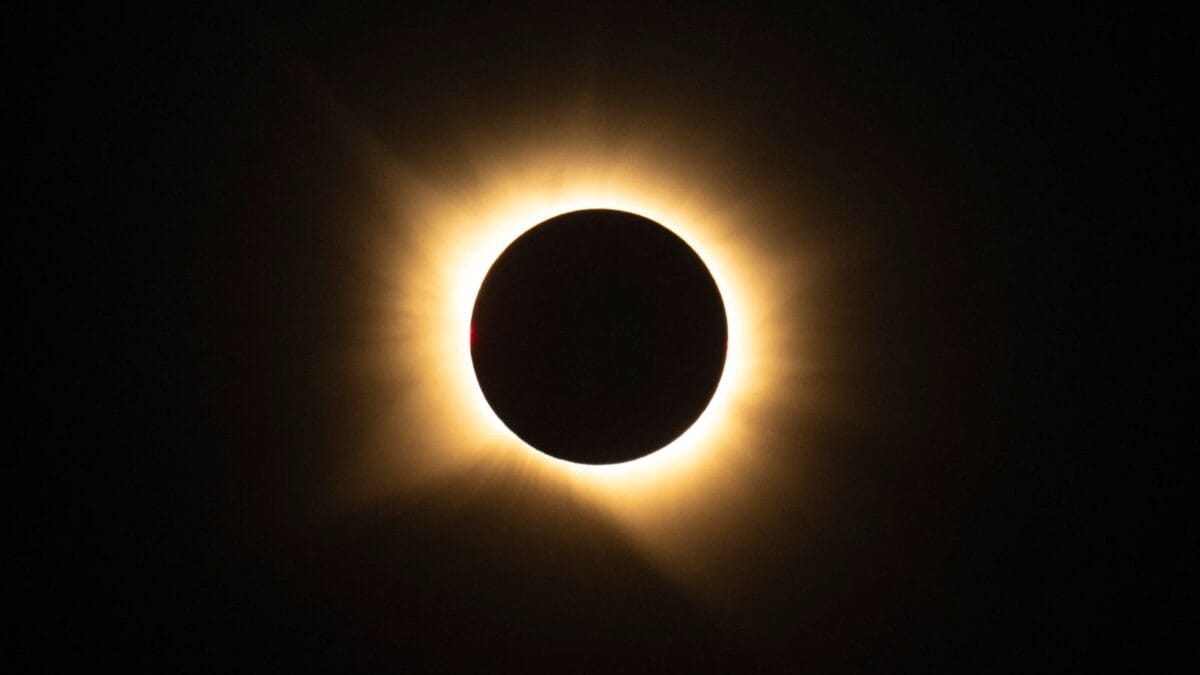
On Wednesday, August 12, the Moon moved between the Earth and the Sun and covered the Sun's bright face for a little while.
This special event is called a total solar eclipse, and millions of people looked up to see it.
Scientists used the short period of darkness to study the Sun's corona, its extremely hot outer atmosphere.
The corona is usually hidden by the Sun's bright glare, but the Moon blocked that light.
Scientists are puzzled because the corona is about one million degrees Celsius, even hotter than the Sun's visible surface.
They want to learn how the Sun's magnetic energy heats it so much.
A NASA team flew a special plane to get a longer and clearer view of the corona.
The Sun sometimes sends bursts of charged particles toward Earth that can create geomagnetic storms.
These storms can disturb satellites, communications, and power grids.
By studying the eclipse, scientists hope to predict such space weather better in the future.

A total solar eclipse occurred on August 12, 2026, crossing the Northern Hemisphere from Greenland and Iceland to Spain and part of Portugal.
The brief period of totality revealed the Sun's corona, which can reach around 1 million degrees Celsius.
A NASA-funded team flew a WB-57 aircraft at about 50,000 feet through the eclipse's shadow to observe the corona with four cameras.
Scientists hope the observations will explain how the Sun's magnetic energy heats the corona and releases charged particles into space.
Better understanding of the corona could improve forecasts of geomagnetic storms that can disrupt satellites, communications, and power grids.
- Who
- Scientists, including a NASA-funded team flying a WB-57 aircraft, along with millions of sky-watchers who witnessed the eclipse.
- What
- A total solar eclipse revealed the Sun's corona, giving researchers a rare chance to study its million-degree outer atmosphere, solar eruptions, and space weather.
- Where
- A path across the Northern Hemisphere over Greenland, Iceland, the North Atlantic, Spain, and part of Portugal; a partial eclipse was visible in parts of Europe, North America, and northwestern Africa.
- When
- August 12, 2026
- Why
- To study how the Sun's corona is heated and how charged particles are released into space, aiming to improve forecasts of geomagnetic storms that can affect satellites, communications, and power grids.
Key facts
- Event
- Total solar eclipse
- Date
- August 12, 2026
- Path of totality
- Greenland, Iceland, North Atlantic, Spain, and part of Portugal
- Areas with partial eclipse
- Parts of Europe, North America, and northwestern Africa
- Corona temperature
- Around 1 million degrees Celsius
- Research aircraft
- NASA-funded WB-57 flying at about 50,000 feet
- Cameras
- Four, capturing visible and infrared wavelengths at at least 20 frames per second
- Report location
- Washington D.C., United States of America
Sources
Related news
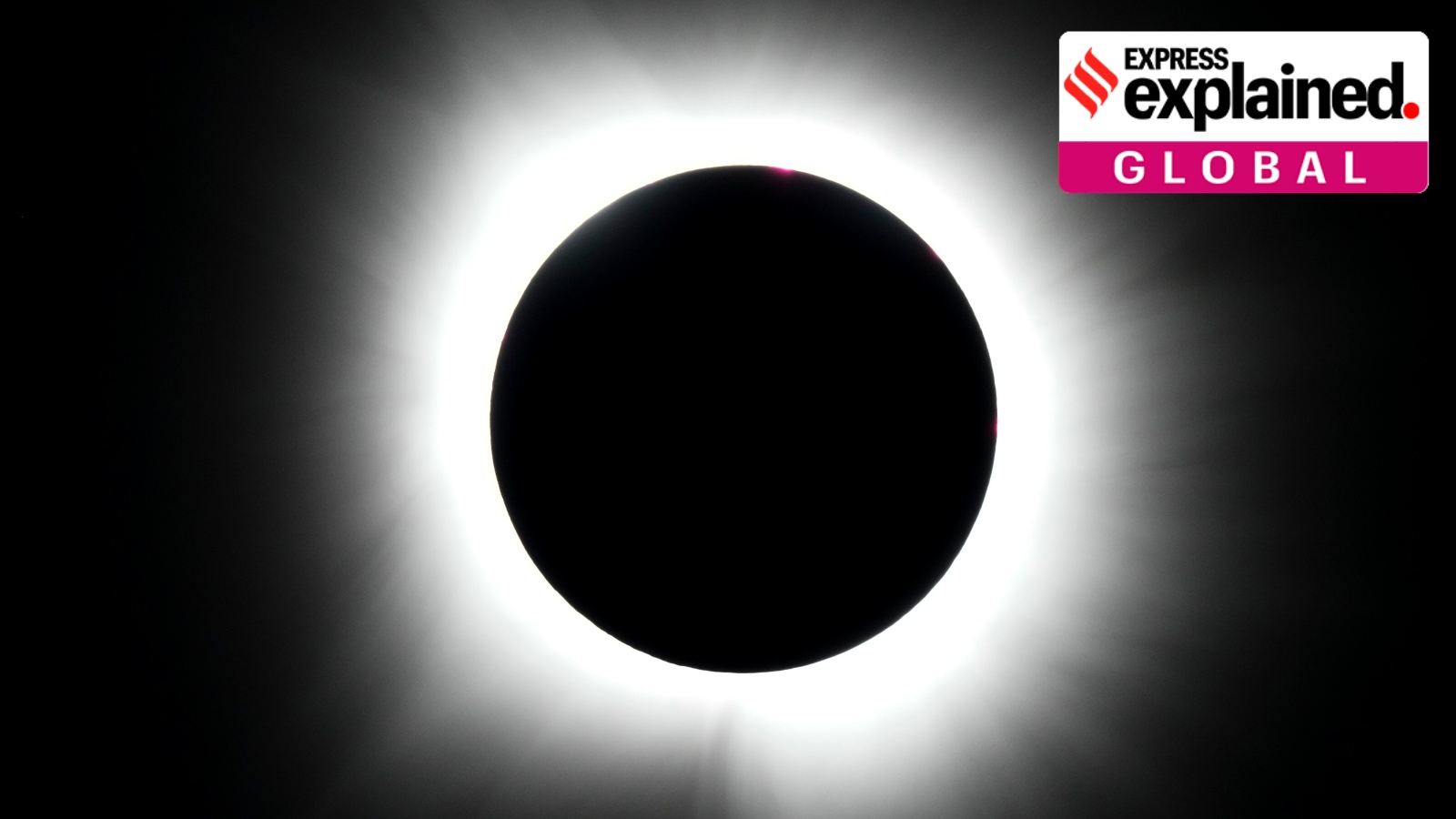
Total Solar Eclipse 2026: Europe's First Since 1999

NASA Pilots Chase August 12 Solar Eclipse From Iceland

Aditya-L1 Findings Clarify Magnetic Heating of the Sun’s Corona

Sun's magnetic dance holds key to hot corona mystery

Total Solar Eclipse Plunges Iceland and Spain Into Darkness

Total Solar Eclipse August 2026: India Out, Greenland, Spain In

Bhavana Reddy Brings Kuchipudi Performances to Iceland, Germany

Iceland Rejects EU Talks, Putting Membership Debate On Ice

Iceland Rejects Restarting EU Talks in Close-Fought Referendum

Iceland Votes in Tight Referendum on Reopening EU Membership Talks
Iceland’s EU Talks Referendum Remains Too Close to Call