3 weeks ago
New Images Reveal Sun's Surface in Finest Detail Yet
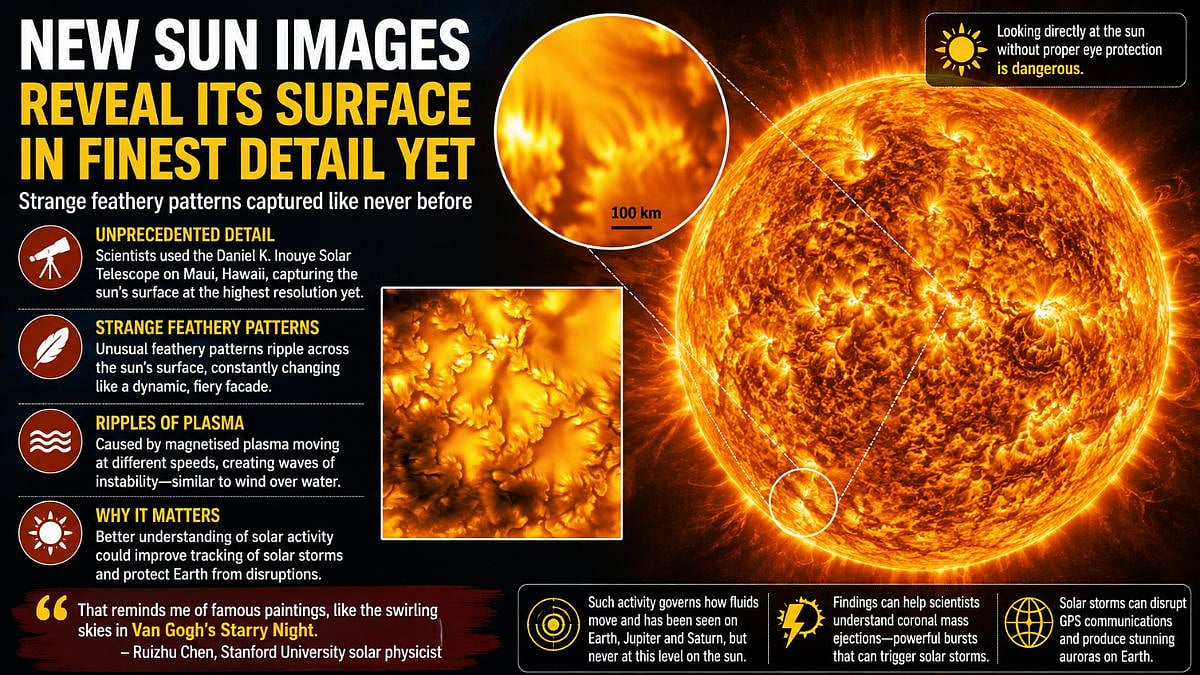
Scientists have taken the most detailed pictures ever of the Sun's surface.
They used a special telescope in Hawaii called the Daniel K. Inouye Solar Telescope because it is dangerous to look directly at the Sun.
The pictures were first taken just to test how well the telescope worked.
But they turned out to be the sharpest images of the Sun's surface ever captured.
The images show strange feathery patterns rippling across the surface.
One scientist said they look like the swirling sky in the famous painting Starry Night.
The patterns are caused by hot, magnetic gas moving at different speeds, like wind making waves on water.
This has been seen before on Earth, Jupiter, and Saturn, but never so clearly on the Sun.
The findings were published in the science journal Nature.
Scientists hope this helps them track giant bursts of energy from the Sun that can disrupt GPS signals and create colourful auroras on Earth.

Scientists captured the most detailed images yet of the Sun's surface using the National Science Foundation's Daniel K. Inouye Solar Telescope on Maui, Hawaii.
The images were originally taken to test and fine-tune the telescope's limits, but they revealed the Sun's bright outer shell at higher resolution than ever before.
The images showed unusual feathery patterns rippling across the surface, which Stanford University physicist Ruizhu Chen compared to the swirling skies in Van Gogh's Starry Night.
The ripples are caused by magnetised plasma moving past one another at different speeds, similar to wind stirring waves on water; co-author Friedrich Woger said this had not been observed at that level on the solar surface before.
The findings were published Wednesday in the journal Nature and could help scientists track coronal mass ejections that can trigger solar storms, disrupt GPS communications, and produce auroras.
- Who
- Scientists using the National Science Foundation's Daniel K. Inouye Solar Telescope, including study co-author Friedrich Woger of the National Solar Observatory; Stanford University solar physicist Ruizhu Chen commented but was not involved in the research.
- What
- Captured the most detailed images yet of the Sun's surface, revealing feathery patterns caused by magnetised plasma moving at different speeds.
- Where
- Daniel K. Inouye Solar Telescope on the island of Maui, Hawaii.
- When
- Findings were published Wednesday in the journal Nature; the articles carry an August 6, 2026 dateline.
- Why
- To understand the Sun's inner workings and better track coronal mass ejections that can trigger solar storms affecting Earth.
Key facts
- Telescope
- Daniel K. Inouye Solar Telescope
- Operator
- National Science Foundation
- Location
- Island of Maui, Hawaii
- Journal
- Nature (published Wednesday)
- Key Finding
- Feathery plasma patterns on the Sun's surface in higher resolution than ever before
- Cause
- Magnetised plasma moving at different speeds, similar to wind-blown waves on water
- First Observation
- Never before observed at that level on the solar surface, though seen on Earth, Jupiter, and Saturn
- Why It Matters
- Could aid tracking of coronal mass ejections that trigger solar storms, disrupt GPS, and cause auroras
Quotes
Ruizhu Chen
Stanford University solar physicist
“"That reminds me of famous paintings, like the swirling skies in Van Gogh's Starry Night,"”
 freepressjournal.in
 deccanchronicle.com
Friedrich Woger
National Solar Observatory co-author
“"It has not been observed ever at that level on the solar surface,"”
freepressjournal.in
deccanchronicle.com
Sources

Related news
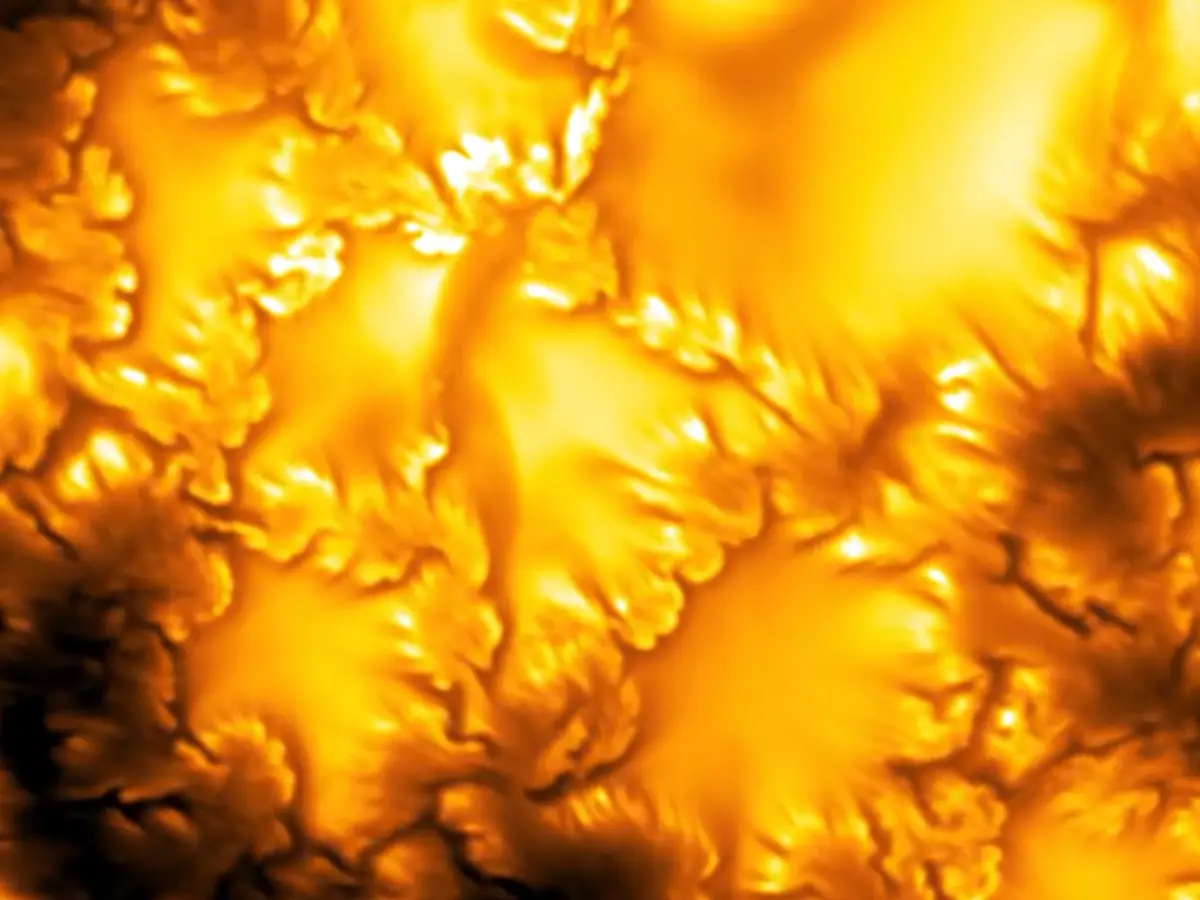
Sun's Surface Reveals Swirling Vortices in Highest-Resolution Images
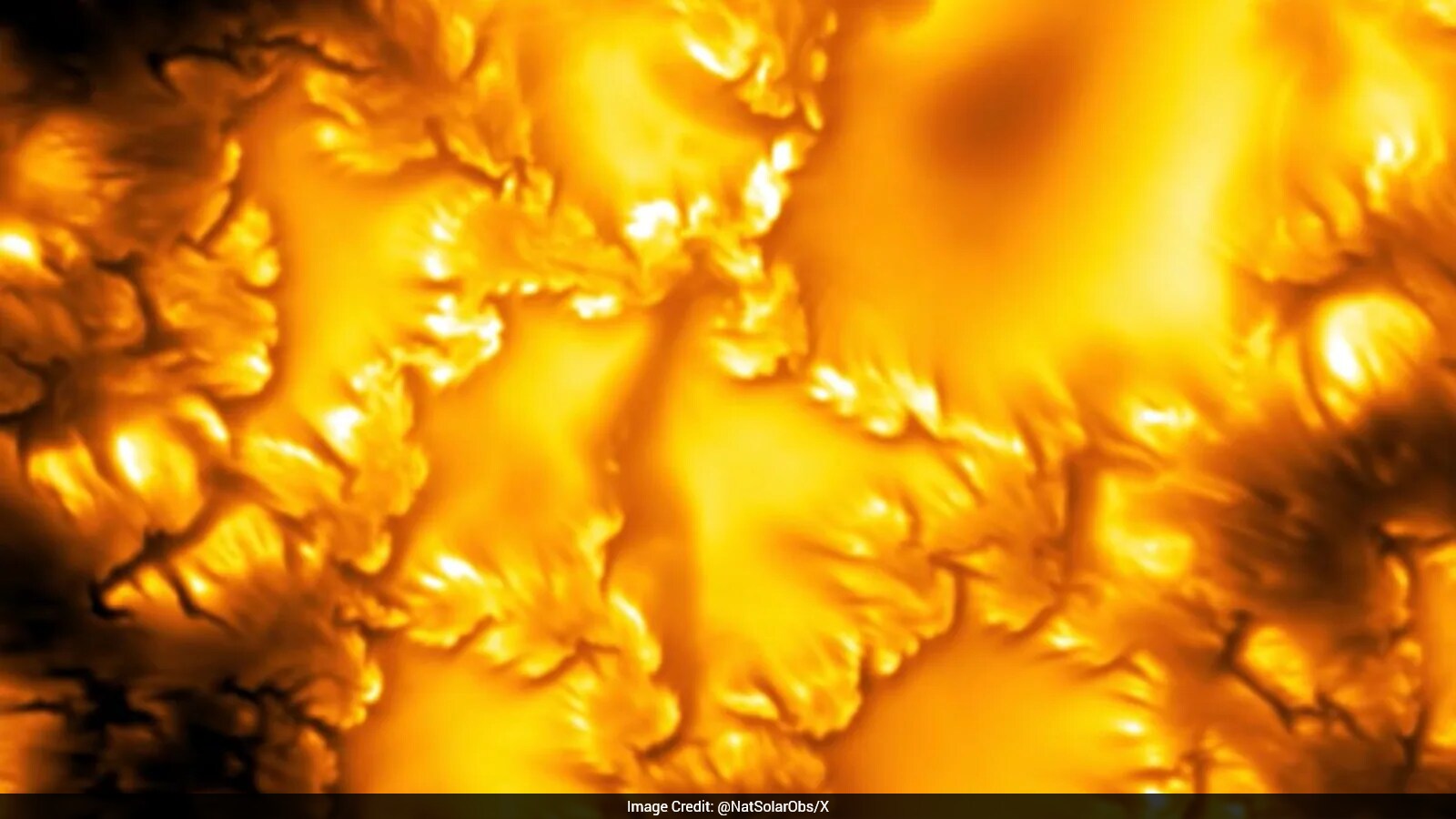
Scientists Spot Tiny Swirls on Sun for the First Time
Sun's magnetic dance holds key to hot corona mystery
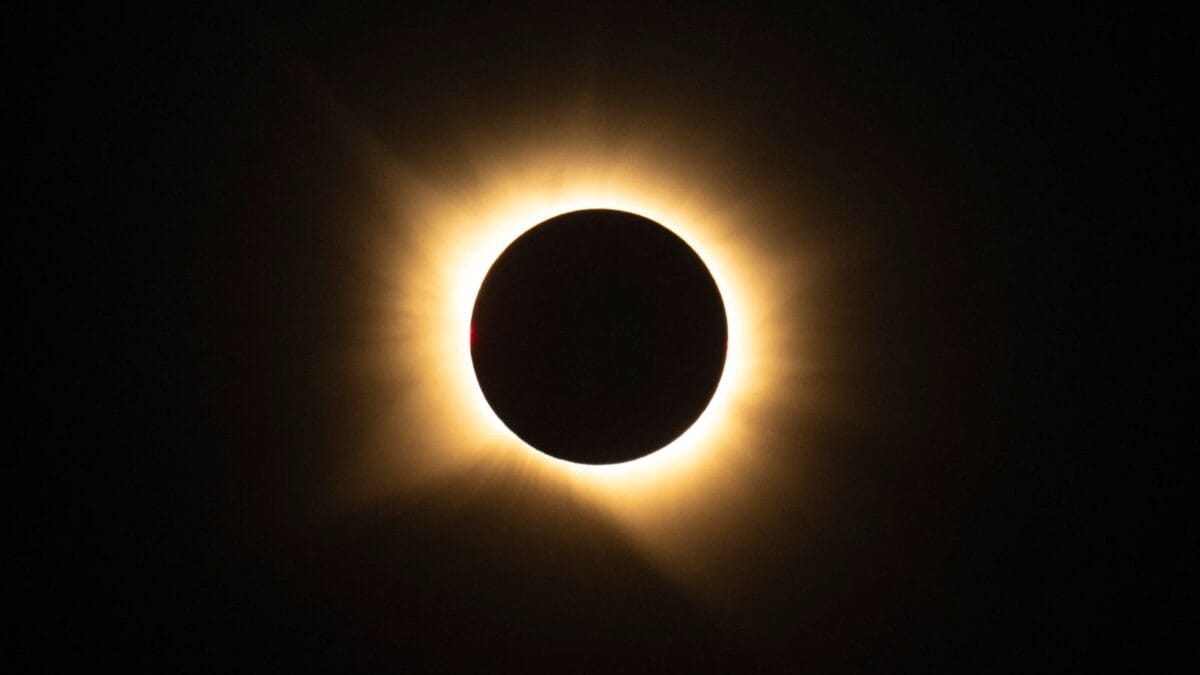
Scientists Study Total Solar Eclipse to Unravel Sun's Corona Mystery

Aditya-L1 Findings Clarify Magnetic Heating of the Sun’s Corona
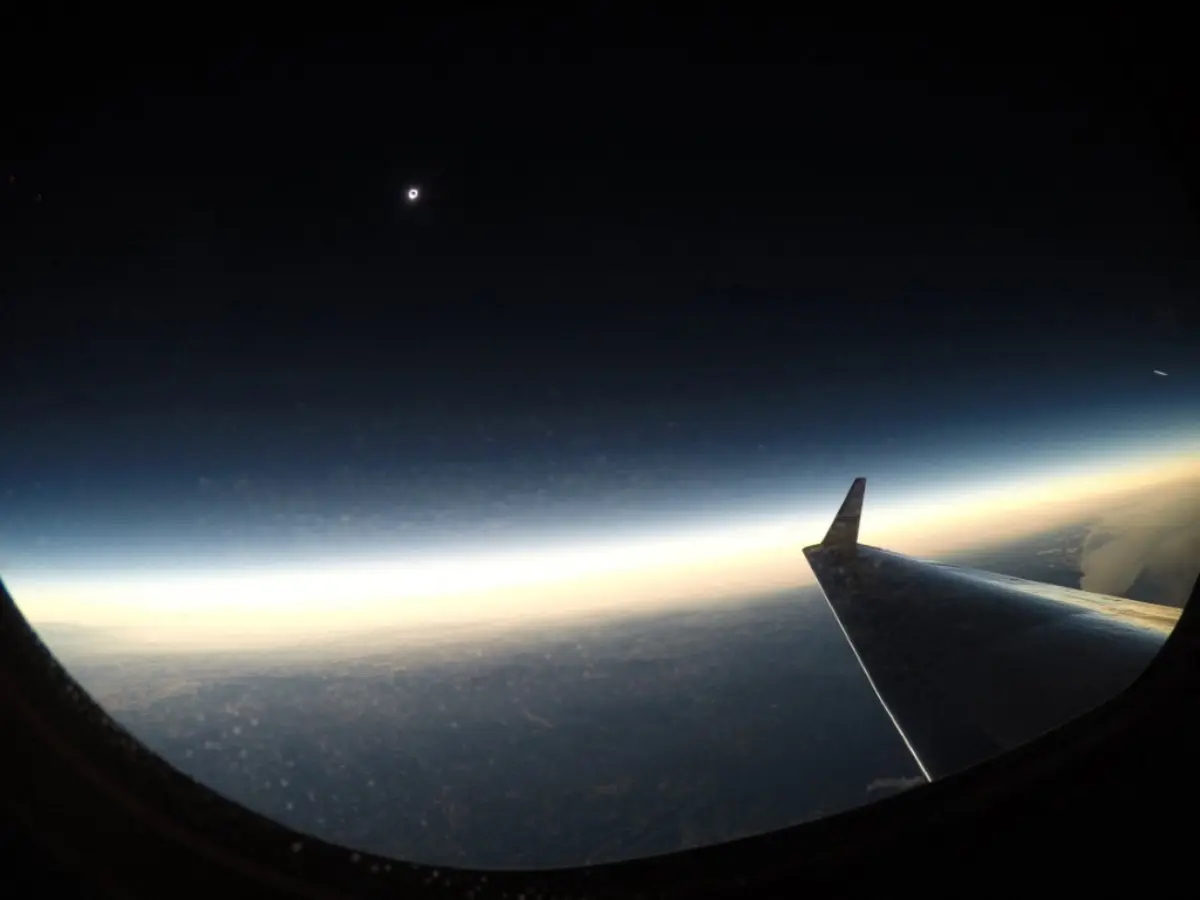
NASA Pilots Chase August 12 Solar Eclipse From Iceland

China’s Hypersonic Weapons Could Threaten Aircraft Near US Bases

Tropical Storm Moke Brings More Rain to Flooded Hawaii
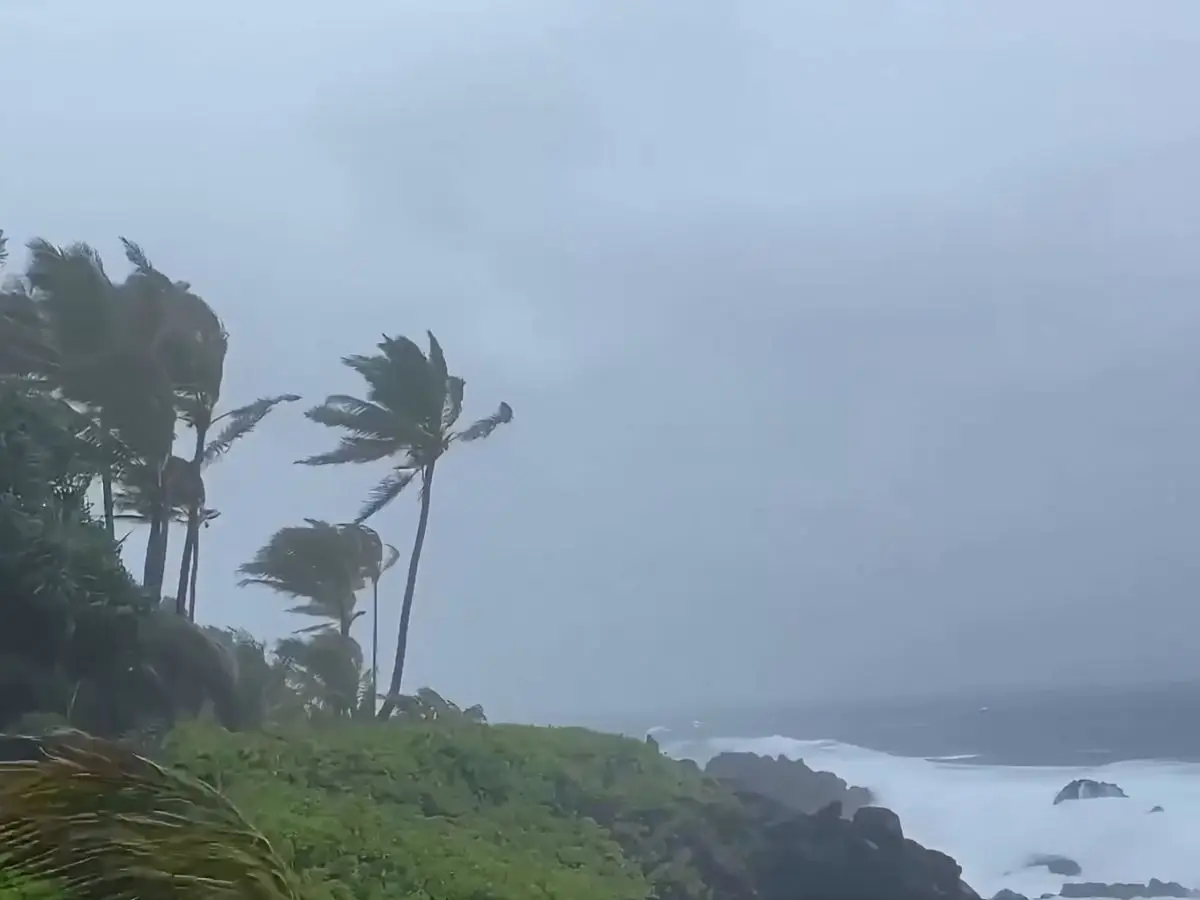
Hurricane Lala batters Hawaii: over 40,000 left without power

Hurricane Lala Strengthens, Threatens Hawaii's Big Island with Flooding

Tropical Storm Lala Nears Hawaii With Possible Hurricane Landfall