3 weeks ago
Sun's Surface Reveals Swirling Vortices in Highest-Resolution Images
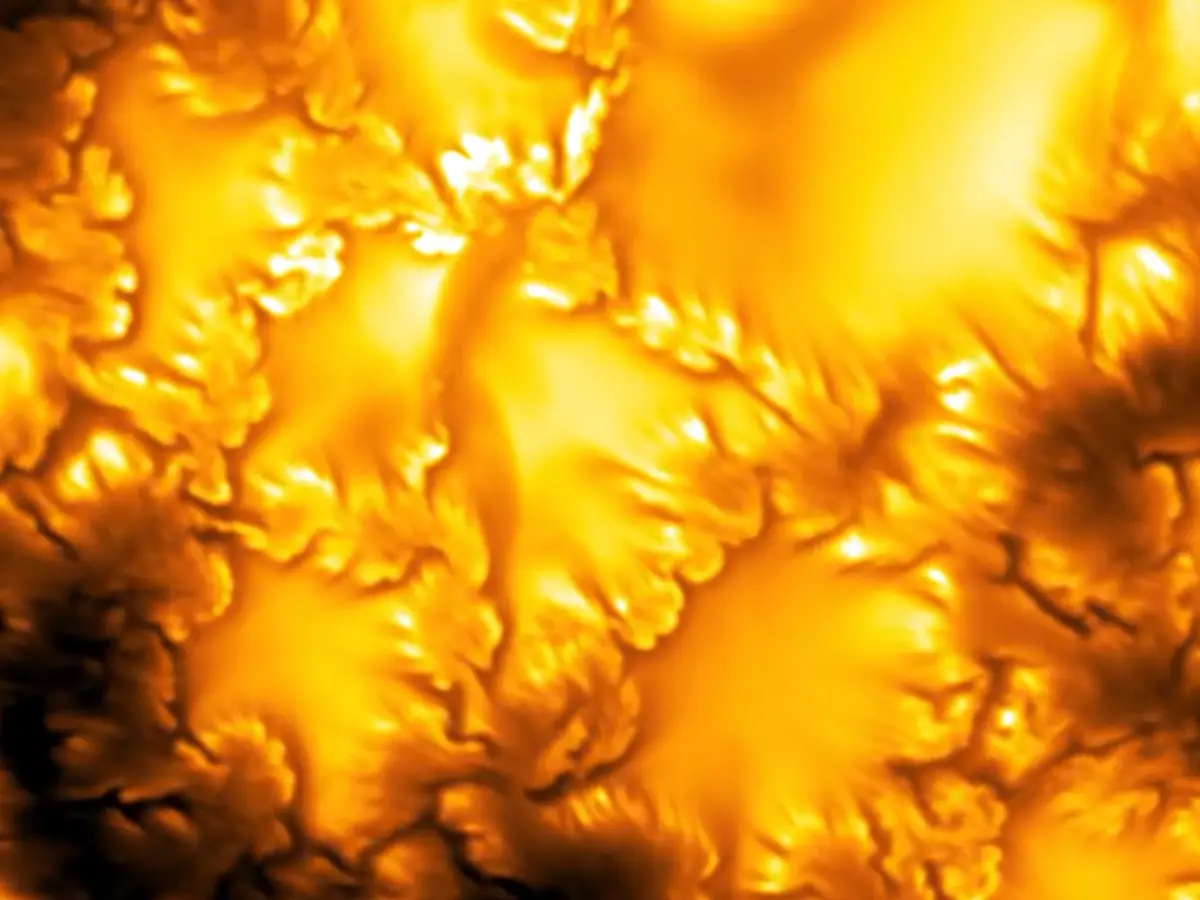
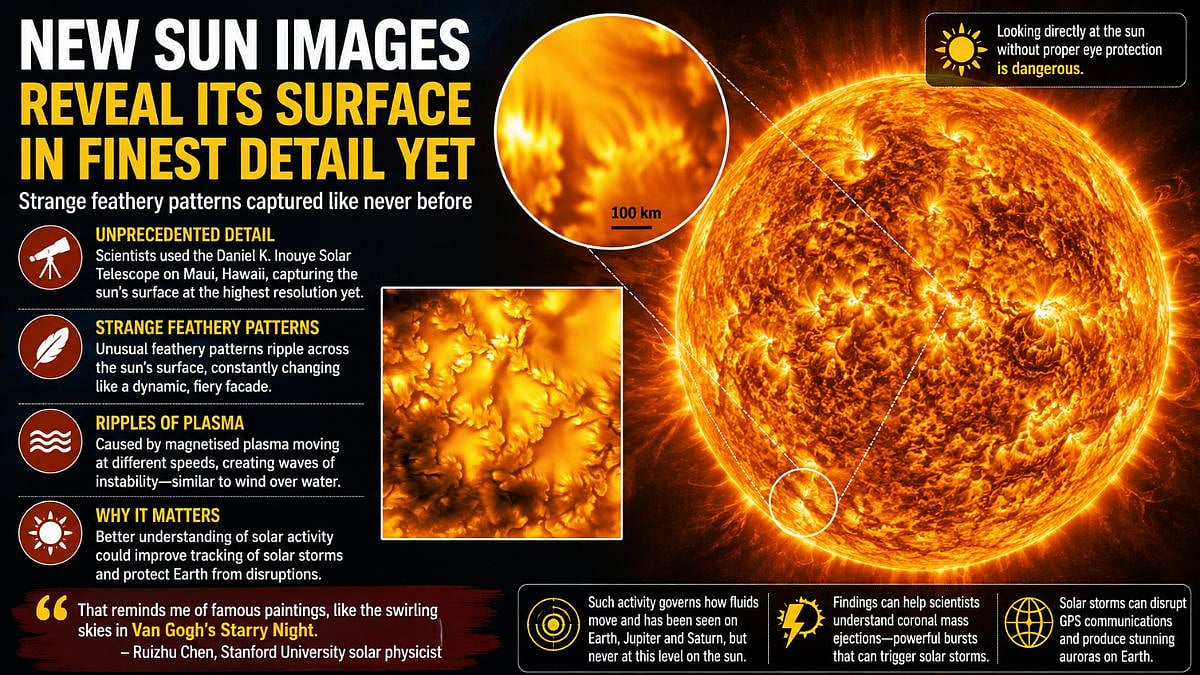
Scientists used a very powerful telescope called the Daniel K. Inouye Solar Telescope, on the island of Maui in Hawaii, to take the clearest pictures ever of the Sun's surface.
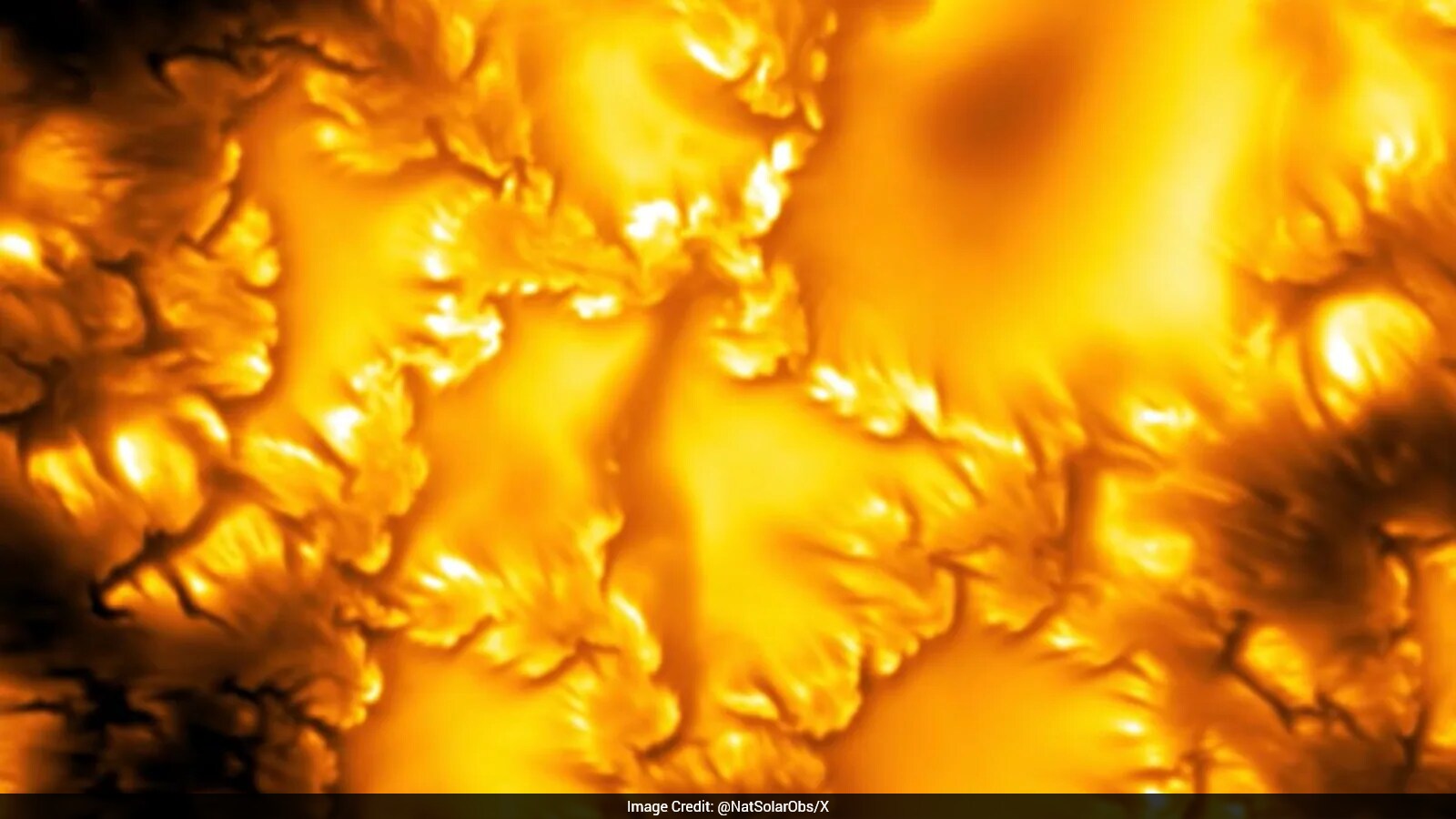
In the pictures, they saw tiny swirling patterns, like little whirlpools, in the hot glowing gas that covers the Sun.
The swirls look a bit like the curly patterns in Vincent van Gogh's famous painting 'The Starry Night.'
Scientists call these swirls Kelvin-Helmholtz instability, which happens when two streams of gas slide past each other at different speeds, making wavy patterns just like wind blowing over water.
It is the first time these swirls have ever been seen on a star.
The swirls grab and twist the Sun's magnetic field, like braiding hair, and when the twisted lines snap, they suddenly release a lot of energy.
That energy can cause giant explosions on the Sun, called solar flares and coronal mass ejections.
Those explosions can send energy toward Earth and affect satellites, GPS, power grids and global communications.
Scientists hope this discovery helps solve the mystery of why the Sun's outer atmosphere is so much hotter than its surface.

Using the U.S. National Science Foundation's Daniel K. Inouye Solar Telescope in Hawaii, astronomers captured the highest-resolution images ever taken of the Sun's surface, revealing whirlpool-like swirls in superheated plasma.
The swirls mark the first confirmed detection of Kelvin-Helmholtz instability on a star, a phenomenon previously observed in Earth's clouds, lakes and oceans and in the atmospheres of Jupiter and Saturn.
Ranging from about 12 miles (19 km) to 100 miles (170 km) across, the vortices in the Sun's photosphere resemble the swirls of Vincent van Gogh's 1889 painting 'The Starry Night.'
Published Wednesday, August 5 in the journal Nature, the findings came from an international team spanning the National Solar Observatory, the NSF NCAR High Altitude Observatory and Germany's Max Planck Institute for Solar System Research.
Researchers say the twisting vortices, which tangle the Sun's magnetic field like braided hair, may explain explosive solar activity and why the Sun's outer atmosphere is millions of degrees hotter than its surface.
- Who
- An international team of scientists from the U.S. National Science Foundation's National Solar Observatory, the NSF NCAR High Altitude Observatory and Germany's Max Planck Institute for Solar System Research, including study co-lead authors Friedrich Wöger and David Kuridze.
- What
- Captured the highest-resolution images ever of the Sun's surface and made the first confirmed detection of Kelvin-Helmholtz instability, seen as swirling, whirlpool-like vortices of superheated plasma.
- Where
- With the Daniel K. Inouye Solar Telescope, operated by the National Solar Observatory near the summit of Haleakalā volcano on the island of Maui, Hawaii.
- When
- Wednesday, August 5, when the findings were announced and published in the journal Nature; the telescope observations were made in April 2025 near a sunspot.
- Why
- To understand the dynamics of the Sun and other stars, including what triggers explosive events such as solar flares and coronal mass ejections and why the Sun's outer atmosphere (corona) is millions of degrees hotter than its surface.
Key facts
- Telescope
- Daniel K. Inouye Solar Telescope, the world's largest solar telescope
- Location
- Near the summit of Haleakalā volcano, Maui, Hawaii
- Discovery
- First confirmed detection of Kelvin-Helmholtz instability on the surface of a star
- Vortex size
- About 12 miles (19 km) to 100 miles (170 km) in diameter
- Plasma temperature
- About 6,000 Kelvin (~10,000°F / 5,540°C)
- Publication
- Journal Nature, published Wednesday, August 5
- Research team
- National Solar Observatory, NSF NCAR High Altitude Observatory, Max Planck Institute for Solar System Research
- Potential impact
- May explain explosive solar activity and why the Sun's corona is millions of degrees hotter than its surface; solar eruptions can disrupt satellites, GPS, power grids and global communications
Quotes
Dr. Matthias Rempel
Senior Scientist at the High Altitude Observatory
“"It is very exciting to see that the highest-resolution observations of the solar photosphere revealed a new dynamical regime in the form of KH vortices at the edges of magnetic field concentrations. These observations also provide the highest resolution validation of solar magnetohydrodynamic simulations to date, and the agreement in physical details is impressive."”
 livemint.com
“The difference from the waves and clouds we know here on Earth is that the two interacting fluids are hot plasma – about 6,000 degrees Kelvin and 10,000 degrees Fahrenheit (5,540 degrees Celsius) – moving within a magnetic field that helps create the conditions for the instability to develop,”
 republicworld.com
Sources

Related news
Scientists Spot Tiny Swirls on Sun for the First Time
New Images Reveal Sun's Surface in Finest Detail Yet

Sun's magnetic dance holds key to hot corona mystery

Aditya-L1 Findings Clarify Magnetic Heating of the Sun’s Corona
Scientists Study Total Solar Eclipse to Unravel Sun's Corona Mystery
NASA Pilots Chase August 12 Solar Eclipse From Iceland

China’s Hypersonic Weapons Could Threaten Aircraft Near US Bases

Tropical Storm Moke Brings More Rain to Flooded Hawaii

Hurricane Lala batters Hawaii: over 40,000 left without power

Hurricane Lala Strengthens, Threatens Hawaii's Big Island with Flooding

Tropical Storm Lala Nears Hawaii With Possible Hurricane Landfall