2 days ago
India Secures Uranium From Uzbekistan, Australia Amid Nuclear Expansion

India wants to build many more nuclear power plants.
Its long-term goal is to raise nuclear capacity to 100 gigawatts by 2047, from roughly 8.1 to 8.8 gigawatts today.
Nuclear reactors need uranium fuel, so India is arranging supplies from countries such as Uzbekistan and Australia.
Uzbekistan is a major uranium producer, while Australia has one of the world’s largest uranium resource bases.
The Australian agreement allows uranium to be supplied to India for peaceful purposes under international safeguards.
India is seeking supplies from several countries so that it does not depend too heavily on one source.
It is also looking for lithium, cobalt, rare earths, and other materials needed for batteries, electric vehicles, renewable energy, and technology.
New laws and government programmes are intended to increase private investment, domestic mining, and mineral processing in India.

India has established long-term uranium supply arrangements with Uzbekistan and Australia as it plans a major nuclear expansion.
India aims to increase nuclear capacity from roughly 8.1–8.8 GW today to 20 GW by 2030 and 100 GW by 2047.
Uzbekistan produced about 4,000 tonnes of uranium in 2024 and has substantial reported recoverable resources.
Australia, which holds about 28% of the world’s identified uranium resources, began operationalising direct uranium exports to India in July.
India is also pursuing critical minerals and rare earths through overseas partnerships, domestic mining reforms, and expanded processing capacity.
- Who
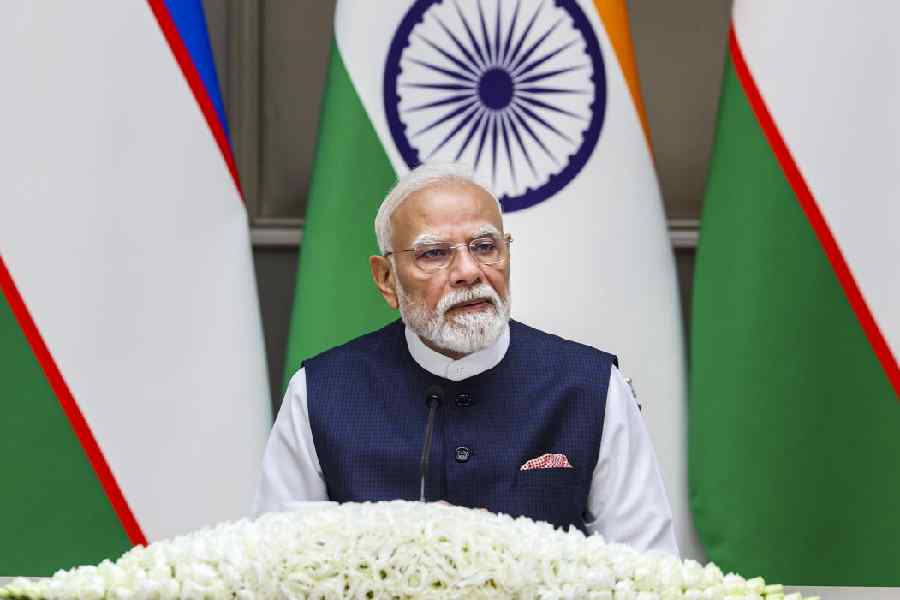
- India, Uzbekistan, and Australia; the arrangements involved Prime Minister Narendra Modi, Uzbek President Shavkat Mirziyoyev, and Australian Prime Minister Anthony Albanese.
- What
- India is securing long-term uranium supplies while pursuing critical minerals and planning a major expansion of nuclear power.
- Where
- The agreements involve India, Uzbekistan, and Australia, with broader mineral efforts extending worldwide.
- When
- The Uzbekistan arrangement followed talks on August 29–30, 2026; the Australian uranium agreement was operationalised during Modi’s July 2026 visit.
- Why
- India wants dependable and diversified fuel and mineral supplies to support nuclear expansion, energy security, industrial growth, and its low-carbon transition.
Key facts
- India’s nuclear targets
- Capacity is planned to rise from roughly 8.1–8.8 GW today to 20 GW by 2030 and 100 GW by 2047.
- Uzbekistan uranium production
- Uzbekistan produced approximately 4,000 tonnes of uranium in 2024.
- Uzbekistan uranium resources
- World Nuclear Association data lists about 40,200 tonnes of reasonably assured recoverable resources and 49,220 tonnes of inferred recoverable resources.
- Australia’s uranium resources
- Identified recoverable resources were estimated at about 1.67 million tonnes under the $130/kgU benchmark; broader Australian government figures put resources at around 1.96 million tonnes in 2024.
- Australian uranium agreement
- The July arrangement allows Australian uranium exports to India for peaceful purposes and under international safeguards.
- SHANTI Act
- Passed in December 2025, the act opened parts of India’s civil nuclear framework to greater private-sector participation under regulated licensing.
- Critical-minerals strategy
- India is using overseas acquisitions, mining reforms, the National Critical Minerals Mission, and expanded rare-earth processing to reduce supply-chain vulnerabilities.
Sources

Related news

India, Uzbekistan Advance Uranium Supply and UPI Cooperation

India, Uzbekistan Advance Strategic Partnership With Uranium Arrangement
India and Uzbekistan Elevate Ties, Target $5 Billion Trade
Parliamentary panel urges mining contractors' entry in uranium mining

Panel urges policy roadmap for contractor-run uranium mining in India

India Replaces Sri Lanka as 2027 Women’s Champions Trophy Host

Mitsubishi Revives Pajero With 201PS Fifth-Generation SUV

IIM-Born CEO Says Australia’s Everyday Life Runs on Trust

UN Report Says 1.5°C Overshoot, Return Remains Possible

Uday Kotak Warns Global Bond Markets Face Roller-Coaster Volatility