9 months ago
Aditya-L1 Prepares for Solar Maximum and CMEs
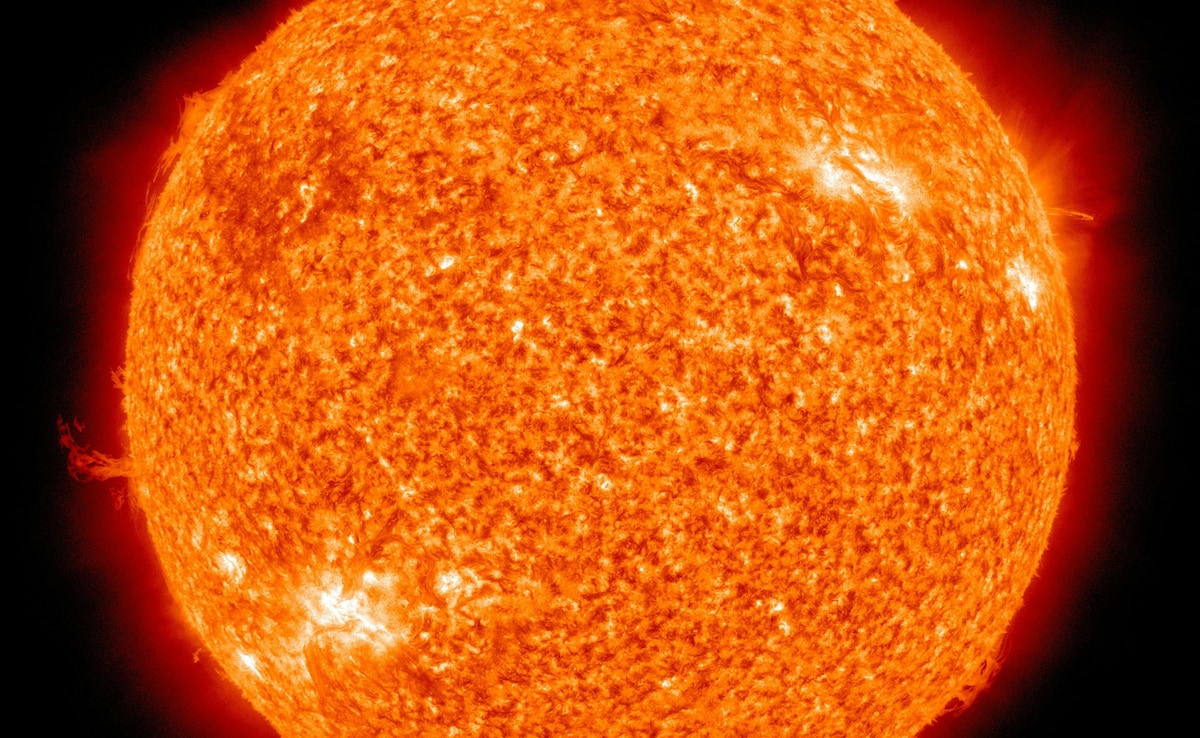
India's Aditya-L1 mission is getting ready for a busy time.
The Sun is about to reach its most active phase, which happens every 11 years.
During this time, the Sun sends out more big bursts of energy called coronal mass ejections (CMEs).
These CMEs can be very powerful and might affect satellites and power grids on Earth.
Aditya-L1 has special tools to watch these CMEs closely.
It can even see the Sun's outer layer all the time, which helps scientists warn us if a big burst is coming.
They studied a huge CME in 2024 to prepare for even bigger ones in 2026.
This mission is important because it helps protect our technology from the Sun's powerful bursts.

Aditya-L1 is preparing for the Sun's peak activity in 2026, expecting increased CMEs.
CMEs can weigh up to one trillion kilograms and reach Earth in 15 hours.
Aditya-L1's coronagraph technology allows continuous observation of the Sun's corona.
A massive CME in September 2024, studied by Aditya-L1, had a mass of 270 million tons.
The mission aims to protect Earth's satellites and power grids from CME impacts.
- Who
- Aditya-L1 mission scientists, led by Professor R Ramesh
- What
- Preparation for increased solar activity and CMEs
- Where
- Aditya-L1 in halo orbit around the Sun-Earth L1 point
- When
- Approaching solar maximum in 2026
- Why
- To study CMEs and their potential impacts on Earth and satellites
Key facts
- Mission
- Aditya-L1
- Primary Goal
- Study Coronal Mass Ejections (CMEs)
- Expected CME Increase
- 10 or more daily by 2026
- CME Speed
- Up to 3,000 km/s
- CME Impact Time
- 15 hours to reach Earth
- Notable CME Event
- September 13, 2024, 270 million tons, 1.8 million degrees Celsius
- Unique Technology
- Coronagraph for visible light study
- Lead Scientist
- Professor R Ramesh (IIA)
Quotes
Professor R Ramesh
Lead scientist for the Visible Emission Line Coronagraph (Velc) on Aditya-L1 and professor at the Indian Institute of Astronomical Physics (IIA)
“Its shape allows it to act like an 'artificial moon', blocking the Sun's intense light and allowing almost the entire corona to be visible day and night, even during eclipses. This capability is not available on other missions.”
 NDTV
NDTV
“This 2024 event lays the groundwork for possible scenarios in 2026. Based on this, scientists can take measures to enhance the safety of satellites and develop a better understanding of the space around Earth.”
NDTV