7 months ago
Rare Red Aurora Lights Ladakh Sky
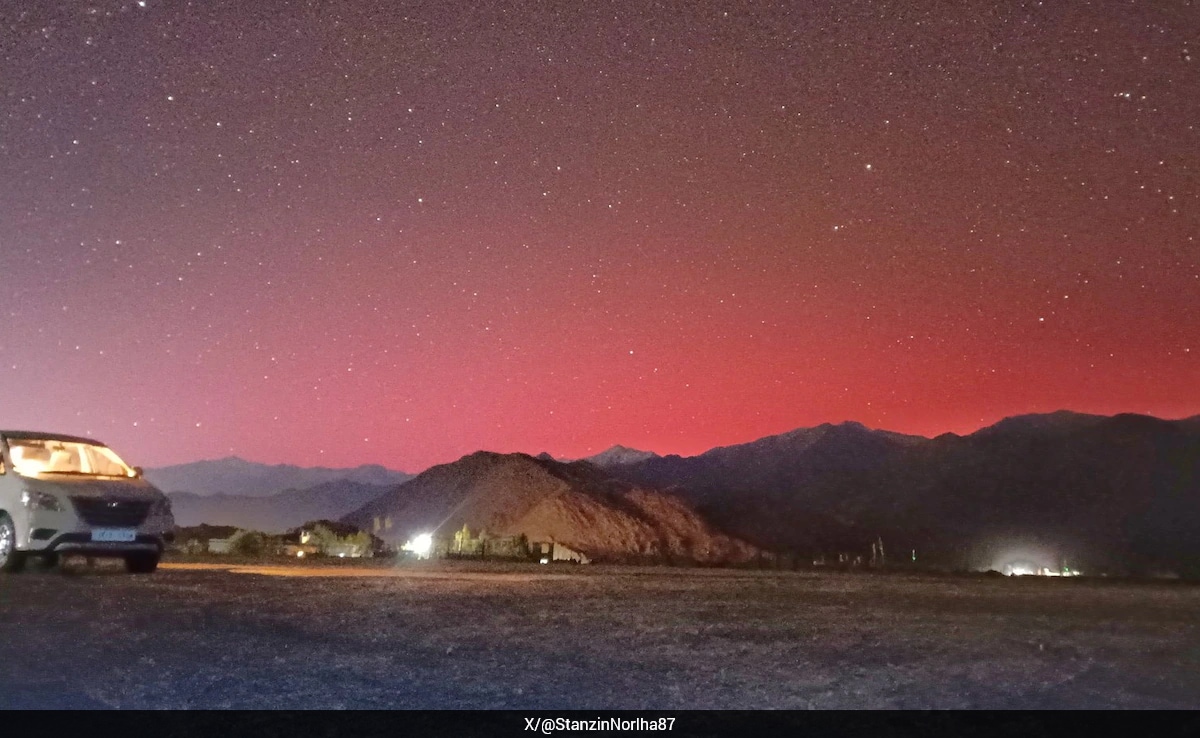
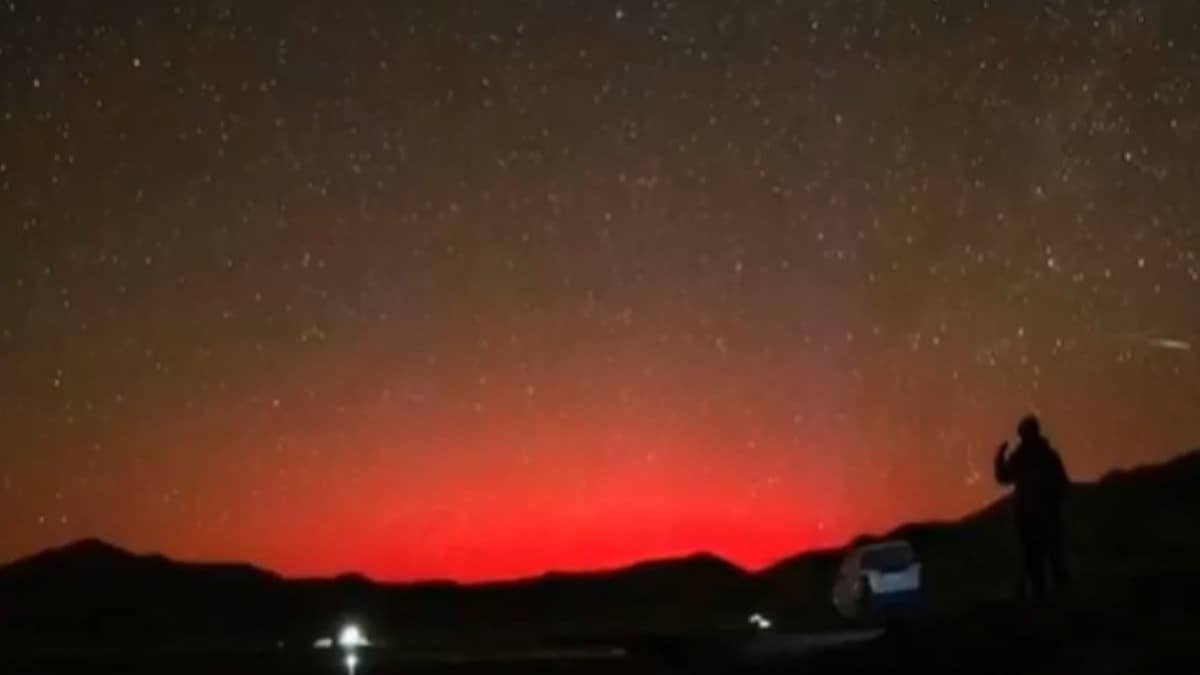
A rare and beautiful red light show happened in the sky over Ladakh, India.
This special light, called an aurora, usually only happens near the North and South Poles.
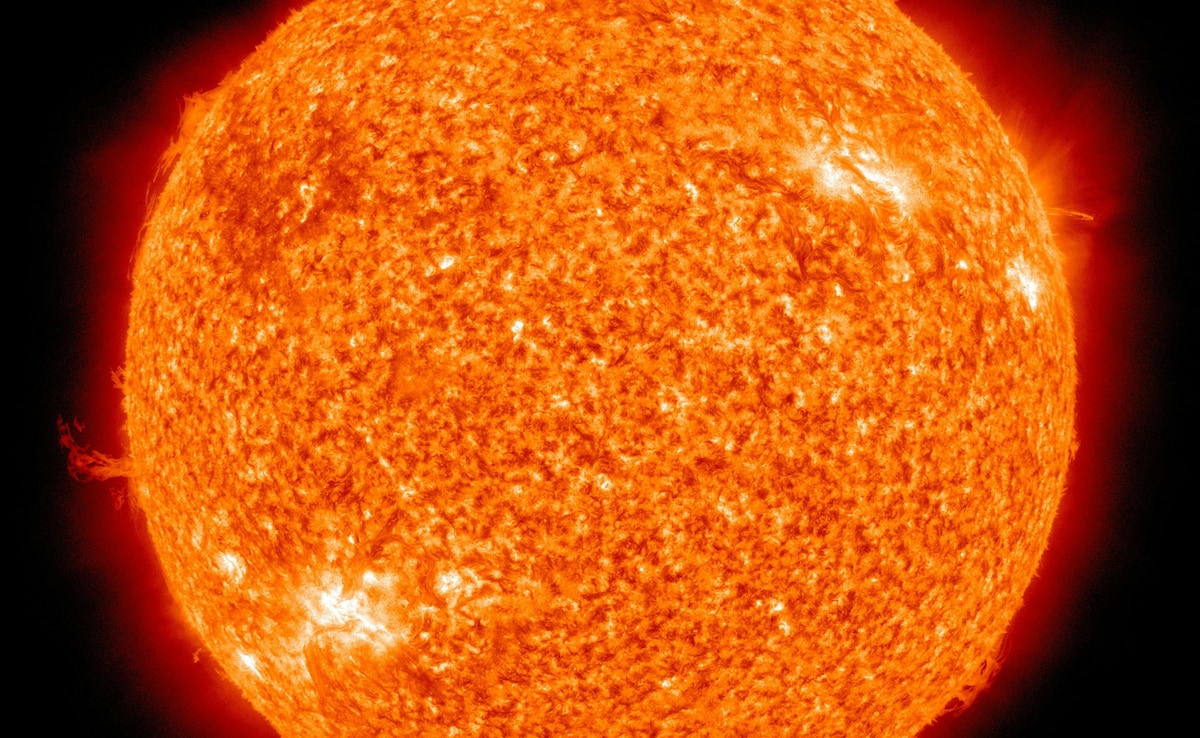
Scientists say it was caused by a big burst of energy from the Sun, called a coronal mass ejection (CME).
This energy hit Earth's magnetic field and made oxygen high in the sky glow red.
It's like when you see a red light in the sky, but this time it was much bigger and rarer.
Scientists are excited because it helps them learn more about how the Sun affects Earth.
They also say it's important to keep watching the Sun to be ready for big solar events like this one.
The red glow was seen at the Indian Astronomical Observatory, which is very high up in the mountains, over 4,500 meters.
The storm was so strong that it was the most intense since 2003.

A rare blood-red aurora was observed over Ladakh on 19 and 20 January 2026.
The aurora was caused by a powerful geomagnetic storm from a coronal mass ejection (CME).
The CME was associated with an X1.9-class solar flare from Active Region 14341.
The deep red color was due to the excitation of oxygen atoms in Earth's upper atmosphere.
The geomagnetic storm reached its peak intensity at 8.30 pm on 20 January 2026, recording a maximum disturbance of -218 nanoTesla.
- Who
- Scientists and observers at the Indian Astronomical Observatory (IAO) in Hanle, Ladakh
- What
- A rare blood-red aurora illuminated the sky over Ladakh
- Where
- Indian Astronomical Observatory (IAO) in Hanle, Ladakh
- When
- On the nights of 19 and 20 January 2026
- Why
- Due to a powerful geomagnetic storm caused by a coronal mass ejection (CME) from the Sun
Key facts
- Location
- Indian Astronomical Observatory (IAO), Hanle, Ladakh
- Dates
- 19 and 20 January 2026
- Cause
- Powerful geomagnetic storm from coronal mass ejection (CME)
- Solar Flare Class
- X1.9-class
- Geomagnetic Storm Severity
- G4 (severe)
- Aurora Color Cause
- Excitation of oxygen atoms in Earth's upper atmosphere
- Operating Body
- Indian Institute of Astrophysics (IIA)
- Altitude
- 4,500 metres
- Peak Intensity
- 8.30 pm on 20 January 2026, -218 nanoTesla