1 week ago
Researchers Turn Plastic Waste Into NASA-Tested 3D Cookies
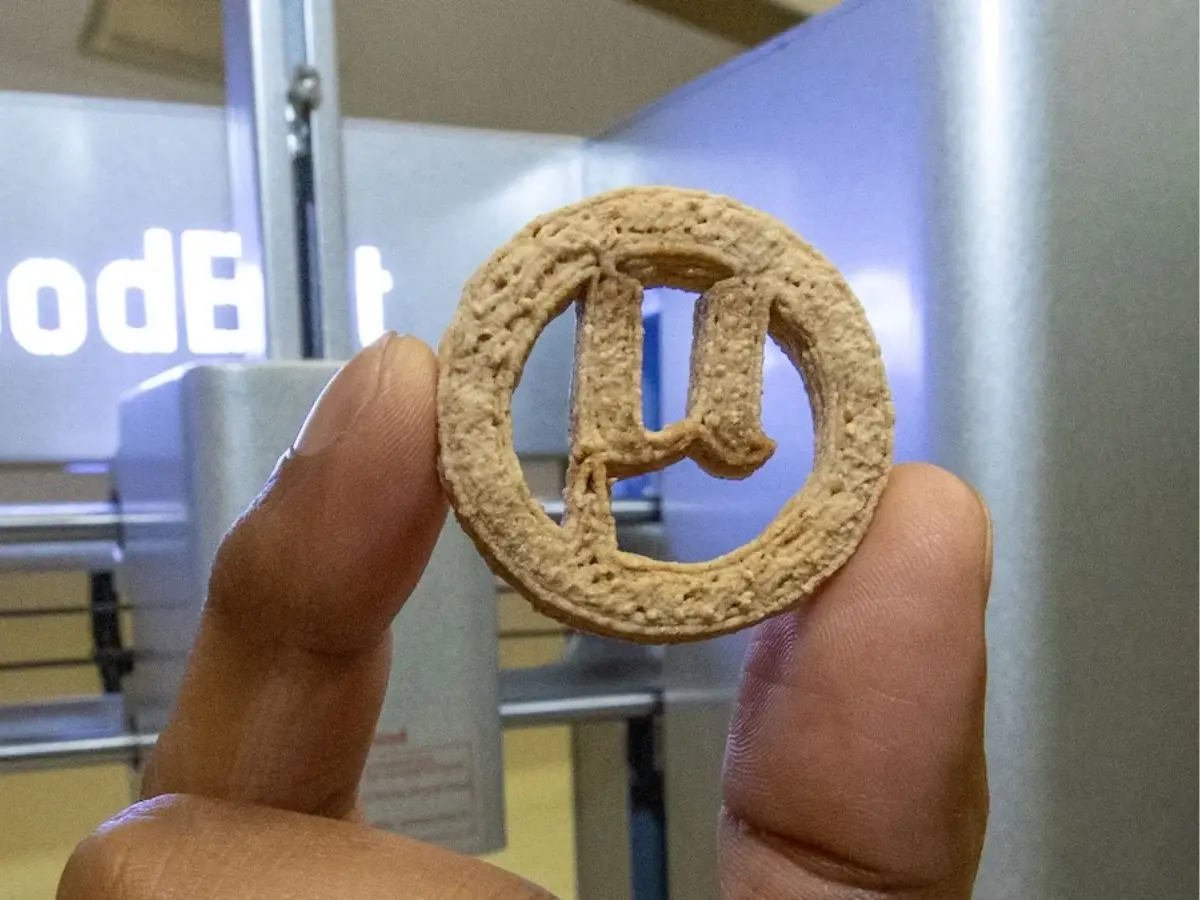
Scientists made cookies using ingredients that came partly from plastic waste.
They changed yeast so it could break down a common plastic called PET.
PET is found in items such as water bottles, food packaging and clothes.
The plastic is first turned into a liquid-like mixture that the yeast can digest.
The resulting materials are combined with fiber, starch and sweetener.
A 3D printer shapes the mixture into cookies called µBites.
The researchers think the cookies smell and may taste good, but they have not eaten them yet.
The idea could help make food in space, but it is currently expensive and cannot remove all the world’s plastic waste.

Southern Illinois University Carbondale researchers created 3D-printed cookies from plastic waste and agricultural material.
CRISPR-engineered yeast breaks down PET plastic into proteins, fats, acids and flavorings.
The mixture is combined with fiber, starch and sweetener before being shaped into cookies called “µBites.”
Researchers have not tasted the cookies because they are awaiting university approval.
Production reportedly costs about $60 per kilogram, and experts say the method cannot solve plastic pollution alone.
- Who
- Researchers at Southern Illinois University Carbondale, led by microbiologist Lahiru Jayakody.
- What
- They developed 3D-printed cookies made partly from plastic waste and agricultural material.
- Where
- Southern Illinois University Carbondale; the project was funded through NASA’s Deep Space Food Challenge.
- When
- The articles do not specify when the research was conducted.
- Why
- The project aims to explore ways to reduce plastic waste and address food shortages, including possible use in space.
Potential Benefits
Practical Concerns
Reducing waste and producing food
Potential Benefits
Researchers say the method could potentially address plastic waste and food shortages by converting discarded materials into edible ingredients.
Practical Concerns
Jason Hallett of Imperial College London said the amount of plastic waste is too large for all of it to be turned into cookies, so the method is not a solution to the plastic-waste crisis.
Suitability for human consumption
Potential Benefits
Lahiru Jayakody said the cookies have a pleasant aroma and are expected to taste good.
Practical Concerns
The researchers have not yet tasted the cookies because they are waiting for university approval, so their safety and flavor have not been confirmed through tasting.
Economic viability
Potential Benefits
The project explores a way to create food from available waste materials, including for potential deep-space applications.
Practical Concerns
The reported production cost of about $60 per kilogram makes the process unviable for now.
Key facts
- Cookie name
- µBites, named for their Greek-letter µ shape
- Plastic used
- Polyethylene terephthalate (PET)
- Biological tool
- CRISPR-engineered yeast
- Printing method
- A 3D printer combines the processed ingredients and forms the cookies
- Taste testing
- The researchers are awaiting university approval before tasting the cookies
- Estimated cost
- About $60 to produce one kilogram of cookies
- Plastic waste cited
- About 400 million tons are produced globally each year, according to the report
Quotes
Lahiru Jayakody
Microbiologist at Southern Illinois University who led the research
“We produce 400 million tons a year of plastic waste. You’re not going to turn it all into cookies. So it’s not a solution to the plastic-waste crisis”
 wionews.com
“I think it has a pleasant, appealing aroma. And it will taste good, too”
wionews.com
Sources
Related news
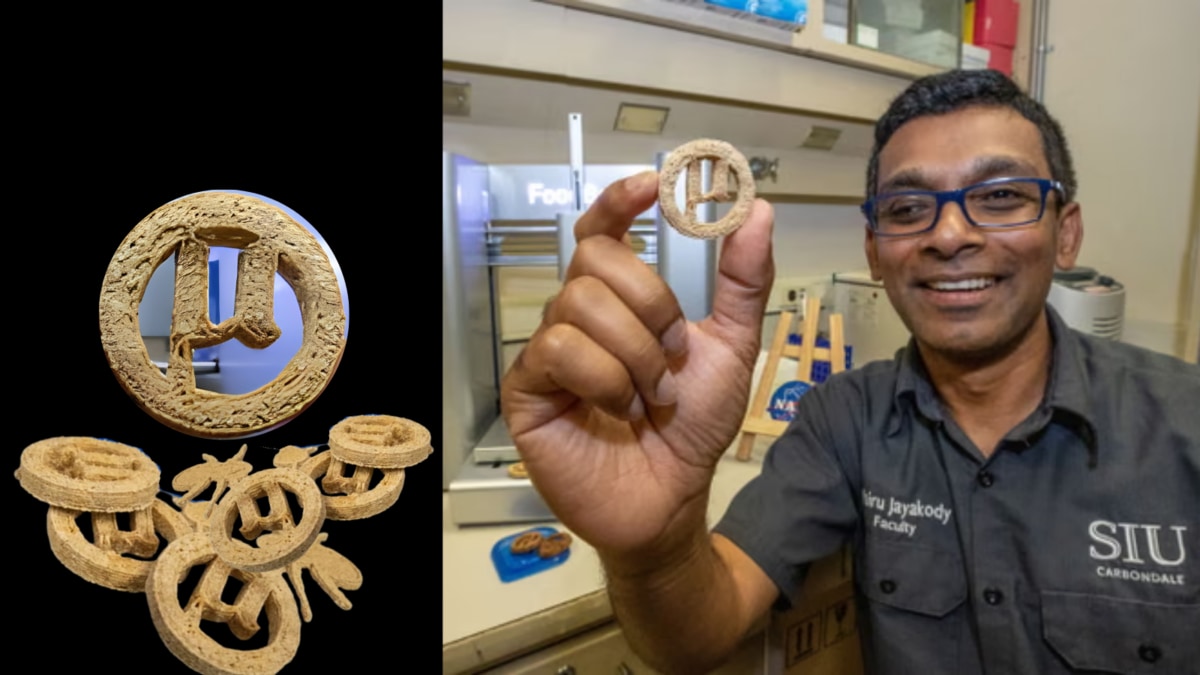
Scientists Turn Plastic Waste Into Protein-Rich 3D-Printed Cookies

Scientists Create Cookie Using Ingredients Derived From Plastic Bottles
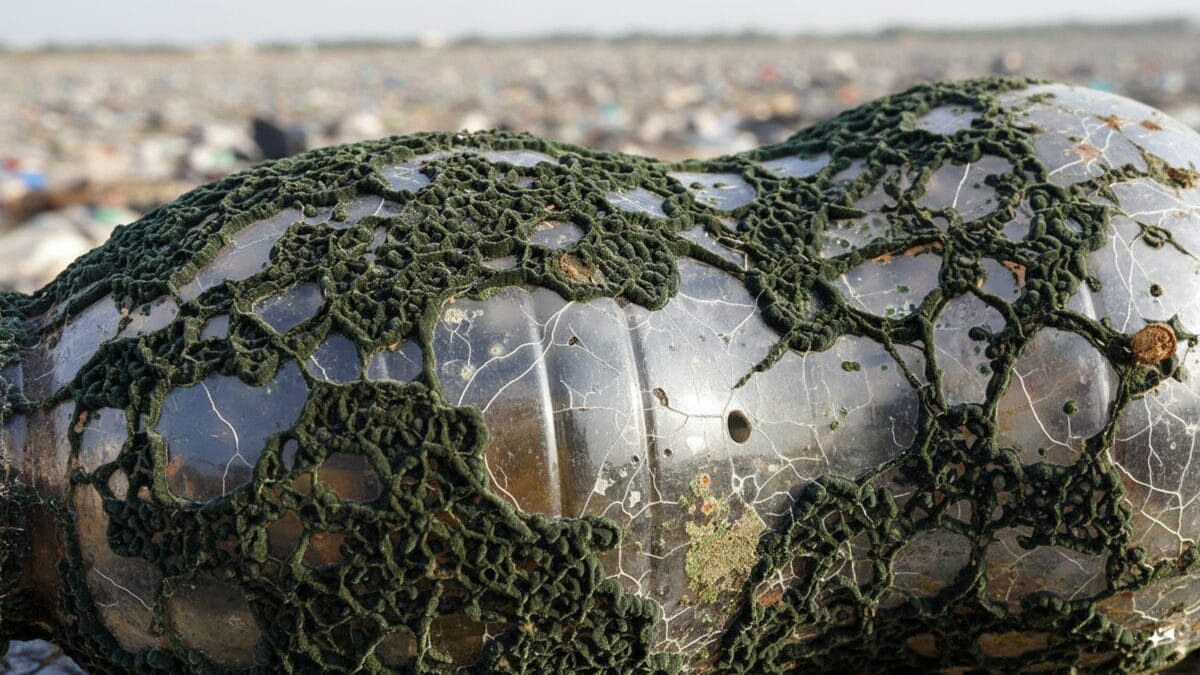
Fungus Found in Pakistan Landfill Breaks Down Tough Plastic
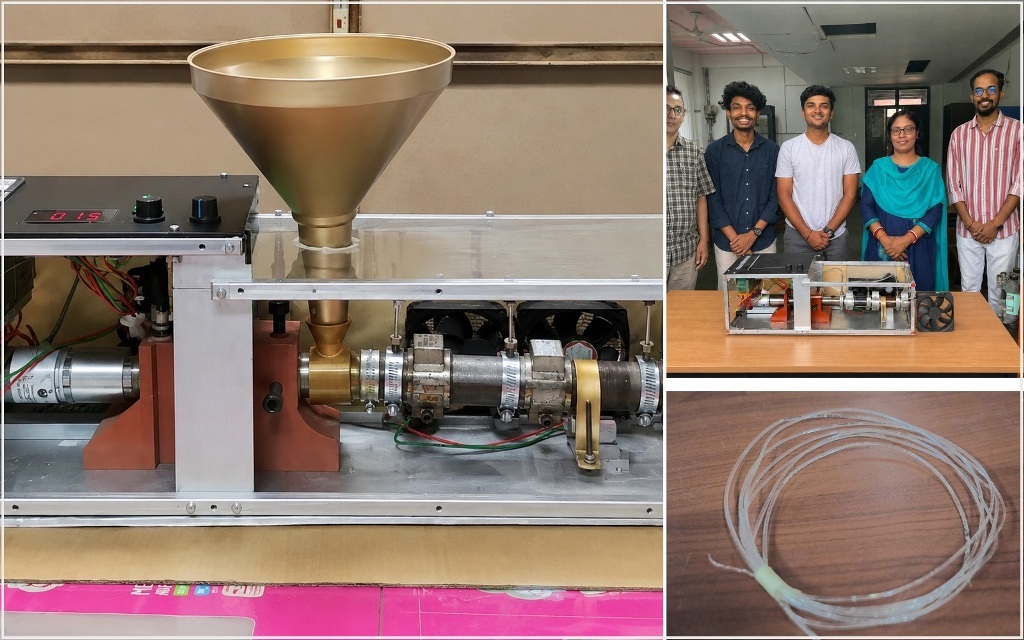
NIT Rourkela Patents Low-Cost Extruder for Recycled Composite Filaments
Study Finds Hot Takeaway Paper Cups Release Millions Of Microplastics
Science Quiz Covers Vehicle Communication, Space, Medicine, Missiles and Time
NASA Launches Roman Telescope to Probe Universe’s Mysteries
India's R&D Ecosystem Faces Hurdles On Path To Knowledge Economy
NISAR's Nepal Flood Silence Raises Questions About Disaster Readiness

Next Lunar Eclipse Set for February 2027 Across India, World