

6 days ago
Study Finds Hot Takeaway Paper Cups Release Millions Of Microplastics
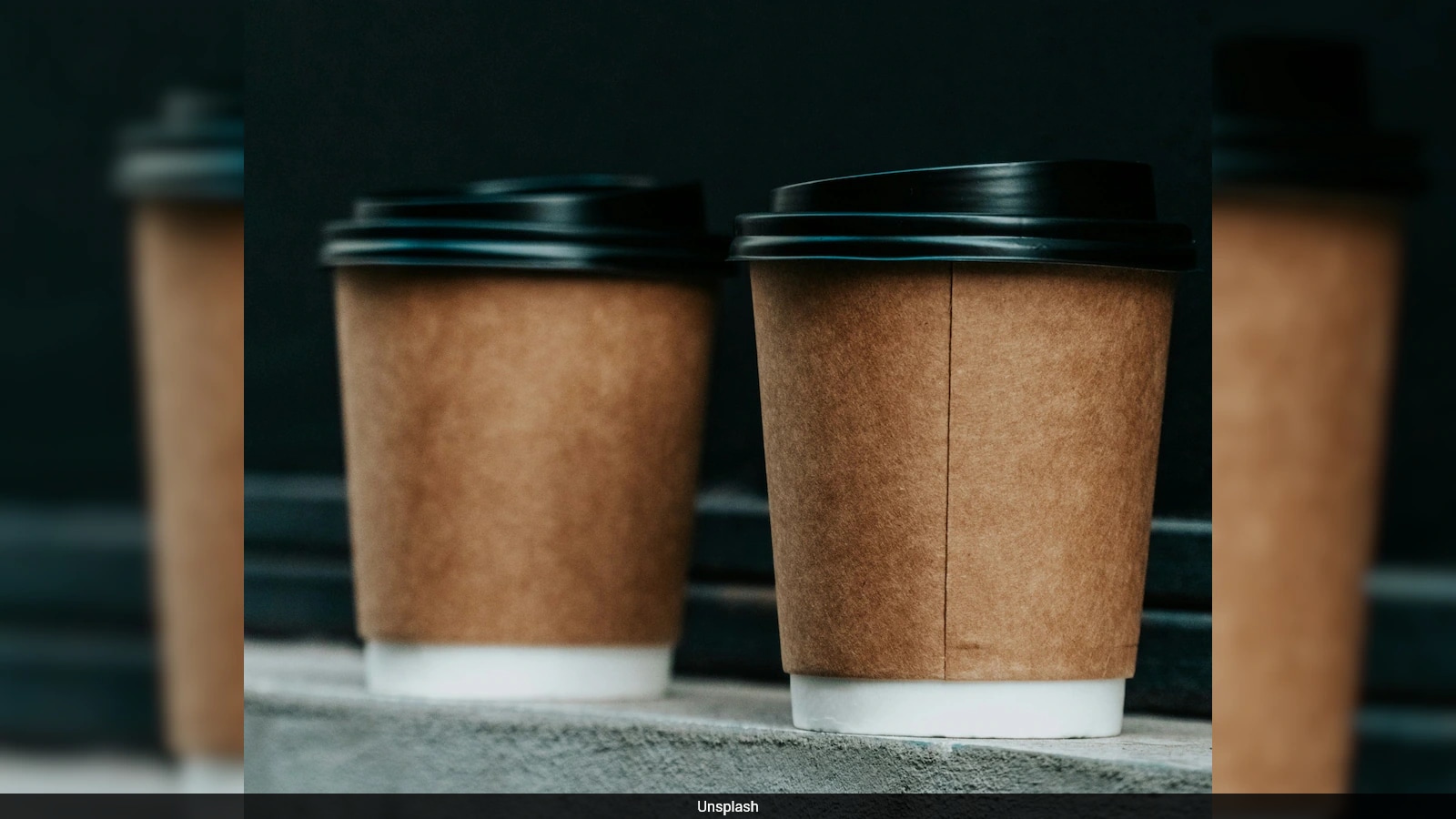
Paper cups often have a thin plastic layer inside to stop drinks from leaking.
Scientists tested cups with two different kinds of plastic lining.
They found that hot liquid made both types release tiny plastic particles.
The biodegradable lining released about 12 times more particle mass in their experiments.
The particles were much thinner than a human hair.
The researchers did not say that people must stop using paper cups.
Instead, they said cup materials should be tested for how many particles they release.
They also suggested clearer labels and safer cup designs.

University of Queensland researchers found that hot drinks cause plastic-lined paper cups to release millions of particles.
Both polyethylene- and polylactic acid-lined cups released plastic particles in laboratory experiments.
Polylactic acid-lined cups released about 12 times more total particle mass than polyethylene-lined cups.
Researchers measured approximately 4.3 million nanoparticles per millilitre from polylactic acid-lined cups, versus 2.7 million particles per millilitre from polyethylene-lined cups.
The researchers called for clearer labelling, improved cup designs and possible testing of microplastic release in safety assessments.
- Who
- Researchers from the University of Queensland's Queensland Alliance for Environmental Health Sciences, including Dr Elvis Okoffo.
- What
- A study found that hot liquid caused plastic-lined single-use paper cups to release micro- and nanoparticles.
- Where
- The experiments were conducted by researchers at the University of Queensland.
- When
- The article does not specify when the experiments were conducted; the study was published in ACS Food Science & Technology.
- Why
- The researchers aimed to examine how plastic-lined paper cups may contribute to daily plastic exposure and inform product safety assessments.
Researcher and Regulatory Concerns
Caution Against Overstating the Finding
Consumer use
Researcher and Regulatory Concerns
Consumers should receive information about cup-lining materials, and regulators should consider safety guidelines or warning labels for hot-beverage products.
Caution Against Overstating the Finding
Dr Elvis Okoffo said the findings do not necessarily mean people should stop using paper cups.
Biodegradable linings
Researcher and Regulatory Concerns
The polylactic acid-lined cups released about 12 times more total particle mass than the polyethylene-lined cups in the experiments, showing that environmental biodegradability alone may not address particle release.
Caution Against Overstating the Finding
The researchers said this result does not establish that polylactic acid is inherently unsafe.
Product safety
Researcher and Regulatory Concerns
Micro- and nanoplastic release could be included in safety assessments of food-contact materials, particularly those intended for hot drinks.
Caution Against Overstating the Finding
The article reports particle release in the study but does not establish specific health effects from consuming the particles.
Key facts
- Researchers
- University of Queensland's Queensland Alliance for Environmental Health Sciences
- Cup linings tested
- Fossil-based polyethylene and biodegradable polylactic acid
- PLA particle measurement
- Approximately 4.3 million nanoparticles per millilitre
- PE particle measurement
- Approximately 2.7 million particles per millilitre
- Relative particle mass
- Polylactic acid-lined cups released approximately 12 times more total particle mass than polyethylene-lined cups
- Particle size
- The nanoparticles were around 1,000 times thinner than a human hair
- Publication
- ACS Food Science & Technology
Quotes
Elvis Okoffo
University of Queensland researcher involved in the paper-cup microplastics study
“Policymakers and regulators could consider whether testing for micro- and nanoplastic release should form part of the safety assessment of food-contact materials, particularly products designed for hot beverages.”
 NDTV
NDTV
“A cup made mostly of paper does not mean that the cup is plastic-free because many contain a thin plastic lining that provides water resistance and structural integrity.”
NDTV
Sources
Related news
FSSAI bans plastic, aluminium foil packaging for pan masala
Scientists Turn Plastic Waste Into Protein-Rich 3D-Printed Cookies

Scientists Create Cookie Using Ingredients Derived From Plastic Bottles
Pune Couple’s Startup Converts Hard-to-Recycle Plastic Into Footwear
Fungus Found in Pakistan Landfill Breaks Down Tough Plastic
Researchers Turn Plastic Waste Into NASA-Tested 3D Cookies
Cyborg Cockroaches Could Deliver Emergency Aid Under Disaster Rubble

Experts Call for Traditional Knowledge and Modern Science to Unite

China slams Australia over directive to end university collaborations
'Sophie, Standing There': Mason asks if books can save us
