

7 hrs ago
Centre Develops CBSE Three-Language Plan as Supreme Court Seeks Details

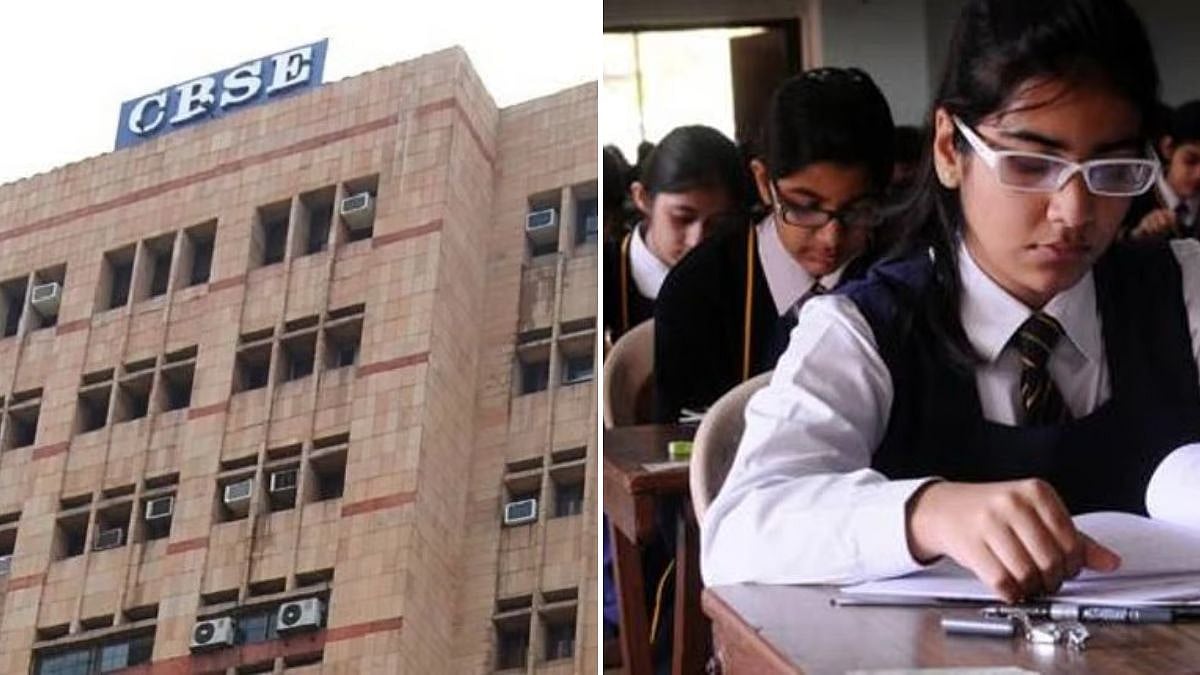
The CBSE wants Class 9 students to learn three languages.
At least two of these languages must be native Indian languages.
The rule is planned to begin on July 1, 2026.
Some petitioners have asked the Supreme Court to examine how the rule is being introduced.
The court said learning more languages is not necessarily a problem.
However, it wants children to avoid excessive pressure.
The Centre is preparing a plan to address concerns about the policy.
The court will consider the matter again after one week.

The Centre told the Supreme Court it is preparing implementation suggestions for CBSE’s Class 9 three-language policy.
The policy requires three languages from July 1, 2026, including at least two native Indian languages.
The Supreme Court deferred the case by a week after the Centre sought more time.
The court said the policy itself was not objectionable but urged safeguards against undue pressure on children.
CBSE said students may study a foreign language only as a third or additional fourth language, while no Class 10 board exam will be held for R3.
- Who
- The Centre, CBSE, petitioners, and the Supreme Court of India are involved.
- What
- The court is examining a challenge to CBSE’s compulsory three-language policy for Class 9 students.
- Where
- The matter is before the Supreme Court of India in New Delhi.
- When
- The Centre made its submission on September 3; the policy is scheduled to apply from July 1, 2026.
- Why
- The court wants implementation concerns, including student pressure and language-teaching infrastructure, to be addressed.
Policy Support and Implementation
Petitioners’ Concerns
Need for three-language study
Policy Support and Implementation
The Centre and CBSE are proceeding with a policy requiring three languages, saying it aligns with the National Education Policy 2020 and the National Curriculum Framework for School Education 2023.
Petitioners’ Concerns
The petitioners have challenged the policy before the Supreme Court, focusing on concerns about how it is being introduced.
Student pressure
Policy Support and Implementation
CBSE said removing a Class 10 board examination for R3 would keep the focus on learning and reduce undue pressure.
Petitioners’ Concerns
The Supreme Court stressed that children should not come under pressure and asked that implementation problems be addressed.
Practical implementation
Policy Support and Implementation
The Centre is working on implementation modalities and suggestions for the policy.
Petitioners’ Concerns
The court highlighted the need to build adequate human-resource infrastructure for the available language options before the policy is fully streamlined.
Key facts
- Policy requirement
- Class 9 students must study three languages, with at least two native Indian languages.
- Implementation date
- July 1, 2026.
- Court action
- The Supreme Court deferred the matter by one week.
- Foreign languages
- A foreign language may be selected only as the third language or as an additional fourth language.
- R3 examination
- CBSE said there will be no Class 10 board examination for the R3 language.
- Policy basis
- The change aligns CBSE’s study scheme with the National Education Policy 2020 and the National Curriculum Framework for School Education 2023.
- Interim textbooks
- Until dedicated R3 textbooks are available, Class 9 students will use Class 6 R3 textbooks from the 2026-27 edition.
Quotes
Supreme Court bench
The Supreme Court bench hearing the challenge to CBSE’s three-language policy
“You may revisit some of these problems. There is no doubt that sooner or later, it has to be introduced; there is nothing wrong with that. But how it is to be streamlined so that whatever impediments or blockades are coming up, you may find a solution to those.”
 deccanchronicle.com
 freepressjournal.in
Central Board of Secondary Education
The school education board that issued the language policy circular.
“With effect from July 1, 2026, for Class 9, the study of three languages (R1, R2, R3) shall be compulsory, with at least two languages being native Indian languages.”
freepressjournal.in
Sources
Related news

Supreme Court Asks CBSE to Revisit Three-Language Policy Rollout
Supreme Court Questions CBSE Three-Language Policy Rollout

Supreme Court Urges CBSE Review Three-Language Policy, Ease Pressure

Supreme Court Questions Pace and Design of CBSE Language Policy

Supreme Court Questions English Status in CBSE Language Rule

Supreme Court Inconclusive on CBSE Three-Language Policy Questions
Parents Group Seeks Cancellation of Andhra Pradesh MBBS Admissions
Supreme Court Limits Bar Council's Power Over Law Students
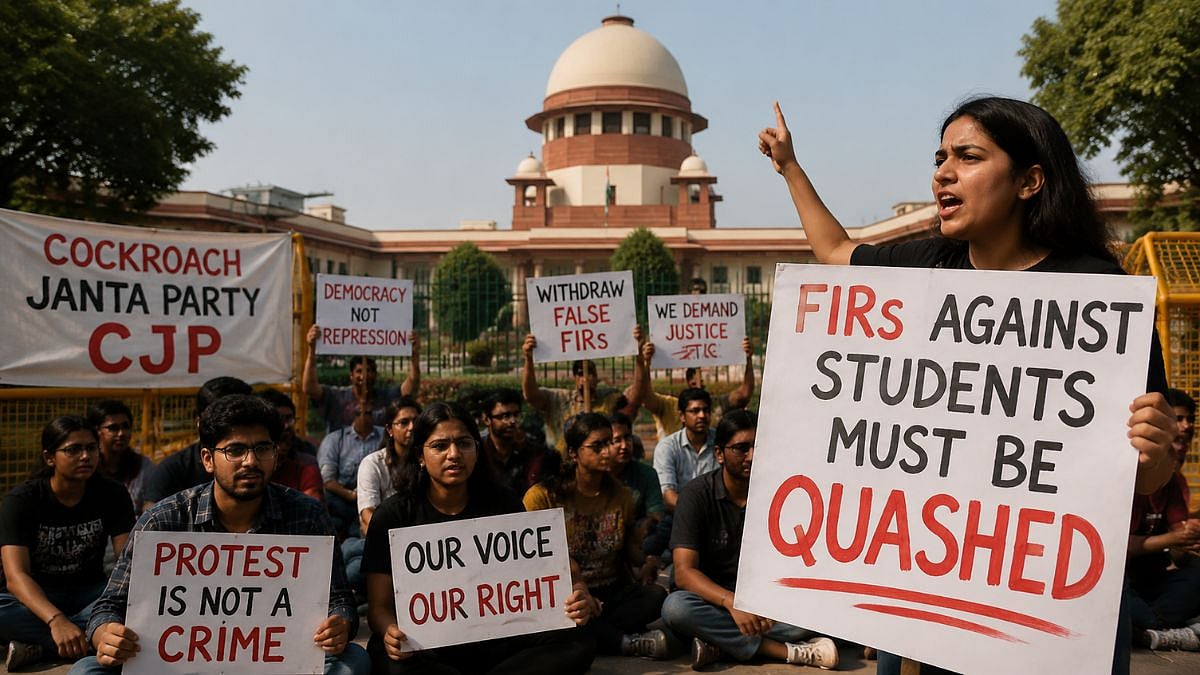
Supreme Court FIR Order Draws Criticism Over Protest Rights

Delhi Police Coordinates Security Plans Ahead of BRICS Summit
