

1 week ago
Supreme Court Questions CBSE Three-Language Policy Rollout
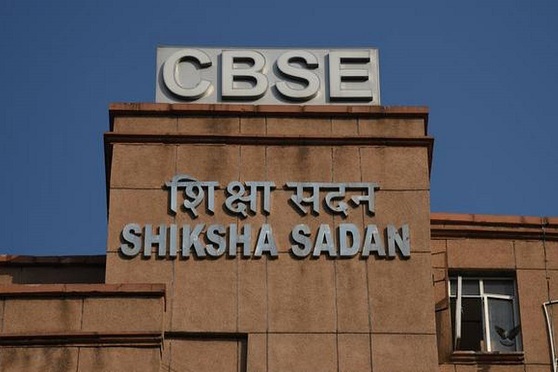
The CBSE wants students to learn three languages under a new education plan.
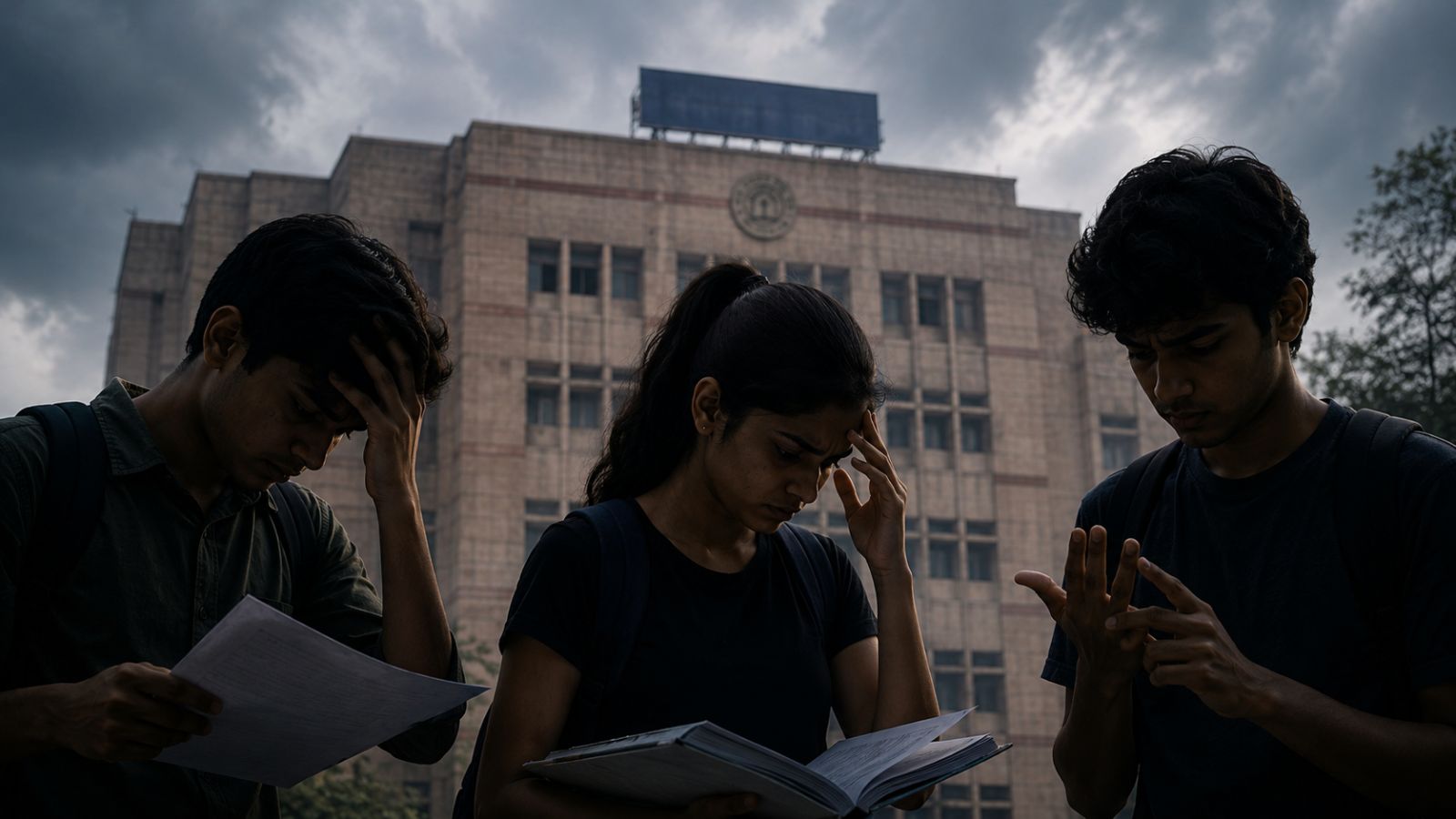
The Supreme Court said learning languages is valuable, but children should not feel too much pressure.
Judges worried that schools may not have enough qualified teachers, books or other materials.
They asked whether the plan should start in Class 6, Class 4 or Class 3.
The court also suggested that the current Class 6 students might receive extra time before the new rules apply.
It questioned whether English should be described as a foreign or non-native language in India.
CBSE says the change follows the National Education Policy and is meant to encourage multilingual learning.
The government and CBSE will now review the concerns before the case is heard again.

The Supreme Court questioned how CBSE is introducing its compulsory three-language framework.
The bench raised concerns about student pressure, teacher availability, textbooks and other learning resources.
The court suggested reviewing whether implementation should begin in Class 6, Class 4 or Class 3.
CBSE’s framework requires three languages, with at least two being Indian languages; reports differ on R3 examination provisions.
The Centre and CBSE were asked to examine implementation across school boards and respond to the court’s concerns.
- Who
- The Supreme Court of India, the Central Board of Secondary Education, the Centre and petitioners challenging the policy.
- What
- The court questioned the implementation, starting class, language classification and practical readiness of CBSE’s three-language framework.
- Where
- The policy concerns CBSE schools across India, while the court asked authorities to consider implementation across other school boards.
- When
- The concerns were raised during a hearing on August 20; the policy is scheduled to apply from the 2026-27 academic session, with one report referring to July 1, 2026.
- Why
- The court wanted to prevent excessive academic pressure and address shortages of qualified teachers, textbooks and learning resources.
Policy Supporters
Policy Critics
Purpose of the policy
Policy Supporters
The Centre said the framework supports multilingual learning and is aligned with the National Education Policy 2020 and the National Curriculum Framework for School Education 2023.
Policy Critics
Petitioners and the court questioned whether the rollout could impose excessive academic pressure on children.
Implementation readiness
Policy Supporters
The Centre said thousands of experts were consulted while framing the policy, and CBSE has provided multiple language options and learning materials.
Policy Critics
The court and a Parliamentary panel raised concerns that schools may not have enough time, teachers or study materials to implement the additional language requirement.
Authority and starting point
Policy Supporters
CBSE is implementing the framework through its revised rules and has asked schools to update language options for Classes 6 to 9.
Policy Critics
Petitioners questioned CBSE’s authority over the curriculum for Classes 6 to 8, while the court questioned whether Class 6 or another class should be the starting point.
Key facts
- Policy basis
- The framework is described as aligning with the National Education Policy 2020 and the National Curriculum Framework for School Education 2023.
- Language requirement
- Students are to study three languages, with at least two being Indian languages.
- Language options
- One report says CBSE has provided 23 language options; another refers to dedicated Class 6 R3 textbooks in 22 scheduled Indian languages.
- Proposed start
- The court discussed Class 6, Class 4 and Class 3 as possible starting points, while the reports also describe a CBSE circular covering Class 9 from July 1, 2026.
- School readiness
- The court raised concerns about the availability of qualified teachers, textbooks, educational materials and school infrastructure.
- English classification
- The bench questioned whether English should be treated as a foreign or non-native language in India.
- Next step
- The Centre said it would seek instructions on the court’s concerns; the matter was posted for further hearing after 10 days.
Sources
Related news

Supreme Court Asks CBSE to Revisit Three-Language Policy Rollout

Supreme Court Urges CBSE Review Three-Language Policy, Ease Pressure

Supreme Court Urged to Hear CBSE Three-Language Policy Pleas Urgently

Supreme Court Questions Pace and Design of CBSE Language Policy

Supreme Court Questions English Status in CBSE Language Rule

Supreme Court Inconclusive on CBSE Three-Language Policy Questions

NCERT Prepares Classes 10-12 Textbooks For Responsible AI Use

Ramesh Seeks Funds for 13 JNVs and Two AIIMS
Andhra Pradesh Government Schools Told to Prioritize Practical Skills

West Bengal, UNICEF Begin Workshop on Inclusive Education

India’s Exam Reform Must Begin in the Classroom
