

1 week ago
Supreme Court Urges CBSE Review Three-Language Policy, Ease Pressure

The Supreme Court is reviewing a CBSE plan that would make students learn three languages.
The plan says Class 9 students must study three languages, including at least two Indian languages.
The judges said learning languages can be valuable, but children should not feel too much pressure.
They asked CBSE to reconsider how and when the plan should begin.
They also discussed giving this year’s Class 6 students extra relief.
Schools may need more teachers, books, and other resources to offer the languages.
CBSE said students will not have a Class 10 board exam for the third language.
The court will hear the matter again after the government responds to its suggestions.

The Supreme Court urged CBSE to reconsider how its three-language policy will be implemented.
The policy requires Class 9 students from July 1, 2026, to study three languages, including at least two native Indian languages.
The Bench suggested giving the current Class 6 batch a reprieve and questioned whether the policy should begin in Class 6, 4, or 3.
Judges said schools need qualified teachers, infrastructure, and resources before introducing additional language options.
CBSE said no Class 10 board examination would be held for the third language to reduce student pressure.
- Who
- The Supreme Court Bench led by Chief Justice Surya Kant, CBSE, the Union government, NCERT, and petitioners challenging the policy.
- What
- The Court urged CBSE to review the implementation of its three-language policy and address concerns about student pressure, timing, teachers, and resources.
- Where
- The matter was heard by the Supreme Court of India.
- When
- The hearing took place on a Thursday; the policy is scheduled to apply to Class 9 students from July 1, 2026, and the matter was posted for hearing after 10 days.
- Why
- The Bench wanted the policy introduced in a streamlined way without placing undue pressure on students or burdening schools that lack teachers and infrastructure.
Court and Petitioners' Concerns
CBSE and Union Government's Position
Implementation and student pressure
Court and Petitioners' Concerns
The Supreme Court and petitioners questioned whether the policy can be introduced smoothly without increasing pressure on children, and asked CBSE to revisit its approach.
CBSE and Union Government's Position
The Union government said it wants to support students and argued that the policy was developed after consulting thousands of experts.
Teachers and school resources
Court and Petitioners' Concerns
The petitioners and Bench said new language choices require qualified teachers and adequate infrastructure before implementation.
CBSE and Union Government's Position
CBSE and the government indicated that the policy is being rolled out with language options and asked schools to update their offerings.
Scope and timing of the policy
Court and Petitioners' Concerns
The Bench questioned whether the starting point should be Class 6, Class 4, or Class 3, and suggested a reprieve for the current Class 6 batch.
CBSE and Union Government's Position
The policy framework sets Class 9 as the point at which three languages become compulsory from July 1, 2026, while CBSE has removed the Class 10 board examination for R3.
Key facts
- Policy requirement
- Class 9 students must study three languages, including at least two native Indian languages.
- Scheduled start
- The requirement is scheduled to take effect from July 1, 2026.
- Third-language examination
- CBSE said no Class 10 board examination will be held for the third language, or R3.
- Court concern
- The Supreme Court said children should not come under academic pressure.
- Implementation issue
- The Bench highlighted the need for qualified teachers and adequate human-resource infrastructure.
- Language options
- The Bench said CBSE has provided options involving 23 languages.
- Next hearing
- The matter was posted for further hearing after 10 days.
Quotes
Chief Justice Surya Kant
Supreme Court Chief Justice
“Some of these problems, you may revisit. There is no doubt that sooner or later, it has to be introduced. There is nothing wrong with that. But how it is to be streamlined so that whatever impediments or blockades are coming up, you may find a solution to those.”
 rediff.com
“We don't want the children to come under any pressure.”
rediff.com
Sources

Related news
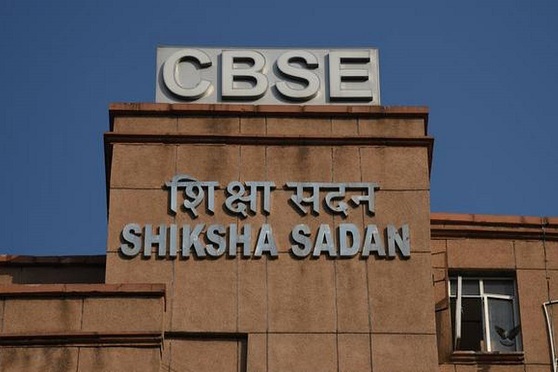
Supreme Court Questions CBSE Three-Language Policy Rollout

Supreme Court Asks CBSE to Revisit Three-Language Policy Rollout

Supreme Court Urged to Hear CBSE Three-Language Policy Pleas Urgently

Supreme Court Questions Pace and Design of CBSE Language Policy

Supreme Court Questions English Status in CBSE Language Rule

Supreme Court Inconclusive on CBSE Three-Language Policy Questions

NCERT Prepares Classes 10-12 Textbooks For Responsible AI Use
Ramesh Seeks Funds for 13 JNVs and Two AIIMS
Andhra Pradesh Government Schools Told to Prioritize Practical Skills

West Bengal, UNICEF Begin Workshop on Inclusive Education

India’s Exam Reform Must Begin in the Classroom
