1 week ago
Supreme Court Inconclusive on CBSE Three-Language Policy Questions

The Central Board of Secondary Education has a new rule about learning languages.
Students must study three languages called R1, R2 and R3.
At least two of them must be Indian languages.
The third language can be from another country.
Under this rule, English is also counted as a foreign language.
Petitioners told the Supreme Court that some students have studied French for several years.
They said these students now have to stop learning French because of the new rule.
The Supreme Court did not reach a clear conclusion on the policy.

The Supreme Court remained inconclusive on the Central Board of Secondary Education’s three-language policy.
The framework requires students to study three languages: R1, R2 and R3.
At least two of the three languages must be Indian languages.
The third language may be a foreign language, with English classified as foreign under the framework.
Petitioners said students studying French for years are now being forced to give it up.
- Who
- The Supreme Court, petitioners, and students affected by the Central Board of Secondary Education framework.
- What
- The Supreme Court remained inconclusive on a policy requiring students to study three languages.
- Where
- Not specified in the article.
- When
- Not specified in the article.
- Why
- Petitioners said students who had studied French for years are being forced to give it up under the new framework.
Key facts
- Policy structure
- Students must study three languages: R1, R2 and R3.
- Indian-language requirement
- At least two of the three languages must be Indian languages.
- Foreign-language option
- The third language can be a foreign language.
- English classification
- English is treated as a foreign language under the framework.
- Petitioners’ concern
- Some students who had studied French for several years are reportedly having to give it up.
- Court status
- The Supreme Court was inconclusive on the policy.
Sources
Related news

Supreme Court Asks CBSE to Revisit Three-Language Policy Rollout

Supreme Court Urged to Hear CBSE Three-Language Policy Pleas Urgently
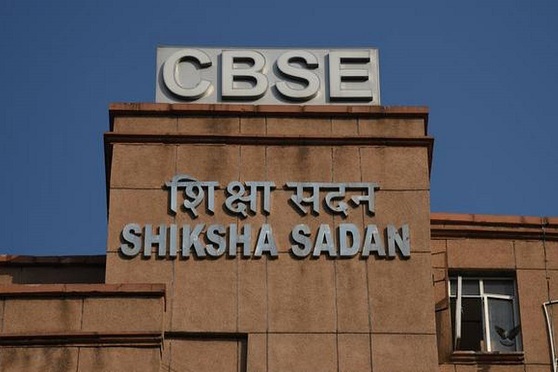
Supreme Court Questions CBSE Three-Language Policy Rollout

Supreme Court Questions English Status in CBSE Language Rule

Supreme Court Urges CBSE Review Three-Language Policy, Ease Pressure

Supreme Court Questions Pace and Design of CBSE Language Policy

PUCL Urges CJI Action Over Rajasthan High Court Allegations

Supreme Court Questions IPS Deputation for CAPF Leadership Positions

Supreme Court Quashes 20-Year Conviction, Reaffirms Juvenile Legal Protections

Two Years After RG Kar Doctor's Rape-Murder, Case Remains Unresolved

ED widens Chhattisgarh probes with two arrests and searches