

1 week ago
Supreme Court Asks CBSE to Revisit Three-Language Policy Rollout

The Supreme Court is looking at a new rule requiring students to learn three languages.
The rule is planned for Class 9 students from July 1, 2026.
At least two of the languages must be Indian languages.
The judges said learning languages can be helpful, but children should not feel too much pressure.
They asked whether students already in Class 6 should get extra time before the rule applies to them.
They also asked why English was called a non-native language because English has been used in India for a long time.
Schools must have teachers, books and other resources for the languages students choose.
The court did not cancel the policy, but asked officials to improve its rollout and report back.

The Supreme Court asked CBSE, NCERT and the Centre to reconsider how the three-language policy will be introduced.
The policy requires Class 9 students to study three languages, including at least two native Indian languages, from July 1, 2026.
Justice Joymalya Bagchi questioned describing English as “non-native” or “foreign” and objected to the term “native”.
The court asked CBSE to consider relief for students already in Class 6 and possibly begin with a later batch.
CBSE was asked to provide a roadmap for trained teachers, textbooks and other resources for 23 language options.
- Who
- The Supreme Court bench of Chief Justice Surya Kant and Justices Joymalya Bagchi and V Mohana; CBSE, NCERT, the Centre and petitioners were involved.
- What
- The court asked authorities to reconsider practical aspects of CBSE’s three-language policy and its implementation.
- Where
- The matter was heard by the Supreme Court in India.
- When
- The hearing took place on a Thursday; the policy is scheduled to begin for Class 9 on July 1, 2026, in the 2026-27 academic session.
- Why
- The court raised concerns about pressure on children, the classification of English, the transition for existing Class 6 students, and the availability of teachers and learning materials.
Petitioners’ implementation concerns
Government and policy rationale
Student transition
Petitioners’ implementation concerns
Petitioners argued that some students could be forced to abandon languages they had studied for years and that the change could affect about three million children.
Government and policy rationale
The government said it wanted to support children, while the court suggested giving current Class 6 students relief and applying the system to a later batch.
Teachers and materials
Petitioners’ implementation concerns
Petitioners said several schools lacked arranged teachers, classes and textbooks, and argued that students unfamiliar with a language would need basic instruction first.
Government and policy rationale
The Centre disputed claims that preparations were absent and said the government had made arrangements and consulted thousands of experts; the court nevertheless sought a detailed roadmap.
Purpose and language choices
Petitioners’ implementation concerns
Petitioners questioned the practicality of suddenly requiring students to study languages such as Punjabi or Tamil and challenged the treatment of English as foreign or non-native.
Government and policy rationale
The court said learning a language is valuable and that Indian and regional languages should not be treated as inferior. The policy permits a foreign language as the third language after two Indian languages, or as a fourth language.
Key facts
- Policy requirement
- Class 9 students must study three languages, with at least two native Indian languages.
- Planned start
- The requirement is scheduled to begin on July 1, 2026, during the 2026-27 academic session.
- Language options
- CBSE has provided options involving approximately 23 languages.
- English classification
- Justice Joymalya Bagchi questioned describing English as non-native or foreign and said “native” had a colonial connotation.
- Class 6 transition
- The court asked CBSE to consider giving current Class 6 students a reprieve and starting with a later batch.
- Implementation roadmap
- CBSE was asked to provide details about trained teachers, textbooks and other learning resources.
- R3 examination
- CBSE said no Class 10 board examination would be held for the third language, or R3.
- Policy basis
- CBSE said the change aligns its scheme of studies with the National Education Policy 2020 and the National Curriculum Framework for School Education 2023.
Quotes
Additional Solicitor General Aishwarya Bhati
Additional Solicitor General, representing the government
“"Let us not have any impression of inferiority complex with respect to regional languages. We should respect all these languages as much as any other language," the bench said.”
 deccanchronicle.com
“Justice Joymalya Bagchi questioned the classification of English as a 'non-native' language under the proposed framework, noting that the term carried a colonial context.”
 NDTV
NDTV
Sources
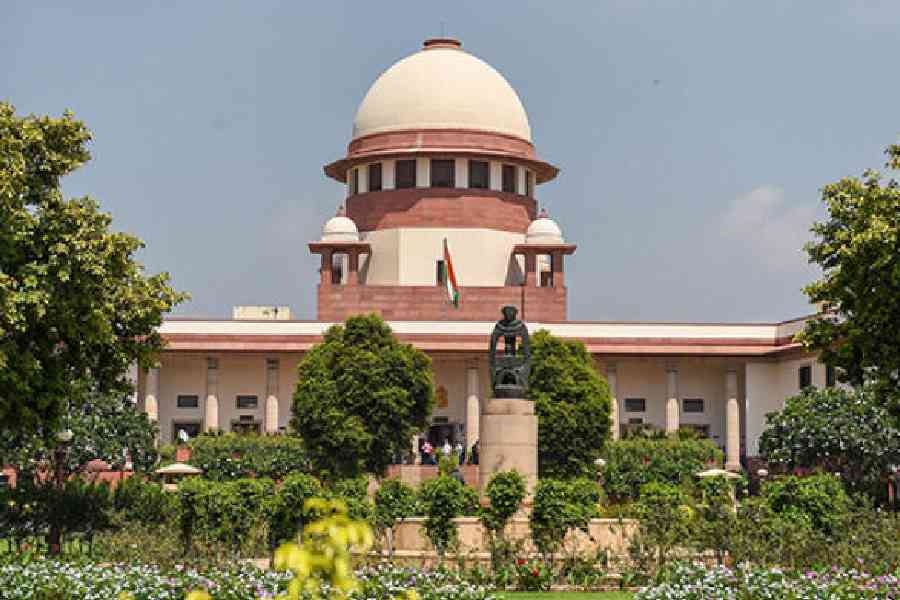
Supreme Court says children should not face pressure, seeks solution to CBSE's three-language policy
Supreme Court Questions English As ‘Non-Native’, Asks CBSE To Revisit Three-Language Policy Rollout
CBSE 3-Language Policy: 'How Can English Be Non-Native?' Supreme Court Asks

CBSE Three-Language Policy: SC Says Don't Put Children Under Pressure
Related news
Supreme Court Questions CBSE Three-Language Policy Rollout

Supreme Court Urges CBSE Review Three-Language Policy, Ease Pressure

Supreme Court Questions English Status in CBSE Language Rule

Supreme Court Urged to Hear CBSE Three-Language Policy Pleas Urgently

Supreme Court Questions Pace and Design of CBSE Language Policy

Supreme Court Inconclusive on CBSE Three-Language Policy Questions

NCERT Prepares Classes 10-12 Textbooks For Responsible AI Use
Ramesh Seeks Funds for 13 JNVs and Two AIIMS
Andhra Pradesh Government Schools Told to Prioritize Practical Skills

West Bengal, UNICEF Begin Workshop on Inclusive Education

India’s Exam Reform Must Begin in the Classroom
