

1 week ago
Supreme Court Questions English Status in CBSE Language Rule

India’s Supreme Court is reviewing a new school language rule.
The rule says CBSE students must learn three languages, including at least two Indian languages.
Some parents and students say the rule could be difficult and stressful, especially when introduced during their schooling.
They also question why English is treated as a non-native language.
A judge said English has been used in India for a long time and is an official language in some states.
CBSE said English is an official constitutional language but is not a native Indian language under the policy.
The court asked officials to check whether schools have enough teachers, books and facilities.
It also suggested giving current Class 6 students more time before the full rule applies.
The court will hear the matter again after the Centre and CBSE consider its suggestions.

The Supreme Court asked the Centre and CBSE to revisit aspects of the three-language policy for Classes VI to X.
The bench questioned whether English should be classified as non-indigenous, citing its historical roots and official use in several states.
CBSE said English is an official constitutional language but cannot be treated as a native Indian language under the policy.
The court sought a roadmap on teachers, textbooks, school capacity and students’ informed language choices.
Judges suggested giving the current Class 6 batch more time and reducing pressure as the policy is implemented.
- Who
- A three-judge Supreme Court bench led by Chief Justice Surya Kant, petitioners, the Centre and the Central Board of Secondary Education.
- What
- The court is examining challenges to the CBSE three-language policy, including English’s classification and the practical demands of implementation.
- Where
- The matter was heard in the Supreme Court of India.
- When
- The hearing took place on Thursday; the policy is scheduled to apply from the 2026-27 academic year, with the CBSE circular specifying July 1, 2026, for Class IX.
- Why
- Petitioners cited student pressure and implementation difficulties, while the court raised constitutional questions about English and concerns about teachers, infrastructure and school capacity.
Petitioners and Court Concerns
Centre and CBSE Position
English’s classification
Petitioners and Court Concerns
Petitioners argued that English should not simply be treated like a foreign language because of its longstanding roots and use in India. Justice Joymalya Bagchi said the terminology and its constitutionality may require examination.
Centre and CBSE Position
Additional Solicitor-General Aishwarya Bhati said English is an official constitutional language, but it cannot be treated as a native Indian language. She said the term non-native comes from the National Education Policy.
Timing and implementation
Petitioners and Court Concerns
Petitioners argued that the policy was being introduced in the middle of students’ schooling and could force some Class 9 students to abandon languages they had studied for years. The court raised concerns about pressure on current Class 6 students and infrastructure.
Centre and CBSE Position
The Centre and CBSE did not announce a delay but agreed to consider the court’s suggestions and provide information about implementation. The court said the policy need not be scrapped and could instead be streamlined.
Number and type of languages
Petitioners and Court Concerns
Petitioners said requiring two Indian languages could create practical difficulties, including for students expected to learn languages far from their home regions. They argued that a Punjabi student, for example, could not be expected to learn Tamil overnight.
Centre and CBSE Position
The policy requires three languages, at least two of them Indian, as part of implementing the National Education Policy. Chief Justice Surya Kant also asked whether teaching Indian languages across regions could serve national interest.
Key facts
- Language requirement
- Students must study three languages, with at least two being Indian languages, also described as Bhartiya Bhashas.
- Planned implementation
- The policy is scheduled for the 2026-27 academic year; a CBSE circular says the Class IX requirement begins July 1, 2026.
- Court bench
- Chief Justice Surya Kant heard the matter with Justices Joymalya Bagchi and V. Mohana.
- CBSE position
- CBSE said English is an official language under the Constitution but cannot be treated as a native Indian language under the policy.
- School coverage
- The court was told that about 4% of schools are under CBSE and 96% are under state boards.
- Implementation needs
- The court sought information about qualified language teachers, textbooks, infrastructure and schools’ language offerings.
- Third-language assessment
- CBSE said no board examination will be held for the third language, or R3, at the Class 10 level; it will be assessed internally.
Quotes
Bench of Chief Justice Surya Kant, Justice Joymalya Bagchi and Justice V. Mohana
Supreme Court judges
“"If we have to examine that issue as to the extent to which English can be considered as a non-indigenous language, first, I personally have a serious reservation about the expression used ‘native’. It has a very colonial import. It should be ‘indigenous’."”
 indianexpress.com
 livemint.com
 telegraphindia.com
“"English is an official language under the Constitution. That status no one can take away… it’s not treated like a foreign language, but it can’t be treated like a native language also. Language is the vehicle of a culture…"”
indianexpress.com
livemint.com
Sources
‘Can English be considered non-native?’ asks SC in challenge to CBSE’s three-language policy
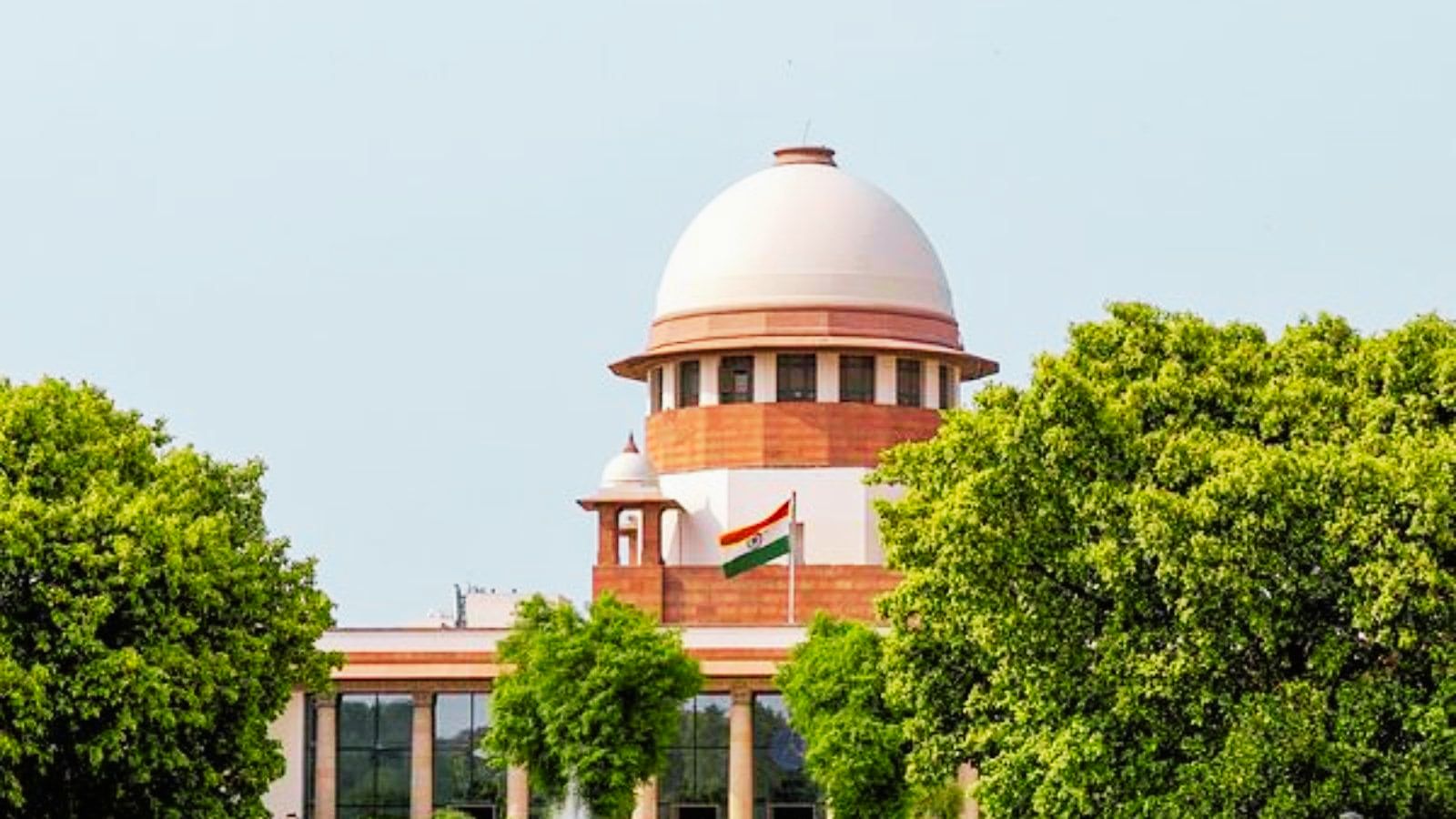
English indigenous or foreign language? Supreme Court for examining constitutionality

English foreign or indigeneous language? Supreme Court asks during CBSE's 3-language rule hearing
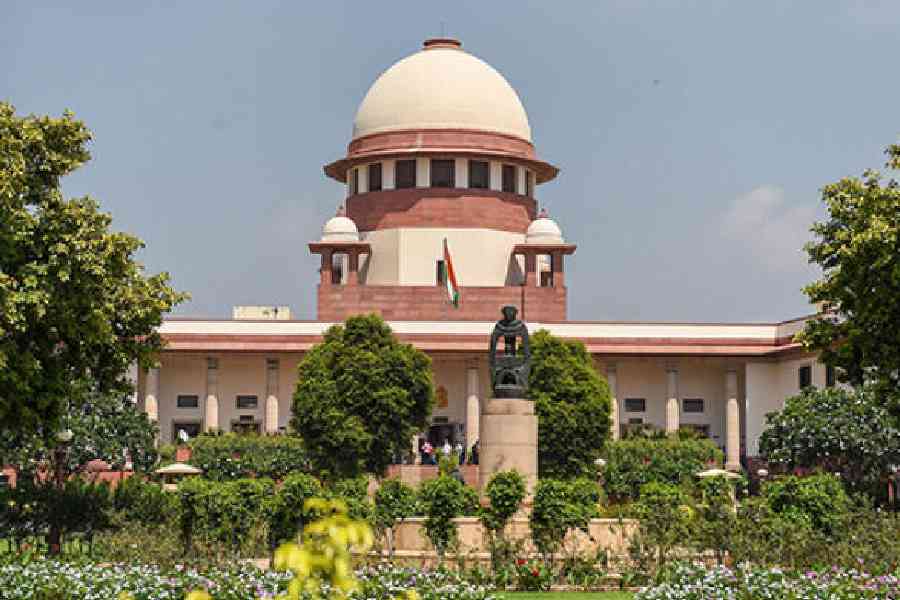
SC asks Centre, CBSE to revisit 3-language formula, consider English 'indigenous' language
Related news

Supreme Court Asks CBSE to Revisit Three-Language Policy Rollout
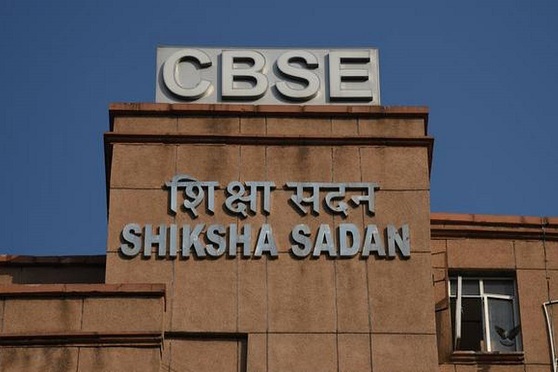
Supreme Court Questions CBSE Three-Language Policy Rollout

Supreme Court Questions Pace and Design of CBSE Language Policy

Supreme Court Urges CBSE Review Three-Language Policy, Ease Pressure

Supreme Court Urged to Hear CBSE Three-Language Policy Pleas Urgently

Supreme Court Inconclusive on CBSE Three-Language Policy Questions

NCERT Prepares Classes 10-12 Textbooks For Responsible AI Use
Ramesh Seeks Funds for 13 JNVs and Two AIIMS
Andhra Pradesh Government Schools Told to Prioritize Practical Skills

West Bengal, UNICEF Begin Workshop on Inclusive Education

India’s Exam Reform Must Begin in the Classroom
