

Science & Tech · Science & Environment · 2 hrs ago
Ancient sea levels show Earth's poles shifted during the dinosaur age
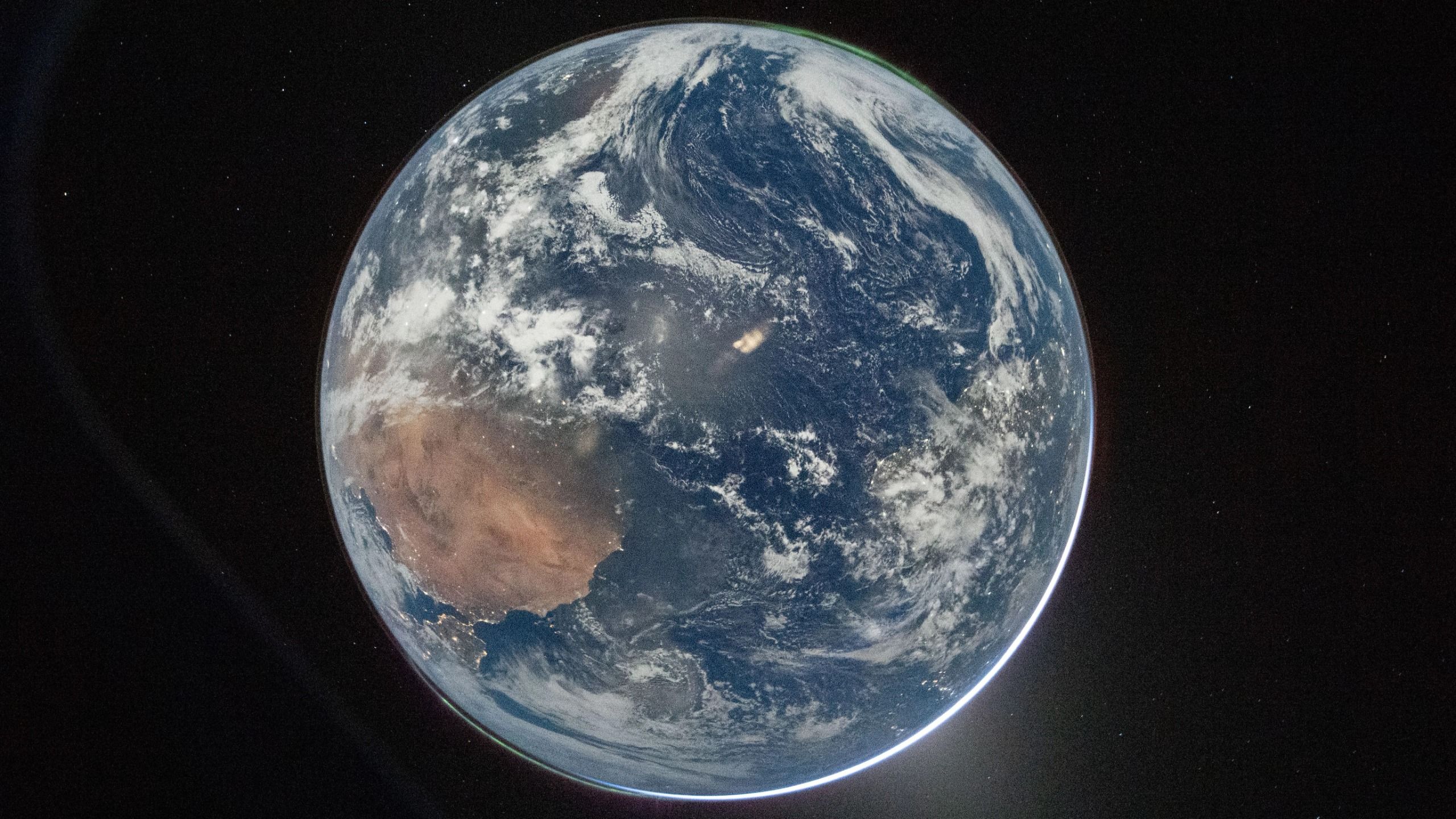
Researchers found Earth's geographic poles shifted during the age of the dinosaurs by studying patterns in ancient sea levels.
The work, led by Mathew Domeier at the University of Oslo in Norway, examined geological changes spanning the past 320 million years.
True polar wander happens when Earth's crust and mantle shift relative to its spin axis, changing the locations of the geographic poles without changing the angle of the spin axis itself.
Earlier studies based on magnetic traces in rocks had suggested these shifts were slow or negligible, but that method can give uncertain results.
The team used sea-level changes to track the shifts, because movement of Earth's mass can produce opposite sea-level patterns in the two hemispheres.
The findings challenge the idea that polar wander was always slow, and such shifts can move regions between latitudes and affect climate.
The research describes changes over the geological past; the supplied account does not say what further work is planned.

A study using ancient sea-level changes suggests Earth’s geographical poles shifted faster than previously thought during the age of the dinosaurs.
The research examines changes over the past 320 million years linked to the movement of Earth’s crust and mantle relative to its spin axis.
This process, known as true polar wander, can move regions between polar and lower latitudes and affect climate.
Earlier studies using magnetic traces in rocks had suggested that true polar wander was negligible or slow in the distant past.
- Who
- Researchers led by Mathew Domeier at the University of Oslo’s Centre for Planetary Habitability.
- What
- The team used ancient sea-level changes to study how Earth’s geographical poles shifted.
- When
- The study examines changes over the past 320 million years, including during the age of the dinosaurs.
- Where
- The research was conducted by a team at the University of Oslo in Norway.
- Why
- To better establish when and how quickly true polar wander occurred; earlier methods produced differing conclusions.
Earlier paleomagnetism studies
Researchers behind the new sea-level study
Rate of true polar wander in the distant past
Earlier paleomagnetism studies
Studies using magnetic traces in ancient rocks had concluded that it was negligible or slow.
Researchers behind the new sea-level study
The new results indicate it was not negligible or slow.
Researchers used paleomagnetism to estimate true polar wander, but reached substantially different conclusions.
Space.com reported new findings based on a study of ancient sea-level changes.
- Study period
- Past 320 million years
- Lead researcher
- Mathew Domeier
- Institution
- Centre for Planetary Habitability at the University of Oslo, Norway
- Current true polar wander rate
- 10 centimeters (4 inches) per year
Sources
Related news
Egyptian fossils identified as a new 45-million-year-old crocodile species

High-speed video shows how detached honeybee stingers keep pumping venom

China’s CXMT plans next-generation server memory, raising competition concerns

Vellore starts clearing invasive plants from irrigation tanks before monsoon
Satellite Data Reveal Opposing Changes Beneath Nicaragua’s Masaya Volcano
Red dwarf slowly draws matter from a brown dwarf

Pacific buoy recorded a 17.6-metre rogue wave nearly three times its neighbours

A 1960 population model set a ‘doomsday’ date that later growth disproved

Researchers trace the unusual shape of rose petals to geometry

Scans reveal how Iran’s spider-tailed viper’s unusual lure is built

Jonathan the tortoise’s gene switches may offer clues to long life
