

Science & Tech · Science & Environment · 3 hrs ago
Study finds honey bee stingers pump venom with two saw-like parts
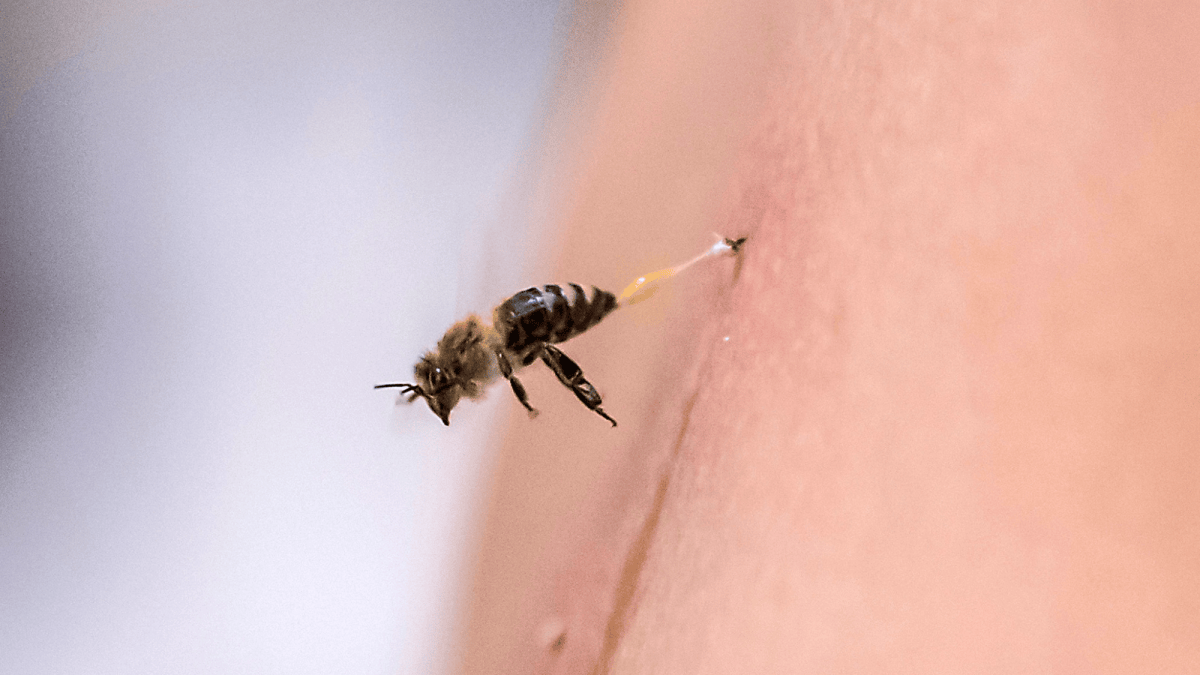
Researchers in Australia studied how a honey bee’s stinger keeps injecting venom after it has detached from the bee.
They had bees sting a clear gel that mimics human skin and filmed the process at high speed.
The stinger has two sharp parts that slide back and forth, helping it move deeper into tissue.
Valves attached to those parts work like two pistons, pumping venom in opposite directions while limiting its flow back into the venom sac.
This explains how a tiny stinger can deliver a steady flow of venom on its own.
The researchers also used scans to make a small robot model that confirmed key parts of the pumping action.
Understanding the mechanism could help inspire small pumps for delivering medicine to people in less invasive ways.

A study found that honey bee stingers pump venom using two saw-like lancets that move in opposite directions.
The 2-millimeter stinger can continue injecting venom after detaching from the bee.
Researchers used high-speed video to observe bees stinging a clear gel that mimics human skin.
They found valves on the lancets change shape during the pumping cycle to help maintain pressure and reduce backflow.
The team said the mechanism could inspire less invasive micropumps for delivering medicine.
- Who
- Researchers from Macquarie University and the University of New South Wales studied the stinger.
- What
- The team found that two saw-like lancets help a honey bee stinger pump venom continuously.
- When
- The study was published on October 12, 2026.
- Where
- The research was conducted in Australia. The tests used a clear gel that mimics human skin.
- Why
- The team aimed to understand how a detached honey bee stinger continues to penetrate tissue and inject venom.
This story does not have two clearly opposing sides.
Researchers already knew that the honey bee stinger’s venom sac empties into a chamber with pumping elements called valves.
The study describing how the stinger pumps venom was published in PNAS.
- Stinger length
- 2 millimeters
- Species studied
- Honey bee (Apis mellifera)
- Research institutions
- Macquarie University and the University of New South Wales
- Study journal
- PNAS
- Experimental material
- Clear gel mimicking human skin
What people are saying
The unique geometry of the valves is the key; they act as collapsible pistons and—by pumping in opposite directions—they’re able to deliver a continuous flow of venom.
The double piston design adds complexity but it’s the key to the stinger being able to deliver venom continuously in a compact, autonomous unit.
Sources
Related news

Chinook salmon return to habitat opened by removal of four Klamath River dams
Fossil study suggests animal life may be 200 million years older

Low-pressure system may bring rain to Andhra Pradesh from October 15
Study finds ancient gut microbes shared by Hadza and Tsimane

A 1960 Population Model’s 2026 Doomsday Forecast Fell Behind Reality

Roman Villa Excavations Near Wrexham Reveal Earlier Activity and Later Changes

Aging-related DNA changes may help explain why large dogs die younger

Vienna team demonstrates a self-stabilizing thorium nuclear clock

Ucluelet wave was nearly three times the height of nearby waves

Debate over Monte Verde reopens questions about the first Americans

Africa’s solar installations set a record as official data misses much of the growth
